
This is the first chapter of our eight-year odyssey. At that time, I did not write a blog, so I am now (in 2025) reconstructing our experiences of that maiden voyage. Of course, I also have the perspective of our many years of practice, accompanied by memories that are certainly incomplete after all this time!
We spent the time between our purchase of Nine Lives in December, and the maiden voyage in January, gathering together everything we thought we might need, at least for that first three weeks.
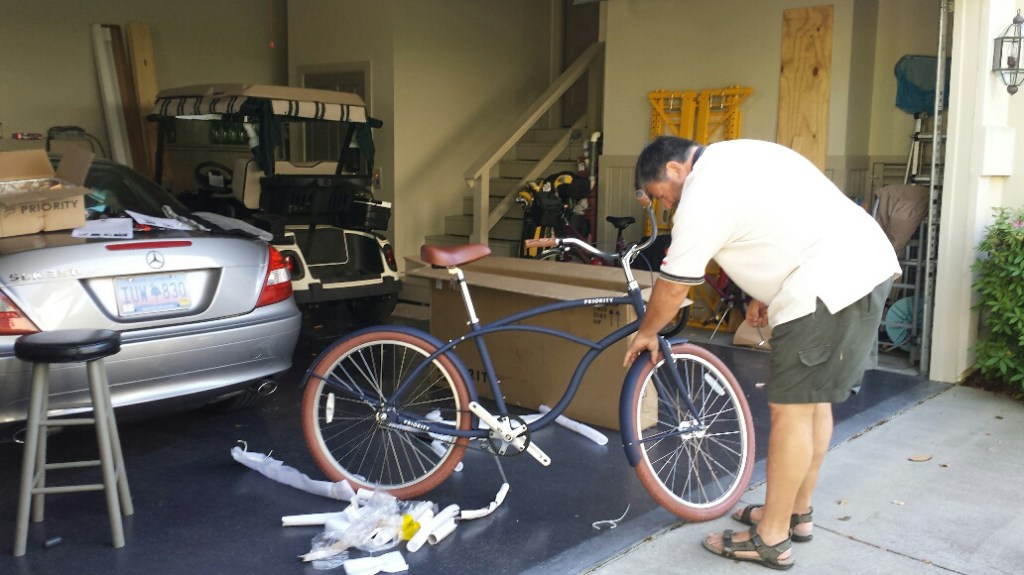
Dick bought a bicycle that was designed for beaches and salt air. It has a rubber belt instead of the usual metal chain, and everything is supposedly salt tolerant. Unfortunately, many of the screws and a few of the parts turned out to be just normal metal, and they did rust over the years. Replacements and repairs were relatively simple to find, and 8 years later that bike is still in service.
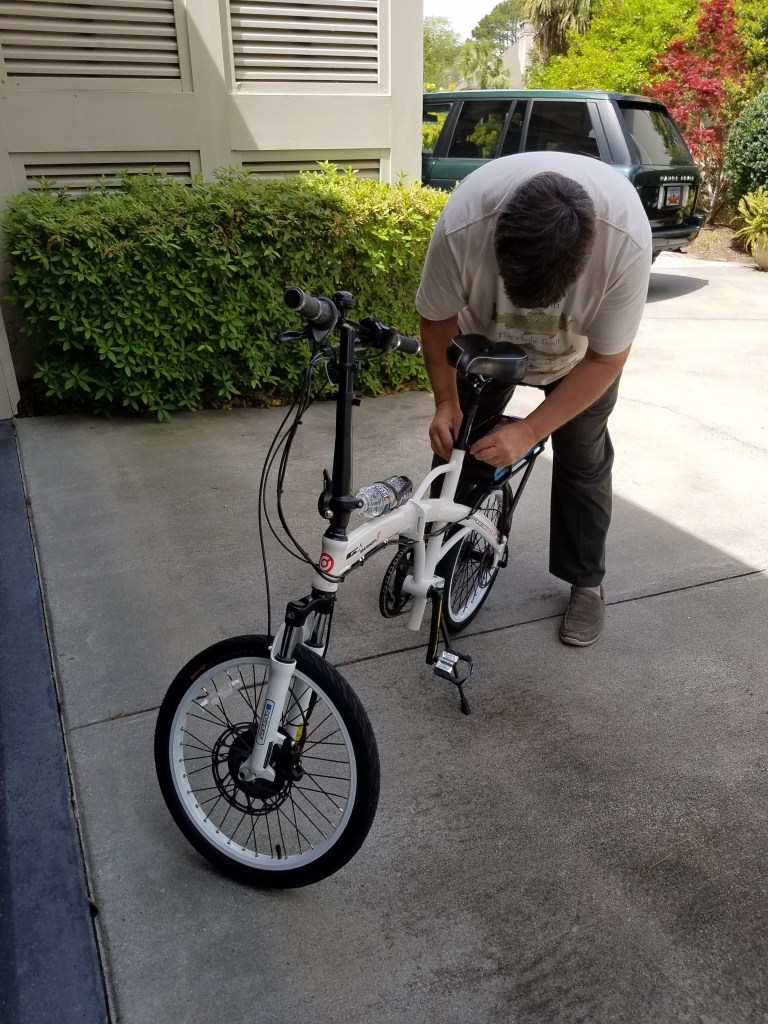
I had zero interest in a single speed, non-electric bicycle, so we found a relatively small, folding, electric bike that was also rated for marine use. It held up much better, although we generally kept it covered.
I found a wonderful website by a lady who lived on sailboats for many years. Carolyn Shearlock’s website is incredibly useful for boaters who are new to living aboard. She also has an excellent cookbook. I spent hours pouring over her various lists, and gave our Amazon account a real workout. If I am expecting to cook on board, I would like to have the same quality knives, good pots and pans, and nice plates, glassware, and cutlery. We had saved a set of Corelle that had belonged to my mother, and the smallish square plates fit perfectly in the galley cupboards. The stainless-steel cutlery that had been our first purchase many years ago after we were married, was available to take on board. We found some very good stacking pots and pans that were non-stick and also induction ready. I bought small appliances including a hand mixer, a hand blender and food chopper, and a multipot that we liked so much we bought another for our home kitchen. Glassware was a challenge. We prefer to limit the amount of glass on a boat, given the increased risk of dropping things, plus the certainty that we would not be wearing shoes (usually barefoot) on board. I found a source for polycarbonate glassware, so we ordered a full set of old fashioned, tall drink, and wine glasses with Nine Lives engraved on each. For mugs, I ordered some with photographs of cats that I had taken over the years. To complete the “cat theme” I also ordered matching covers for the throw pillows.
At one of the boat shows we attended, we found some absolutely gorgeous Italian custom-made bedding. As soon as we were able to measure the beds, we ordered a full set (with duplicates for laundry) of dark red and cream bedding for Nine Lives. Although Nine Lives came fully equipped, as is normal when a boat is sold, almost all of the linens were stained and unusable, and we prefer to use duvets instead of blankets, so the total bill for bedding ended up being somewhat eye-watering!

The insurance company accepted our boating resumes, but required that we hire a licenced captain for the first week of cruising. This actually fit well with our own preference, never having owned or operated such a large boat, and being entirely unfamiliar with the various controls, engines and systems, and how to use the chartplotter. We did make an error in judgement in this case, choosing to hire the son of the boat builder, rather than an instructor who is well known in AGLCA circles. We thought that the builder’s son would know more about Nine Lives than any other captain. A few days before we were ready to set off, we were advised that the son was not going to be available and instead they had arranged for the Endeavour delivery captain to travel with us for that initial week.
Captain Woody turned out to be a friendly fellow, who appeared to have a lady friend in every port. He spent almost all of the time on his phone. He knew how to operate Nine Lives, but he knew nothing specific about any of her engines or systems, so Dick had to learn all of that on his own. To this day, there are still things about the boat that we don’t know. Woody was not a particularly good instructor, seeing his job as a delivery captain rather than a teacher. For the most part, we had to learn everything on our own, although at least we had the comfort of having a “professional” close by if we got into trouble.
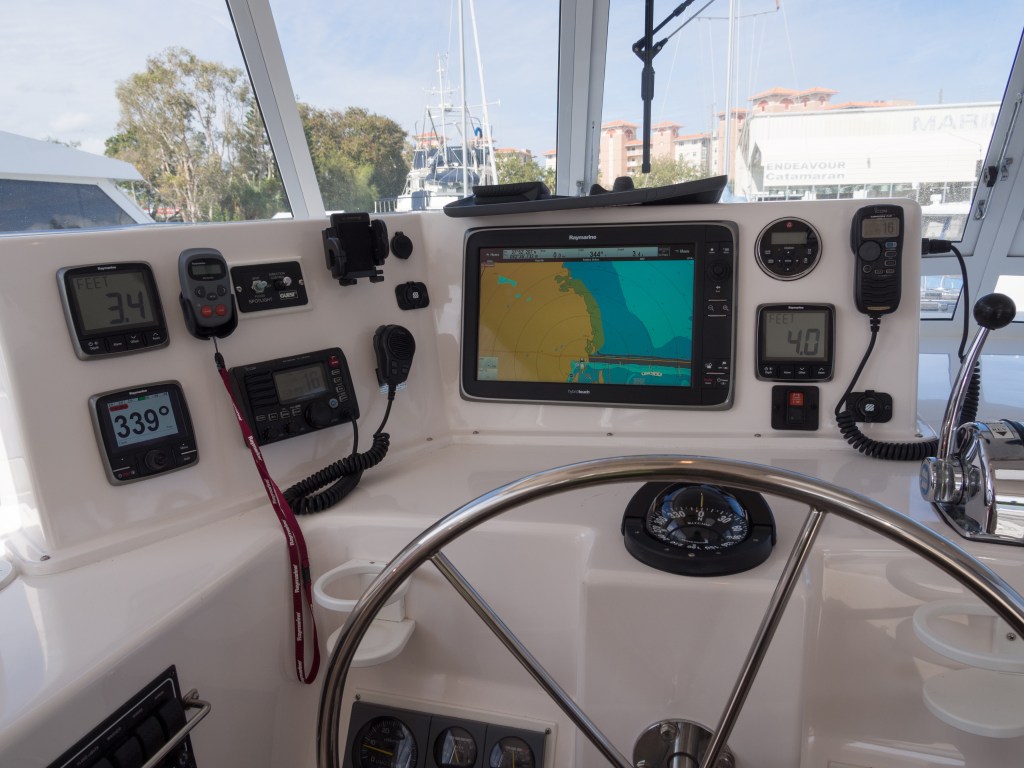
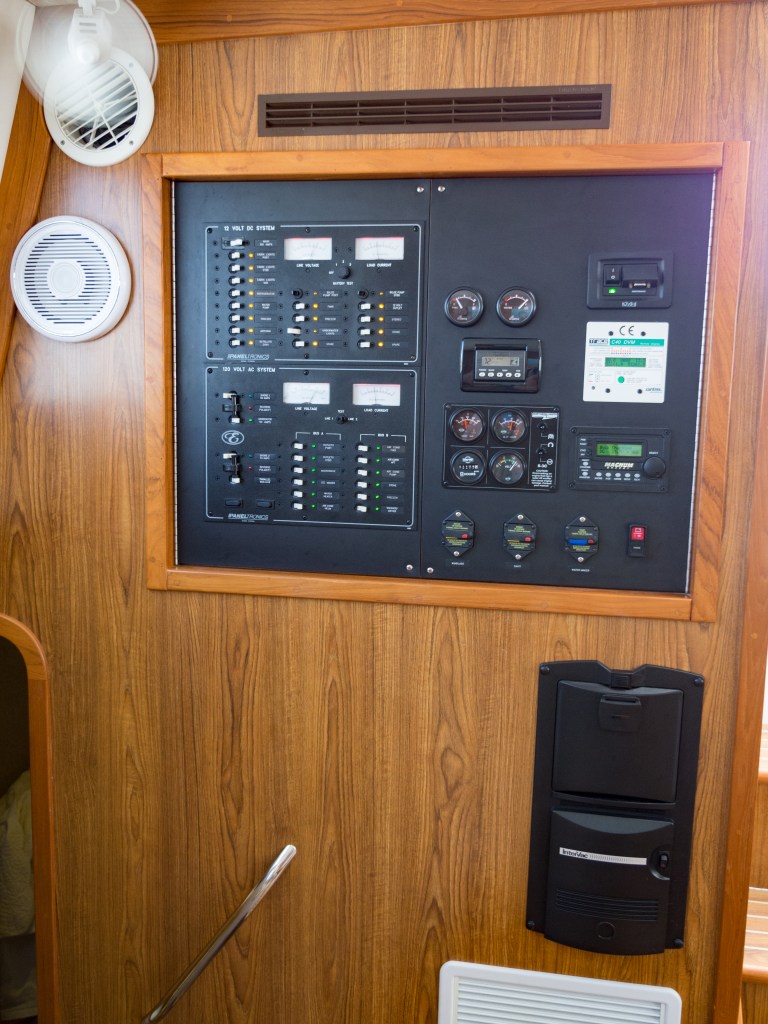
In mid-January, we loaded up the vehicle with everything we had been accumulating over the past month and a half, and set off for St Pete Beach. Our good friends, Kim and Stuart, owned a home there, and kindly let us stay while we prepared Nine Lives for her maiden voyage. In addition to finding places for everything, there were new fenders to blow up, our first experience with pumping out the black water tank, filling the fresh water tanks, and a multitude of other jobs, small and large. We also filled up with fuel for the first time. It is one thing to know intellectually how much the tank holds, and how much per gallon diesel costs, and quite another to see the numbers tick up on the fuel pump! We looked around, and decided that the best place to hang the bright new AGLCA members’ burgee was one of the antennas. After a couple of days, we moved aboard, and began to acclimate and set our routines for living on Nine Lives.


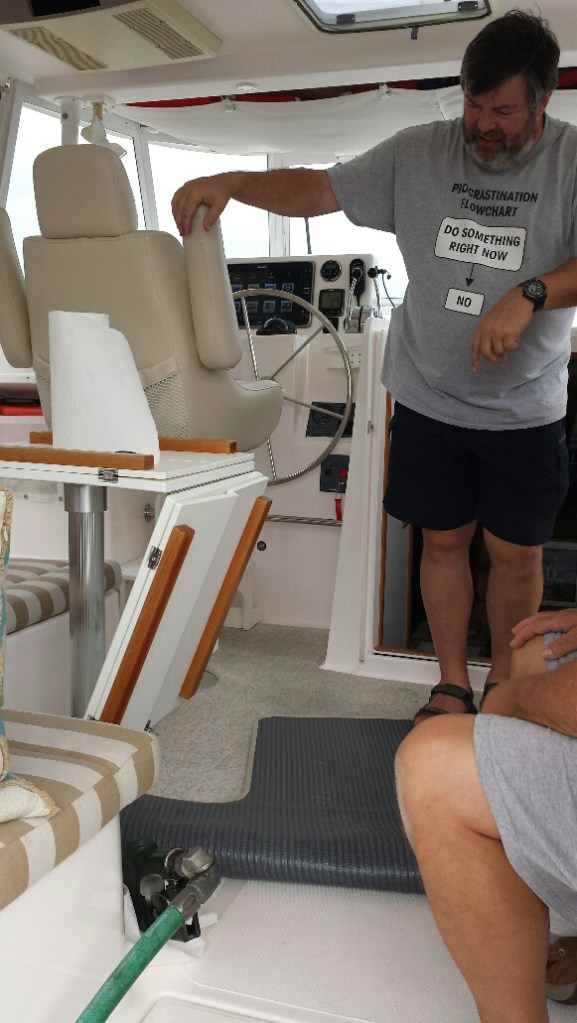
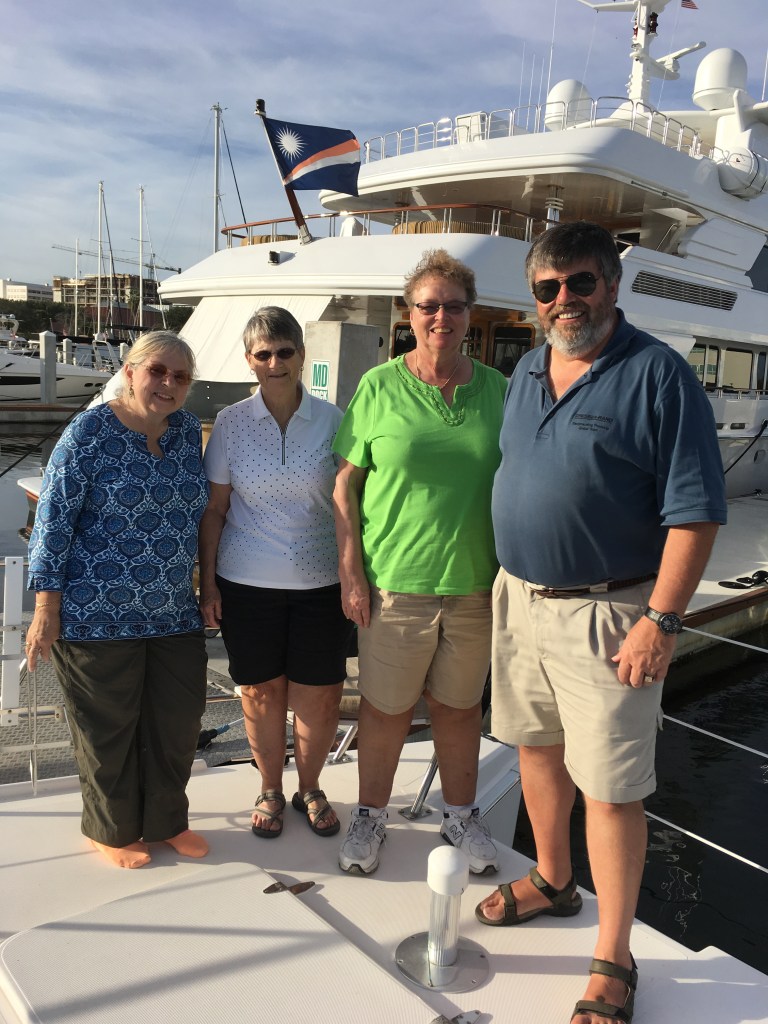
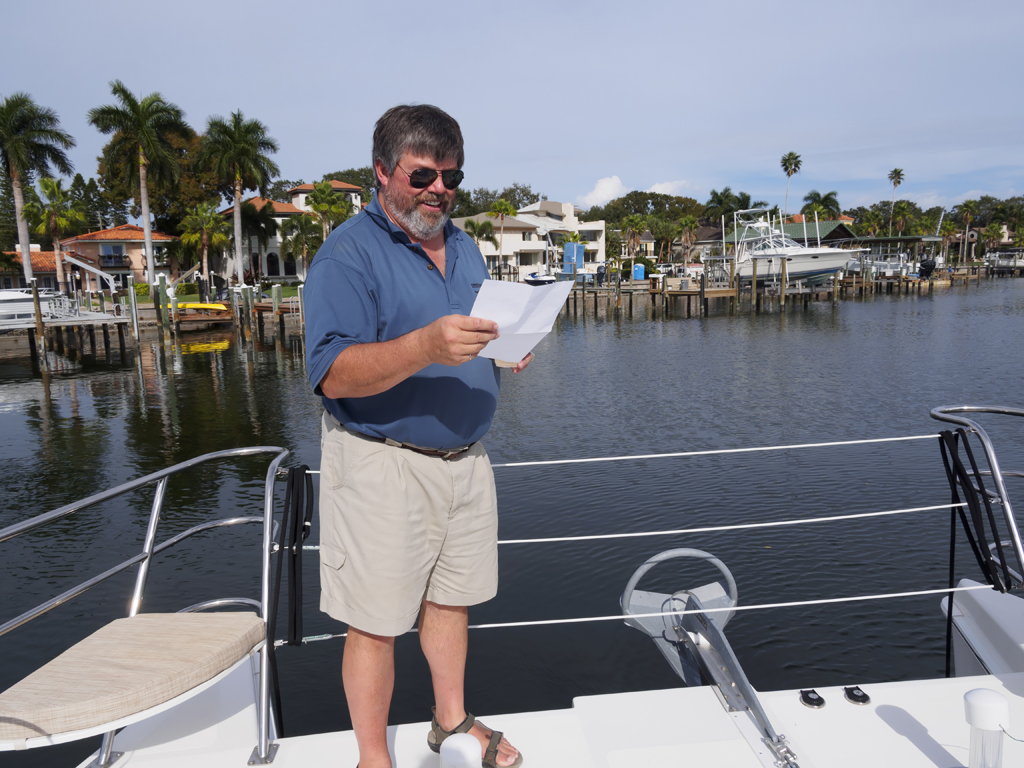
On January 17th, 6 friends joined us on board for the critically important renaming ceremony. It is considered to be very bad luck to change the name of a boat. We did not wish to tempt fate (and besides, who doesn’t want an excuse to have a party?) Captain Woody drove us out to a convenient bay near the marina, and we performed the ceremony. Dick read some of it, and we asked our friends to assist with the rest of the readings. We called upon the gods of wind and waves to forget the previous name, and then we introduced Nine Lives and asked the gods to bless her voyages with light winds and calm seas. Each part of the ceremony required a certain amount of champagne to be tossed overboard to propitiate the gods, and we also drank toasts. There was no champagne left at the conclusion of the event.
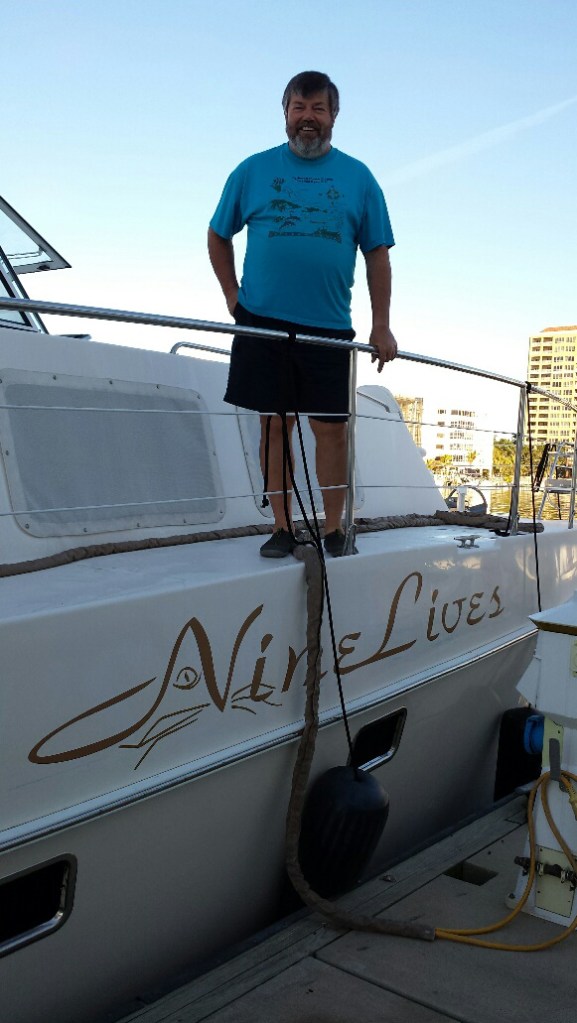
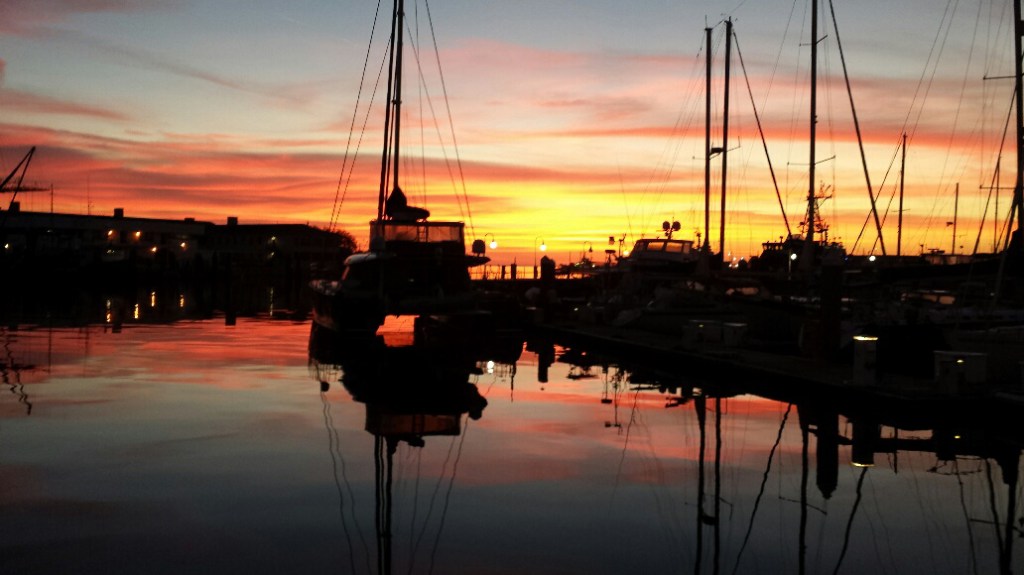
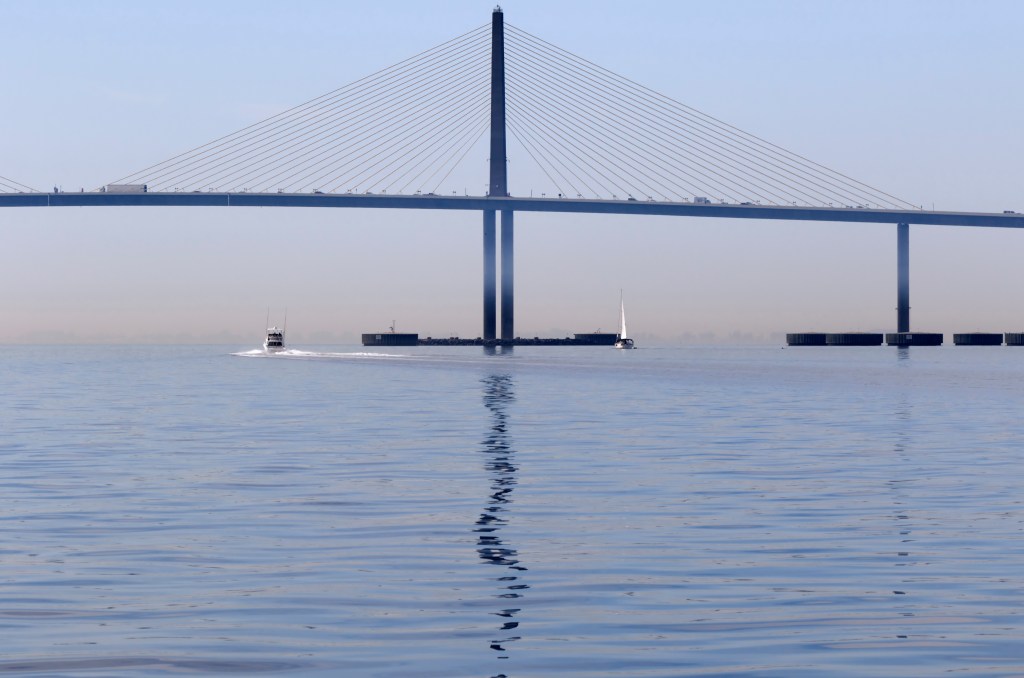
Early the next morning we departed for Sarasota. Tampa Bay was in a kind mood, with no chop to disturb us, and we passed under the Sunshine Skyway Bridge and turned into the Gulf Intracoastal Waterway. Our destination that first night was Marina Jack in Sarasota.
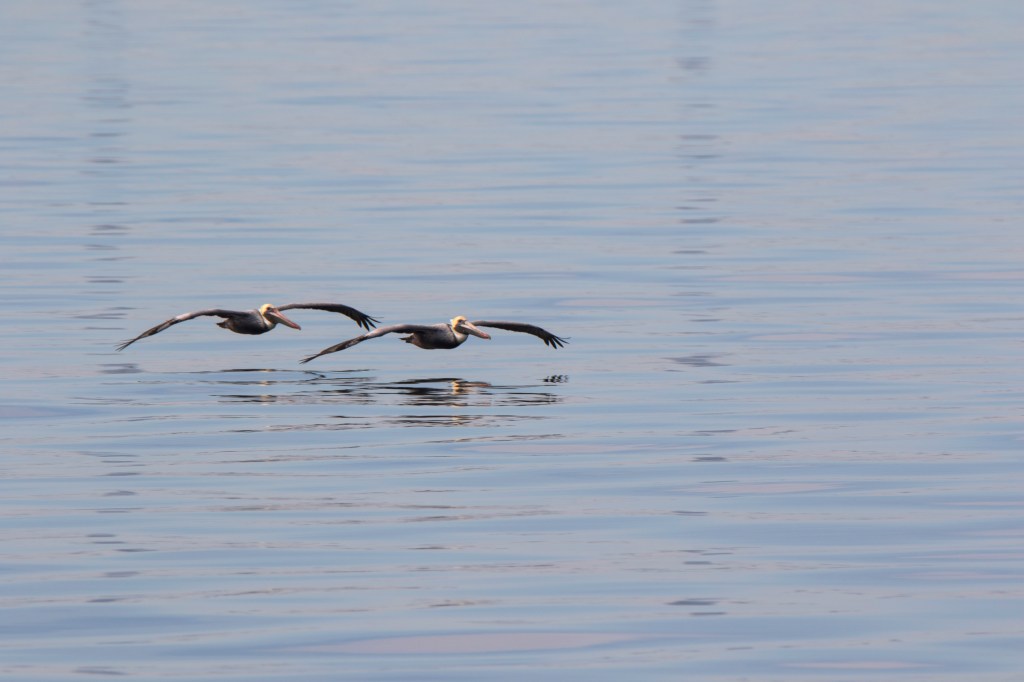
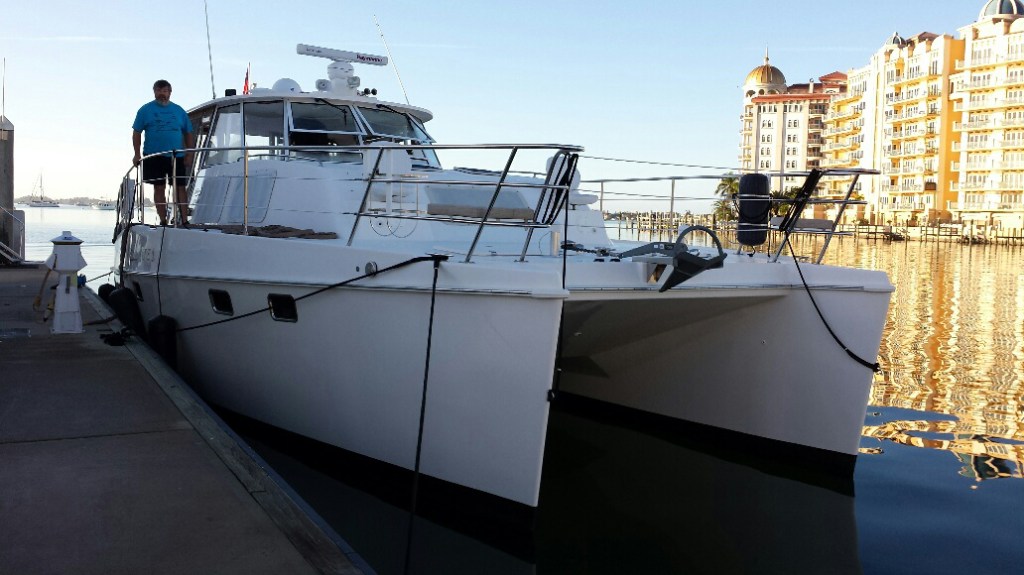
The next night was our first experience of anchoring on Nine Lives. Dick and I had anchored many times when we were sailing with Mum and Dad, and of course, anchoring was part of our ASA sailing courses. Fortunately, on this and all but one subsequent occasion, we had a nice electric windlass to help with dropping and raising the anchor. (our ASA course required each of us to raise and lower the anchor manually, easy enough for Dick, not quite such a simple endeavour for me!) Our anchorage was in Pelican Bay, off Cayo Costa, then and still today a favourite spot for Loopers. The next morning, Woody introduced us to his favourite breakfast spot, Cabbage Key Inn. I see from the Captain’s log that day the statement “dinghy won’t get out of forward gear”. I am sure there is a story to go with that, but I have no recollection of the incident. I do know that we must have dropped the dinghy into the water for the first time, and motored around the waters of the bay, perhaps stopping to chat with any Loopers anchored there. This was the first of many incidents and frustrations with that particular motor, and we were delighted to replace it a few years later, along with a new dinghy.

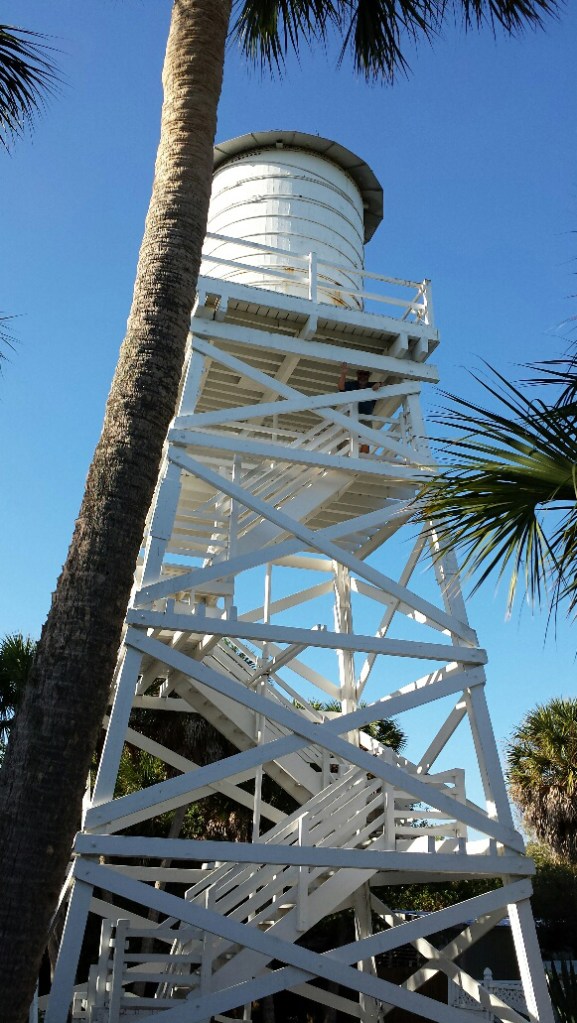
From Pelican Bay, after we stopped for breakfast, and Dick climbed the water tower, we headed to Legacy Harbour in Fort Meyers. I remember that this was the day that Woody handed the controls over to me at the helm and said, go ahead and dock her. He then disappeared below to make one of his endless phone calls to his lady friends. There was a pretty strong wind in the marina, and this was my first time manoeuvring Nine Lives in tight quarters. I remember feeling seriously panicky, and Dick was out on deck, so there was nobody to take over. Docking was successful however, with no bumps or scrapes.
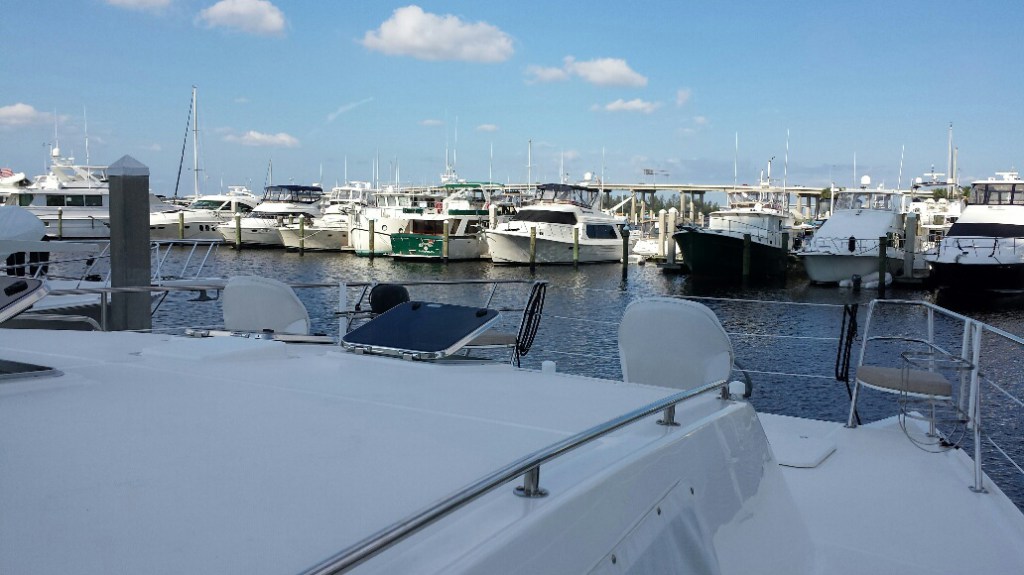
At some point we noticed that our shiny new AGLCA burgee was missing. The unfortunate conclusion was that clips on the antenna are simply not enough to hold a flag in any wind. We ordered a new burgee, and sourced proper flag poles for the bow rails.
From Fort Meyers we headed inland on the Caloosahatchee River and Canal to Roland Martin Marina in Clewiston, on the shore of Lake Okeechobee. Slightly disturbing instructions for the somewhat rustic marina include the suggestion that you do not let your pets go anywhere near the water, as it is well populated with alligators. As I recall, this was also one of the occasions that I enjoyed getting used to the galley and we ate on board. Captain Woody consulted his various weather apps, and advised us to get a very early start the next morning, in order to stay ahead of a forecast major windstorm. Lake Okeechobee is notoriously shallow, and being a fairly large body of water, when the wind blows it tends to pile the water up at one end and reduce the already shallow passage to a serious risk of running aground.


We left at 7:15 am, and had an uneventful crossing. It seemed misty, but in fact we were experiencing smoke from acres of sugar cane being burned in advance of spring planting. The smoke made everything filthy, including the ceiling of the cockpit, and every part of the boat and the cockpit needed major cleaning at our next stop. Our first lock experience on Nine Lives was uneventful. All those years of locking manually on the English canals stood us in good stead. We were tied up in Loggerhead Marina in Stuart by 2:30pm.
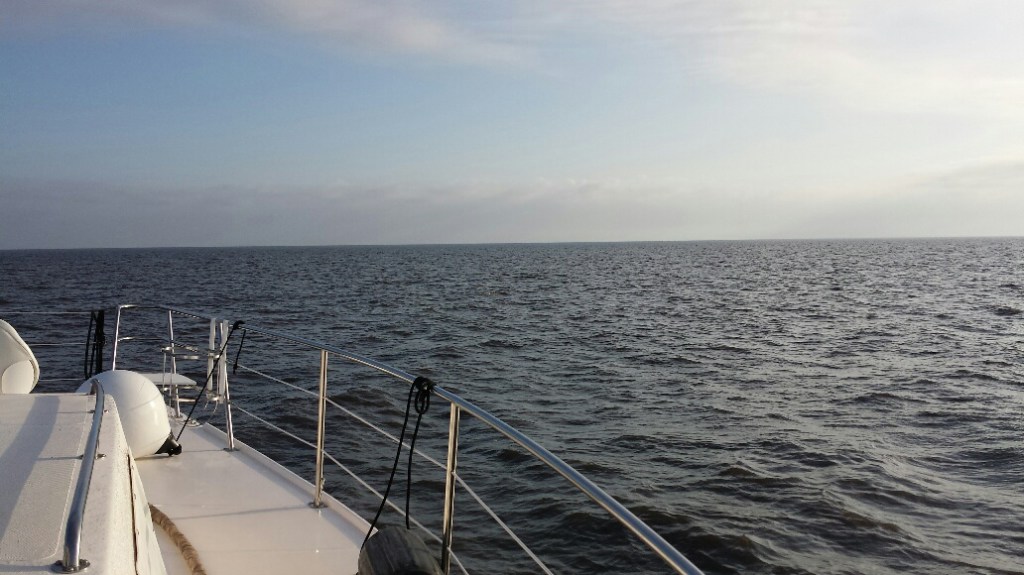
The next morning, disaster struck! The Cuisinart coffee maker that we had purchased for Nine Lives failed! This could have resulted in a very cranky crew, but fortunately the previous owner had left a French press on board, and it saved our morning. After that experience, no matter how much I might have wanted to make more space in the galley, I refused to dispose of the French press.
We also said goodbye to Captain Woody at Stuart, and from then on, we were on our own. Our first solo port of call was Sebastian River Marina, which is north of Vero Beach. There was a slight weather delay the next morning, due to mist, but we were still underway by 9am. Eventually, our normal leaving time would be 9am, but on this first voyage we were in what we refer to as “delivery mode”. In other words, we were moving as quickly as possible to get to our final destination, with only occasional time allowed for sightseeing, and no plans for fine dining experiences.

In Titusville, I was highly amused by our reception at the marina. I was at the helm, but Dick had made all the arrangements and the initial radio contact with the marina before handing over to me while he went forward to deal with the lines and fenders. Two dockhands waited for us on the docks. There was a visible reaction when they saw who was driving. You could see the wheels turning as they looked at each other and without saying anything, they clearly thought “Oh (expletive deleted), it’s a woman driving!” They briskly moved into position to try to fend off what they expected would be an inevitable crash into the dock and the pilings. I did not oblige, and the docking was just as smooth as anyone could wish. It was just slightly irritating to hear the well-meant but seriously insulting congratulations on doing a great job of bringing such a big boat into the admittedly narrow slip.
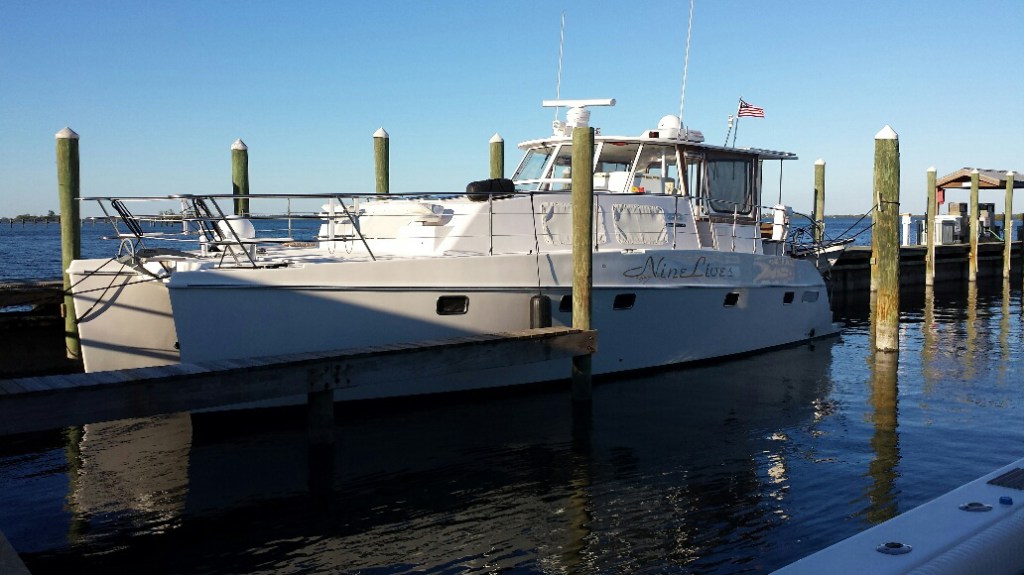
We had time to visit the local supermarket in Titusville. This was certainly not our favourite stop on the Great Loop. The area did not feel unsafe, but it was clearly a very deprived part of town. The supermarket was aimed at those on a very low budget. It was awful to see what is offered to people who struggle with their food budget. Everything was of the poorest possible quality, and yet the prices were not really any lower than any other supermarket. We bought the minimum that we could (and had to throw out the coffee a few days later, it was so awful). When we arrived at the checkout, they were unable to take a credit card, and had trouble figuring out how to accept cash, as they normally are paid with food stamps.

From Titusville, our next stop was Halifax Harbour Marina in Daytona, and from there we went to St Augustine, where we gave ourselves a well-deserved day of rest and time to explore what was to become one of our favourite cities. We loved the boutiques and galleries. In one of them we admired a beautiful lamp. After looking around the gallery, I was waiting in the entrance for Dick, when I realized that he had returned to that lamp. Then followed a fair amount of discussion, including a conversation with the artist, so that Dick could determine how the lamp was put together. The plan was to extend the rod that holds the parts of the lamp together up the middle, and drill a hole in the chart table, so that the lamp could be securely fixed to the chart table in the salon. Eventually, we left the shop with our prize, and it has provided a beautiful focal point in the salon for all these years. Ultimately, it will be brought home, and we will be keeping it as a permanent reminder of Nine Lives.
We left St Augustine on the 29th. That day was our first worrying experience. We had planned to stop at Amelia Island and stay in the marina at Fernandina Beach. At that time, we were still calling on the same day to marinas to make arrangements (we learned later to make reservations well ahead). Dick was told that not only was the marina closed, but they strongly advised against anchoring in the bay, or taking a mooring ball. Hurricane Matthew had been through in the previous autumn, and Florida (and Georgia) were still recovering. Docks had been trashed, and boats had sunk at anchor and not been retrieved. Amelia Island does have another marina, and they said they had space for us. Dick consulted them on the narrow channel leading off the ICW, and was assured that we would have no problem.
The channel is a sharp turn to starboard, immediately past a railway bridge. The pilings of the bridge create strong currents through that area, and it is also tidal. I was at the helm, and made three attempts to turn into the channel, running into the (fortunately mud) bank each time. I backed off and handed over to Dick, who had no better success. The problem was, Nine Lives, being a catamaran, has two hulls, widely spaced, whereas a monohull is V-shaped below. There was plenty of room in the narrow channel for a monohull, but not enough for our two hulls. We had to make a quick decision on an alternate destination, and chose St Marys, just a short run to the north and east.

The weather was blowing up as we came through St Marys Sound, and it was a somewhat lumpy ride. Behind us was a small sailboat. He did his best to keep in our wake and make his passage smoother, but he was plunging up and down and I was seriously worried about him until we eventually arrived in the calmer waters around the St Marys. The town docks were under water, so we could not tie up there as planned. There was a space available at the fishing docks, on the outside, between a large pleasure cruise boat and a sailboat. Once again, I made two attempts to bring Nine Lives into the small space, but with the wind blowing us around and concerns about hitting either the dock or one of the boats, I decided that Dick was going to have to do the honours.
I went out onto the deck, and had the line ready to throw over the cleat. The man from the sailboat came out onto the dock and held out his arms for me to throw him the line. As Dick brought Nine Lives in, we hit the dock, hard. I threw the line, and the man dropped his arms and stepped back away from the coil! As I quickly recoiled it, a fellow from a boat across the dock came out, and he was able to catch the second throw and secure us. That was the last time I willingly attempted to dock Nine Lives. Although I did have to take the helm for docking on a few subsequent occasions, it was my firm decision that if anyone was going to hit the dock it was going to be Captain Dick, and Captain Louise would wrangle lines and fenders.
The next stop was St Simons Island. I had hoped to anchor off Cumberland Island, but we were very much in delivery mode and there was no time. As we passed the Kings Bay Submarine Base, we were hailed by the Coast Guard. They asked us if we could go any faster than our current speed of about 7 knots. They advised us that if we could get out of the area within the next 20 minutes we could go ahead, otherwise we would have to heave to and wait for the submarine that was coming through. We pushed the throttles down and enjoyed a quick trip through the bay to get out of the way. We were joined for dinner at the marina in St Simons by our friend Karen. The marina had a great many interesting extras, including a courtesy car (that we did not use), excellent showers, and a morning paper and muffins delivered to the boat. We did not know about the muffins, but the gulls did, and they enjoyed the feast.
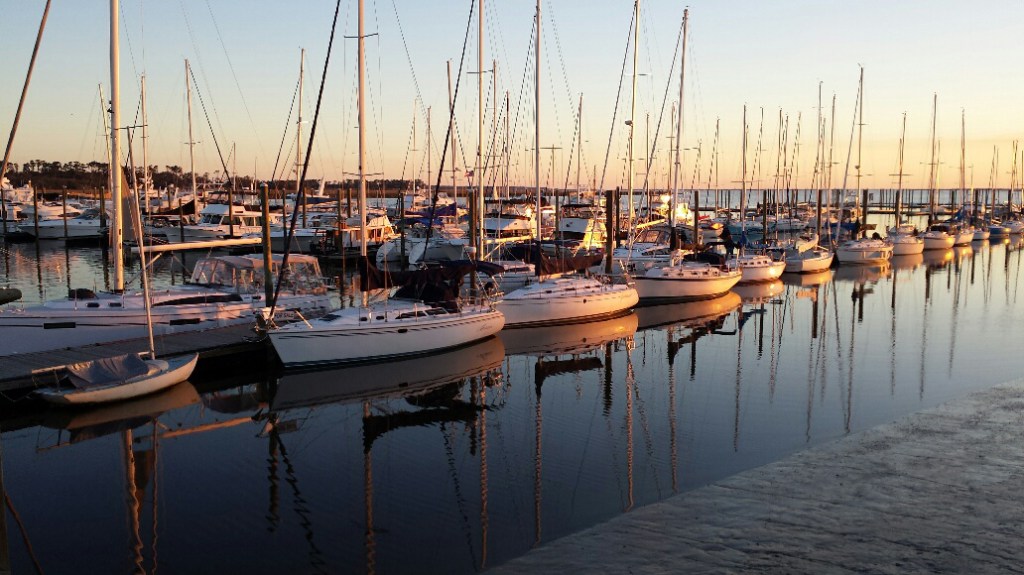
Our next night was a planned anchorage in Walburg Creek. I thought it was a rather open area, and I was very unhappy with the choice, especially after I read a warning that shrimp boats come through there during the night. I was unaware that it was not the shrimp fishing season, so I did not need to worry. We use our anchor light of course, and all commercial traffic is supposed to use radar and should see us anyway, but this was our first night alone at anchor, and I was nervous. In fact, I am nearly always a bit concerned the first time we anchor somewhere. I worry (unnecessarily, Dick says) about the anchor dragging, and whether other boats will be paying attention and see us. This was also the first night that we ran the generator overnight, as it was quite chilly and we needed the heating on. Dick found the generator noisy.
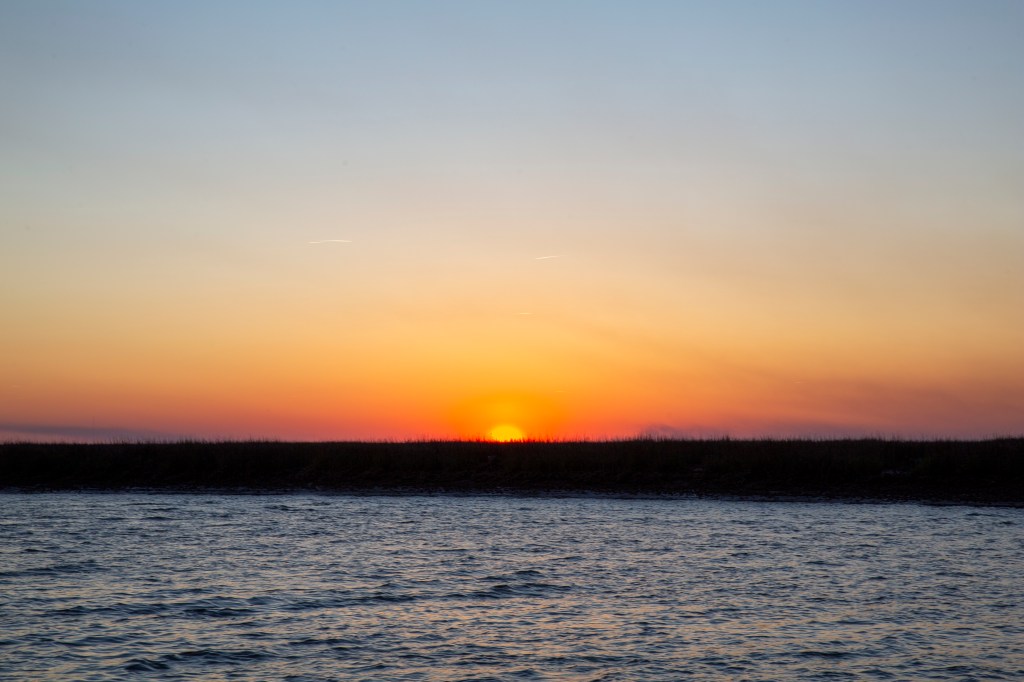
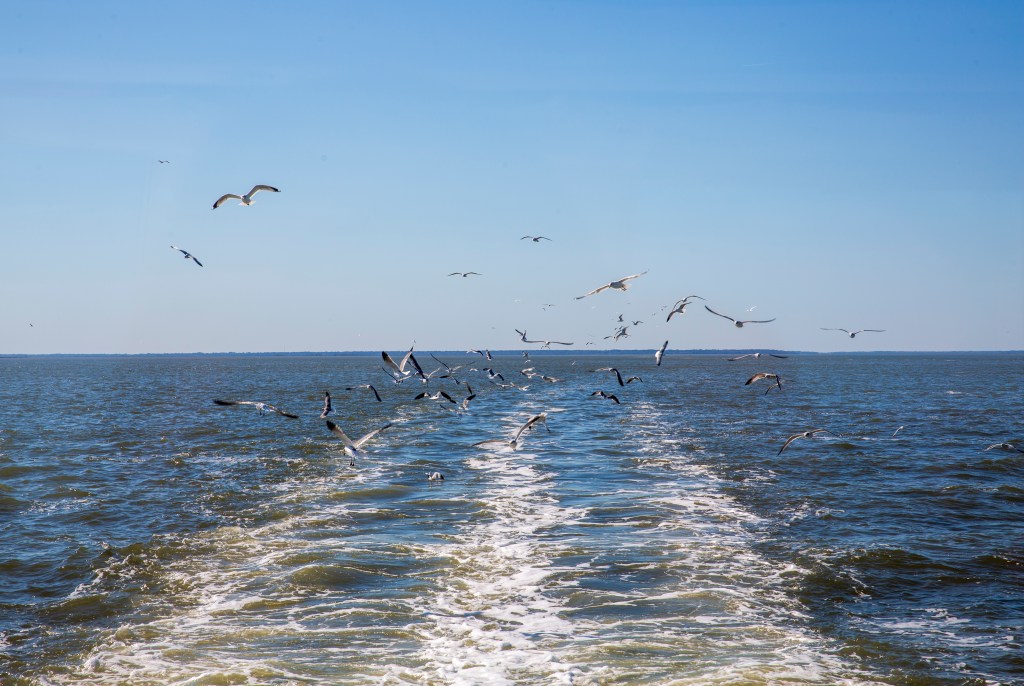
Our last night of the maiden voyage was at Thunderbolt, which is on the outskirts of Savannah. Here we filled up with diesel again, and I see from the Captain’s log that Dick made a calculation and determined that we averaged 2.373 mpg on that journey.
On February 2nd, we brought Nine Lives home to Hilton Head and our dock in Wexford. The waters around Daufuskie Island are quite shallow, and Dick noted that he needed to keep the speed up somewhat faster than preferred, to handle the wind and currents. We just fit into Wexford lock, with inches to spare on each side. Fortunately, there are rubber bumpers along the sides of the lock, so we had no scrapes, just the first of many black marks along the hull. Docking at our own dock behind our house was simple compared to some of our experiences on that trip, and we secured Nine Lives and breathed a sigh of relief that we had successfully brought her home.
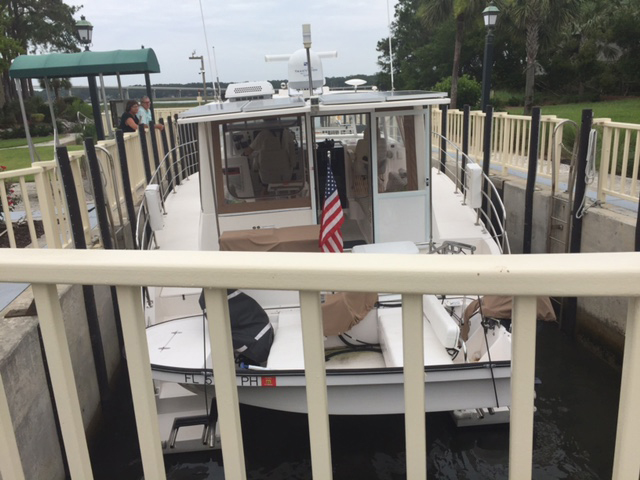
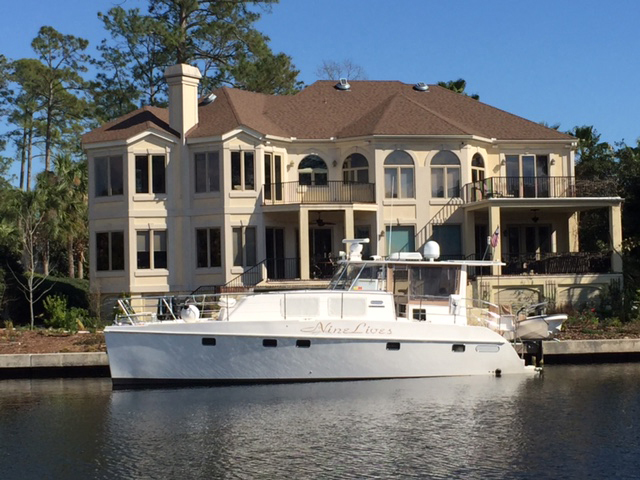

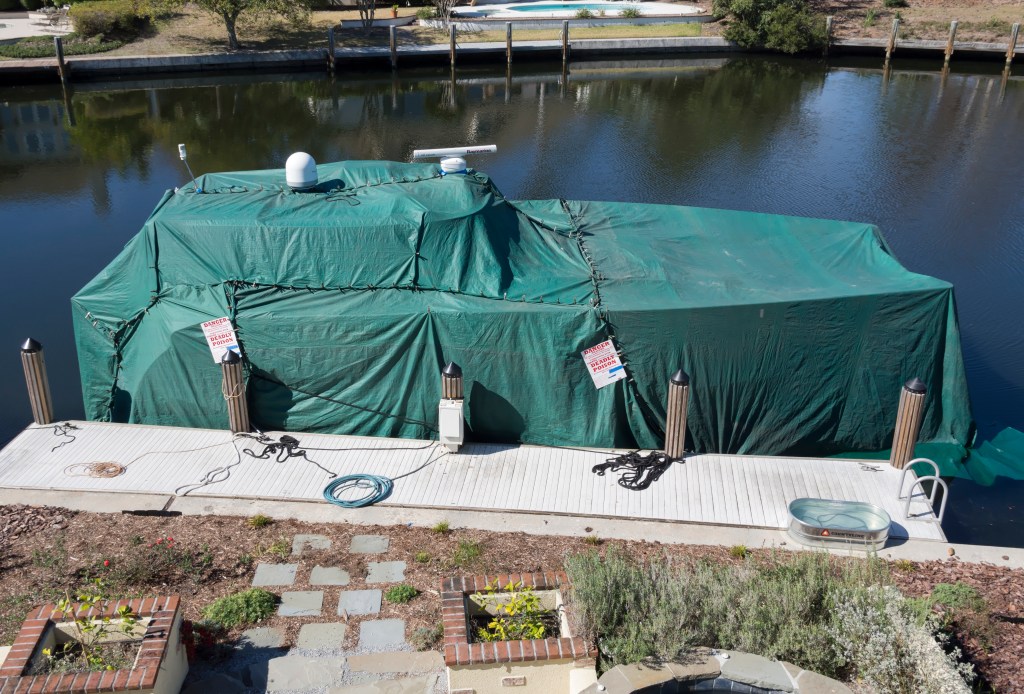
Over the next few months, we made several short trips in local waters. We dealt with an infestation of termites (!) that Nine Lives had picked up when she was docked at the Endeavour boatyard. In addition to building Trawlercats, they also specialized in repair and maintenance of large wooden boats, and it is certain that the termites came from a “pirate ship” that was in for repair. Bob Vincent told us that the other TC44 that we had looked at also picked up some of the small and very unwelcome passengers. Nine Lives was covered all over and to the waterline with an huge green tarp, to the dismay of our good friend who lives across the canal. She thought we were having a very ugly custom cover made. All food, including cans, had to be removed, and the interior was thoroughly sprayed and then left for a few days. We saw no more evidence of termites after the procedure was complete (and our friend was very glad to see the green tarp disappear).
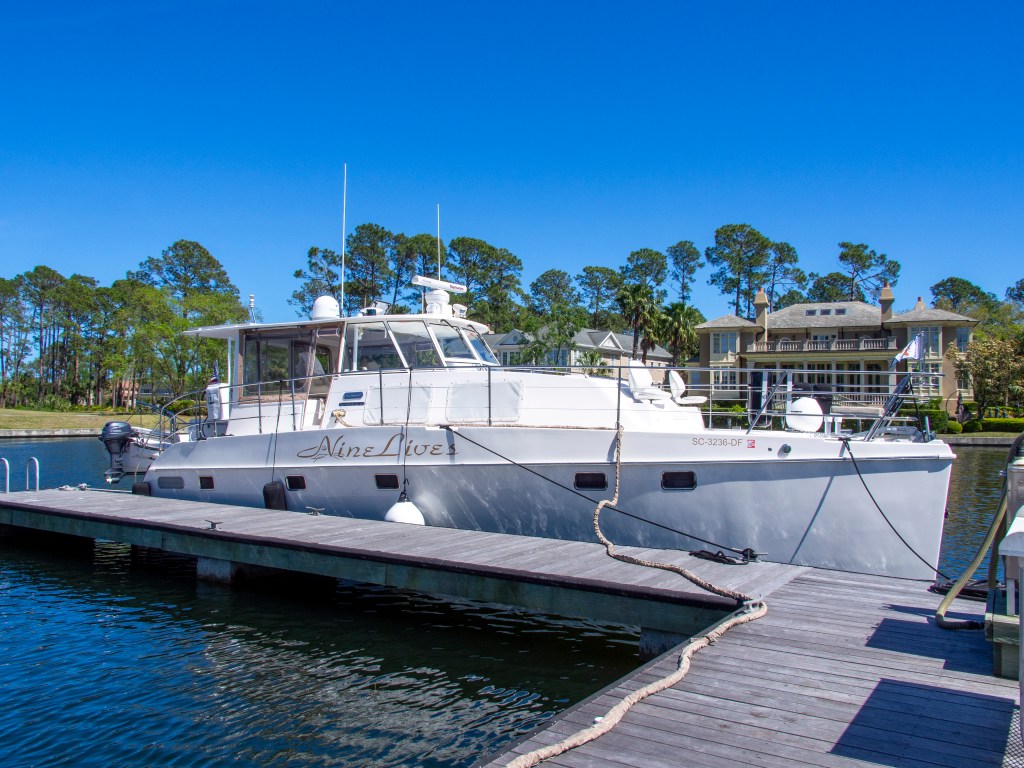
We participated in the new boat welcome to Wexford Harbour, and Nine Lives had her bow christened with bubbly. We were glad to entertain our friends on board during the party.
We had other travel planned for 2017, but in the meantime, Dick put together the plans for what he considered our “shakedown cruise” in the summer. Only Dick would consider 3000 miles a shakedown cruise!
 The Voyages of Nine Lives