
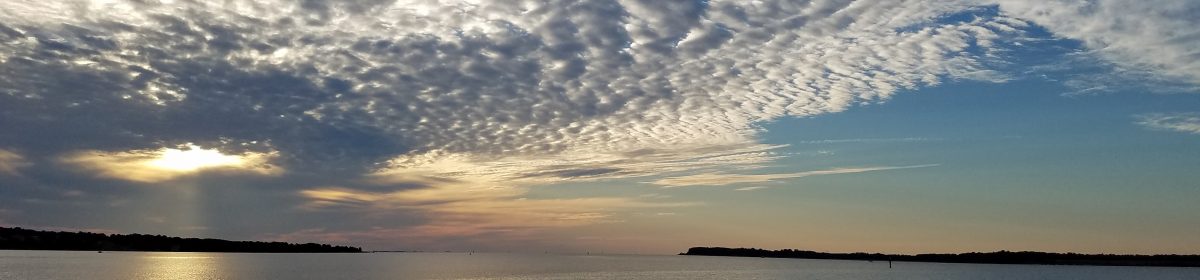
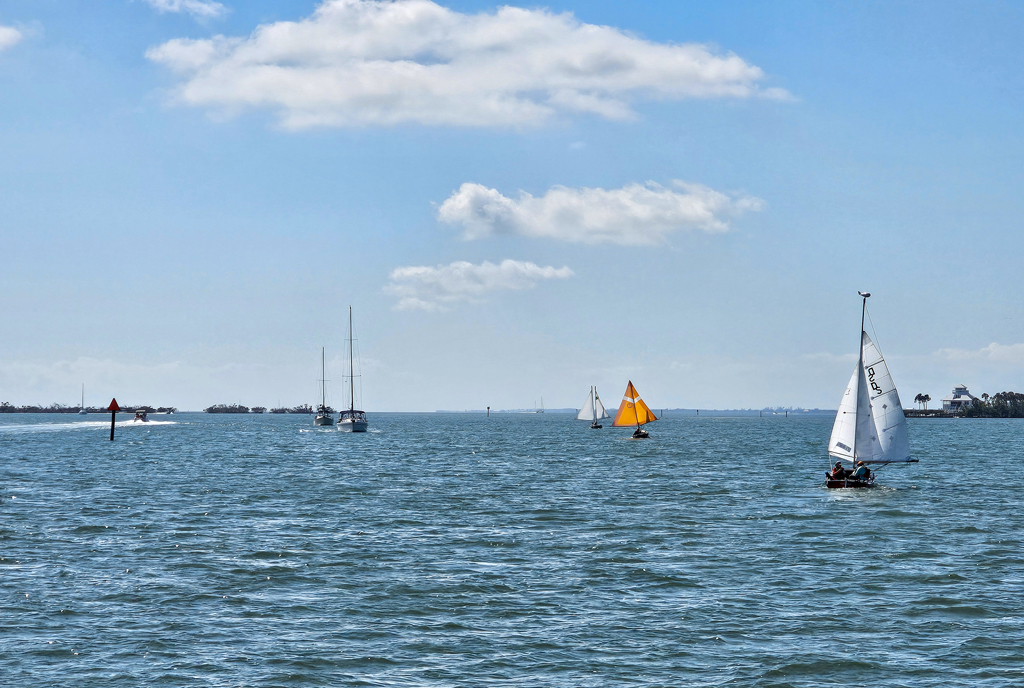
Our trip across Tampa Bay to St Petersburg was uneventful and far more pleasant that the previous crossing. We encountered a huge tow that took up the entire shipping channel, but there was plenty of water depth in the Bay, so we simply moved out of the way (the law of gross tonnage trumps all questions of right of way!) As we neared St Petersburg, we saw several groups of dinghy sailboats, some racing, some obviously practicing their turns, but they were well off the channel.


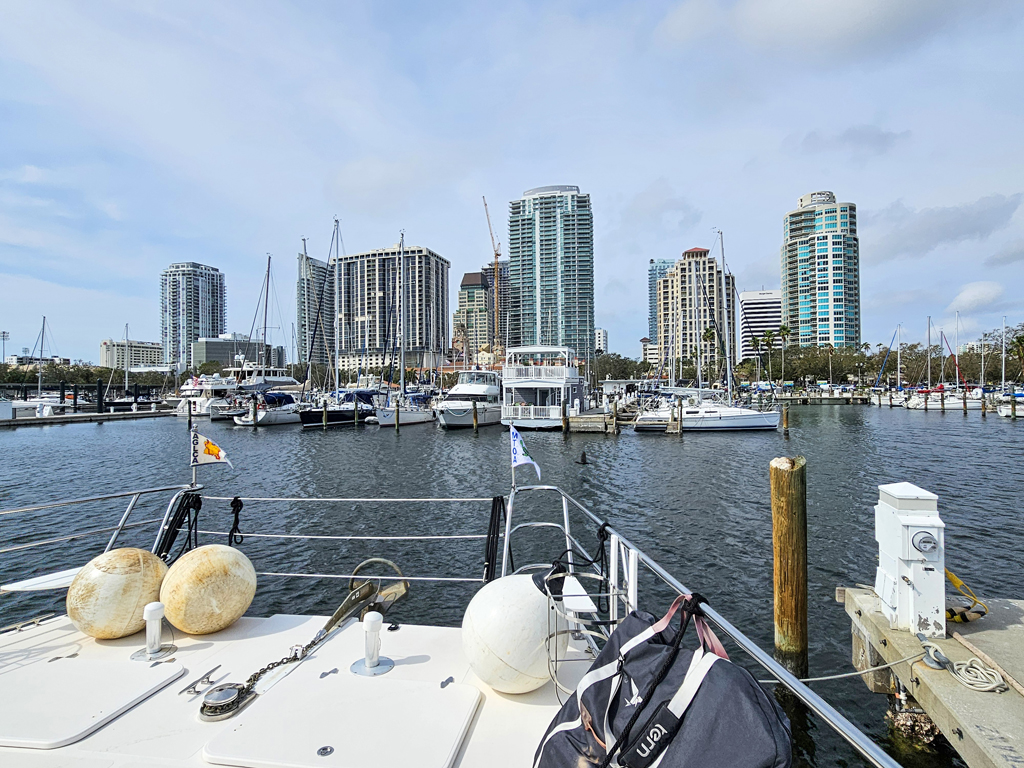
The marina is in the centre of downtown St Petersburg, a huge facility that occupies 3 large basins. High rises line the waterfront, and there is a great choice of restaurants of all styles and price points within easy walking distance.
The marina is very well run. The dockmaster called in the morning to confirm our arrival time, our slip assignment, and to make sure we had all the information we needed. This is very unusual, Dick normally has to phone to confirm and ask the pertinent questions. When we arrived at the pump out dock, they were ready to help tie up, and while we pumped out, the dockmaster went to our slip across the basin so he was waiting to catch our lines.
The facility is still recovering from the hurricanes, and their main building was destroyed, but they have adapted well and the dockmaster had all the paperwork and key cards ready to hand us, rather than making Dick walk the ¾ mile each way to the temporary office. The docks are wide, sturdy concrete with good pilings, but as they are fixed rather than floating, it is necessary to take the tide into account when tying up. The dockmaster warned us that there “is a pretty good tide here”, telling us that the change is about 2 feet. We chuckled and told him that we deal with 9-foot tides in our home waters. In fact, we always tie up with spring lines and lines across that can account for change in water levels, even on rivers. Many Loopers whose boating experience does not include tidal waters have to learn some new skills and procedures when they arrive in the Gulf.
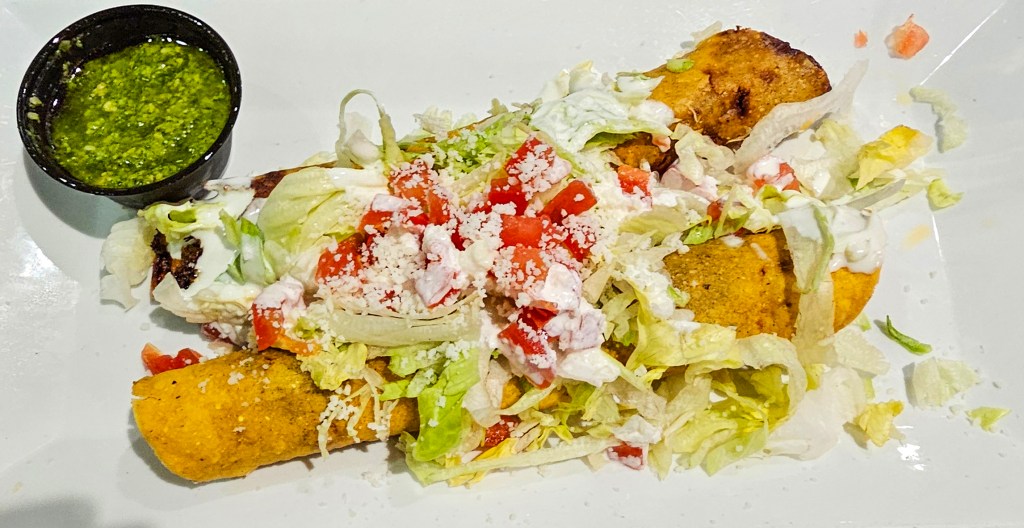
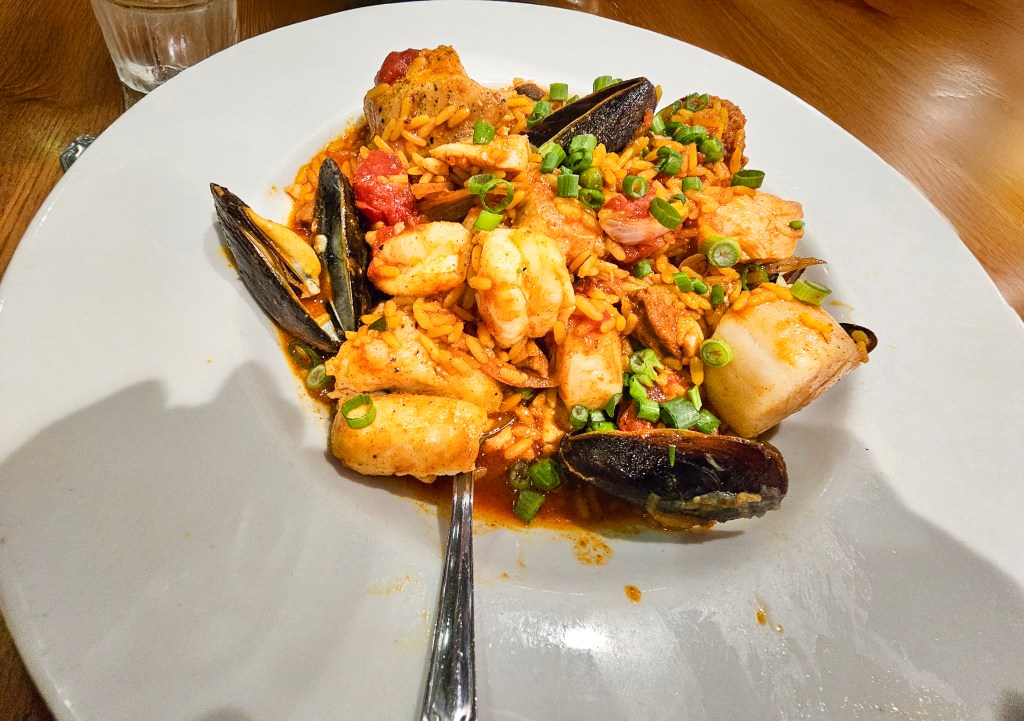
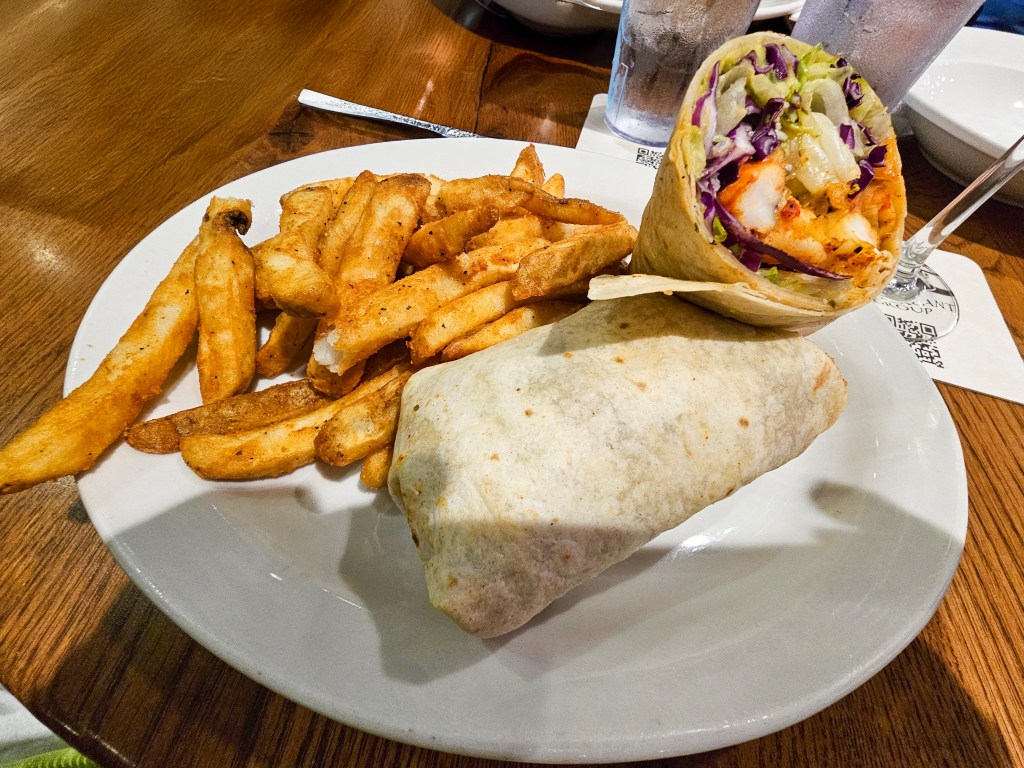
Our friend Kim was unable to meet us for dinner as planned, so we cancelled our reservation at a rather trendy eatery at the end of the pier, and opted for Doc Ford’s. The story of the restaurant is interesting. It is owned by the writer of a popular series of books that feature the character Marion “Doc” Ford, a marine biologist and environmental consultant. Dick always enjoys calamari, and my Tomlinson’s Taquitos were a delicious concoction of spicy shredded chicken in corn tortillas. One was plenty, so the second made a great lunch for Dick, the leftover king. For main courses, Dick’s paella was very good, and I loved my wrap with spicy grilled shrimp accompanied by some of the best fries we have eaten. Even though the restaurant was incredibly crowded and so noisy you had to shout to be heard, all the food was piping hot and timely, and the waiter made a point of not neglecting his smaller tables while looking after the very large groups in his area. We would certainly return.
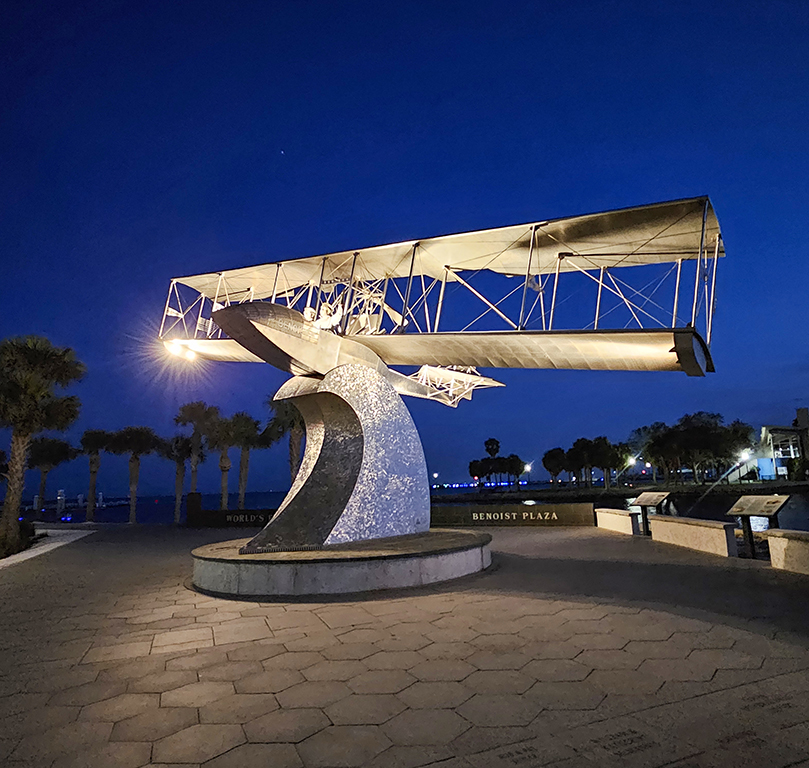
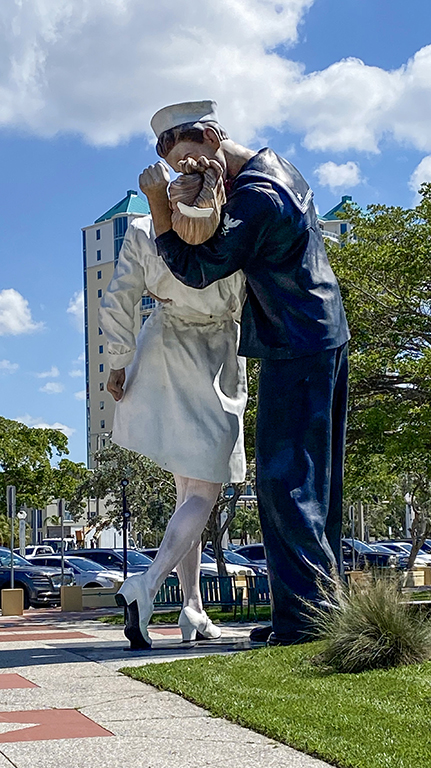
Beside the restaurant is an interesting sculpture to commemorate the world’s first commercial airline flight in 1914 on a Benoist Airboat. The stainless steel sculpture is a full scale replica of the airboat. St Petersburg considers itself the birthplace of commercial aviation, and the sculpture is on the site of the hangar used for the airline. That first flight was to Tampa, taken by the then mayor of St Petersburg, at a cost of $400, equal to about $12,624 today.

The next day Dick shopped for party food and ingredients, and also some disposable champagne flutes. I did part of the preparation, including making up a delicious dip, appropriately called “boat dip”.
In the evening, we donned our bright yellow, waterproof jackets and got ready to walk over to a very nice Italian restaurant to meet Kim. Dick paused to make repairs when we discovered that one of the lines to the fender board had snapped, so I was first at the restaurant. Shortly after I was seated, Dick arrived, and just said to the hostess, “I’m the other canary”. She knew immediately who he was with! Kim arrived after finding scarce parking, and we had a great evening catching up on each other’s news.
The next day I continued with party preparation, while Dick took the dinghy across to the fuel dock to fill the tank. The plan was to anchor one night, and then we would be 4 nights on a mooring ball in Sarasota, so the dinghy was about to play an important role. The battery was flat, but Dick has a charger on board, so that problem was soon solved.

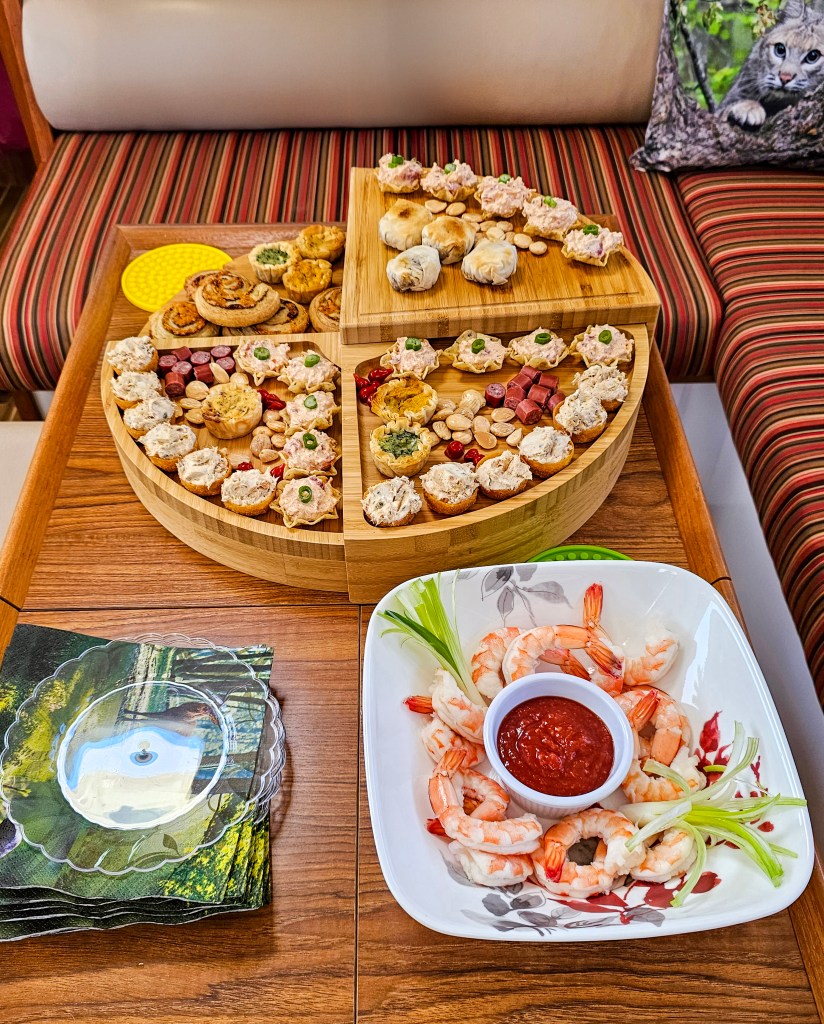
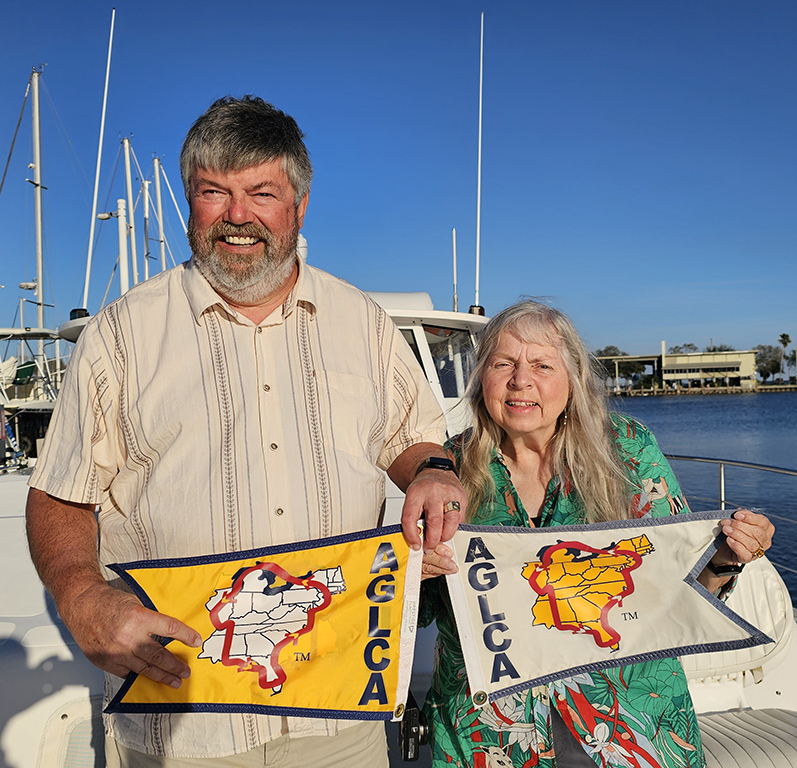
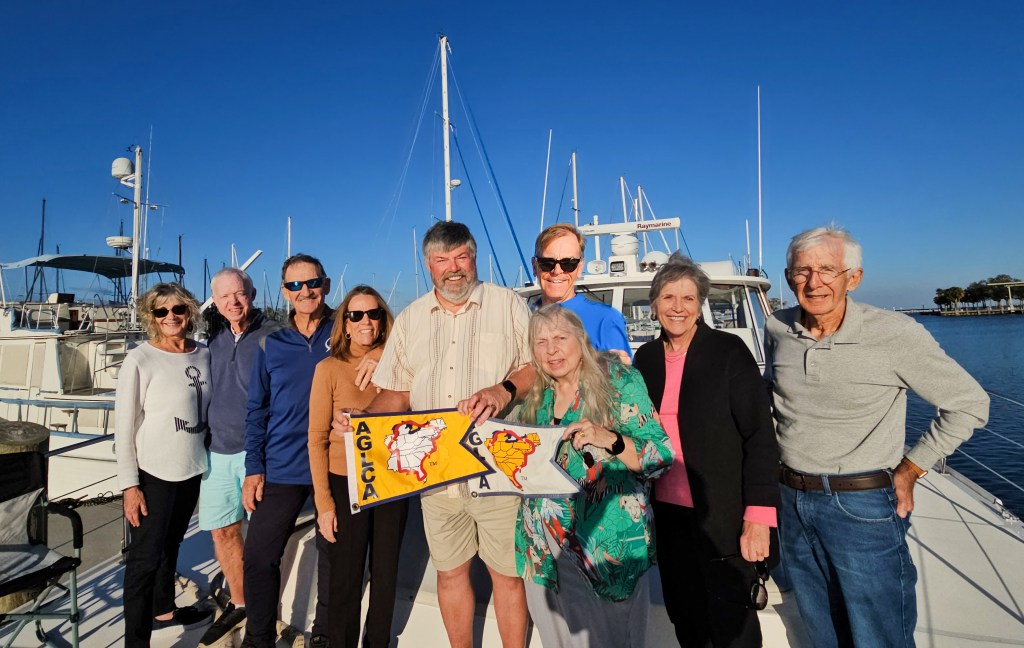
Kim arrived mid-afternoon, and helped me set out the special nibbles on various platters. The boat dip was spooned into tortilla scoops. This was a new recipe, and is definitely a keeper. Sour cream, a can of chopped tomatoes with peppers and onion (Rotel), an envelope each of ranch dressing mix and taco seasoning, and a bag of shredded cheddar jack cheese combine to make a spicy and very moreish dip. I also mixed smoked salmon with onion chive cream cheese to fill tiny pastry cups. We had brought frozen bite sized quiches and raspberry brie parcels, and I had made spiced palmiers. Dick bought cooked shrimp, that were served in a large bowl with cocktail sauce for dipping. I scattered Marconi almonds and tiny pepper drops around the platters, plus some chopped snacking buffalo sausage. Having prepared and set out enough food to feed the entire marina, I was happy that the guests munched and enjoyed the food, along with beer, wine, fizzy drinks, and of course the champagne for toasting Nine Lives and our shiny new gold burgee.
The guests were some of our oldest friends. Three were at our renaming party in 2017 when we began the Loop. The group included some of Dick’s former colleagues from Toronto and Calgary, a friend he played ice hockey with, and a slightly more recent colleague from the times after the joint venture. Julian helped us out in a big way by receiving a bunch of Amazon orders, as well as the critically important gold burgee, and bringing it all to us for the party. Marina offices will receive mail and parcels, but it can be somewhat hit and miss, so we were so glad to have a friend to accept important deliveries.
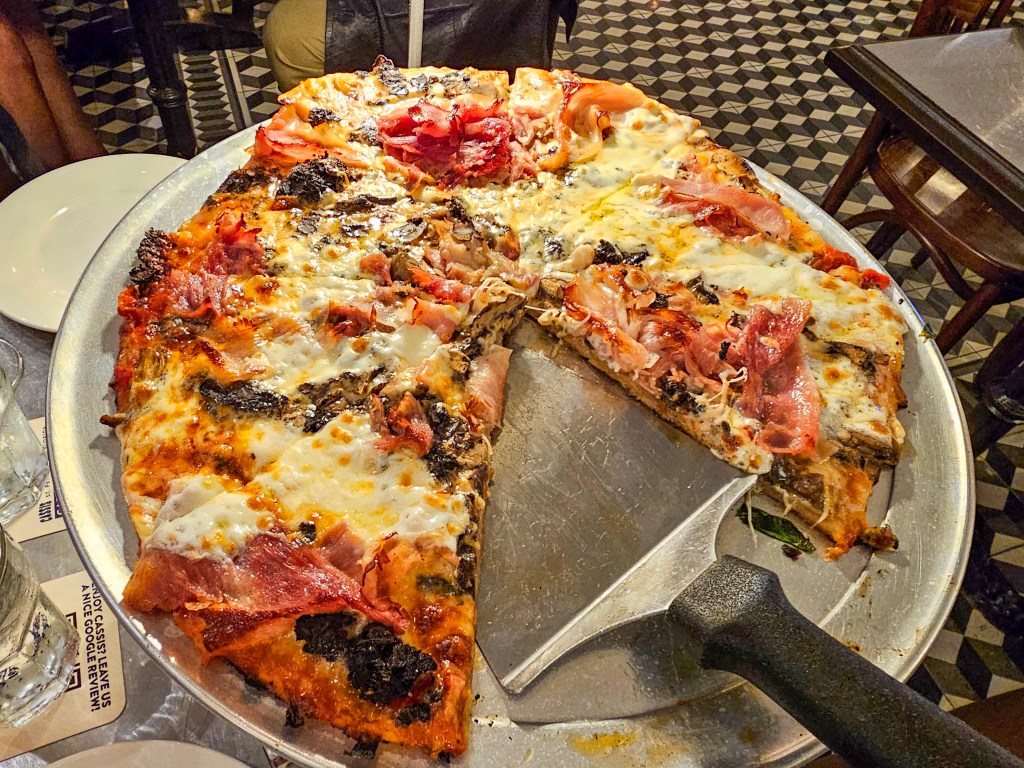
After a quiet day, (Dick rode his bike to Fresh Market to pick up a few groceries), we walked over to Cassis for a very nice dinner. The only downside was that they were having their outside doors repainted, so the large double entrance doors needed to stay open. It was quite chilly outside, so there was a tremendous cold draft that took all the heat off the food very quickly.
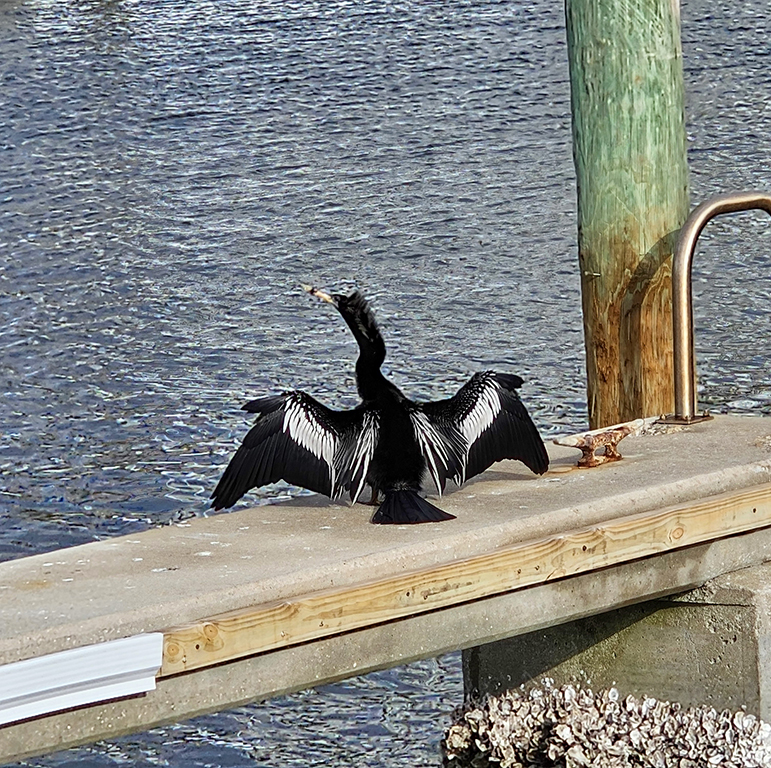
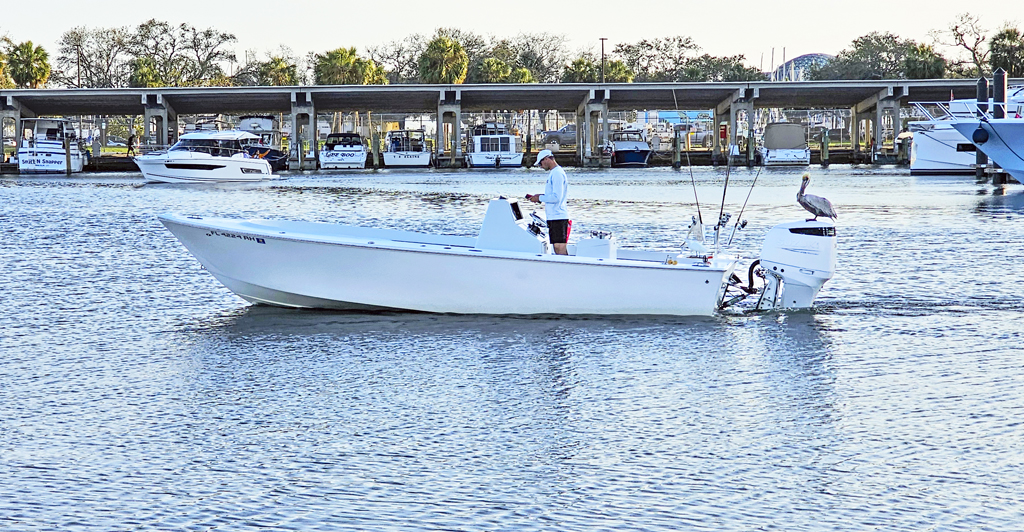

We left St Petersburg at 11am. It was lumpy again in Tampa Bay, but once we passed under the Sunshine Skyway Bridge it smoothed out. From there until we anchored, we only had to deal with wakes from weekend pleasure boats. The anchorage Dick had chosen had poor and out of date reviews. I looked at every possibility south of that one, and we chose Whale Kay, off Longboat Key and across from Sarasota. We crept into the anchorage very slowly, seeing less than 5 feet under the keel before it got a little deeper (8 feet) in the middle of the bay. It felt as though we were out in the middle of Sarasota Bay, but in fact it was a very protected area. Just one derelict boat, clearly dragged onto a sand bar from the hurricanes, and a few crab pots were present in the wide anchorage. There was a glorious sunset to begin a very peaceful night.


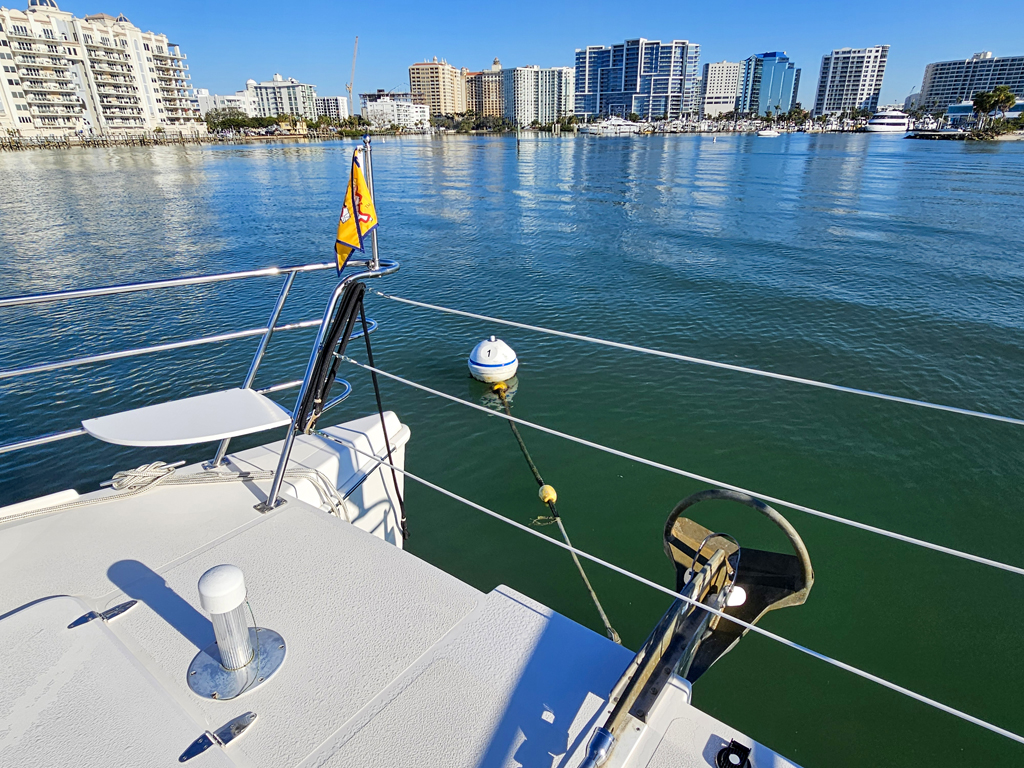
We were only 5 miles north of Sarasota, our next stop, so there was time for Dick’s signature full English breakfast. On arrival at Sarasota, we were reminded of the reason why it is best to stay put on weekends, as a guy in a large cruiser whipped past us very close and at high speed to beat us to the fuel dock, his wake throwing us from side to side. After a long wait it was our turn on the dock, so we topped up with fresh water, then collected our key to the restroom and security gates, and our mooring ball assignment. We were delighted to learn that we were number 1 (not that we ever doubted). This meant that we were the closest ball to the marina, with the smallest wakes and an easy distance to watch the comings and goings of the busy harbour.
Although it is some years since we have used a mooring ball (not since our sailing days with my parents), we were very pleased to accomplish the maneuver without drama. Dick caught the pendant with the boathook on the first pass, and he was ready with two lines to pull through the eye and back to Nine Lives. Another day I watched people on a sailing cat fail to catch the pendant, requiring a big reposition and two tries to catch it. One generally expects greater expertise from sailors. Of course, stuff happens, and until we are done with mooring balls, I should touch wood and stop gloating!
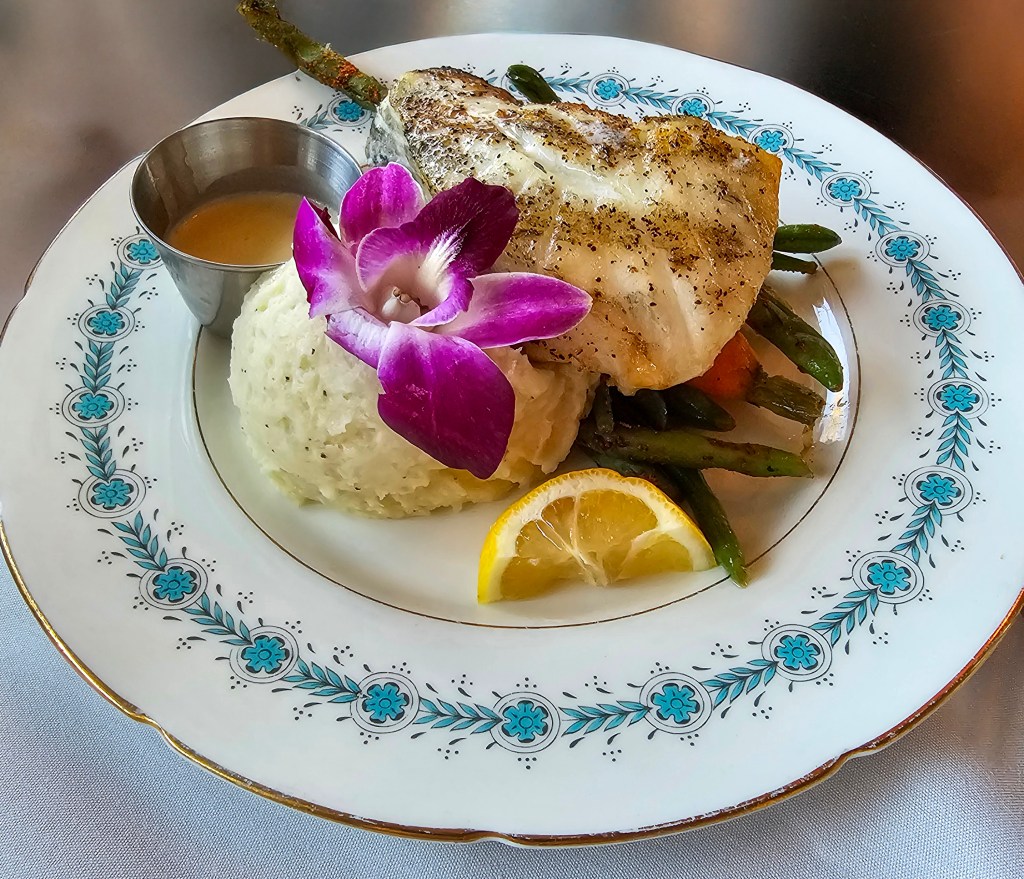
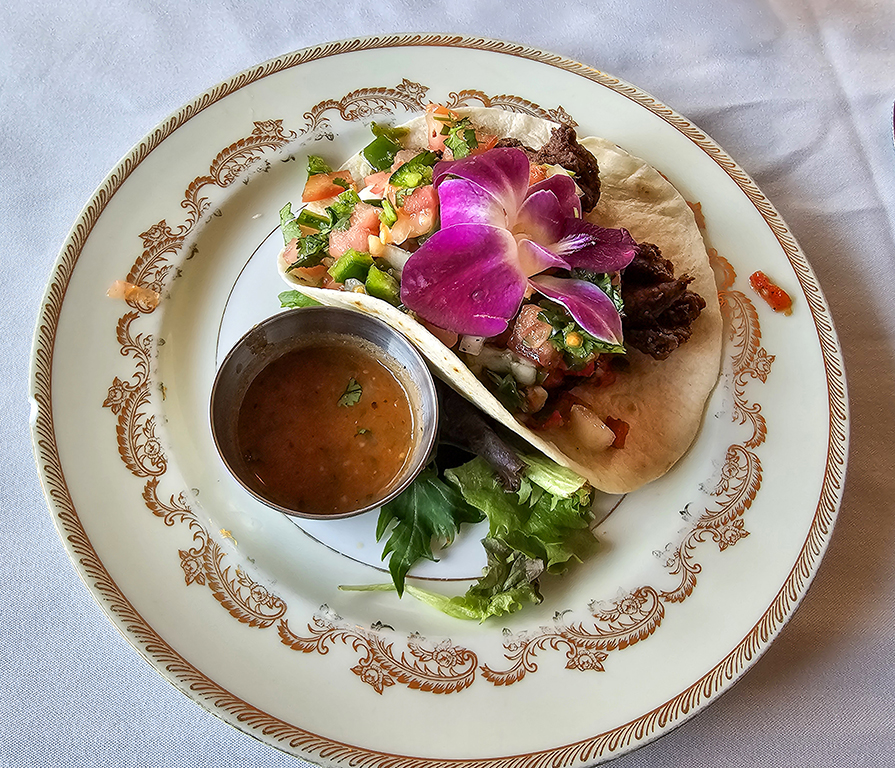
We had an early dinner reservation at a restaurant called Rosemary and Thyme. It was a mile walk on a hot afternoon, but it was definitely worth it. The restaurant is in a beautiful, sympathetically renovated old building, with a huge outdoor patio area. By 5pm it was nearly full, testament to the excellent food and impeccable service. I was charmed by the mismatched old china they use instead of new and matching (or, horrors, slates and bits of wood as were trendy a year or so ago). Dick started with a fish chowder, and I enjoyed a delicious shrimp tostada. Dick chose the halibut special for main course, while I opted for a second starter, sliced beef filet, breaded and fried, served with pico de gallo on a crisp tortilla. Desserts were also excellent, and a reasonable individual portion-size for a change. The walk back to the marina was interesting, taking a different route through downtown. I was surprised at the numbers of people in the many restaurants, on a Sunday night, almost every table in their outdoor areas was full.

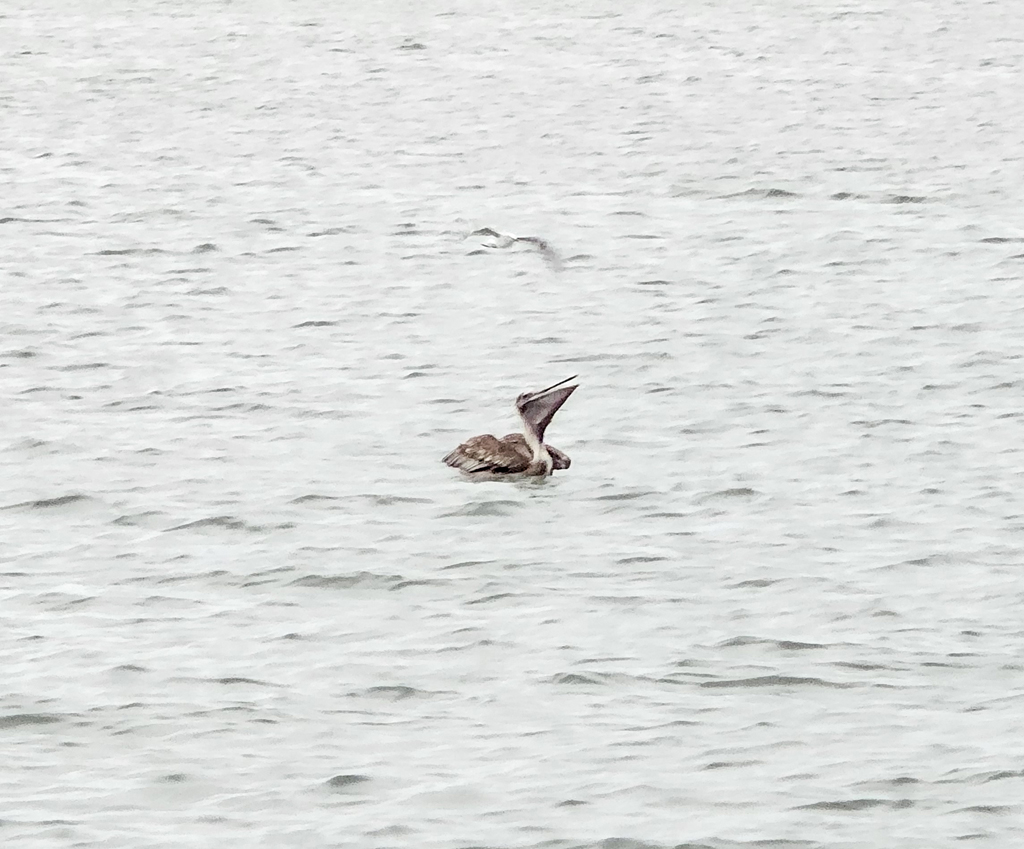
We spent the next, rainy, day on board. I baked a batch of bran muffins, and Dick worked on reservations for the next couple of weeks for marinas and restaurants. We also prepared responses to questions for a podcast on segment looping for AGLCA. In the evening, as we sipped our pre-dinner cocktail, we found we were surrounded by pelicans fishing by diving. It is amazing to watch. They soar over the water, about 30 feet up, and suddenly, they dive straight down into the water, 80% of the time coming up with a fish. They pause with their bill in the water. I am guessing this is to orient the captured prey in the right direction, and then they lift their heads up and swallow the fish whole. We watched this behaviour for the first time more than 20 years ago on a sailing trip in a remote bay in the Caribbean, but we have not seen it since. After less than an hour, the fishing session was over, and the pelicans disappeared at dusk.

As the evening progressed, the rain became heavier. Later, the wind came up, and Nine Lives transformed into a flamenco dancer, sliding back and forth through 180 degrees, and bouncing on the pendant of the mooring ball with loud noises, accompanied by rhythmic slapping of the waves and rocking from side to side. Soon, the rotating became so fast that it was making me dizzy, so I retired early to bed and spent the night listening as the storm came up and retreated several times. The rain was biblical, and with the strong wind, water leaked through some of the tiny gaps in the cockpit enclosure and there were small puddles here and there in the morning. We were very glad we were on a secure mooring ball instead of at anchor. Even our trusty Rocna might have had difficulty holding as the wind blew us back and forth.
The next day was quieter and mostly sunny, but still a bit rough, making it exciting for getting into and out of the dinghy. We met Betty and Cathie for lunch at the marina restaurant. It was great to see them and be able to wish Betty a Happy Birthday in person, just a few days early. After dropping me back on Nine Lives, Dick walked to Whole Foods with his Burleigh cart, so he could stock up on heavy items like sparkling water and potatoes.
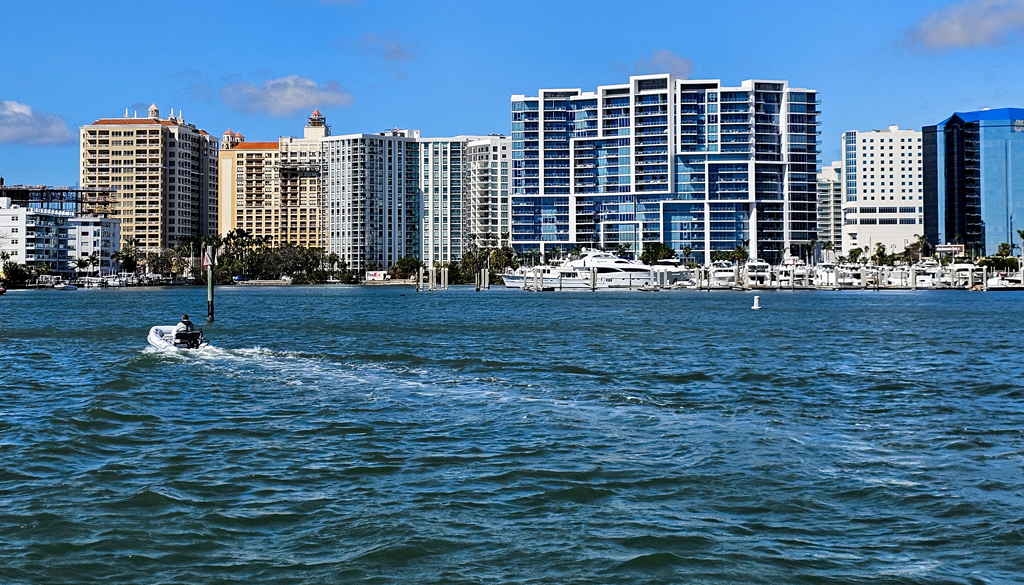
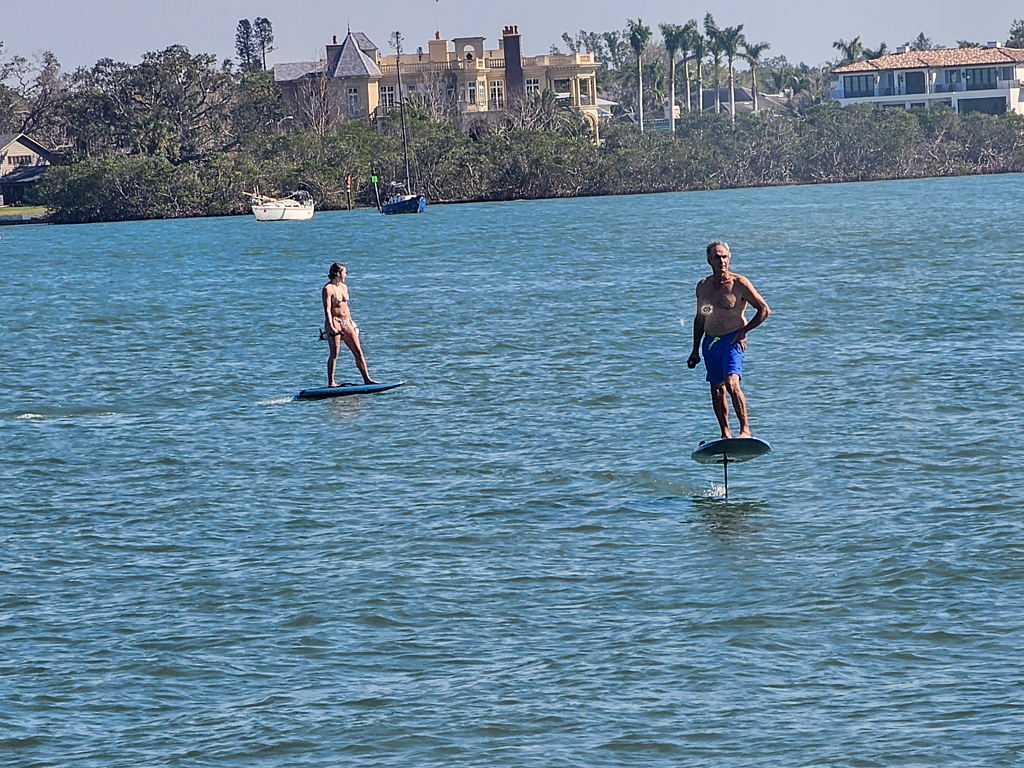
The next morning, we launched the dinghy again and toured around the mooring field and the marina. Some boats have clearly been there for some months, even since the hurricane, given the amount of marine growth on the hulls and the torn sails. There are one or two boats stranded on the shore, but no wrecks in the harbour, so either they have been lifted, or none sank. Dick walked to Publix while I watched the boat traffic. I was fascinated by a couple who anchored beside us and then proceeded to race all around the harbour on e-foils. These are like a small surfboard, with a long keel with wings at the bottom and a motor. One stands on the board and the motor pushes the board (fast). The board lifts right out of the water like a hydrofoil, using the wings on the bottom. The rider holds a remote that controls the motor beneath. When the pair returned to their boat after more than an hour of whizzing about, I was surprised at how large and obviously heavy these things are. Clearly a lot of skill and good balance are required.
Around 4pm we launched the dinghy and headed out to dinner. I will be quite happy if we don’t need to do this again on the voyage. It is hard enough balancing in calm waters, but with the dinghy dancing around it is a recipe for an unplanned swim. The first time we did this from the mooring ball, Dick stood in the dinghy to help me get in. A wave lifted it, and he adjusted his balance suddenly, nearly throwing me overboard! After that, the procedure was for him to sit down, and I kept one hand on a fixed part of Nine Lives until I was safely in the dinghy. (for those of you that wonder, we do both wear life jackets when using the dinghy)

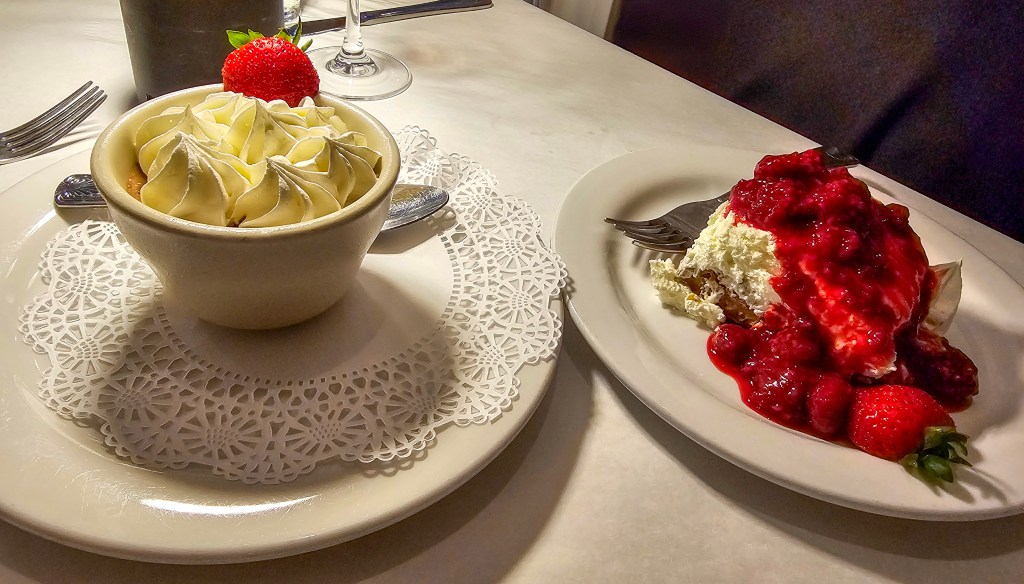
Dinner was incredible, unquestionably our best meal so far. Antoines is a tiny French restaurant located in an unprepossessing strip mall, owned by a Belgian gentleman (a real character, with a Hercule Poirot mustache!) and his chef wife. The food is amazing. Before our appetizers arrived, we were brought tiny amuse bouche bowls of delicious pureed vegetable soup. These were accompanied by fresh rolls and butter that was carved into an exquisite flower shape. My garlic mushrooms were perfect, as were Dick’s authentically garlicky escargot. I ordered the evening special lobster ravioli in lobster sauce, and Dick chose a delicious black grouper. Desserts lived up to the rest of the meal, my chocolate mousse was excellent, as was Dick’s favourite profiteroles. We accompanied the meal with a very good bottle of Sancerre.
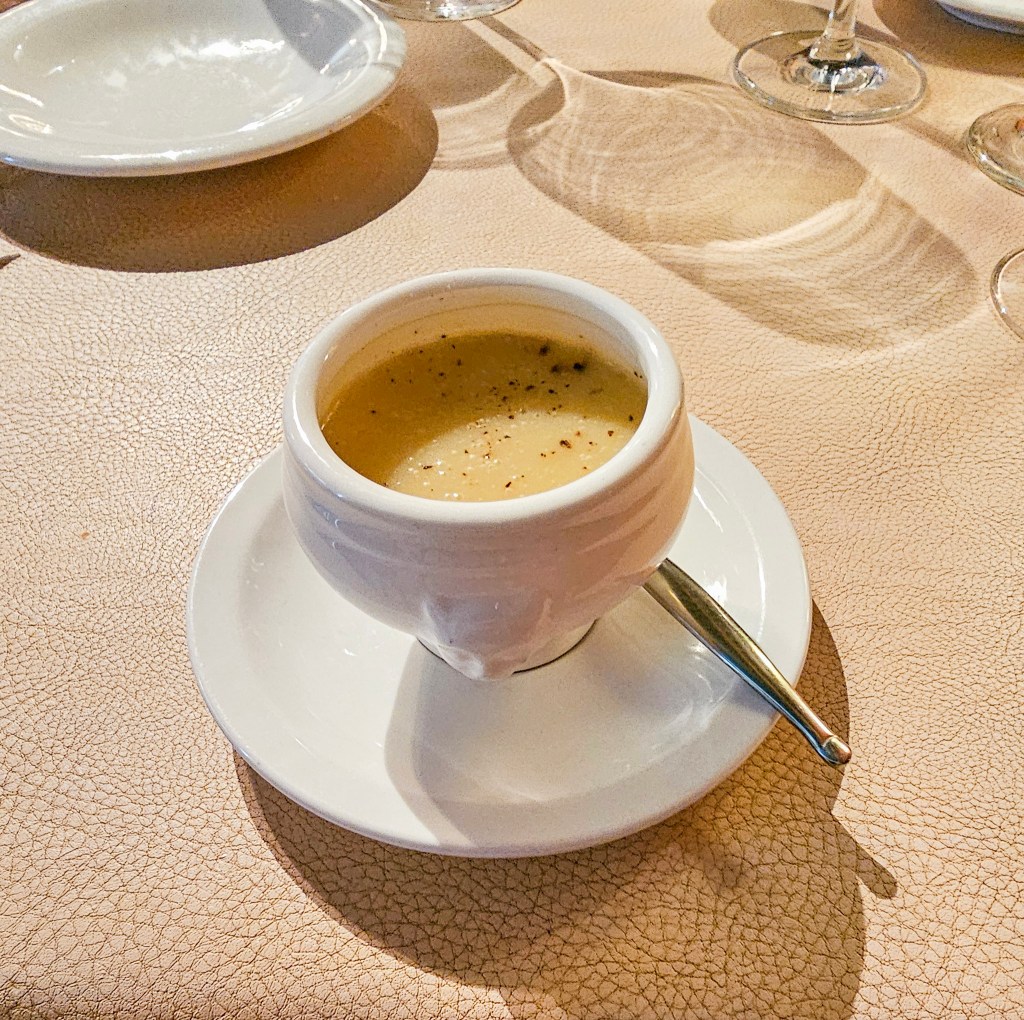
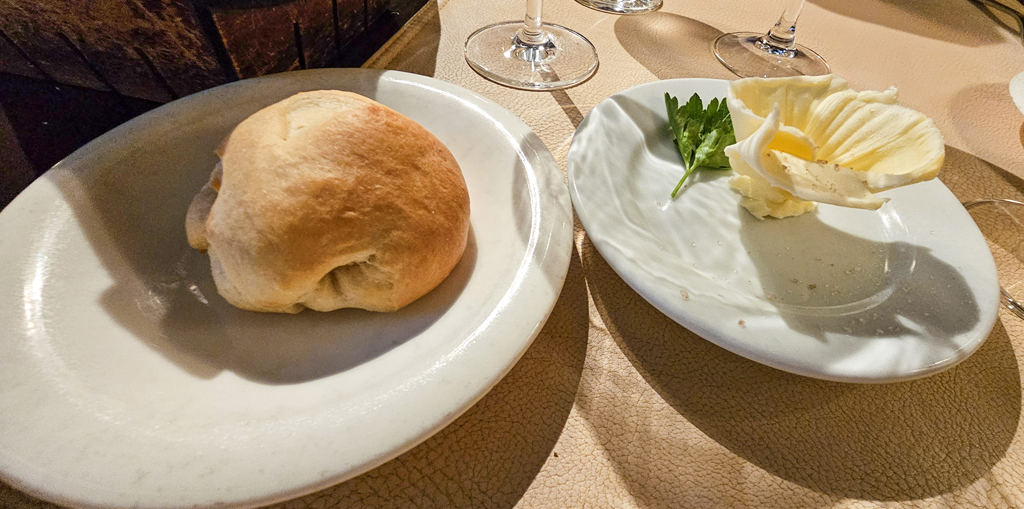

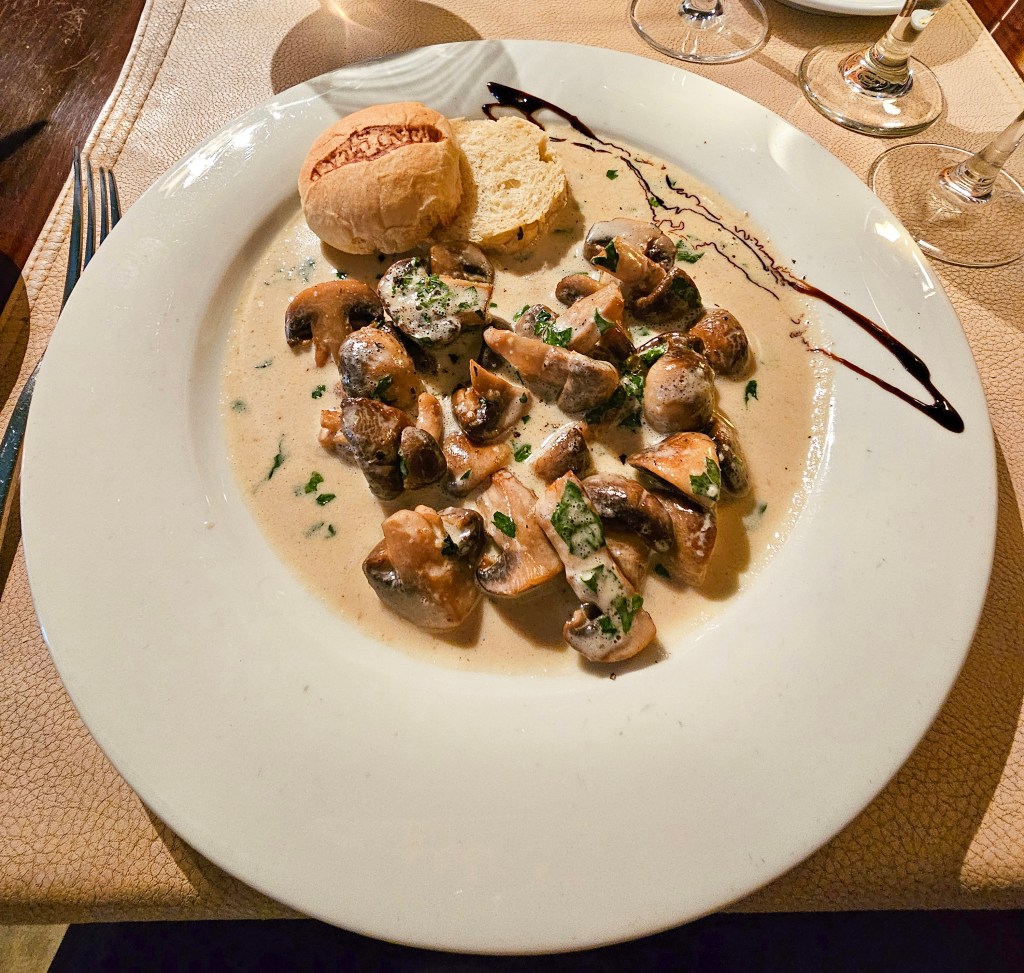
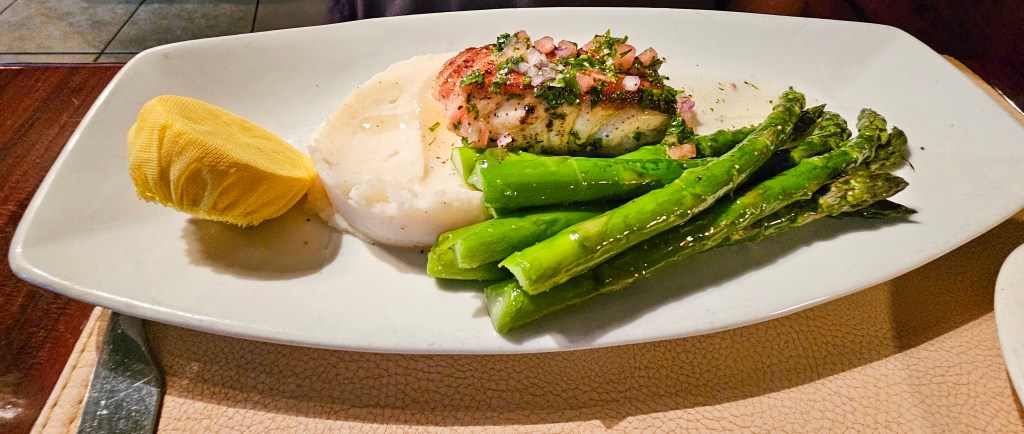

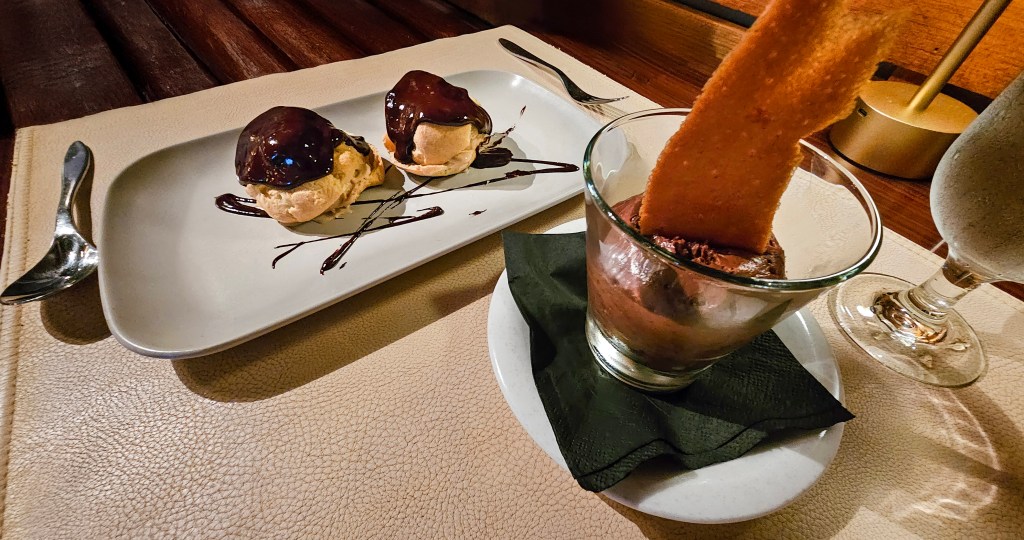
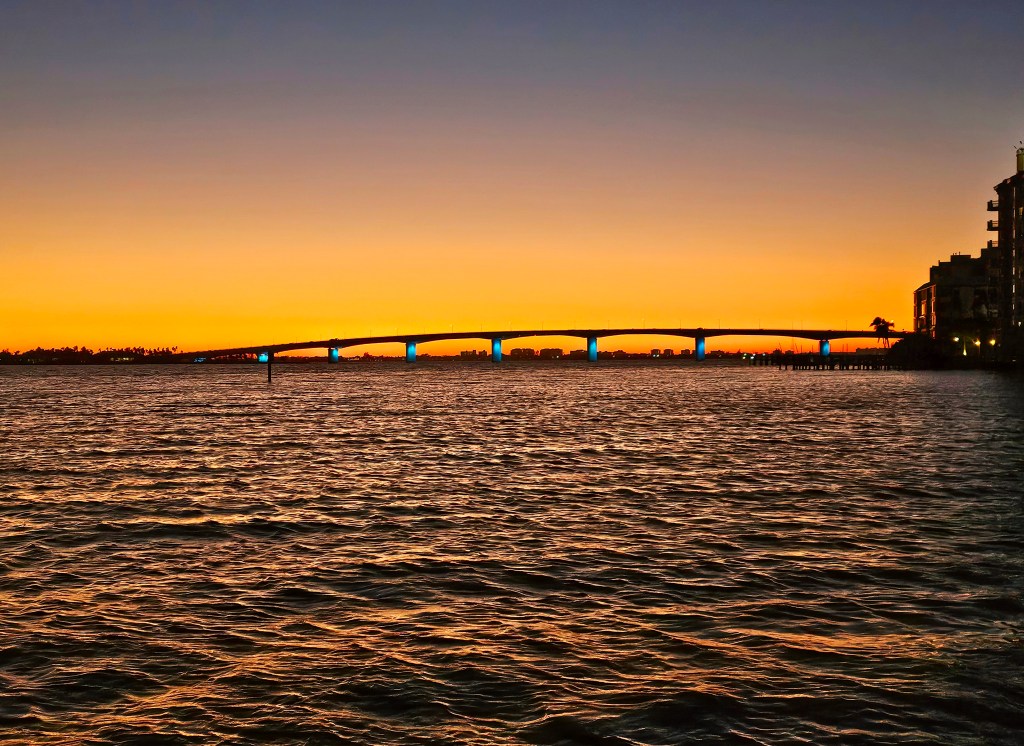
Our return to Nine Lives by dinghy was accomplished at dusk without incident, in spite of all that wine and good food!
Crowsnest Restaurant in Venice operates a marina. Only a few slips have been repaired from hurricane damage so far, and it is quite tricky to get in because the slips sit perpendicular to the strong current from the outlet to the Gulf. Two dockhands help with tying up, in fact they came on board and handled the lines for us. I was a bit insulted at first, thinking they were assuming that I was incapable, but as we watched other boats arrive it was clear that they do this for everyone. In fact, getting into a slip is so tricky that one boat made several approaches and ultimately chose to tie up on the fuel dock overnight instead, in spite of the requirement that they would have to leave before 7:30am.
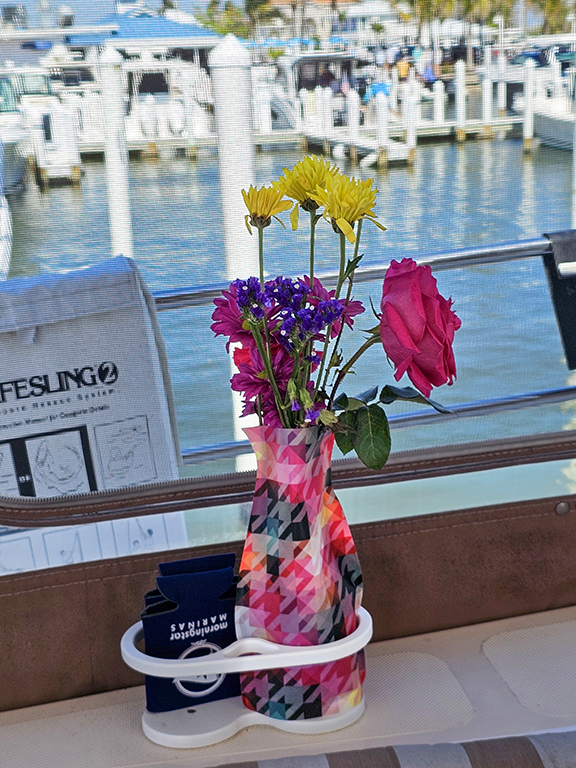
Soon after we arrived and were set, our friends from Pittsburgh and the Monongahela River arrived for docktails. Valerie and Chip are staying in a condo nearby for the winter. Valerie brought several interesting cheeses, a dip, and some strawberries, plus some flowers, so it was a reversal of our usual roles as hosts! Nine Lives loved the flowers, artfully displayed in a special flat vase that expands when water is poured in, and fitting perfectly in one of the cockpit cup holders. It was great to catch up with our friends, and dinner at the restaurant was most enjoyable.
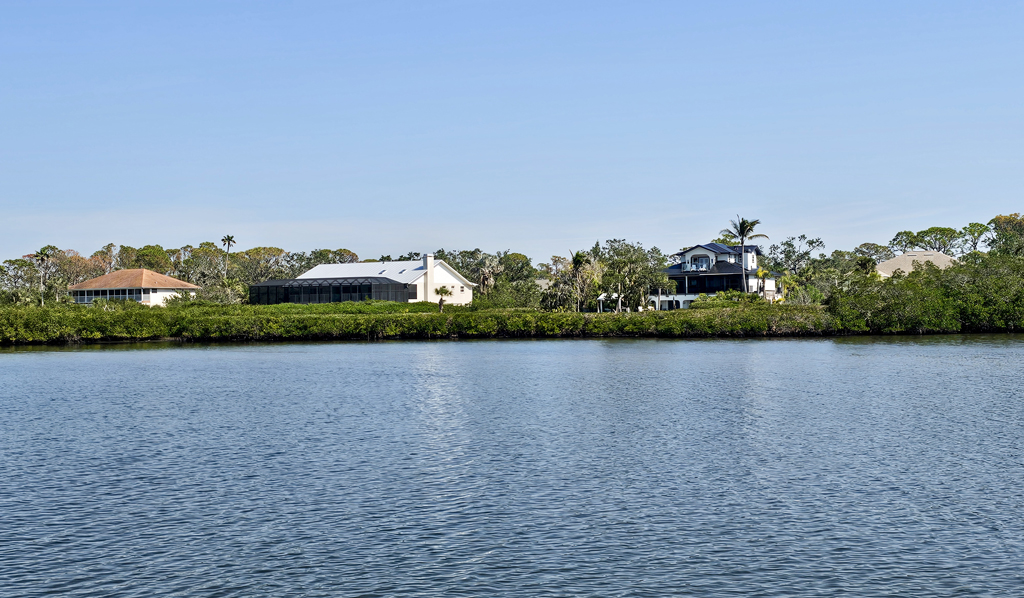
Mangroves provide storm protection. How many homes that were destroyed by flooding would have been saved if the mangroves had been left along the shorelines? Our observation as we travelled south was that there were a lot more repairs required on the Gulf side of the GICW, but most of the mangroves are present on the land side, and there appears to be less hurricane damage. Some wrecked docks and boat lifts, but the houses, even the single-story bungalows, look okay.
For reasons that make sense to somebody, the posted no-wake zones are outside the fairly narrow dredged Intracoastal channel, meaning that all the shallow draft center consoles can wake us all the time.
Dolphins followed us a for a couple of miles, switching from one side of Nine Lives to the other. We also heard them clicking and whistling, first time ever. Dolphins are quite fast, they can travel at 18mph. We were going at our usual cruising speed of 8mph, but apparently they like to ride in the slipstream of boats. The reasons for this behaviour could include ease of travel, playfulness, or something else, nobody knows. Dolphins use echolocation to orient themselves and to determine the size of objects they encounter. I was surprised that they chose to dive beneath the boat as they moved from side to side, clearly, they were not concerned about being caught by our propellers.

Our next destination was Boca Grande, on Gasparilla Island. The area was originally inhabited by the Calusa people, arriving about 800 or 900 BC. They predated the Seminoles, and had died out by the 18th century due to European diseases, slavery, and warfare. Spanish and Cuban fishermen settled in the 19th century, operating fish ranches, catching mullet and other fish for salting and shipment to Havana and other markets. Although the commercial fishery is gone, some of the current full-time inhabitants are descendants of these early settlers. In the 20th century, phosphate mining turned the south end of the island into a major deep-water port. Phosphate was brought south from the mines near Punta Gorda by rail and was loaded onto schooners at the port and shipped worldwide. In 1969, Port Boca Grande ranked as the 4th largest port in Florida. By the 1970’s the phosphate industry started using alternative routes for shipping, and the railway and port were largely abandoned. During this period, the island was discovered by wealthy American and British sportsmen, for hunting, and fishing, particularly tarpon. The Gasparilla Inn opened in 1911, serving the wealthy elite from Tampa, Fort Myers, and New England.
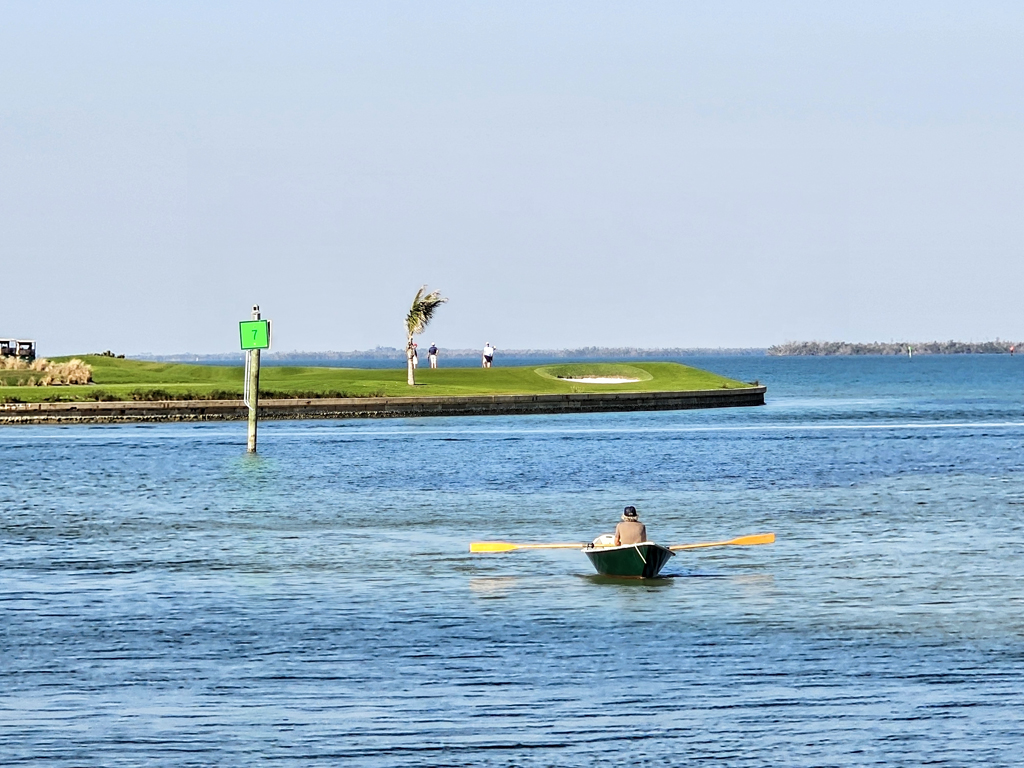
Check-in time at Boca Grande Marina is 2pm, we arrived a little early. We were asked to stand off in protected deeper water in the harbour while the dockmaster wrangled boats. Several had docked for lunch at the onsite restaurant, and 2 larger yachts were also expected. It was organized chaos as the dockmaster and his two dockhands directed, tied, and untied boats in a well-practiced dance. Normally, I would not choose to be on the fuel dock, but in this case, the location gave us a prime view of the golf course across the channel as well as the wildlife on the spit of land that protects the harbour.
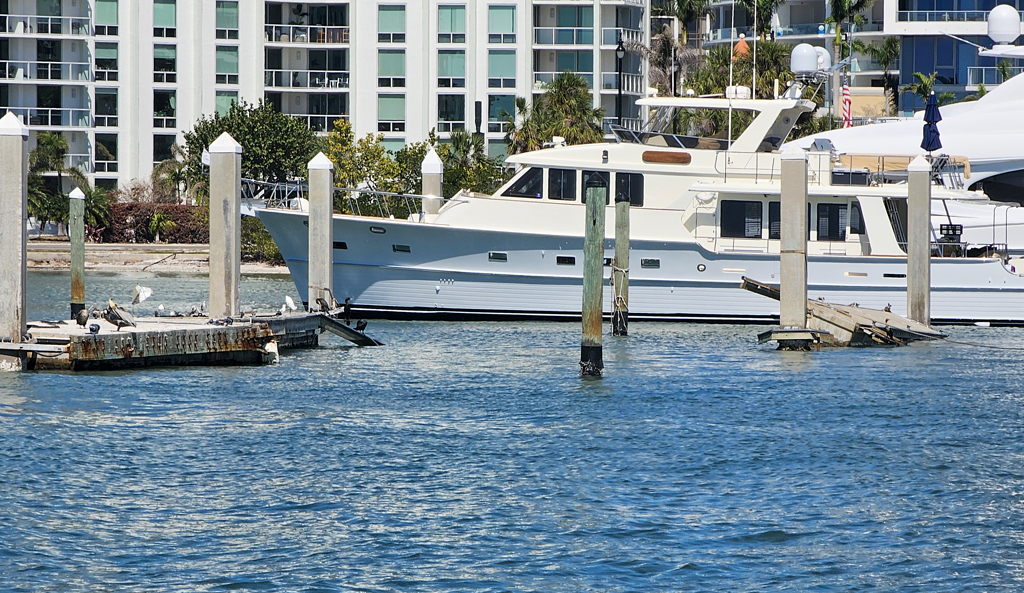
There were a couple of very large yachts berthed in the marina. One (120 feet) had its own center console tender tied up like a baby elephant beside its mother. The one next to it, in a private slip, is Hilarium, a stunning blue-hulled yacht with classic lines, built in the Netherlands in 1986. It is 134 feet long, and accommodates 8 crew and up to 10 guests.
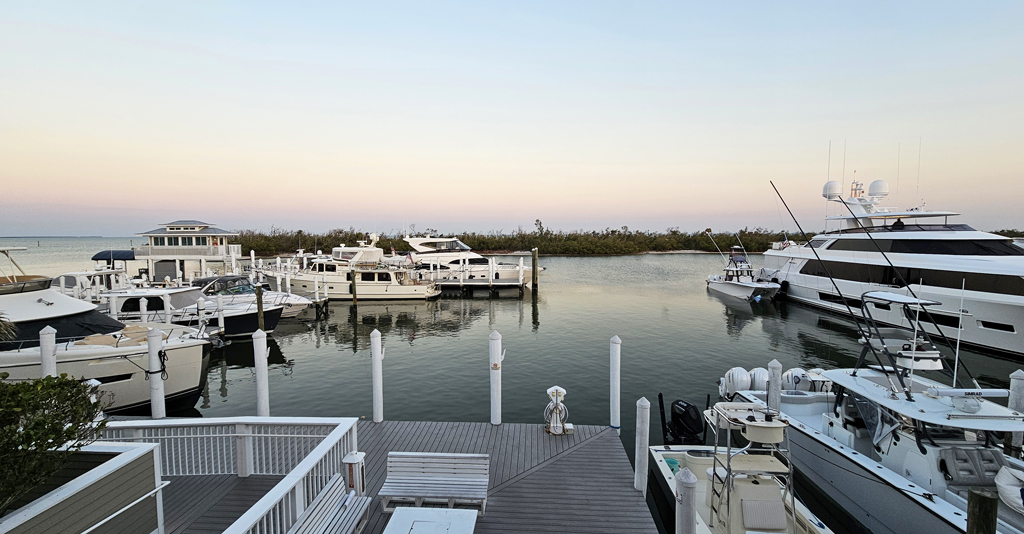
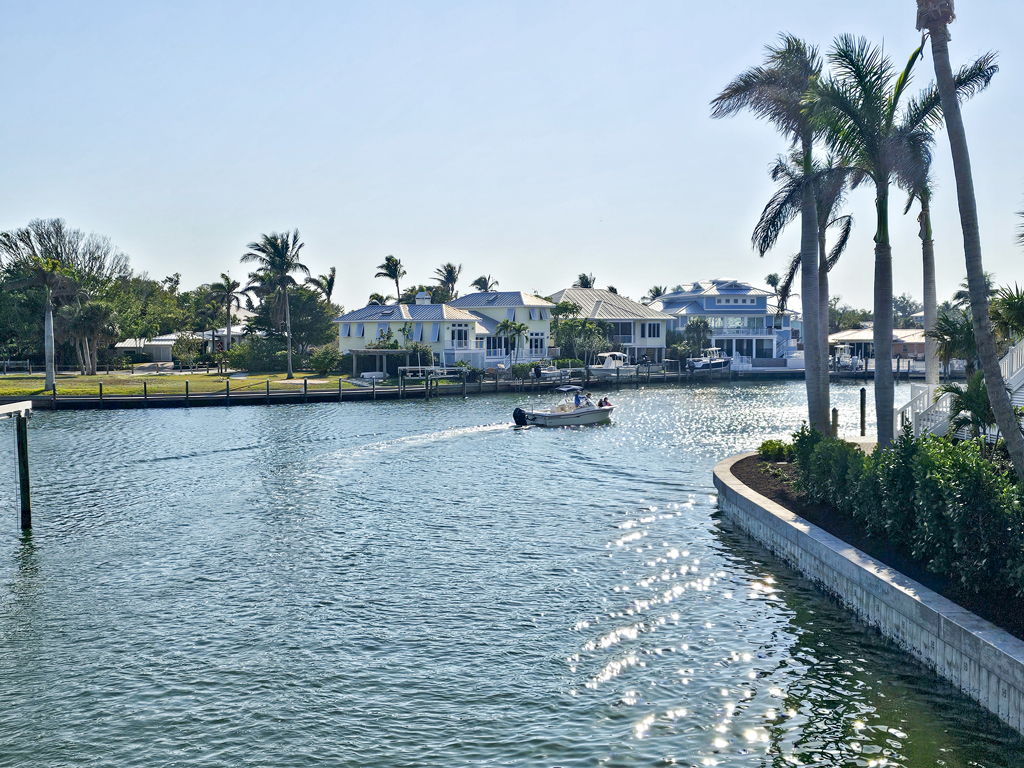
Golf carts are available for rent, so we collected one and headed out for a brief reconnoiter around the town. There are just 1001 full-time residents, with a median age of 68.7, but of course, the population is swelled by huge numbers of visitors. The town prides itself on its old-fashioned, laid-back lifestyle, with no traffic lights, fast food outlets, or nightlife to be found apart from church functions (seriously). That said, my impression is that it is a lot like Marie Antoinette playing shepherdess, given that a building lot in the area is priced at $2.5 million.

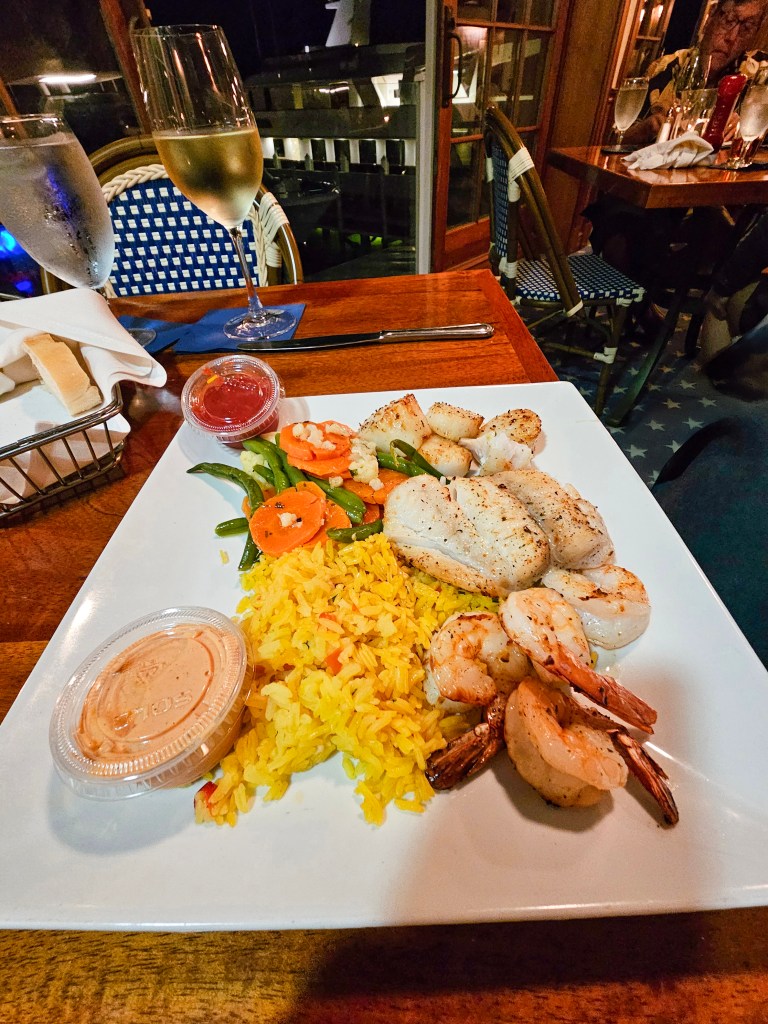
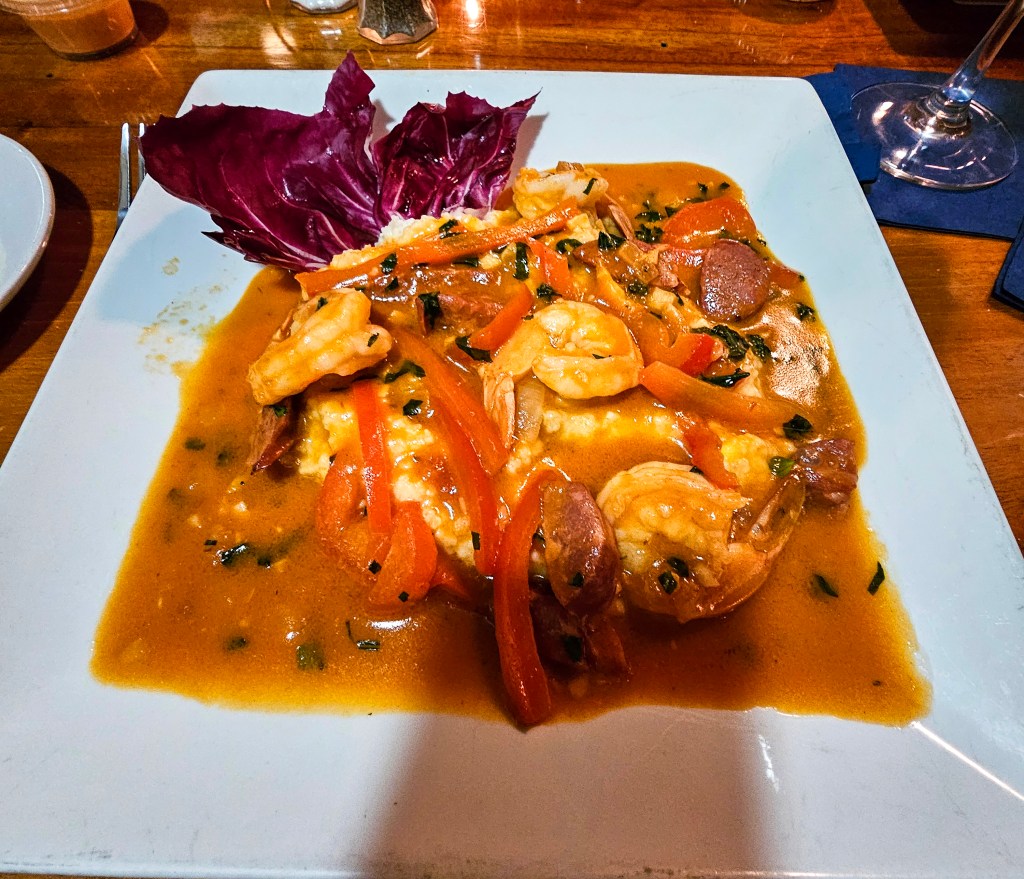
We had dinner at the onsite restaurant. It was a mixed bag. My truffle parmesan shoestring fries were so good that Dick suspended his objection to fried food and helped me eat them. His oysters Rockefeller were not very good at all. I ordered shrimp and grits, that came with just 4, tasty, but slightly overcooked shrimp and a few small chunks of andouille sausage on a mass of red peppers and grits. On the other hand, Dick’s seafood medley was excellent, as was the chocolate mousse cake that we shared for dessert.
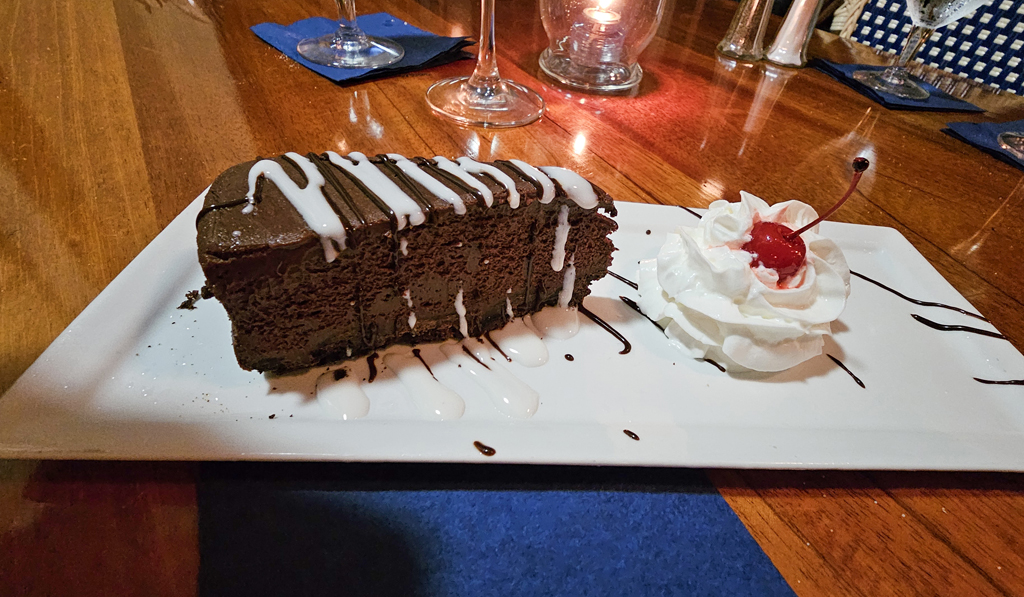
The golf course looks stunning, but the only way for non-members to play is to stay at the Gasparilla Inn. Dick proposes a birthday weekend there for me so that he can play the course…hmmmm…
We enjoyed an interesting day exploring Boca Grande. We went to the Strawberry Festival, but it was quite disappointing, essentially a church social that took up part of the town. There were offerings on silent auction, some used toys and children’s clothes, a tent selling brats in buns, strawberries and strawberry shortcake, and a quite respectable garage band made up of locals of retirement age. There was apparently more to see inside the church, but we didn’t bother. In every shop in town, the ladies asked excitedly, “Did you get your strawberry shortcake?” So, a big deal in the town, but of little interest for us as visitors. We looked around most of the shops, but didn’t buy until we found one with interesting specialty foods, homewares, and upscale takeaway. Dick decided that we would have a large container of lobster salad for our supper the next day. He choked when the bill was rung up. Let’s just say that we could eat lunch out with wine for the same money (including ordering lobster rolls). That said, the salad was delicious served on French bread with crisp butter lettuce.


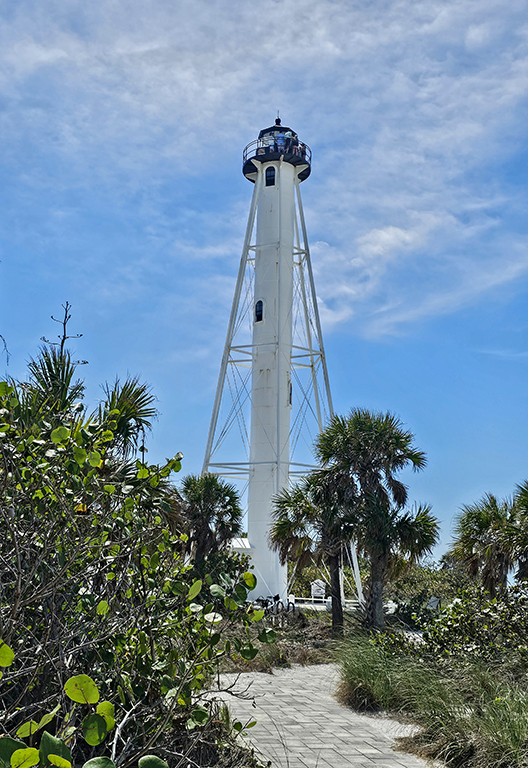
After dropping our purchases off at the boat, we took the golf cart to the southern end of the island. Like highway 98 on the Panhandle, it is miles and miles of new-build housing. It does seem to be built to “hurricane proof” standards, that is, constructed of concrete and elevated so that a storm surge can flow through below. It was possible to climb the lighthouse, but Dick decided this time that it would be very hard on the knees coming down, so he passed on the opportunity.
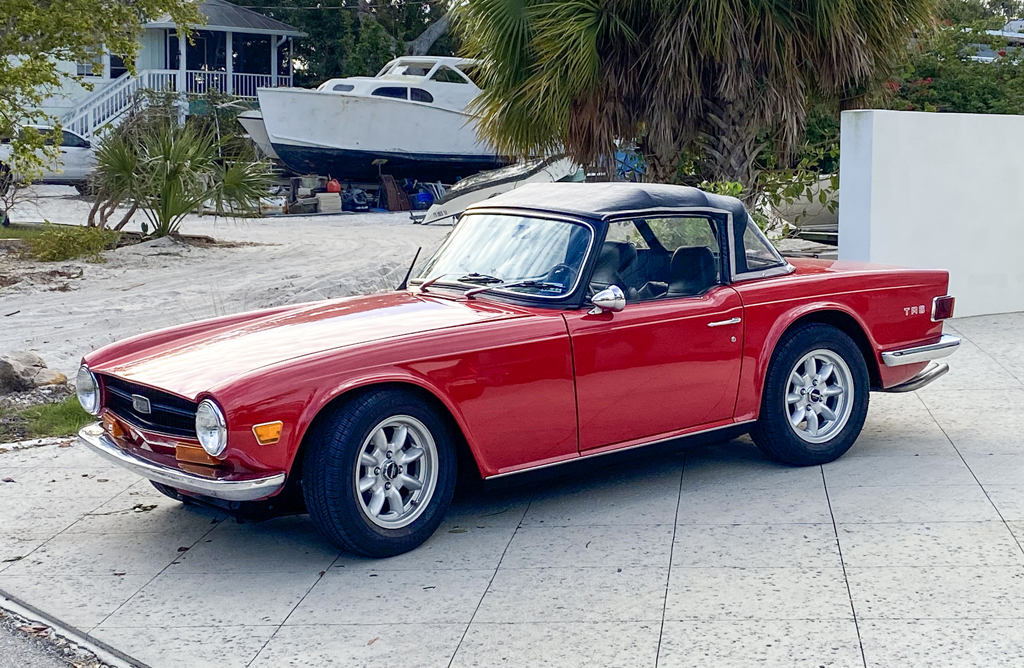
In the early evening, we dressed up and went over to the Gasparilla Inn, a wonderful old Florida hotel, for drinks in their bar. This was touted as a see-and-be-seen opportunity to hobnob with the great and the good of the town. It was a lovely lounge with superb snacks and perfectly prepared Manhattans, but there was nobody hobnobbing at that time, just a fierce game of backgammon going on, played between some guests. We enjoyed the experience anyway.


After our drinks, we went to dinner at Scarpa’s Coastal, a blend of modern Italian and local cuisine. It was a good meal, but the food was not as hot as it should have been.


We made a leisurely start with an easy passage to Sanibel Island. Here we finally left the route we travelled in 2017 when we collected Nine Lives, and everything is new again. The marina at Sanibel is unusual in that it is not on the bay, instead, a narrow channel gives access to the marina as well as a network of canals with homes. There was some damage from the hurricane, but it is mostly repaired, and we are on a newer, floating dock. There is a restaurant on site that we will try later in the week.
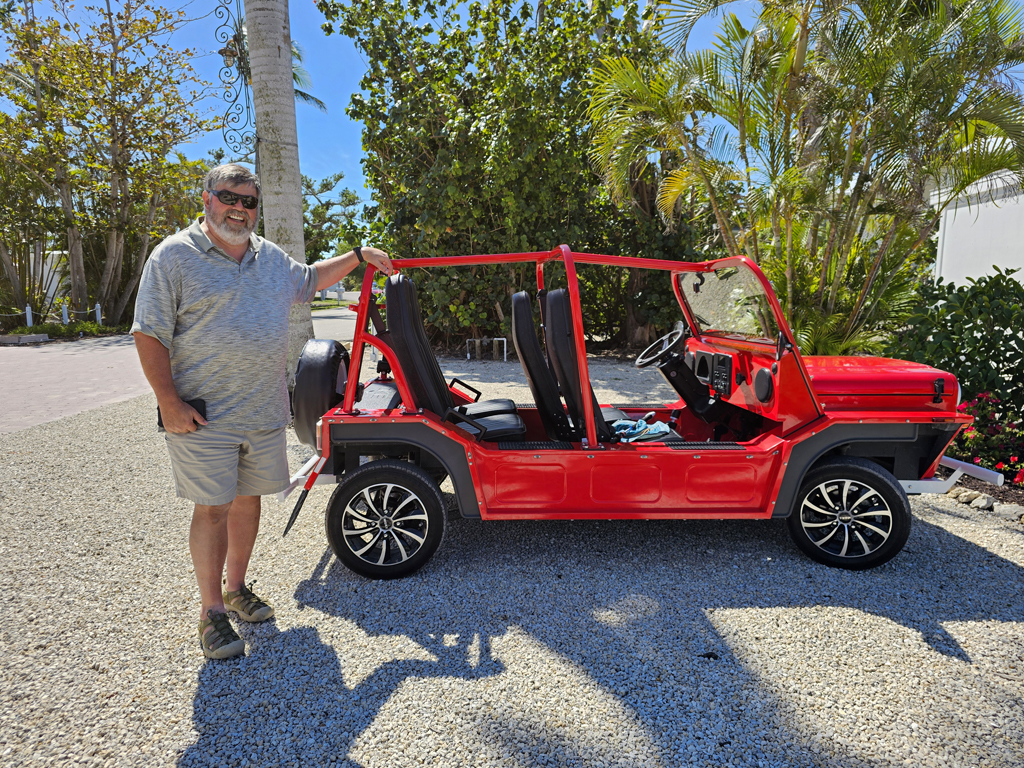
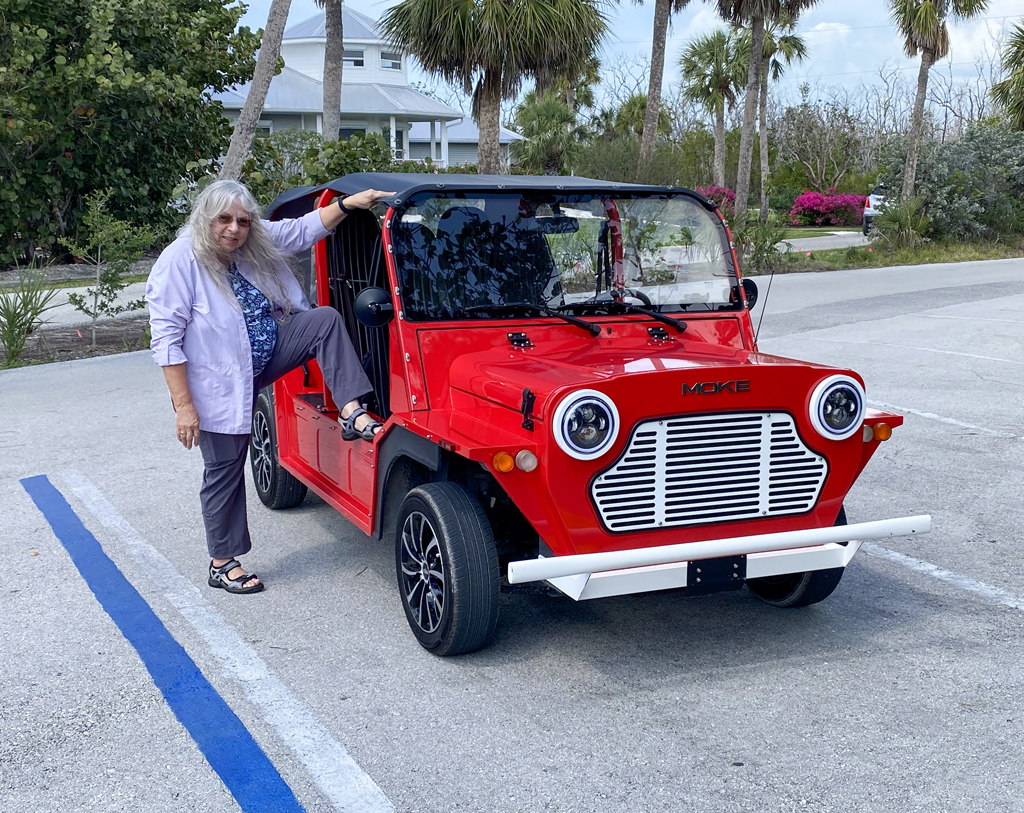
We ate on board the first evening. Next morning, Dick arranged to rent a golf cart for a few days. He decided to upgrade to a Moke. It is sort of what one might expect the offspring of a golf cart and a jeep to be like. Ours is bright red, easier for cars to see us on the roads. Mokes are electric, so quieter than a gas driven golf cart, and fully fitted for roads, with seatbelts, lights, proper signals, speedometer, etc. The seats are also a lot more comfortable than a golf cart would have been. You can even snap on a canvas cover if it rains or for sun protection.
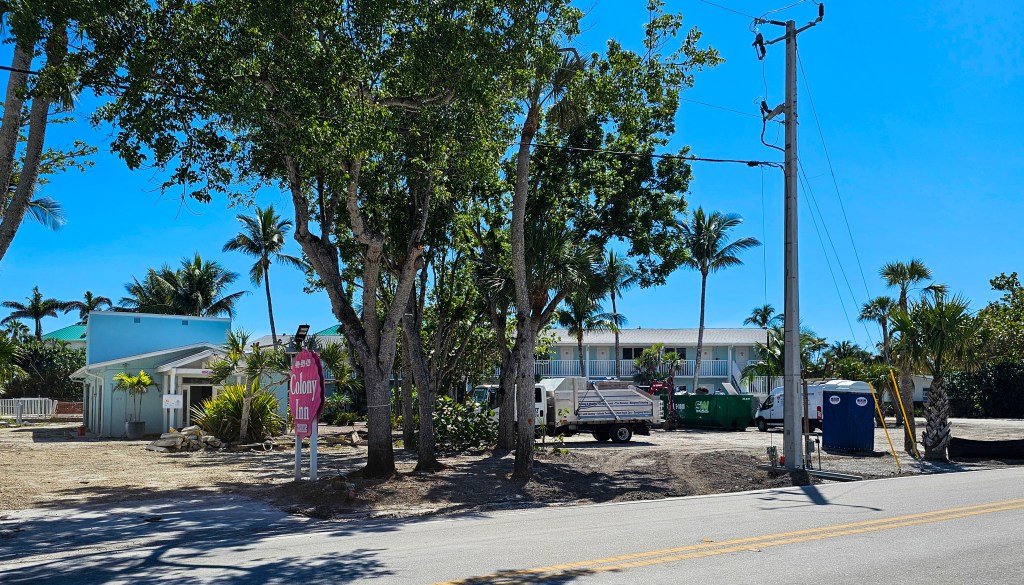
We went for a drive around the island. We were able to find the old, converted motel that we stayed at on a timeshare exchange more than 25 years ago. It is undergoing major renovation, but it is not being torn down. We also visited a couple of interesting galleries, finding a nice piece of art pottery to take home as a reminder of our visit.
Sanibel has clearly had a large influx of new residents since our last visit. There are a great many condos, and a few areas with some very large houses, but mostly it seems to be more down to earth than Boca Grande, with real people instead of the very wealthy playing at being ordinary. We also noticed that while there is almost no evidence remaining of the hurricane on Boca Grande (we could see a lot of obviously new landscaping there) here on Sanibel there is still a lot of dead vegetation and trees, and many homes are still waiting for repair. Less money to effect repairs, and probably further down the priorities list for government help, not to mention further down the priorities list for contractors doing the work.
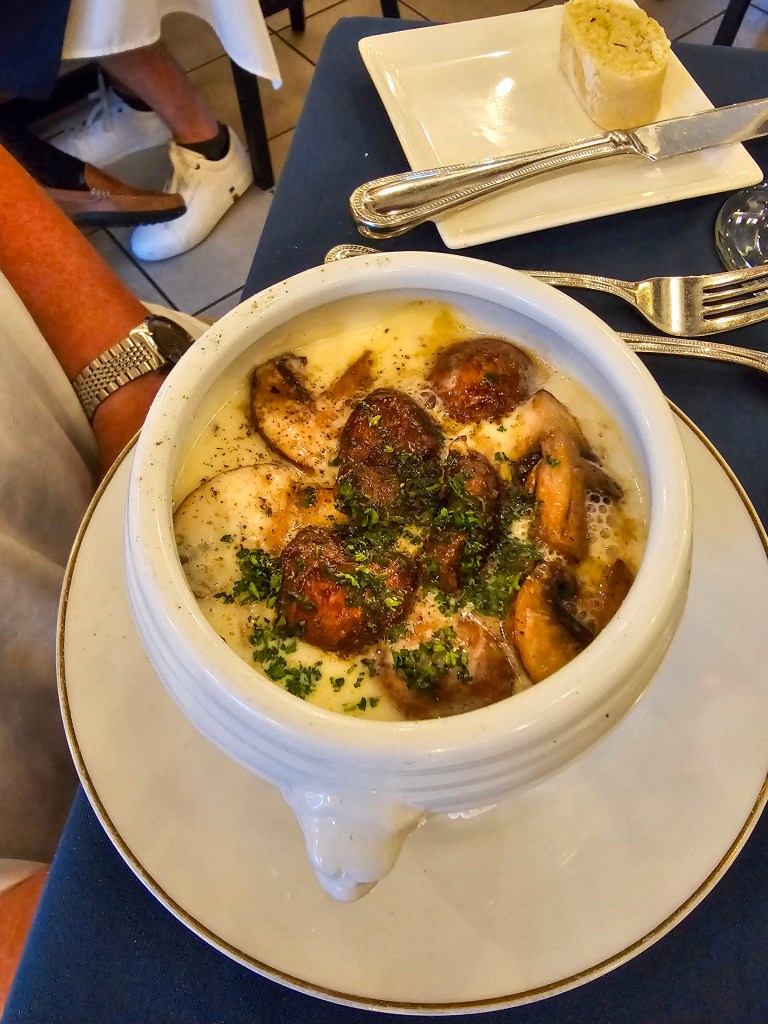
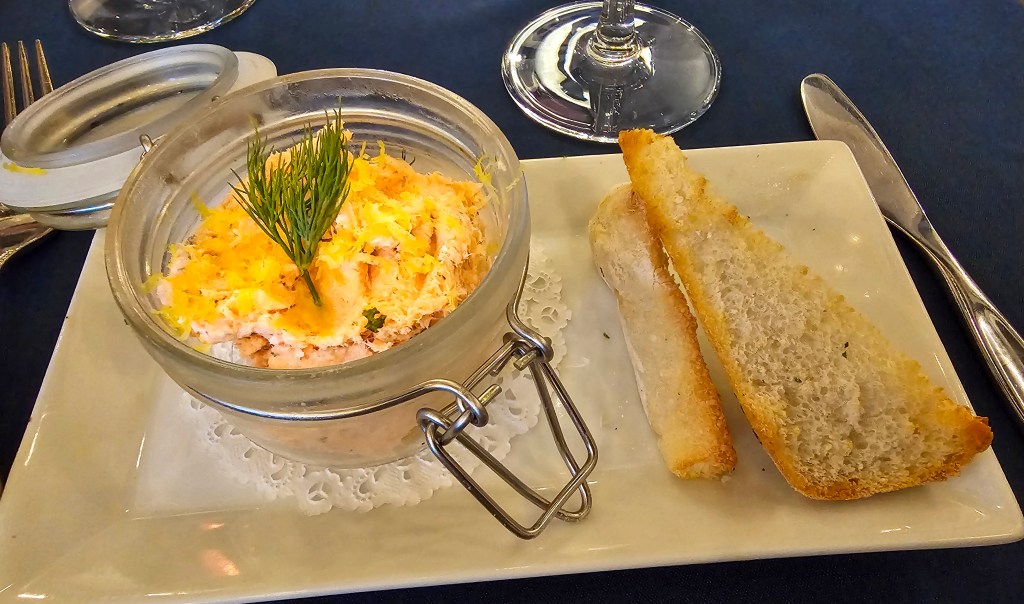
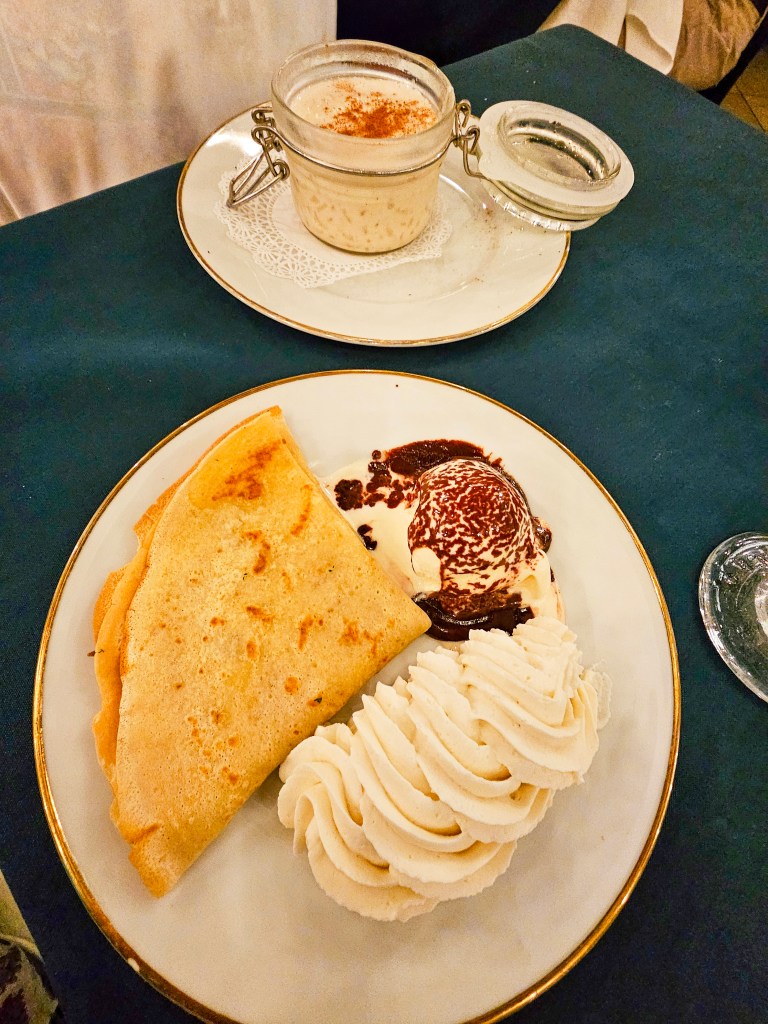
Our dinner was at Bleu Rendezvous, a very authentic French bistro. It was so authentic that our table for 2 was exactly 2 feet by 2 feet. Very typical in Paris, not usual (or comfortable!) here in America. The din was incredible, everyone had to shout to be heard. Excellent food, with the exception of the crepe I ordered for dessert. Hard to say whether we would return. The restaurant is very popular, there were a large number of people sitting waiting outside for their tables to be free when we left.

We are certainly here in the high season. Not only are restaurants full, even on Monday or Tuesday evenings, Dick is finding it quite difficult to get dockage as we move south. We are behind the Looper pack, so are not having to compete with them, but there are few or no slips available for us. We had hoped to stop in Naples for a few days, and then Marco Island, but we can only book one night in Naples, and we are going to have to move from place to place, and anchor part of the time, for the week we plan to be on Marco Island. Plans are also weather dependent, as we have to travel outside in the Gulf between the next two stops, and then a crossing (daylight, but expected to take 10 hours unless we go fast for part of it) to Key West.
A piece of advice for everyone who is charmed by the youthful excitement of a Moke. If you are female, don’t wear a dress or a skirt! Leaving aside the large amount of leg that goes on show as you climb over the sill to get into or out of the vehicle, once you are on the road, it is exceedingly cold and drafty! Trying to hold onto a hat and keep your skirt from blowing up and revealing the lace on your undies, is a feat requiring at least 3 arms. It is a lot of fun to try the Moke out, but there is no temptation to regress to carefree youth and put one into our garage.
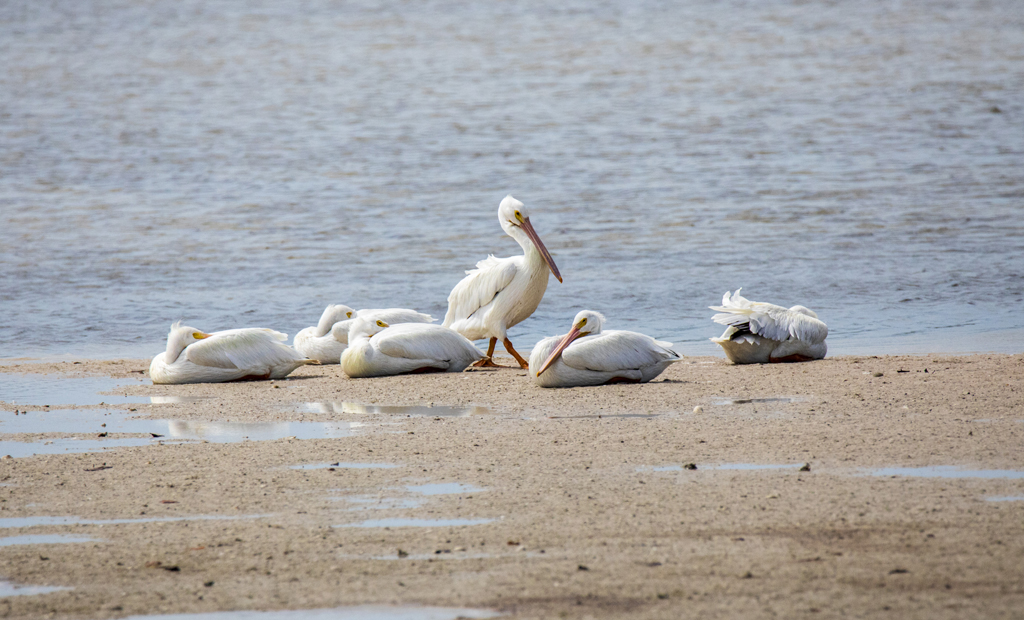
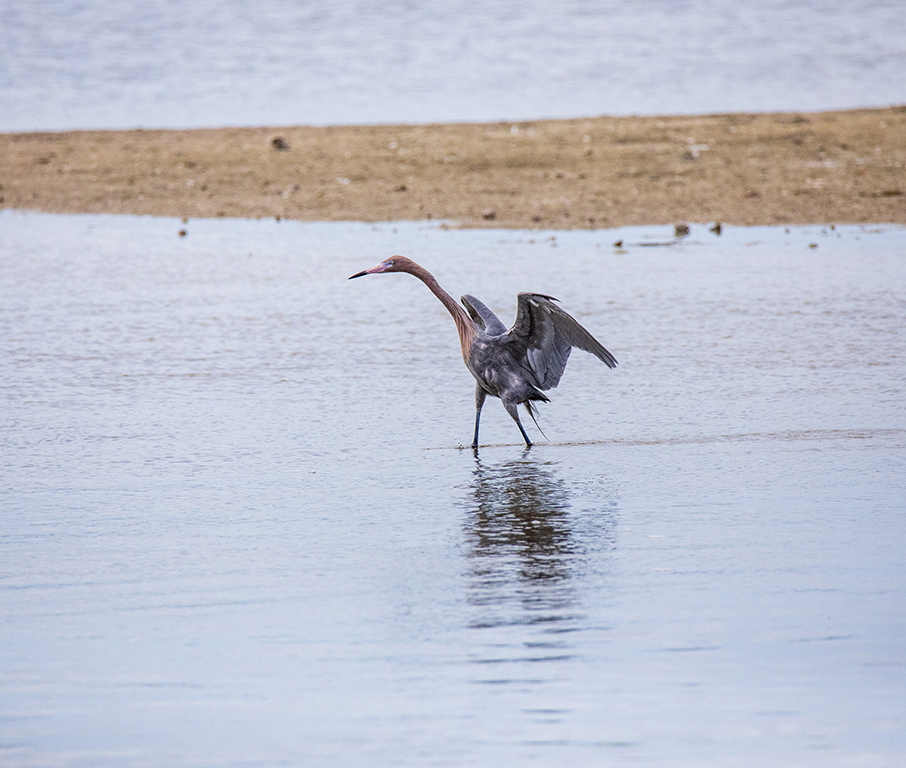
I have been looking forward to visiting the J.N. “Ding” Darling National Wildlife Refuge. Years ago, we rode bicycles through the refuge, and my memory is of an amazing place, teeming with wildlife. Well, history did not repeat, and I am sorry to say that this visit was a great disappointment. Whether it was the time of day, or residual effects from the hurricanes, there were few birds and certainly no alligators to be seen. A couple of iguanas zipped into the brush as we passed. Resting in the shallows we saw pelicans, both brown and white, gulls, and a cormorant, all of which we have seen many times in other locations. Further along we did see a Reddish Egret displaying their typical fishing dance. They jump around, scratching in the sand to stir up the fish, and occasionally spreading their wings, creating a shadow on the water that lets them see the fish below. A godwit stood nearby, perhaps waiting for leftovers.
J.N. Darling was a pioneer of conservation in the United States. His editorial cartoons drew attention to the plight of wildlife, and helped to educate the public that natural resources are not unlimited, and that unhindered use of these resources is not a God-given right. He was the founder of the National Wildlife Federation, and the chief of the U.S. Biological Survey, now called the U.S. Fish and Wildlife Service. He helped conceive the Federal Duck Stamp Program, drawing the first stamp, and since 1934, hunters have been required to purchase a Federal Duck Stamp in order to be allowed to hunt waterfowl. These purchases have supported the acquisition of millions of acres of wetlands for feeding, breeding, and migration of waterfowl.
There was an interesting plaque about the salt marsh mosquito. When the natural flow of water is impeded, the mangroves die, and mosquitoes breed in the still water. Ding Darling brings in engineers to dig culverts to restore the flow of water and reduce the need for pesticides. While mosquitoes have an ecological niche, being incidental pollinators, and also providing food for numerous predators, the sign also mentioned that too many mosquitoes can be a major stressor to both humans and wildlife, through biting and the spread of disease. This is not news to me… small biting insects are my least favourite aspect of any warm climate!

After our visit to the Wildlife Refuge, we stopped at one of the small shopping malls and looked at a few shops before joining the incredible queues on the main road to return to the marina. We think traffic is bad in Hilton Head! The tailbacks on any of the main roads that lead to the causeway on Sanibel are unbelievable. Traffic wardens are in place all day, and it really doesn’t seem to matter whether it is morning or evening. I looked up data for vehicles crossing the causeway. The latest I could find was November of 2021, when 3.2 million vehicles crossed during that single month. The current traffic issues will continue until 2027, as the causeway is repaired after being damaged in the hurricanes. Eventually we were able to turn off and go around the other side of the island to avoid the queues.
Dinner was at the number 2 rated restaurant on the island. The food was not particularly good, the service slapdash, and overall the restaurant has little to recommend it. We would not return.
We are looking forward to continuing our exploration of Florida’s Gulf Coast, followed by a visit to Key West and Marathon before eventually heading north on the Intracoastal Waterway up the east coast of Florida.
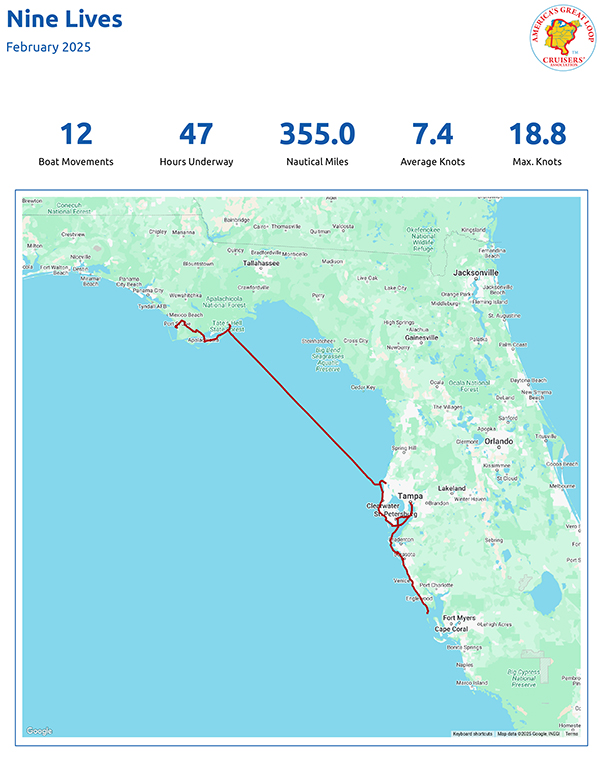
 The Voyages of Nine Lives