
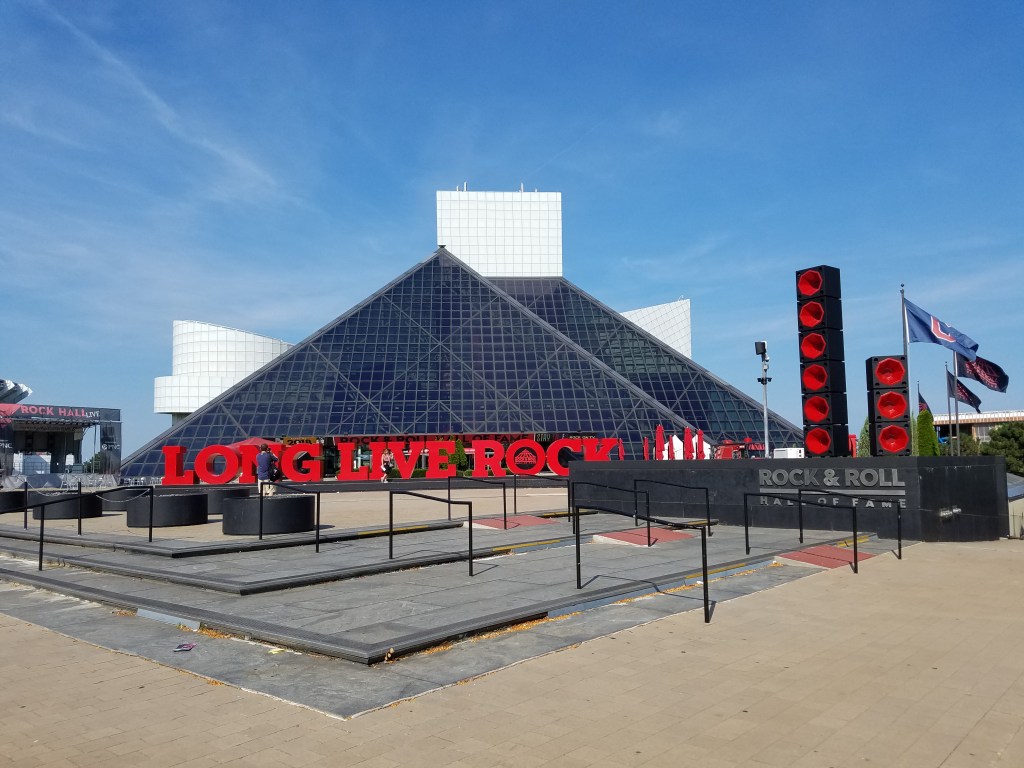
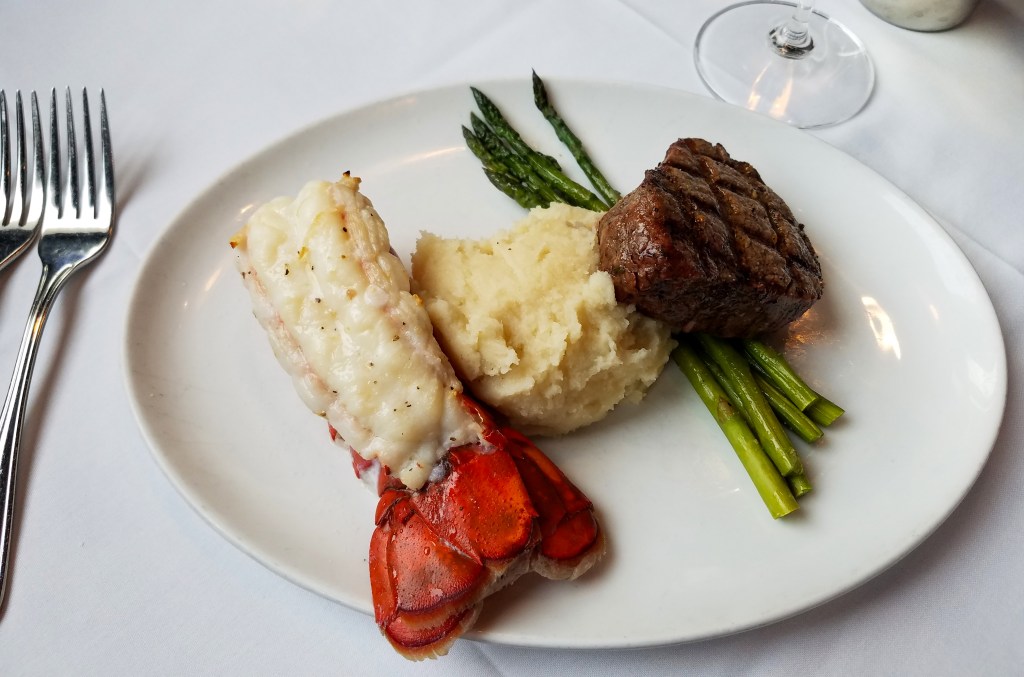
Our second day in Cleveland was spend exploring the Rock & Roll Hall of Fame. We both enjoyed the experience, although we were most interested in the songs and artists of our own generation. I expect some people could spend days there, looking at memorabilia. I found the clothes fascinating, it was hard to believe the performers were so small. There were dresses belonging to Diana Ross and the Supremes, and they were tiny! The clothes worn by the giants of rock and roll, the Beatles, the Rolling Stones, the Who, and many more recent rockers, show that these men had to be well under 6 feet tall, and extremely thin by today’s standards. There was an excellent film with clips of Elvis Presley, and we also loved a 30 minute film of Dick Clark and American Bandstand. In the evening we walked a little further into town for an outstanding meal at Blue Point Grille.
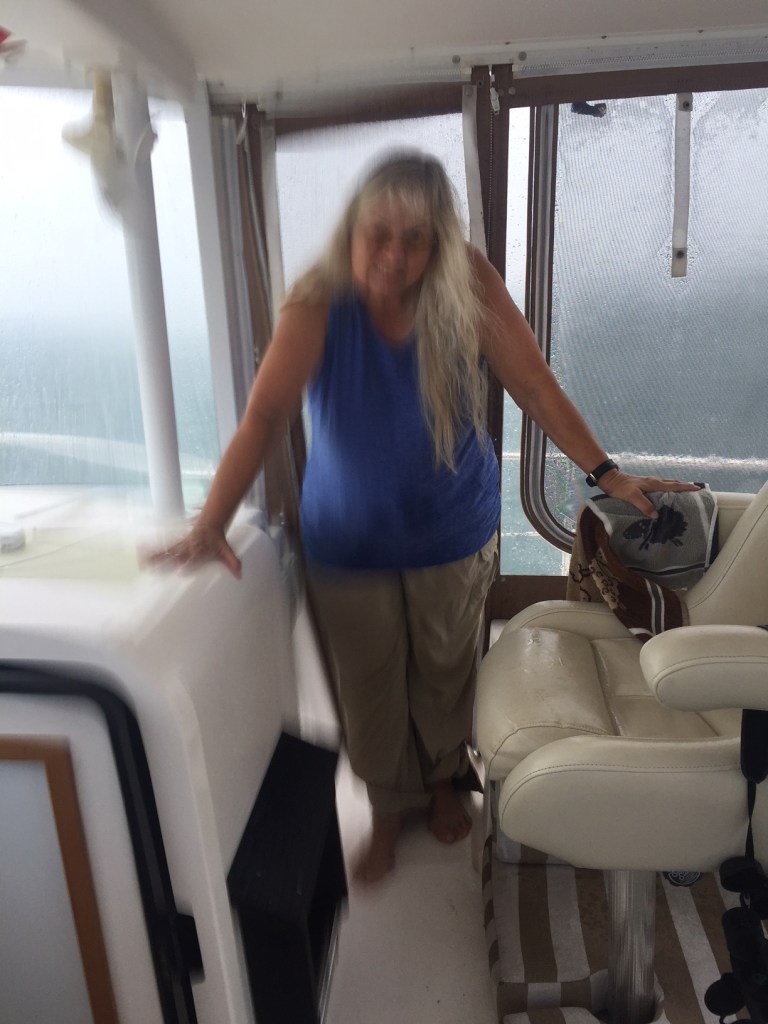
From Cleveland it was a long day, 100 miles, to Erie, Pennsylvania. This year we made a conscious effort to reduce the distances we travelled each day, so a normal day has been 30 to 40 miles. The weather was glorious, although hot, with a bright blue sky and a good forecast for wind and waves. With no rain in the forecast we replaced the side doors with the screens, which involves two large stiff zippers each side and one on top. Just after lunch the clouds started to build up and the sky got dark. We were caught in an afternoon thunderstorm with accompanying squall out on the water. The rain lashed the boat from the side (of course it was the side I sit on) and the cushions, carpet, and my chair, with me in it, got absolutely soaked. Eventually I managed to undo the top zipper and secure my door at the top, but with the strong wind the only way it could even partly reduce the amount of rain coming in was for me to stand with my back to it and hold on. Drenched doesn’t even begin to describe the experience. Dick, from his dry seat at the helm, was highly amused. In fact, he was shaking with laughter, which is why the picture is so blurry!
The rain, low visibility, and choppy water were not the only matters for concern. We had heard a securite announcement from a tow that he was headed into port with 3 loaded barges. We could see his position on the chartplotter, but he didn’t seem to be moving, and we were headed directly for him. Dick went well out into the lake to make sure we gave him plenty of room. We were able to see through gaps in the rain as we passed that he was indeed stopped, repositioning the tow from the front of the barge train (pulling) to the rear (pushing it into port). In due course the rain stopped, the waves settled down, and the sky was blue again. The carpet took a while to dry though, and it was surprising how very dirty that rainwater was after it passed through the screens.
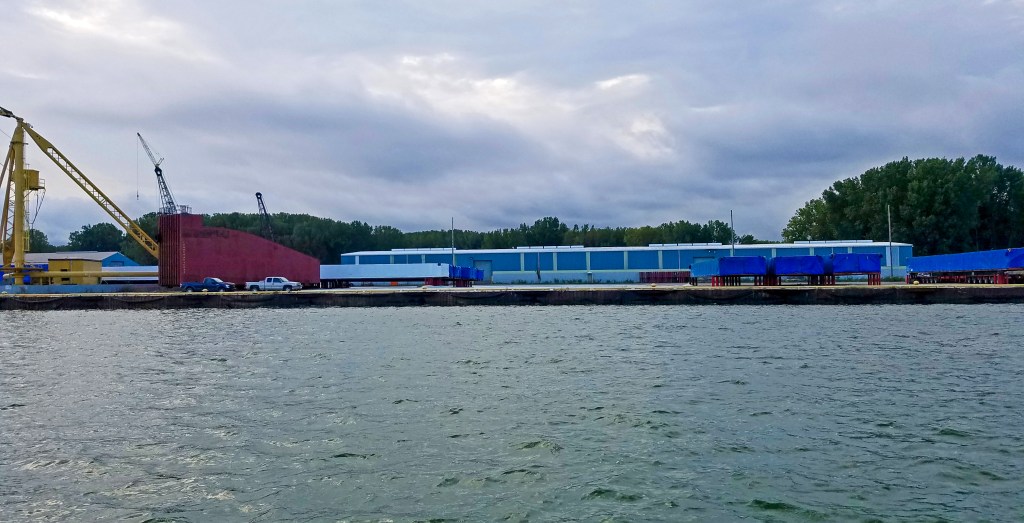
Erie is the fourth largest city in Pennsylvania, and the state’s only major port on the Great Lakes. As heavy industry and shipping have declined, health care, plastics, tourism, and service industries have taken their place. The harbour was interesting, divided into several parts, with the one we were visiting requiring passage under an elevated walkway that connects the Sheraton Hotel with the Bayfront Convention Center. Unfortunately, the harbour itself is still something of a work in progress, but in a few years it could be very pleasant. There is a large maritime museum and library, and a 187 foot Bicentennial Tower along the waterfront.
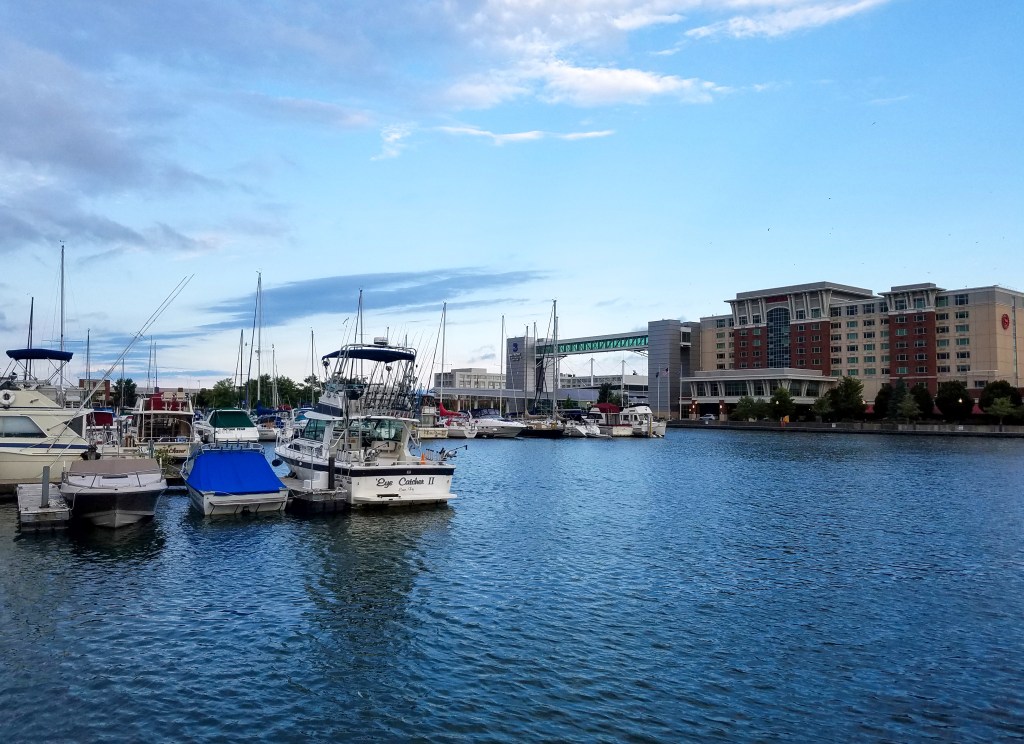
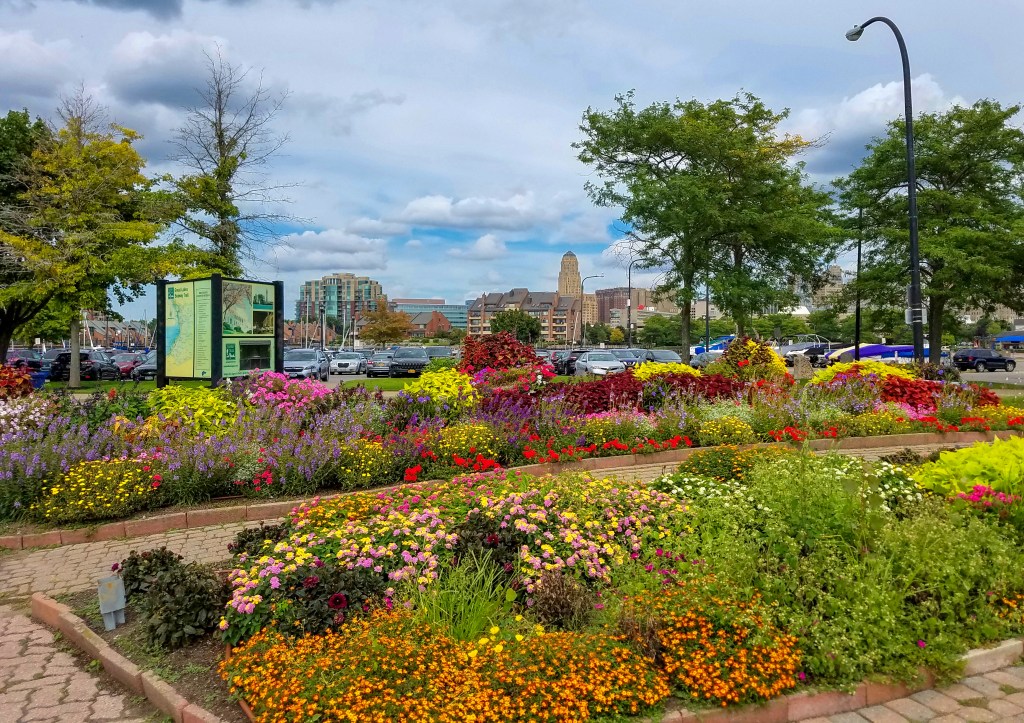
Our next stop was Buffalo and a grateful goodbye to “big water” for this year. We stayed at the marina that is closest to downtown, and once again were pleasantly surprised by the waterfront parks and development of what was once a very unattractive industrial port. When we were growing up, and even after graduation and during the first few years working in Toronto, Buffalo downtown was a no-go zone with derelict buildings and a lot of crime. The marina is situated on a spit of land that also includes a waterfront park with attractive gardens, a lookout tower, and two restaurants. From the marina it was easy access to an extensive network of cycle paths. We rode our bikes right into downtown for dinner, and we never felt unsafe.

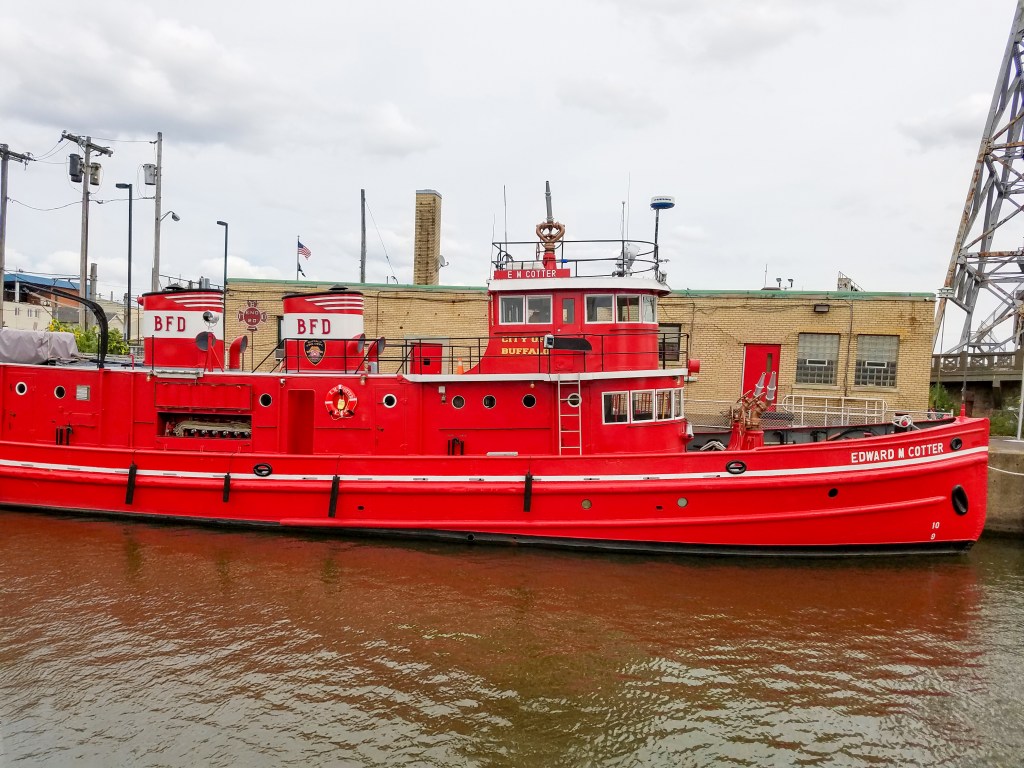
We rode our bikes through what looked to be a very interesting naval museum, the Buffalo and Erie County Naval & Military Park. There are a number of decommissioned ships, including a submarine, a cruiser, and a destroyer. Further along the Buffalo River is the oldest active fireboat in the world. The Edward M Cotter was built in 1900 and rebuilt in 1953. In addition to being a fireboat, she is used as an icebreaker on the Buffalo River in winter. She has a colourful history, including being burnt out in 1928 while fighting a fire on a barge carrying 5,000 barrels of crude oil. Rebuilt, she continued in service, and crossed Lake Erie in 1960 to help put out a fire in grain elevators in Port Colborne, Canada. We only saw her at dock, but I gather she is a regular sight in Buffalo Harbor.
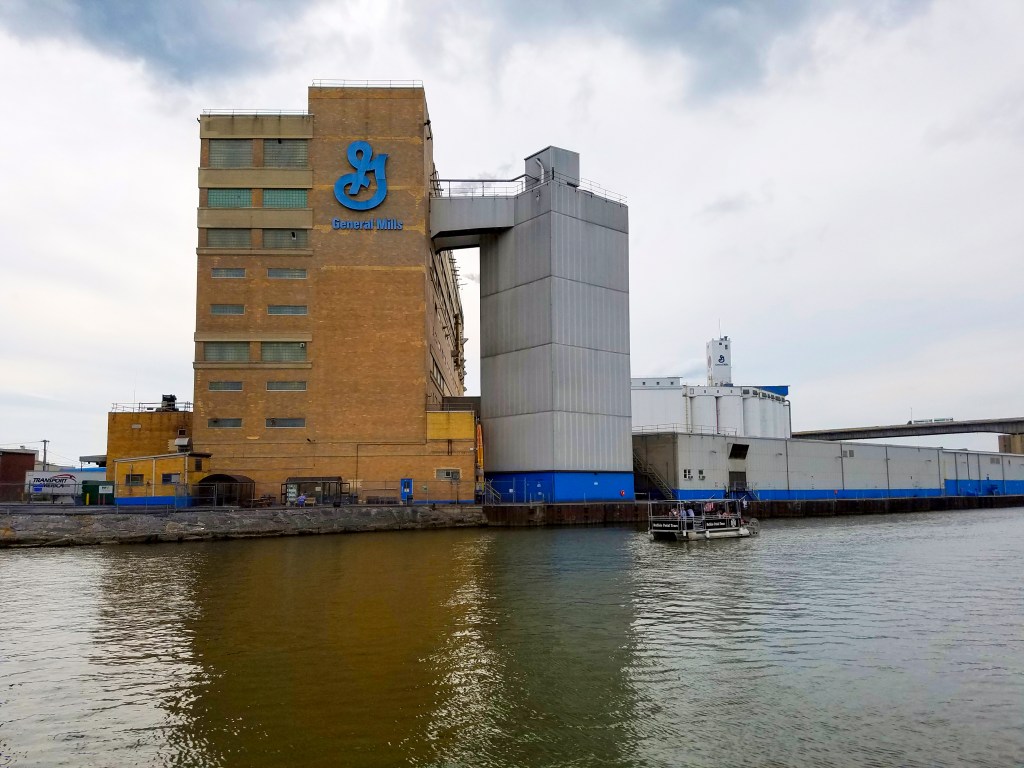
After a two night stop in Buffalo it was time to make our way into the Western Erie Canal. We had planned our usual 9am start, but we were delayed somewhat at the pump out dock by a very slow pump. As it happened, that delay didn’t matter, because of limited service at the lock on the Black Rock Channel. This three and a half mile channel parallels the Niagara River, and allows boats to avoid the strong current and rough waters of the river. It was built as part of the Erie Canal, but somehow it is no longer part of the Canal and the lock is a Federally operated lock. It is in need of refurbishing, so the operators have decided to limit openings, and while two different phone numbers are provided to call to get the schedule, neither of the lines are manned. On arrival at the lock we found a sign that told us the first opening would be 11am, so we had to tie up and wait for over an hour. As is his wont when there is any expected delay, Dick set off along the lock wall to investigate. On his return, he met the lock keeper arriving for work, a surly individual who was not at all impressed with Dick’s friendly smile and told him in no uncertain terms that he was forbidden to be on the dock and to “Get back on that boat and stay there!”
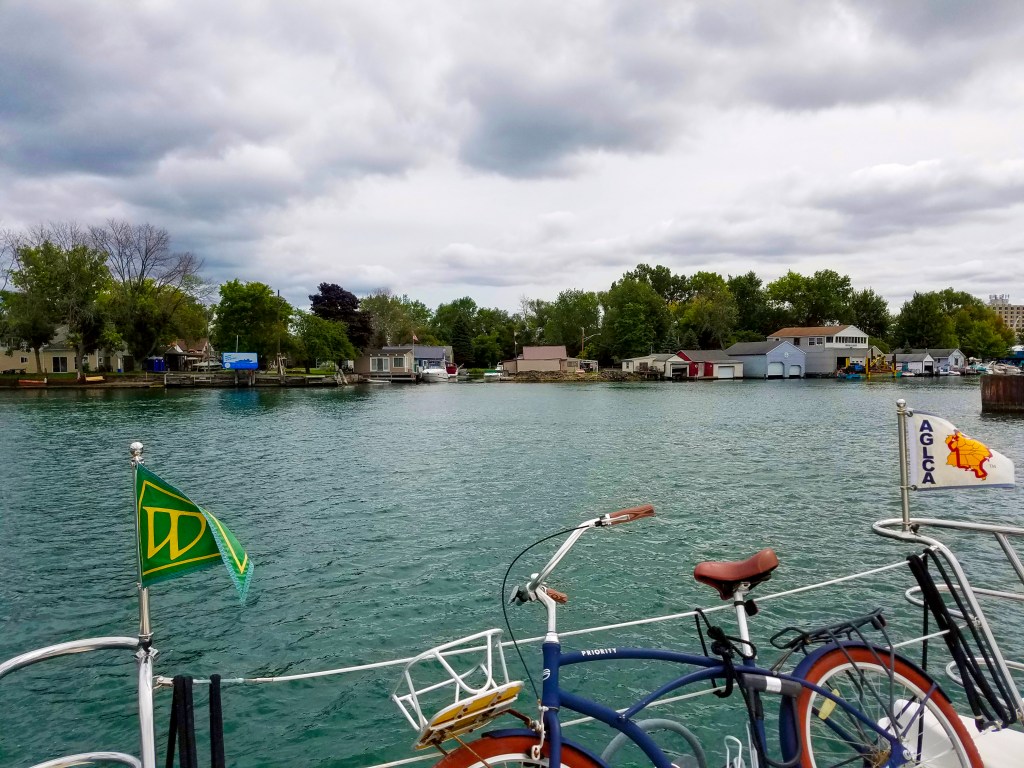
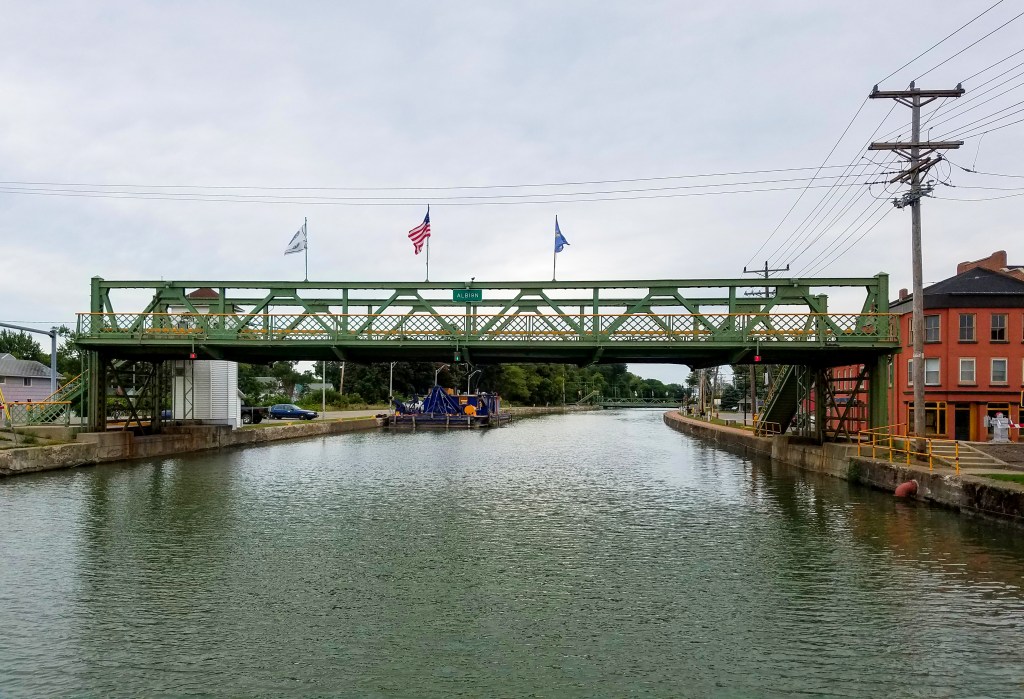
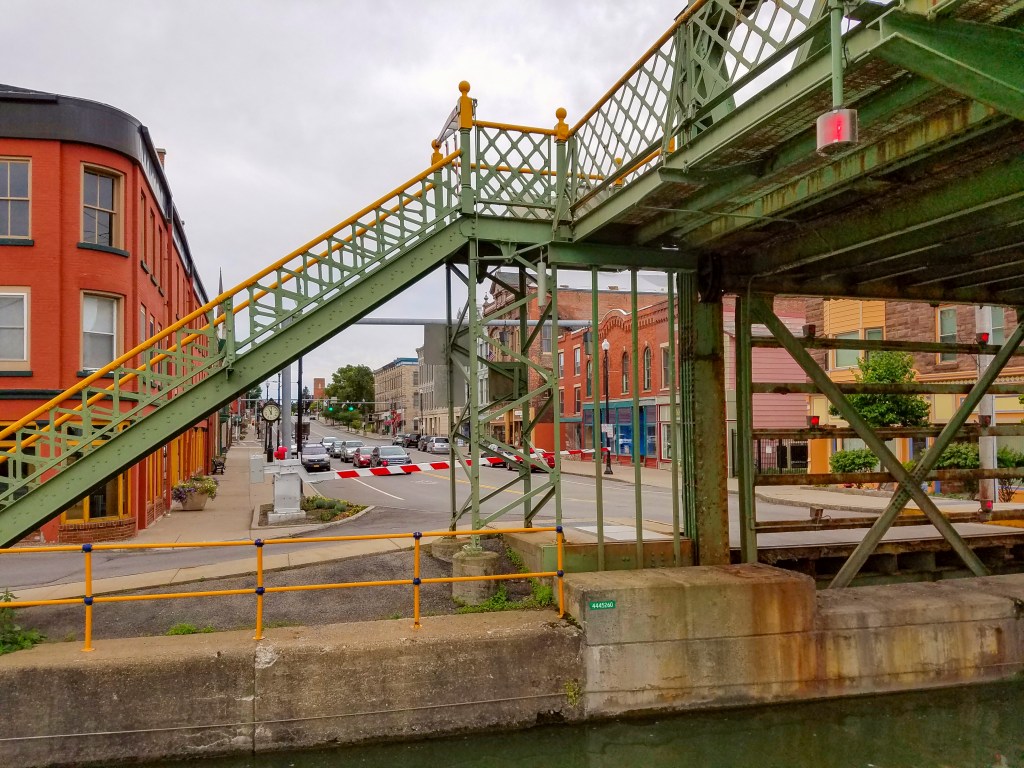
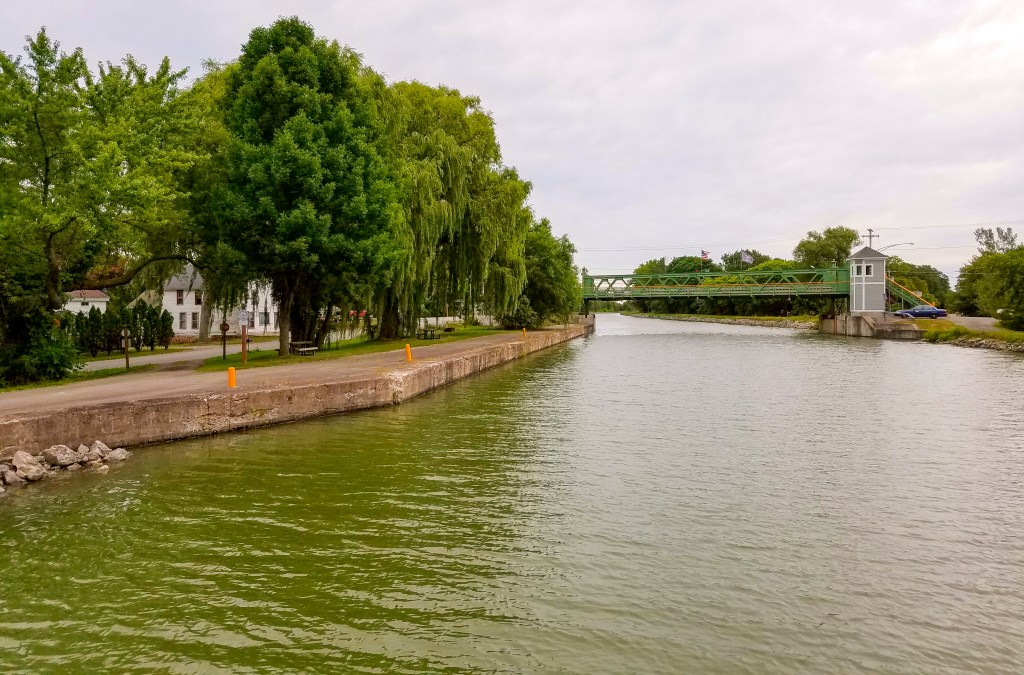
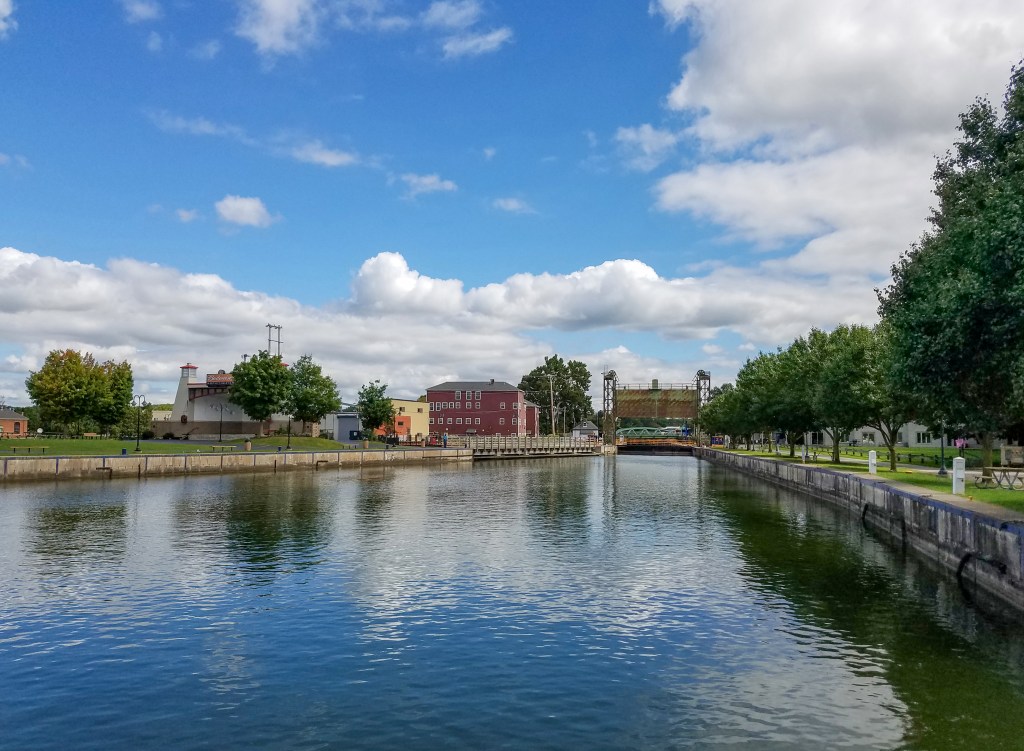
After exiting the Black Rock Channel, we were into the Niagara River, which was unpleasantly choppy until we turned into Tonawanda River. Not the most attractive waterway we have been on, and even after making the turn into the Erie Canal proper, it was somewhat unprepossessing until we had passed through the double lock at Lockport. The stretch between Lockport and Rochester is very pleasant, with small towns that are making the most of their waterfront and the opportunities for tourism. There are many lift bridges, all freshly painted in soft green with contrasting bright yellow trim. Most of the towns have free docking at the town walls, and many have installed power pedestals and shower facilities. One of the lock keepers told Dick that she is employed full time, all year round. During the winter when the canal is closed, they take apart and refurbish all the lock and bridge mechanisms. She said her winters are spent “up to the elbows in grease!” At each lock we were asked how far we planned to go that day, and the keepers called the next lock to tell them to expect us.
In Middleport we were joined for the evening by Wade, a talented photographer I met when we lived in Olean some years ago. It was nice to catch up and hear about his extensive world travels and his photography. The next day we travelled to Spencerport where we were met by another friend from the Olean Camera Club. Barbara was not able to stop for a meal, but we had time for a chat and a cup of tea and hope for a longer visit, perhaps next year when we are in the Finger Lakes.
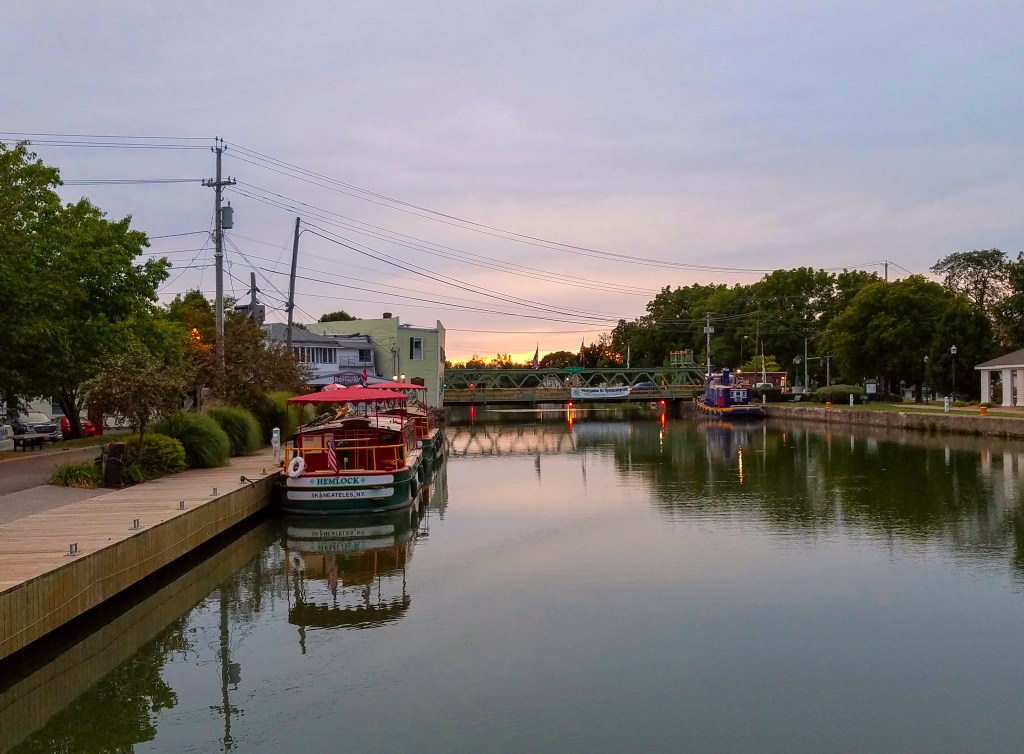
A frequent sight on the Erie Canal are English-inspired canal boats that appear to be a popular vacation choice. The boats are a little wider than UK narrowboats, and generally shorter at a maximum of 43 feet, but they are driven by a traditional tiller at the stern, and they all look very clean and in good condition. You can rent them from Midlakes Navigation, and they offer 3, 4, and 7 day rentals. We do not wish to be disloyal to Nine Lives, but we were intrigued by the possibilities!

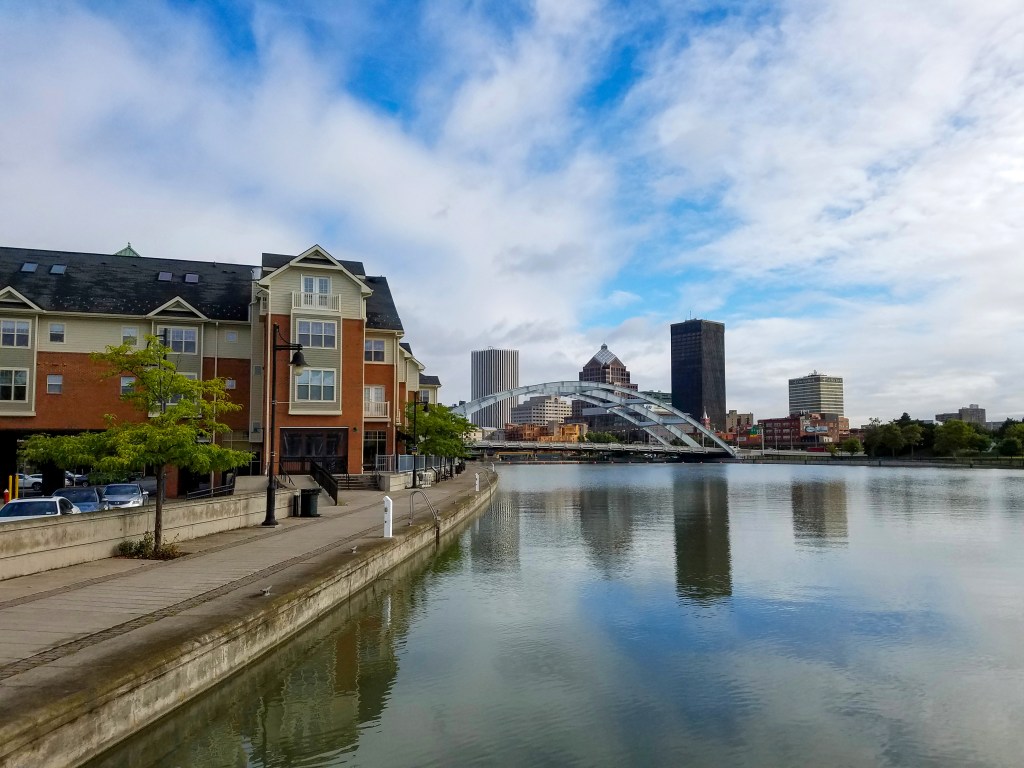
Rochester is another city with an attractive downtown. We turned off the Canal into the Genesee River, navigable almost to the city center. We tied up at a good dock in Corn Hill Landing, a revitalized historic neighbourhood. The waterfront complex of rental apartments includes several restaurants, one of them is a very pleasant wine bar. We walked over and each ordered a wine flight, sparkling for Dick, and rose for me. To accompany we had a meat and cheese board, with fresh French bread, local honey, and grainy mustard. It was a delightful way to spend an hour in the afternoon, particularly as we were planning an “eating up” evening of leftovers on the boat!

The next day Dick rode his bike through downtown to Lake Ontario. He reports that Rochester is a very clean city with lots of parks and waterfront paths. It is strange that a canal has never been cut to bypass the waterfalls in the river and allow access between the Erie Canal and Lake Ontario. Apparently, it has been proposed many times, but so far nobody has found the money.
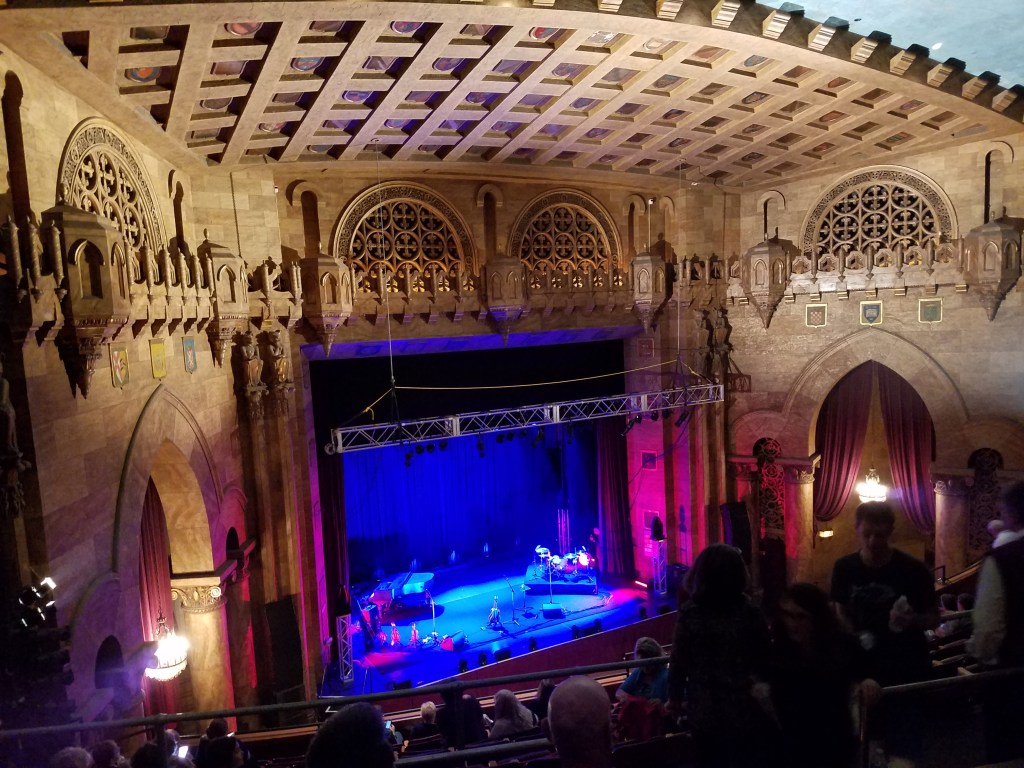
In the afternoon we took a rental car to Ithaca, and after a very nice meal in a French restaurant we went to a concert by Joan Baez. What a remarkable woman she is. She played straight through without an intermission (or a chair), and returned to sing three more songs for an encore. It was a mix of old favourites and new material from her latest album. Although she can no longer sustain the high notes, at 77 years old, she is still an amazing performer, and we were very glad we were able to take the time to see her on what is expected to be her last tour. The theatre is also of historic and architectural interest. The building, originally constructed in 1915, began as a garage and Studebaker showroom. In 1926 it was transformed into a cinema and vaudeville palace. The extravagant combination of Moorish and Gothic architecture is striking. After struggling for many years as a movie theatre that closed in the 1980’s, the building was condemned in 1997 and slated for demolition. It was saved by strong community support and fundraising from both municipal and private donors, and has been operating as a concert theatre since 2001.
Returning to the boat at midnight, we planned a slightly later than usual departure, but our Rochester experience was not yet complete. At just past 4am I became aware of footsteps and a slight rocking of the boat, as well as conversation from outside. I got up and shouted at Dick to wake up. No response. Shouted again as I opened the hatch and went up to the cockpit to find the absolute cliché of a black man in a hoodie sitting on the boat. I shouted at him “GET OFF THIS BOAT”, and somewhat to my surprise, he did, with profuse apologies and compliments on the boat. He told me it was such a beautiful boat he just wanted to try to get a picture of himself sitting on it. His girlfriend on the dock also apologised and paid compliments. As this was happening, Dick finally woke up, just long enough to understand what had happened, to hear the apologies, and know that his intervention was not required. Then back to sleep he went, while I lay awake for hours getting over the shock! Thinking about the incident, I came away with a few thoughts. Given how well spoken and truly apologetic the man and his companion were, we are assuming they were simply walking to or from work, saw the boat and thought it was unoccupied and that they would not disturb anyone if they took a picture. It would have been very easy to over-react. By coincidence I have been reading in the AGLCA forum about several boats being boarded while tied up on the Illinois River. The boaters reported that they used wasp spray and other unspecified deterrents to get rid of the intruders. I know that many boaters (legally) carry firearms. In our case, while it was, for me, a disturbing experience, the trespassers were quite innocent, and over-reacting could have been disastrous. One thing we did agree on, in future we will make a point of connecting the lifelines and rail as well as bringing in the boarding ladder if we are using it. Just to make it a little less easy to get on board.
After Rochester we stopped at Newark, with a well maintained town wall, excellent shower facilities, and a nice little canal museum.
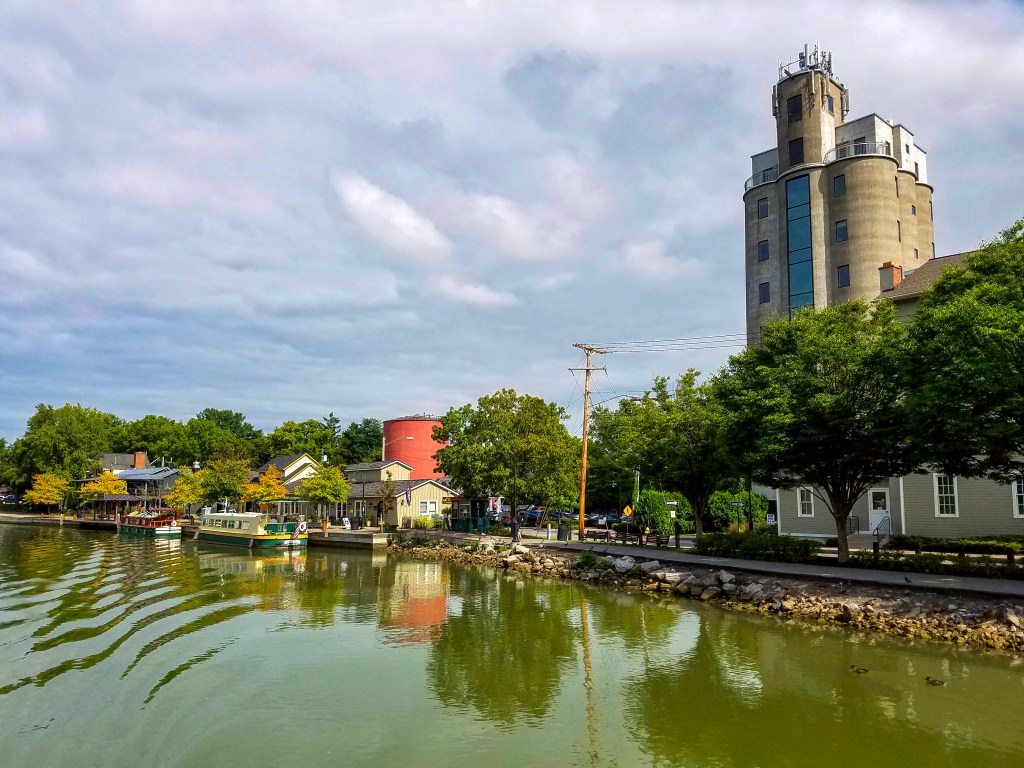

From there the Canal became less scenic, and the towns not quite as pretty. There followed long stretches with no towns or signs of habitation. The next night we tied up below a lock, truly in the middle of nowhere (Tripadvisor reported the nearest restaurant was 4.5 miles away). It was an incredibly peaceful stop, almost like anchoring. We also noticed a somewhat different attitude on the part of the lock keepers (with the exception of the one we tied up at.) They seemed to be less likely to be paying attention to their radio when we called for a lock-through, requiring several phone calls before we could see any activity at the lock, and often no response on the radio at all. They were no longer interested in how far we would be travelling, and certainly not willing to call the next lock to let them know we were coming. The attitude seemed to fit with the general condition of the houses we saw along the canal in this stretch. Tumbledown shacks, yards full of junk, and lots of derelict docks.
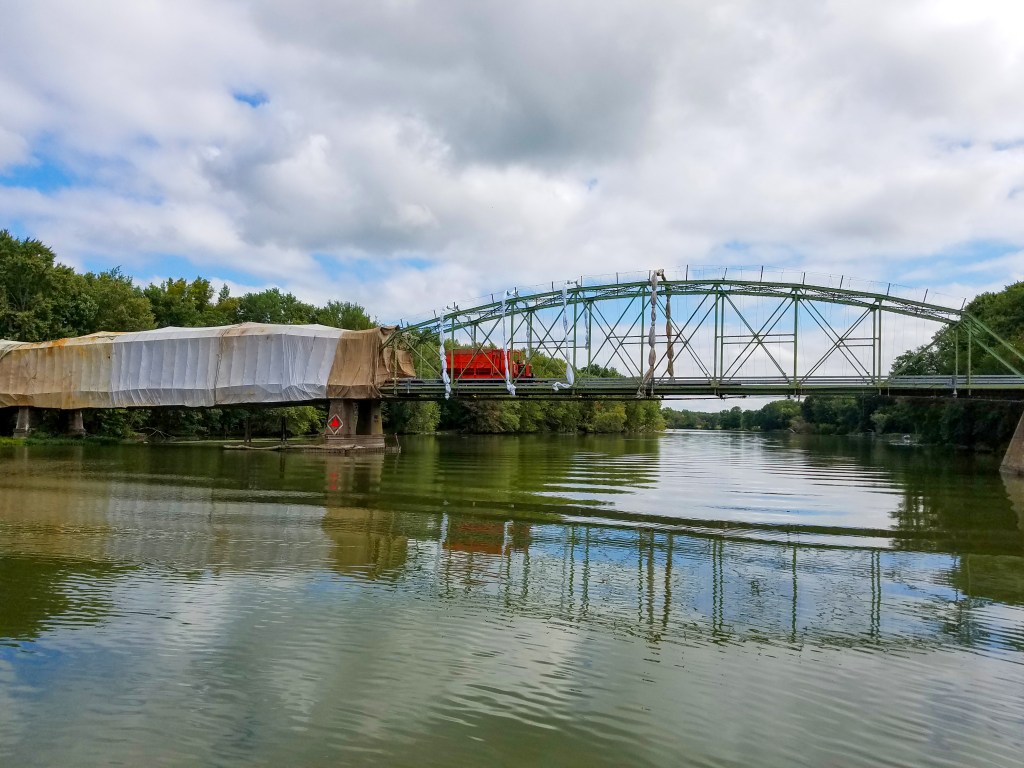


Shortly before Baldwinsville we began to see an improvement. New homes and tidy cottages with well kept grounds and well maintained docks lined the Seneca River (the Canal becomes the river for much of this stretch). Baldwinsville is a very pleasant town of about 8,000 people. It is built on both sides of the canal, and includes an island between the canal lock and the dam. On the island is a large park with an amphitheatre, and we understand that concerts are held regularly through the summer months. The town wall has power and water, at $5 a night on the honour system. Here we met a couple of Loopers who have been spending summers on their boat for the past 8 years. They completed the loop in 2010-2011, and since then, they have been twice to Maine, spent two summers on Lake Michigan, and this summer they went to the north side of Lake Superior. Now me, I think of the Canadian side of Lake Superior as rocks, pine trees, and mosquitoes big enough to carry off your boat! However, Jill told me they loved it, anchoring most nights for nearly a month. The Lake was far more peaceful and the weather predictions more reliable than Lake Michigan, and as for mosquitoes, when they were there it was far too cold! It was certainly interesting chatting with them.

From Baldwinsville it was a short morning’s run to Brewerton, at the north end of Oneida Lake. At Winter Harbor, an aptly named marina where we will leave Nine Lives until next June, we found several other Looper boats in various stages of getting ready for winter storage. Nine Lives will be hauled out and stored in a huge heated and humidity controlled storage shed. While considerably more expensive than non-heated storage, there are a great many advantages, including being able to leave the water tanks full, most of the pantry food on board, and the security of knowing that damp will not be an issue. Since this is also a working boat yard, a quite long list of maintenance and repair items will be dealt with before launch next spring. Today is being spent packing up the clothes we will be taking home, doing a lot of cleaning, and generally getting Nine Lives ready for a long winter’s nap. We expect to leave tomorrow late morning, driving to Hagerstown, PA, and then get home to Hilton Head by early evening on Tuesday.

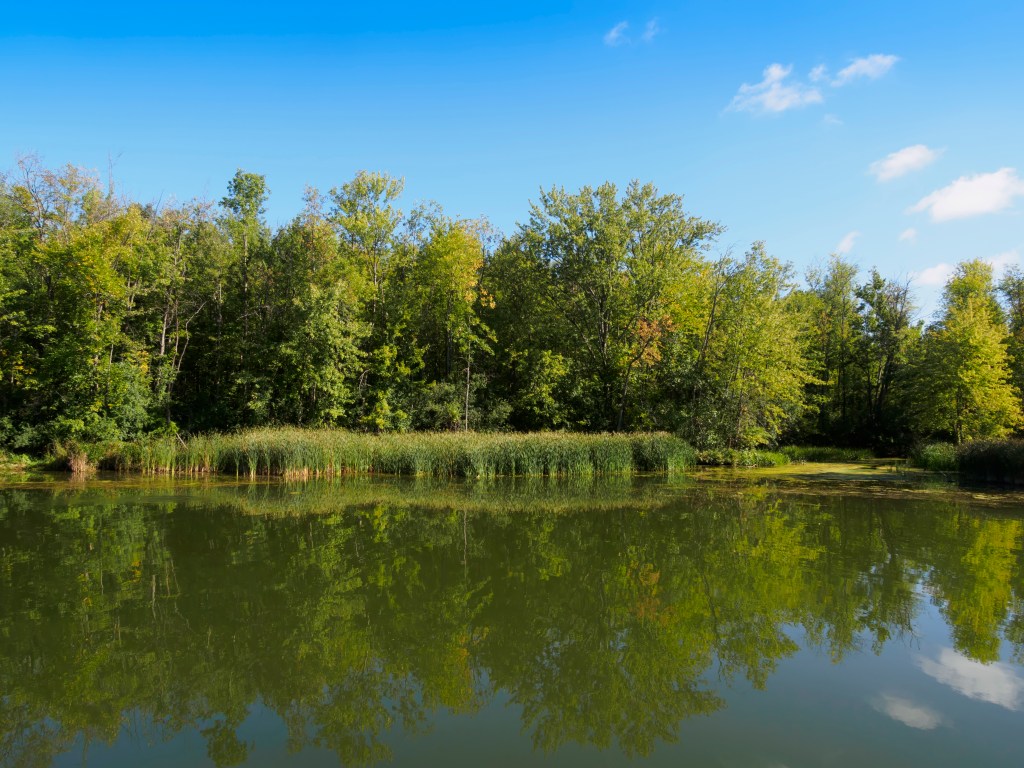
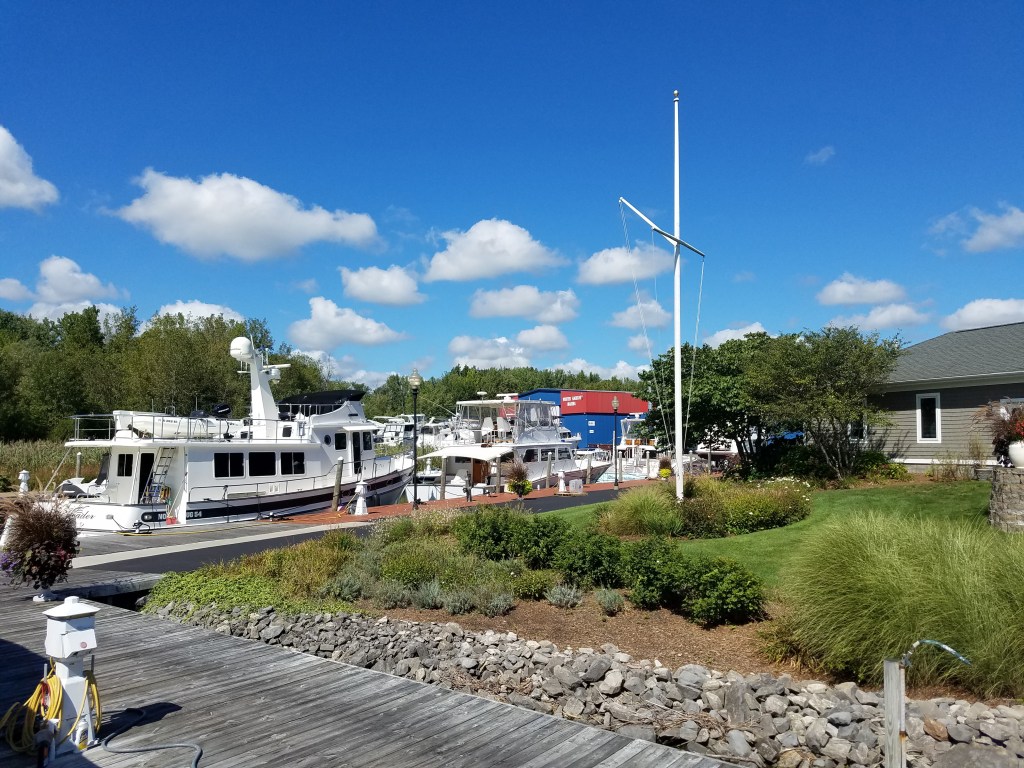
Look for the next instalment of the Nine Lives blog some time in June 2019.
 The Voyages of Nine Lives