
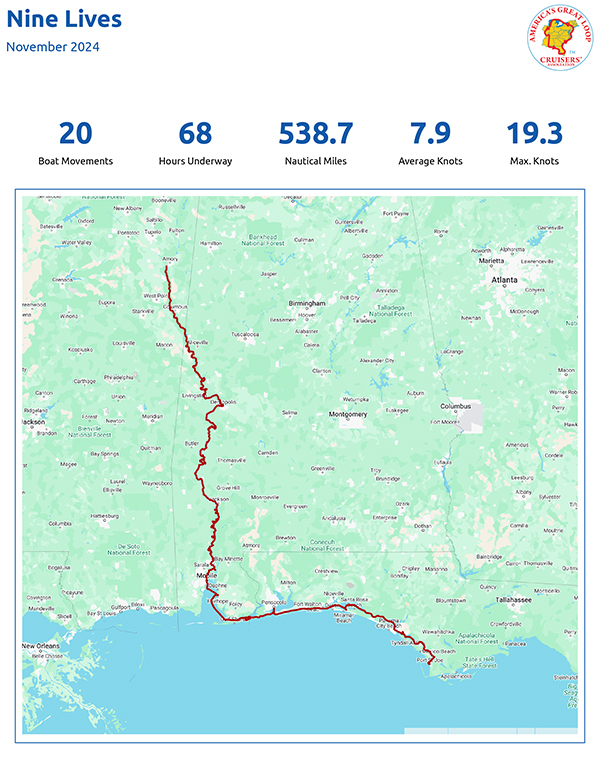
Repositioning the car for the last time on this trip was uneventful, and the return journey was quite interesting. We took the rental car and our vehicle from Pensacola via I-95. That Interstate drive along the Panhandle has to be one of the most boring drives in America. We are both depressingly familiar with it from travelling back and forth between Houston and Hilton Head a few years ago. Eventually we turned south and arrived at Port St Joe. After a quick visit to the marina office to make sure they were aware that our vehicle would be in their parking lot for a couple of weeks, we got back into the rental car and set off for Pensacola. This time we took the coast road all the way. It was quite a change from our last trip 24 years ago. It is that long since we were last in the Florida Panhandle. Dick’s Mum and Dad used to winter in Panama City Beach, and Dick and I stayed at a timeshare in Sandestin one Christmas. Today, with the exception of the environs of two Air Force bases, the entire coast is either fully built up or in the process. Even the devastating hurricane of 5 years ago has not discouraged people from rebuilding the lost homes, and developers are building whole new tracts of housing. Apart from the towns, and of course the glorious beaches, there is nothing except miles and miles of houses. Most new buildings are designed to resist hurricane damage, but neither of us would be tempted to live in the area.
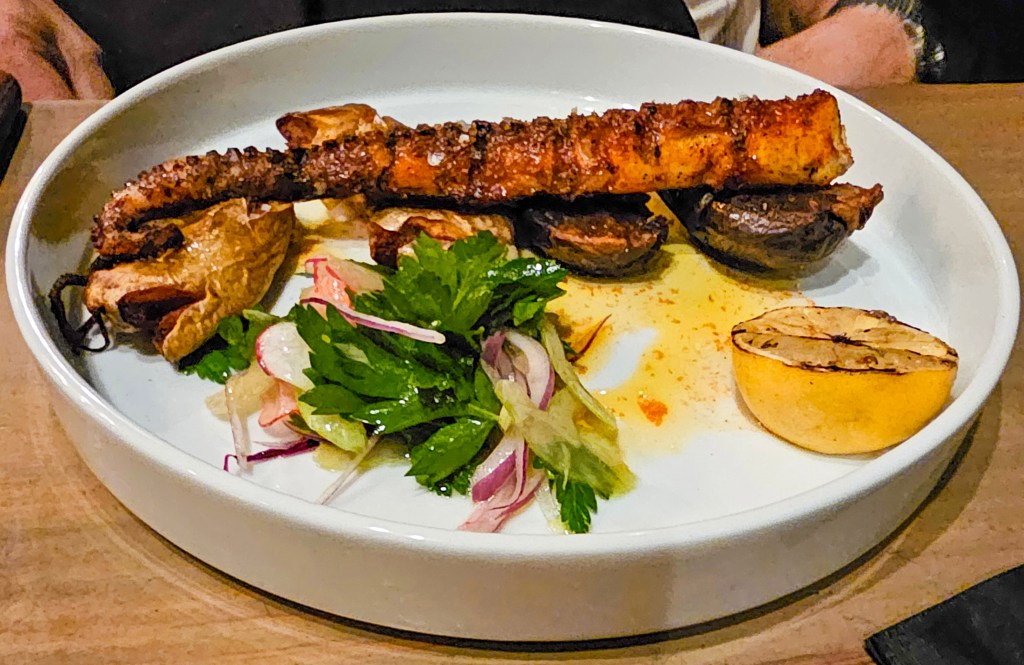
Our restaurant back in Pensacola that evening had a lot of promise, but was a great disappointment. Dick had been looking forward to the octopus starter, and that was about the only success. My specialty fries, loaded with sausage and mushrooms, was so cold that I sent it back. Both main courses were merely warm. The fries were not charged, and they comped one dessert, but no manager came to apologise and one would have thought that after the fries were returned they would at least have made sure that the main courses were served hot.


Dick spent the next day running errands and seeing if he could fix the water issues under my bathroom sink. Eventually, he had to give up, so for the rest of this trip I have had to dump water out of a strategically placed bowl every few hours, rather than letting it seep into the bilge. The problem is that the assembly under the sink is made of polybutylene, a material now banned from plumbing applications because it fails.
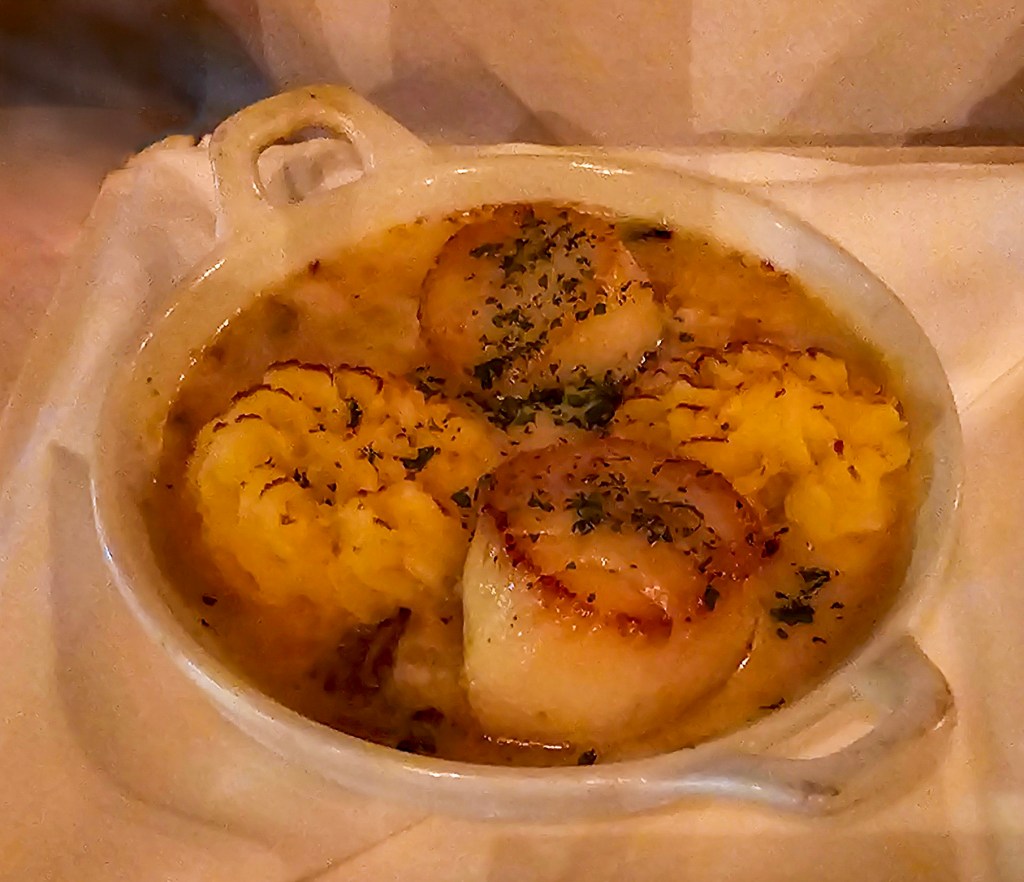
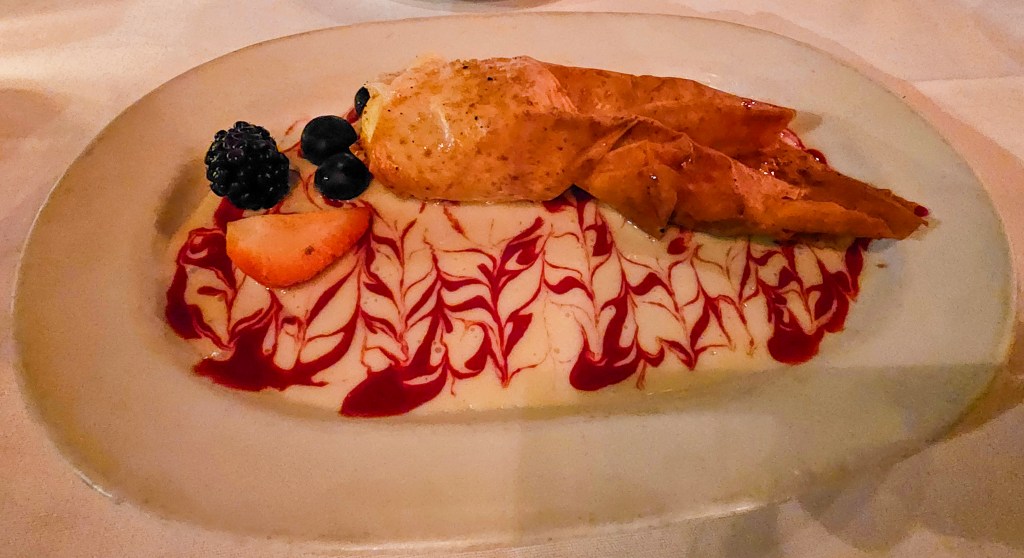
In the evening we walked over to Jackson’s, a really good steakhouse. All our choices were excellent, and piping hot!
The next day brought hours of rain. About 5 inches fell in 24 hours, most of it between dawn and 3pm. I enjoyed preparing a spread for our planned docktails that evening. We expected 10 guests, but 6 showed up, so there were a lot of leftovers! It was an enjoyable evening anyway, and we will persevere with invitations.

Every year’s Looper pack has a slightly different character. This year we are seeing far more 2 to 5 boat groups than previously, who travel together and tend not to socialize outside their group. Since we prefer to make our own decisions and don’t “buddy boat”, we are finding it harder to meet people this year. This is also not the first time that this year’s Loopers have accepted our invitation and then not arrived.
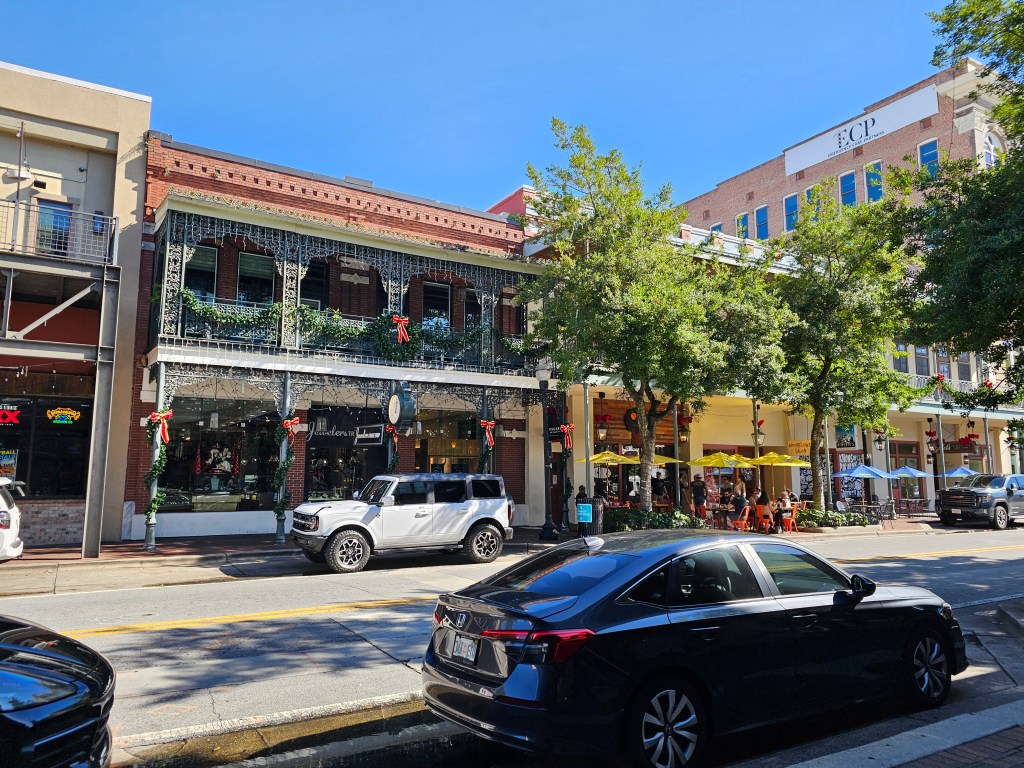
We took a walk to Pensacola’s historic main shopping street. To be honest, there are far too many restaurants and not enough shops. We had fun looking around a home shop that was all ready for Christmas. Well, I enjoyed it, Scrooge waited outside after a quick whip through. There was an interesting chocolate shop, where we tried chocolate coated pretzels (yummy) and ate some ice cream. The highlight was being directed upstairs when we stopped at an oil and vinegar shop, to discover a wonderful array of kitchenware, gadgets, and cheeses. A gentleman from Italy offered wine tasting. Dick loved chatting with him, and trying every one of his offerings, while I filled my basket with treasures that I never knew I needed. I tasted the Chardonnay, while the nice man tried to teach me how to cook like a true Italian “in 3 minutes”. We only had space for 3 bottles of the wines he was selling, but altogether it made for a very enjoyable hour!

The history of Pensacola began in 1559, with a Spanish settlement of 1500 colonists that failed following a significant hurricane and was abandoned after just 2 years. Spain decided that northwest Florida was too dangerous to settle, and they abandoned attempts for 137 years. When the French began exploring the lands to the north and west, Spain decided that their territory was threatened, and they established another settlement near present-day Pensacola. In these early years, the Spanish encouraged escaped slaves to join the colony, and there was intermarriage between the mostly male Spanish members of the fortified trading posts, native American women, and the escaped slaves who were given freedom in exchange for conversion to Catholicism. The multiracial heritage of the city lives on in the local creole and Cajun cuisine, and in the ornate wrought iron balconies of the downtown buildings.
In 1763, Florida was ceded to Britain and Pensacola became the capital of the new colony of West Florida. The colony remained loyal during the War of Independence, but it was never a priority for the British, and was handed back to Spain as part of the Treaty of Paris in 1783. The War of 1812 brought Florida into the possession of the United States, and it became a state in 1845.

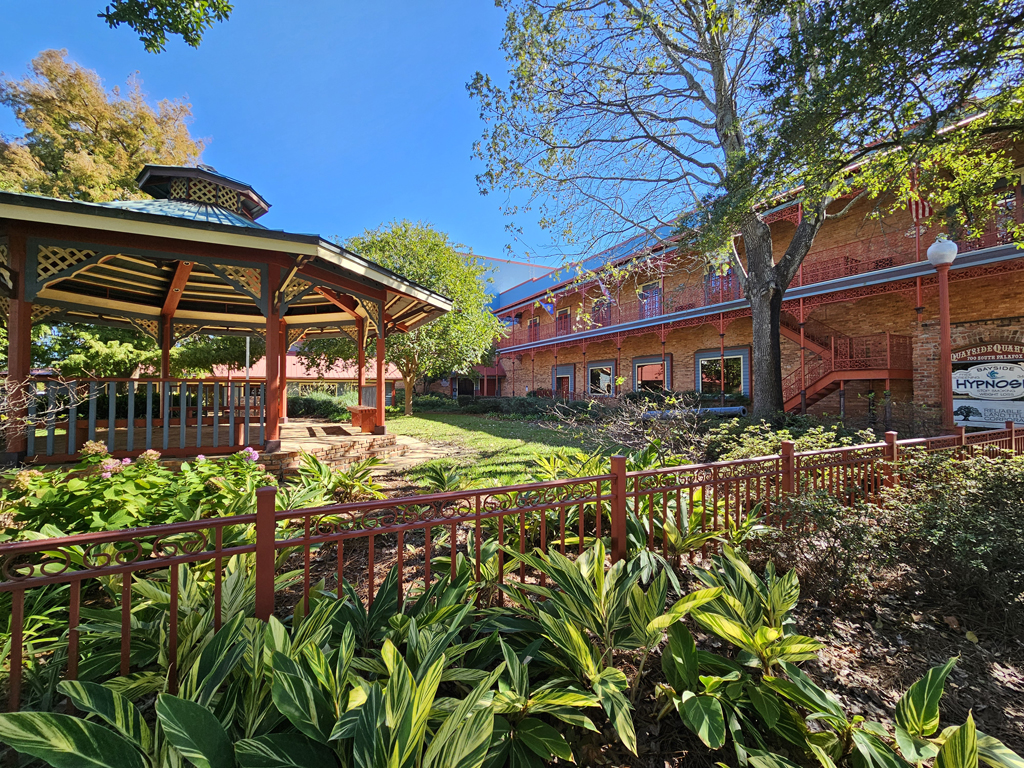
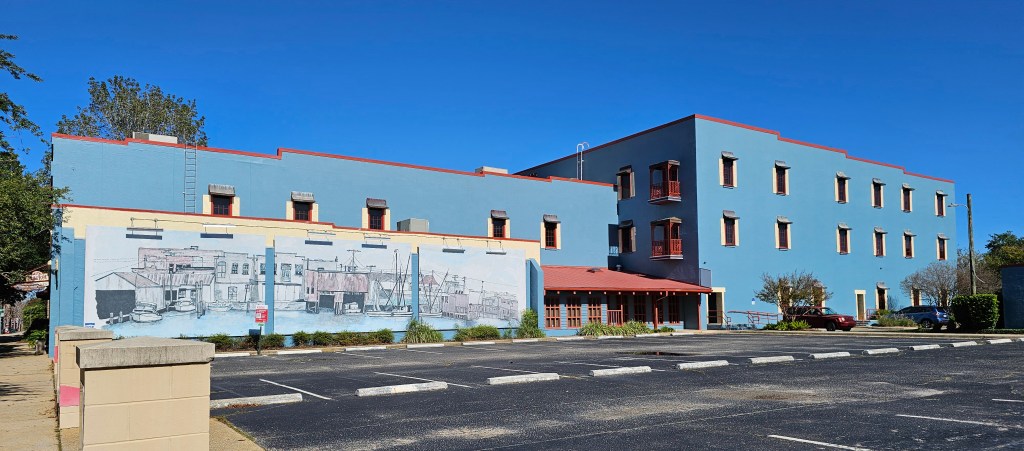
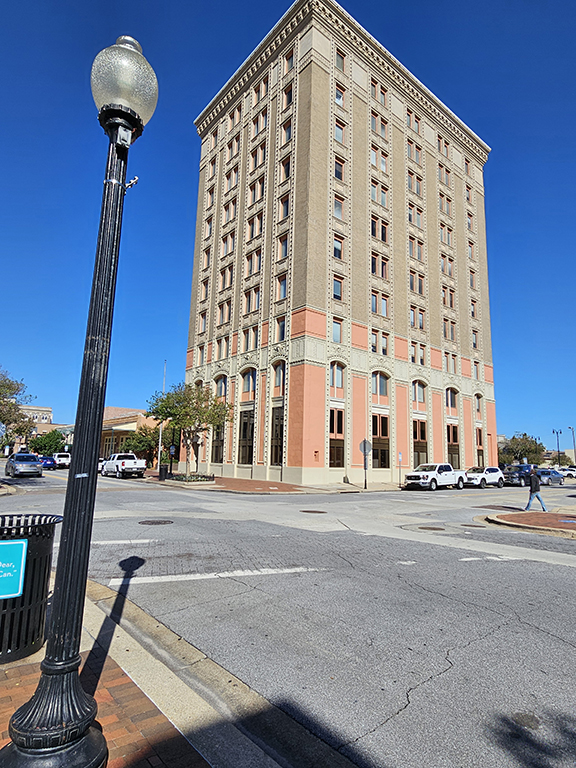
The history of Pensacola includes stories of the struggle for civil rights for black people. During the 1950s and early 60s, African Americans in Pensacola began sit-ins to protest against “whites only” lunch counters in stores. They were verbally and physically harassed, and some were arrested on trumped up charges. The African American community raised bail money, and the peaceful protests lasted 702 days. These protests included the sit-ins, also marches, picketing, and a selective boycott of stores. During this time, downtown stores lost 80% of their business. The lunch counters were integrated in 1962.
Pensacola is also associated with the presence of the Naval Air Station, the first one commissioned in the United States in 1914. The Flight Demonstration Squadron, The Blue Angels, is stationed in Pensacola, but their winter training takes place in California. They return to Pensacola in March, and can be seen practicing through the show season. We heard a few jets while we were in the area, but did not see the Blue Angels.
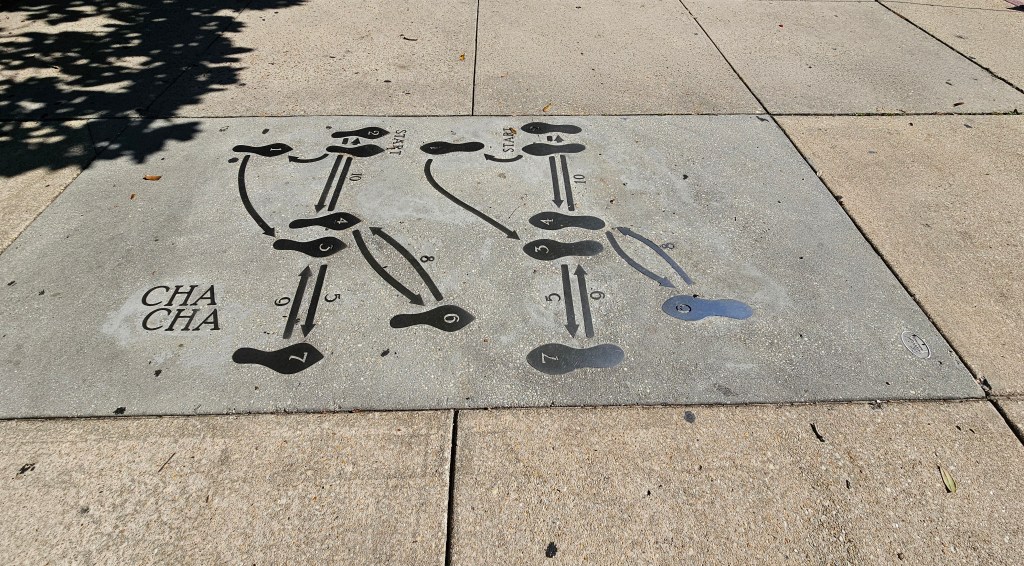
Aging plastic seems to be our theme for November. After the various plumbing issues, all caused by failing plastic, Dick was disappointed when his venerable bike helmet fell apart. Investigation at a bike shop revealed that parts are available (who knew?) but they didn’t have any in stock, so Dick bought a new helmet. This one is larger, heavier, and all white, and the comment at the bike shop was that he looks like a Storm Trooper (Star Wars). He does. Just a couple of days later, after an excursion in Pensacola, the part that clips the bike lock to the crossbar fell apart. Also plastic. Fortunately, Dick also has some cable locks, so he can continue his rides and order the broken piece from Amazon. Clearly, this is a part that fails often, according to Amazon, there were 50 sold on the day I put ours into the shopping basket!
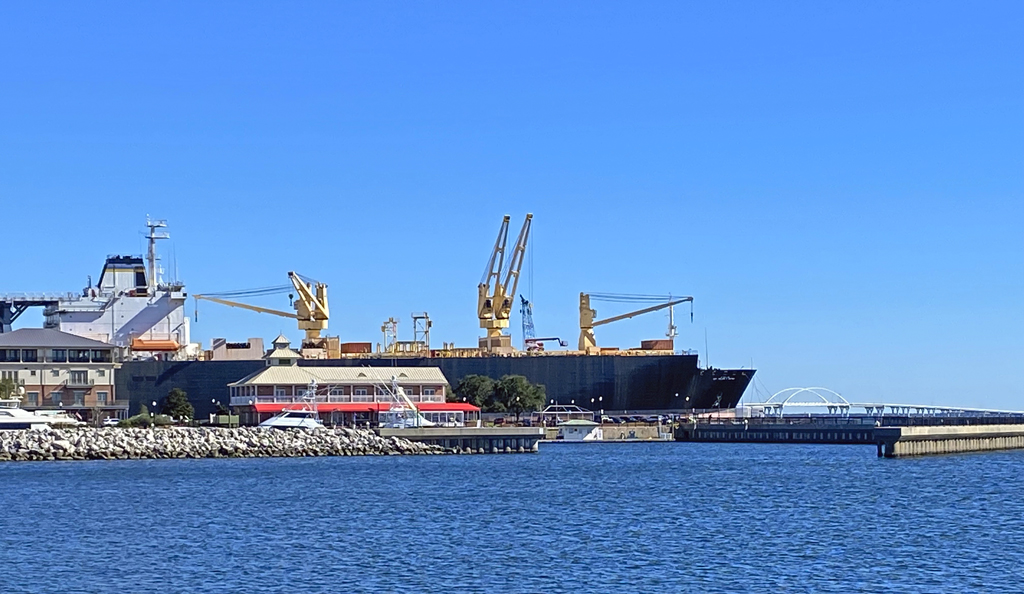
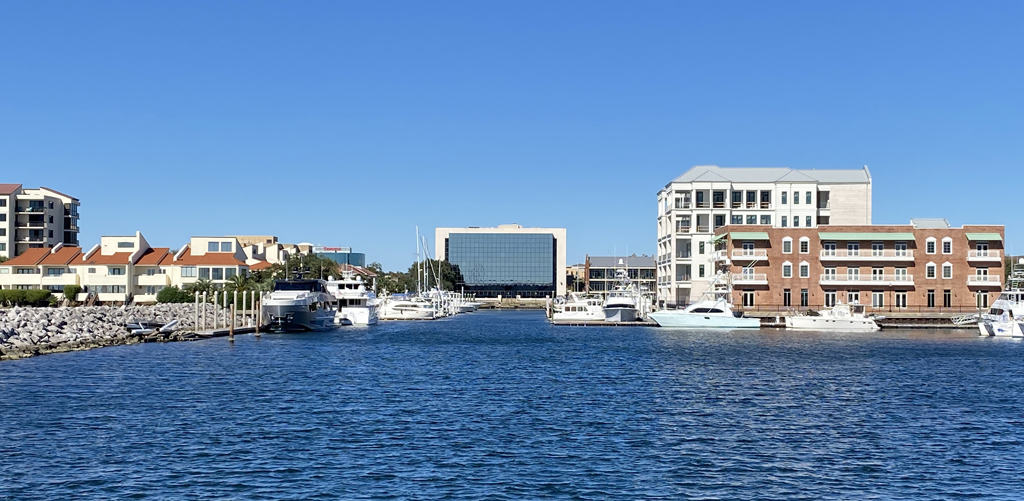
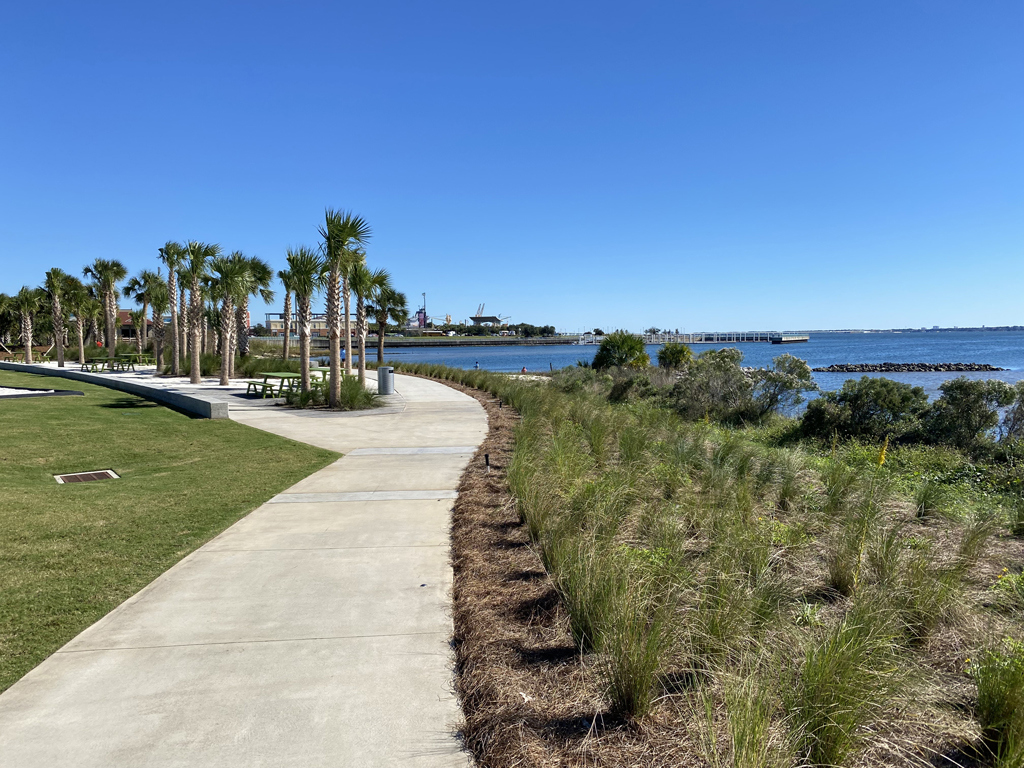
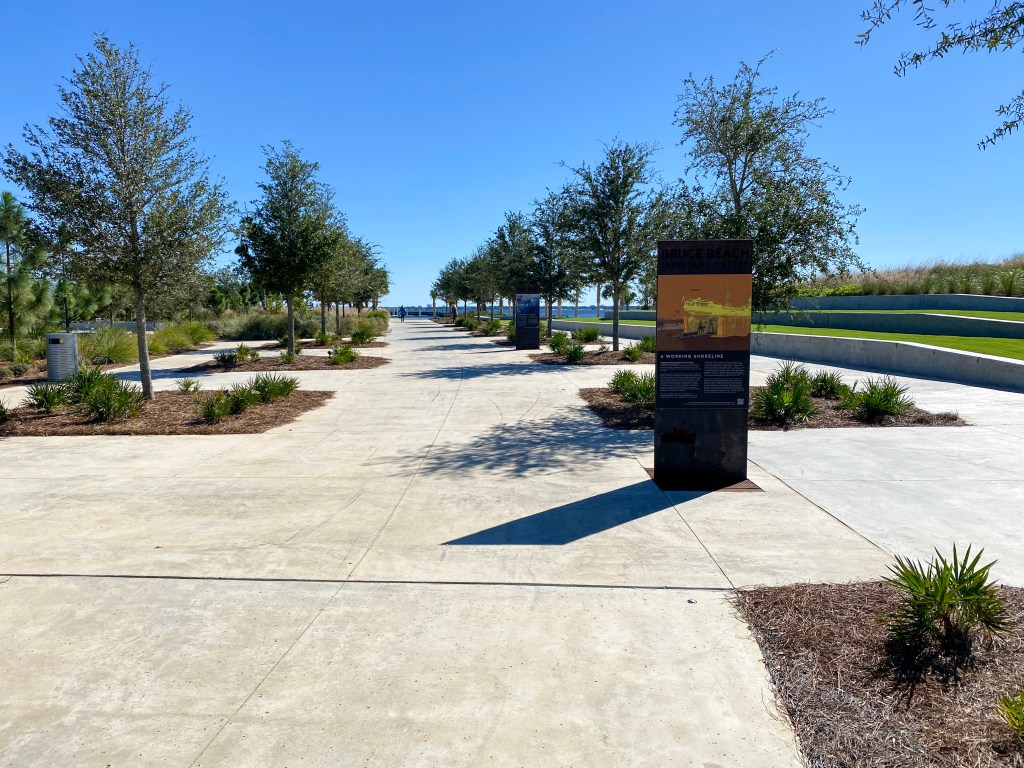
Dick enjoyed a great bike ride through a waterfront park in Pensacola. He also found a completely deserted public marina. Sadly, it is restricted to boats under 27 feet, and no overnight dockage. Possibly there would be pushback from the owners of the local private marinas if the City decided to allow overnight stops or set themselves up in competition. Bruce Beach Park was very interesting. Reclaimed land was the site of lumber mills from the 1890’s until a hurricane swept them away. In 1917, the Bruce Drydock Company was granted two blocks along Pensacola Bay. A dredging project reclaimed 15 acres, as enough sediment was removed to allow vessels of up to 6000 tons to dock for repairs. The business closed in 1939, and the area became a popular, if somewhat unsafe, swimming hole. Later it was a segregated beach for black people, with a purpose-built swimming pool because the bay waters were polluted and treacherous. In the 1990’s, environmental restoration began to reverse the devastation of the 19th and 20th centuries, and the present public park and restored wetlands area opened in 2018.

After being behind for a couple of weeks, our friends on Proost caught up with us in Pensacola, and the next day Spring Fling arrived. We all went to dinner at Global Grill, had a great time and good food. We don’t know whether we will see either couple before we leave the boat in Port St Joe (doubtful), but you never know.
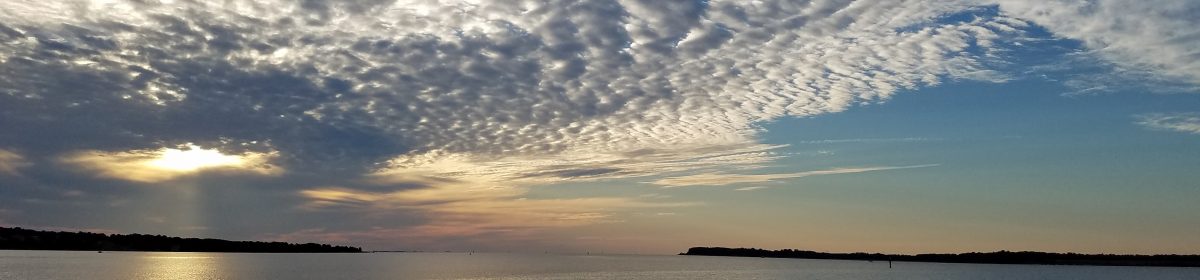
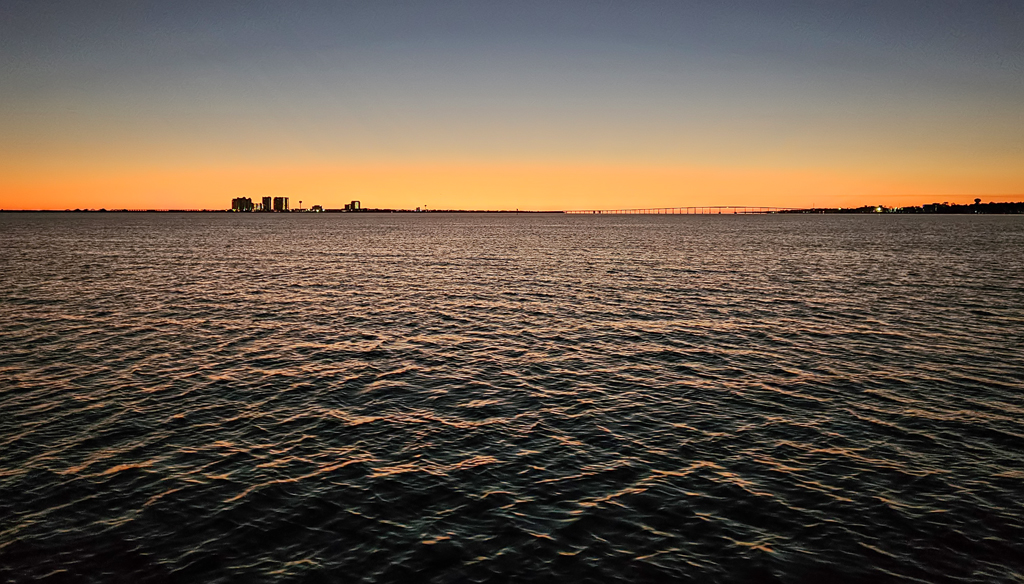
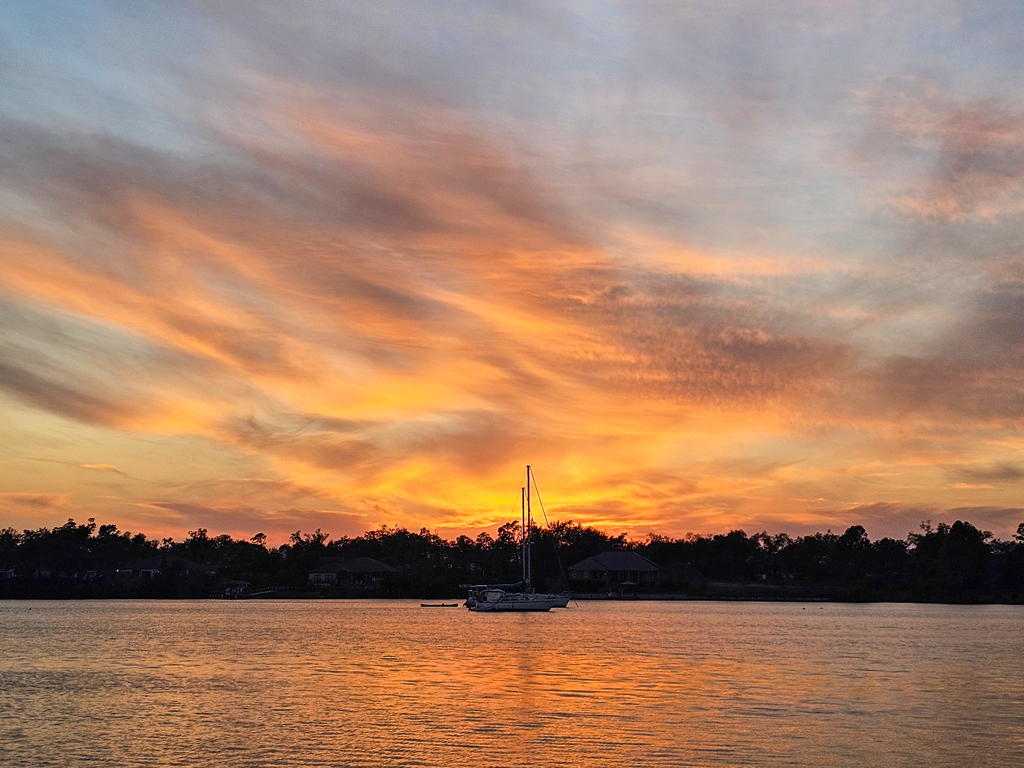
We left Pensacola at a leisurely 10am, for an easy run to an anchorage in Santa Rosa Bay, arriving by 1pm. It is a good spot for protection from north winds, but there was quite a lot of chop until the late afternoon, as well as wakes from passing boaters. There was a brilliant sunset, and I am told the sunrise was also lovely, but I was dealing with a situation at our home in Yorkshire, UK. While we woke up to a sunny, but slightly chilly morning in Florida, England was blanketed with snow, and our cleaner could not get in to turn around the house for incoming guests. Once it was all sorted out, I was able to resume my regular post in the cockpit and enjoy the peaceful morning and a very necessary cup of coffee!
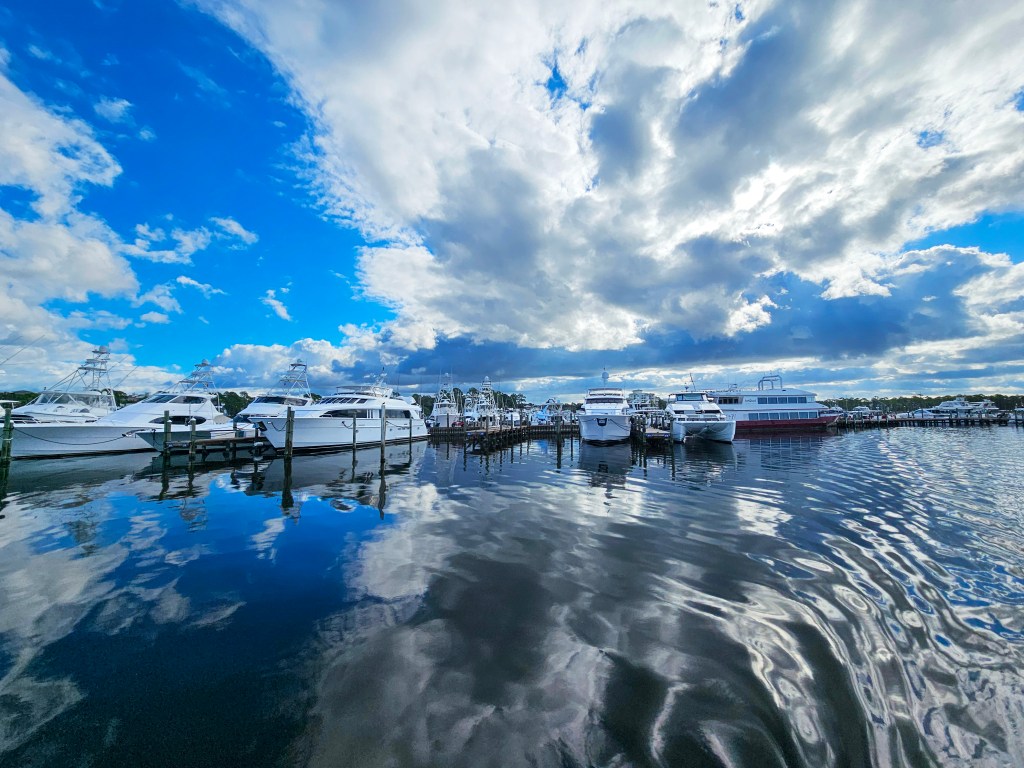
The anchor came up easily, and we had a straightforward morning run to Baytowne Marina in Sandestin. This is certainly a location of contrasts. The marina charges over $5 per foot, a huge price compared to others, and out of budget for most Loopers, and yet they are AGLCA sponsors. The marina is part of a resort, with hotels, shopping, golf, and a beach. I had hopes for the shopping, but sadly, the nearby “upscale boutiques” are definitely not. Instead there is an abundance of t-shirt and souvenir shops and arcades, with noisy bars and take-out restaurants.
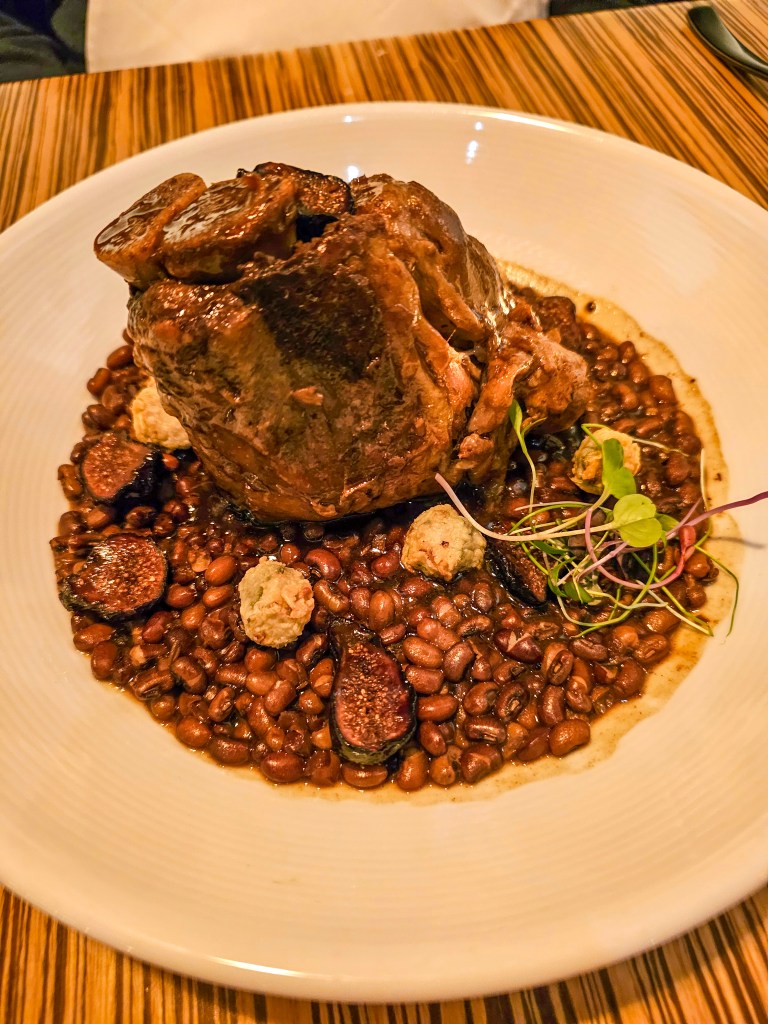
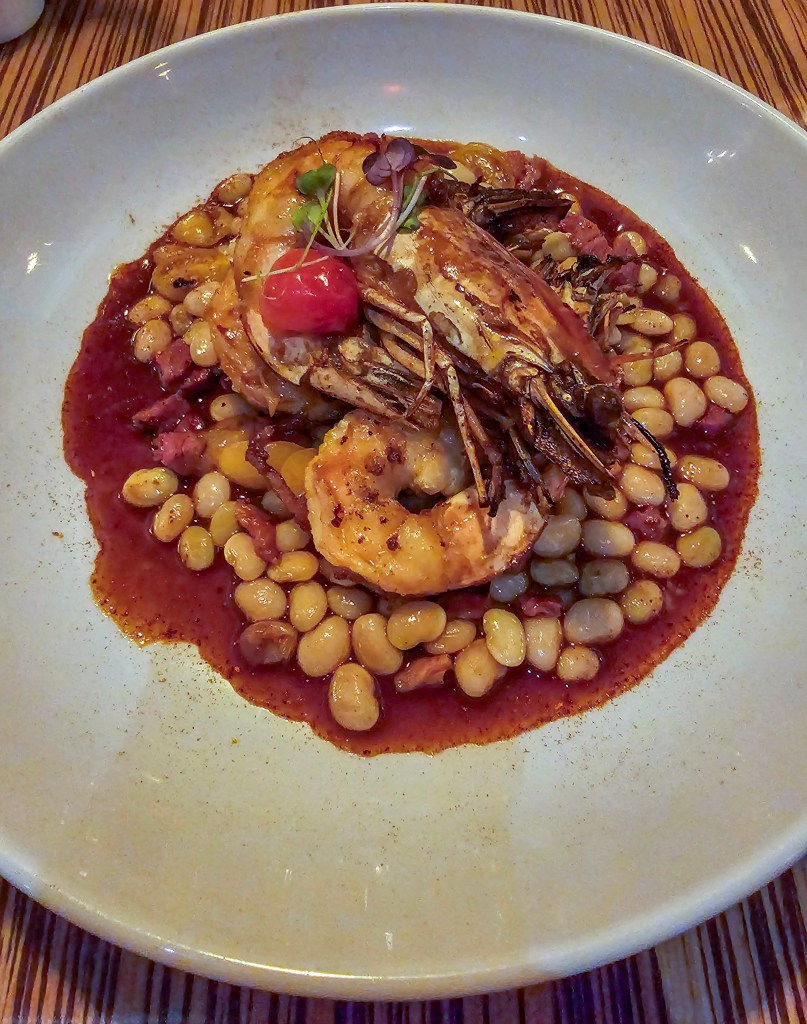
Our first night’s dinner was in the restaurant in one of Marriott’s Autograph Collection hotels. A few months ago, the menu had lots of familiar choices, but now it is trendy “farm-to-table”, with a preponderance of bitter greens, beans, sweet potatoes and squashes. There was little, in fact nothing, on the menu to tempt me. Dick was convinced that I should order the sweet potato, andouille, and kale soup. As two of the 3 ingredients are in the category of “most disliked foods”, I passed and settled for a salad. Dick had octopus again, followed by a pork shank, both were excellent. I chose Australian Prawns, which came with heads and shells intact. They were tasty, but somewhat tough, and undercooked beans were the accompaniment. One wonders why it was necessary to go to Australia for prawns when the bounty of the Gulf is right outside the door. So much for the whole farm-to-table and seasonal produce mantra!
The next day was a highlight. You can rent a golf cart for a day (at the same price as a rental car!), so we explored the local residential areas, very similar in concept to Hilton Head. There is a broad mixture of townhouses and single-family homes, many in separately gated communities, plus a few condos and hotels. All are built around golf courses and lagoons. We then visited the big shopping mall, which has a number of the higher end chain stores, some restaurants, and a supermarket. We always enjoy browsing in cookery shops, and seldom come out empty handed! We agreed that this was one of the best Williams Sonoma shops we have visited.

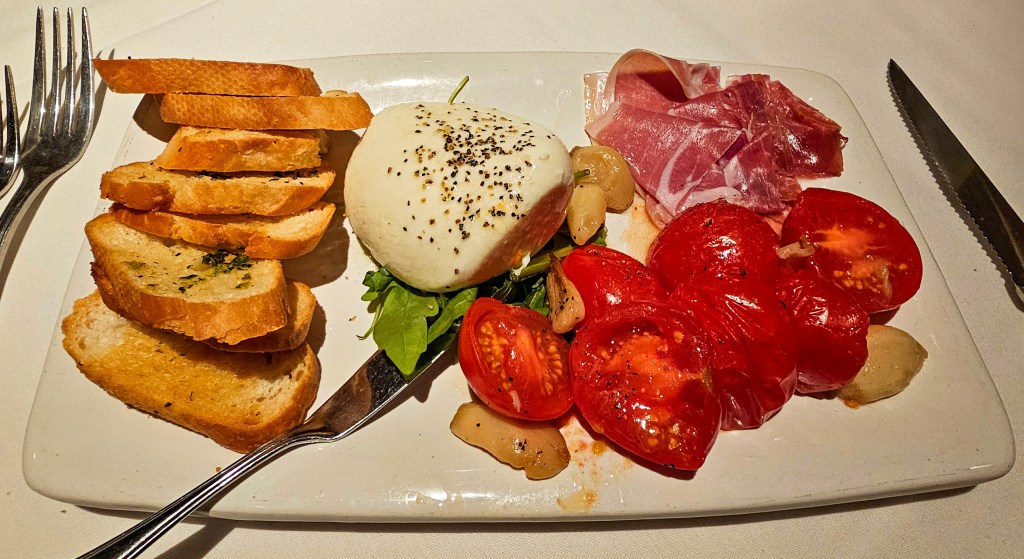
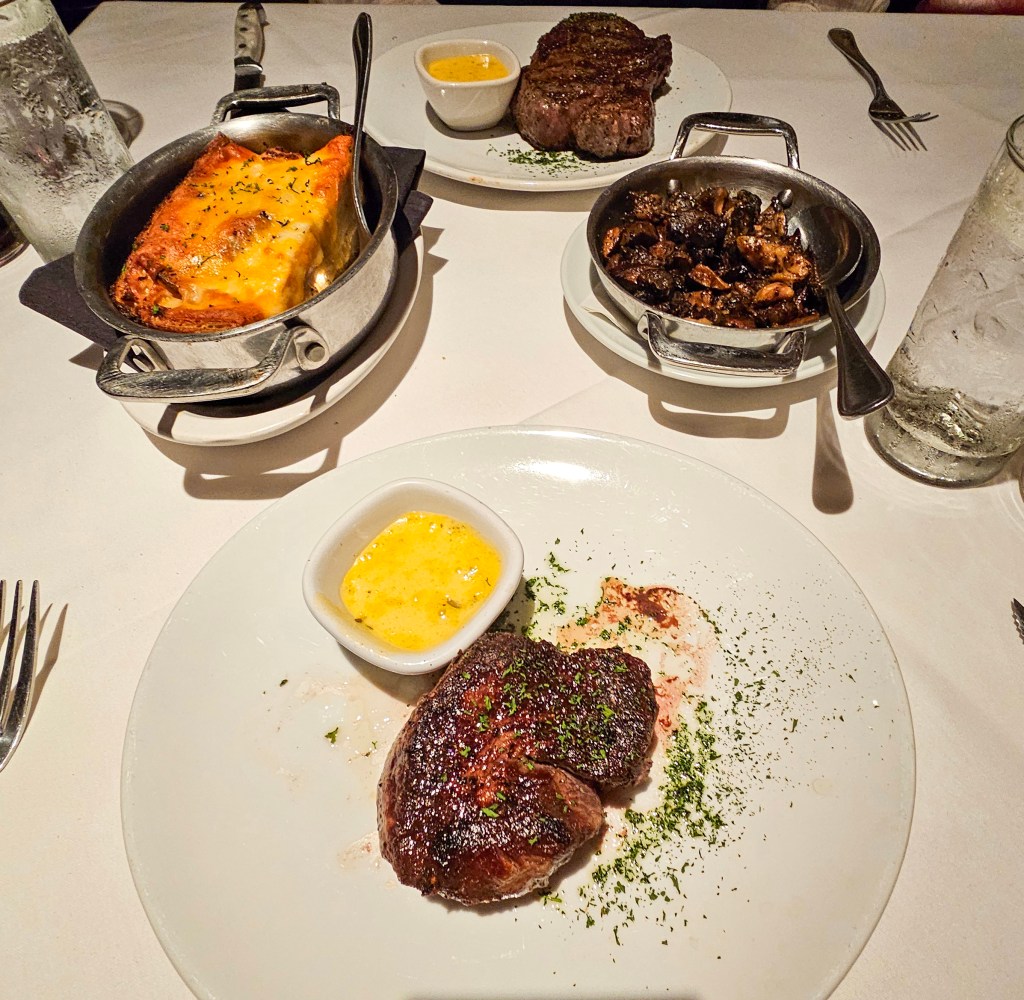
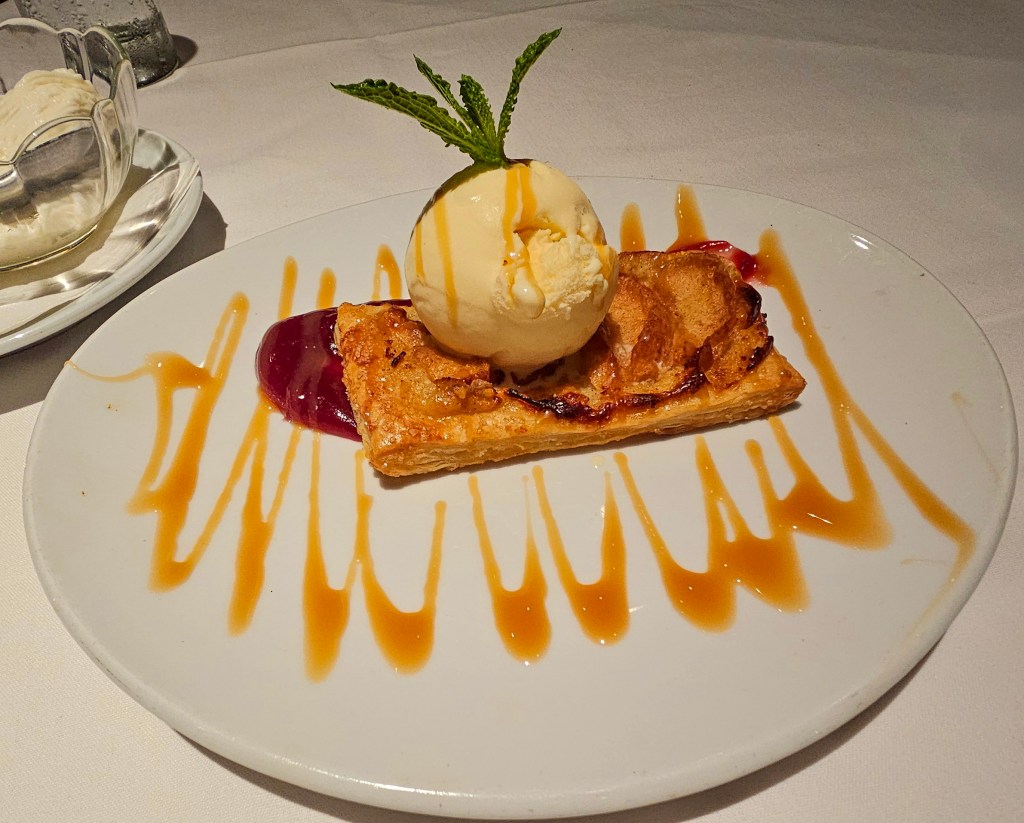
In the evening, we returned to the mall for an excellent dinner at a steakhouse that is part of a very small chain. My burrata and tomato salad with prosciutto was probably the best interpretation of a caprese salad I have ever had. The steaks were perfectly cooked, and everything was nice and hot. The apple galette was a perfect finish.
We were supposed to stay another day, and Dick was looking forward to exploring more by bicycle, but a deteriorating weather forecast suggested that it would be a good idea to move on to Panama City before the winds and waves were set for an uncomfortable journey. The Gulf Intracoastal Waterway is different from that of the east coast, in that it is mainly large sounds and bays with relatively short connecting stretches of canal. The large, open bodies of water are quite shallow, which means that the waves can really kick up and it gets very bouncy and unpleasant. Our friend Pete calls it “sporty”, and I tend to be pretty miserable in those conditions. It was disappointing to walk away from what we had paid for one more night, but we already knew there was a policy of no refunds.
We travelled through the cut called the Grand Canyon, one of the man-made sections of the Waterway. It is about 20 miles long. The book said to watch for bald eagles, but as Dick said, it would seem that the eagles didn’t get the memo. We did see a collection of large plush animals looking out at the channel. A note on Google Earth says that it is called The Welcoming Committee, and the collection has grown considerably in the year since that marker was posted. I cannot find any information, and there are no houses, schools, or other structures anywhere in the vicinity, so we have no idea who the committee is welcoming and why.
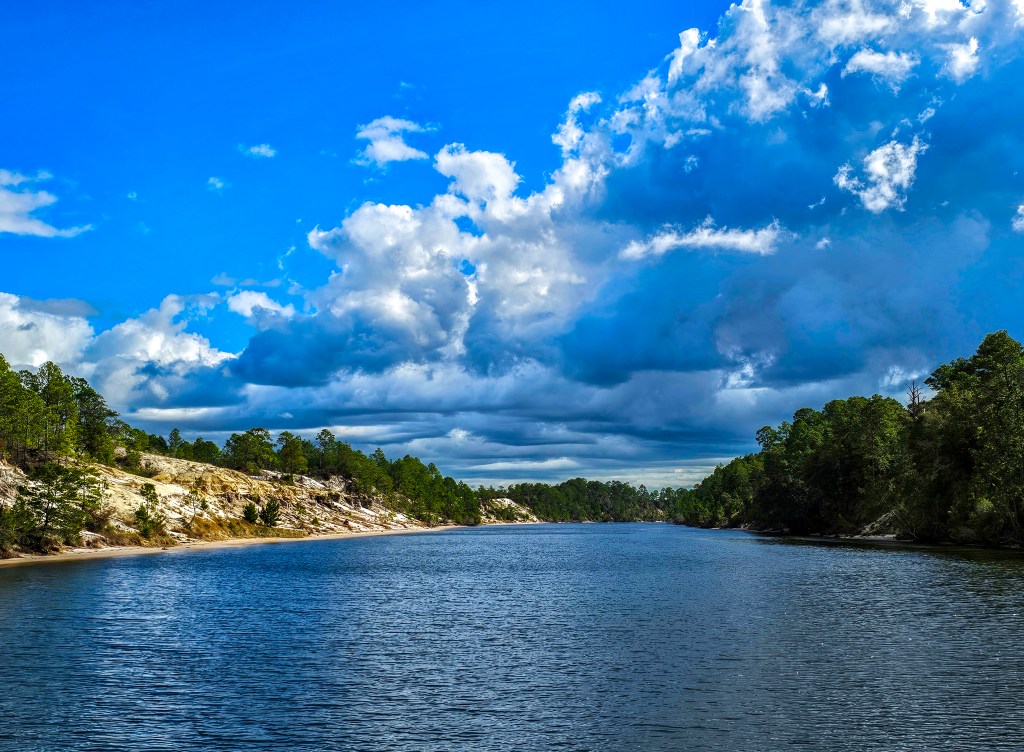


As we crossed West Bay, we heard a loud splash beside the boat. First one, and then three dolphins swam beside us, about 3 feet off our starboard pontoon, for quite a while before they dropped back and went about their important dolphin business.
It was a bit lumpy crossing St Andrews Bay because of the inlet to the Gulf, but for the most part the waves were not on the beam and it was fine. We arrived at Emerald Bay Marina by 4pm. This marina is quite a contrast to Baytowne, isolated in a somewhat industrial and down-market neighbourhood. Apart from the oyster restaurant, any outings require Uber, and there are no interesting shops. The marina is mostly occupied by sailboats, we have not seen this many for some time.
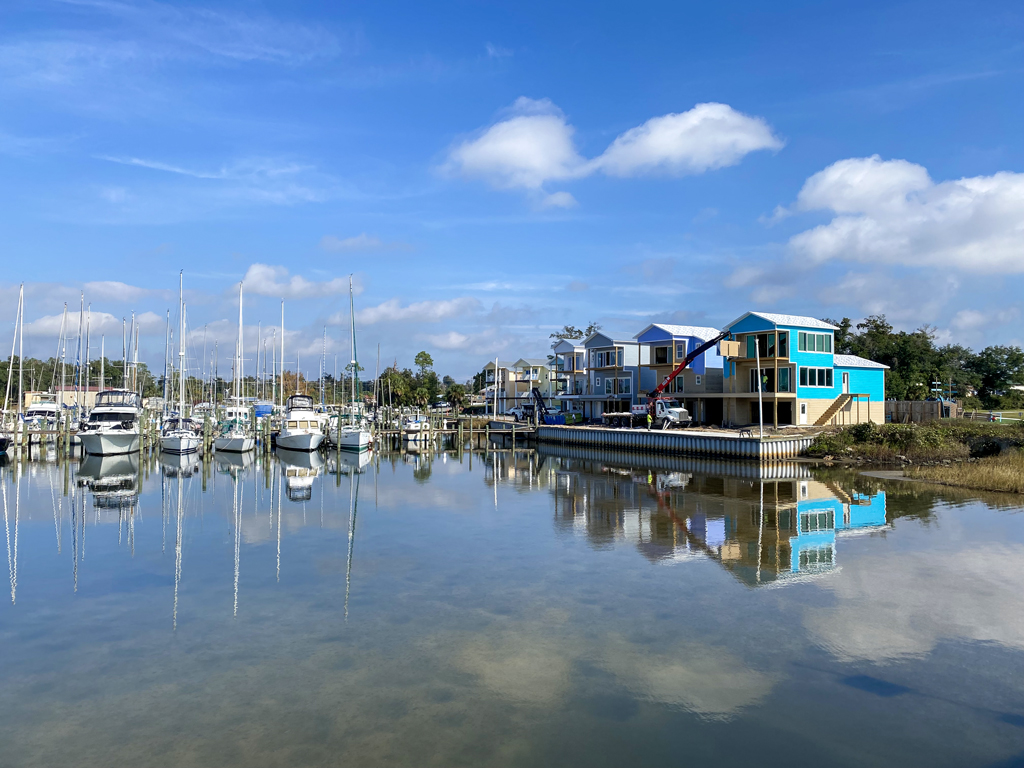

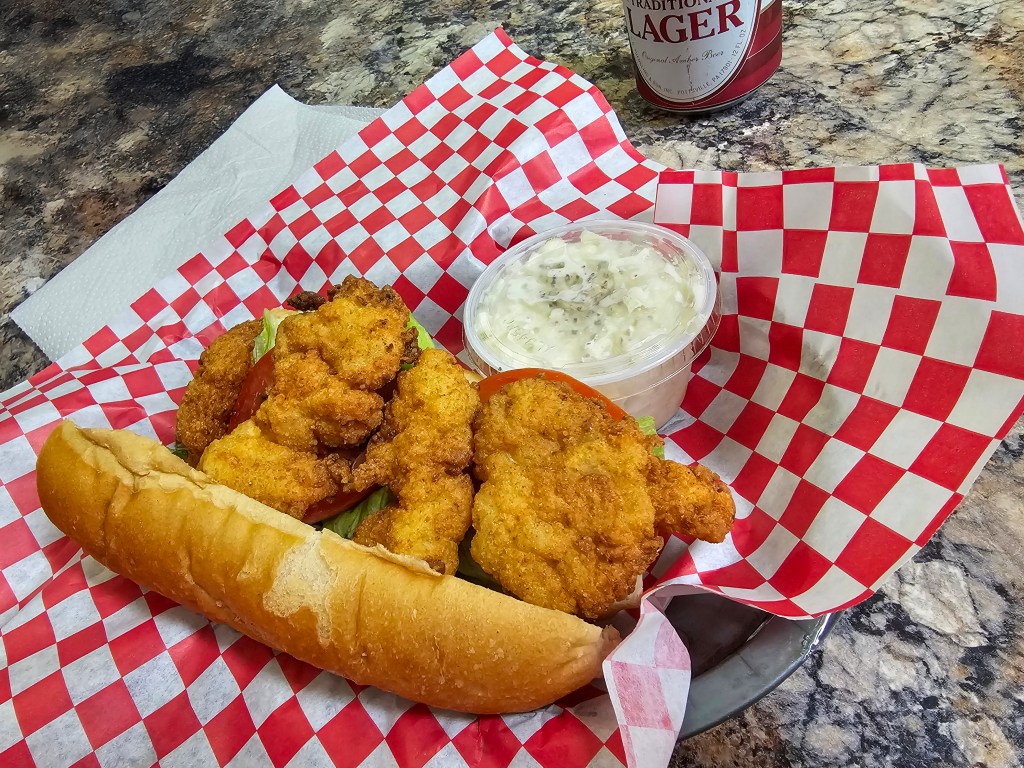
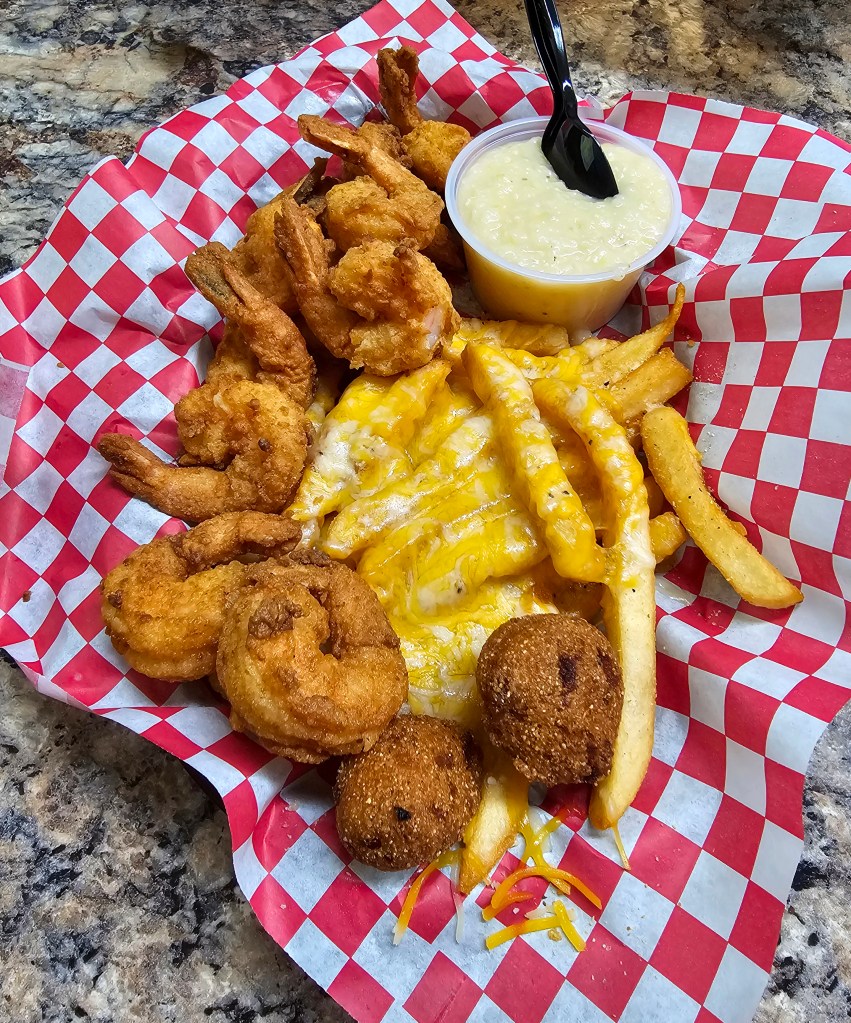
The next evening, we walked to Gene’s Oyster Bar. It is a local institution, having been in business since the 1930’s. The interior is two long counters, with wooden bar stools that must be contemporary with the building. They offer various fresh oysters every day, but since neither of us like them, we chose other options. Dick’s gumbo was good, and he followed it with a grouper po’ boy. The fish was delicious, with a light and tasty batter, and the bread was just right. I opted for a shrimp basket, lovely hush puppies, crisp, hot fries with 3 cheeses melted over them, and some of the most delicious fried shrimp I have ever had. The only jarring note (or call it all part of the atmosphere) was seeing that our friendly, jolly waiter, wore a holstered gun to complete his ensemble of Gene’s T-shirt, slightly grubby jeans, and a truly filthy baseball cap.

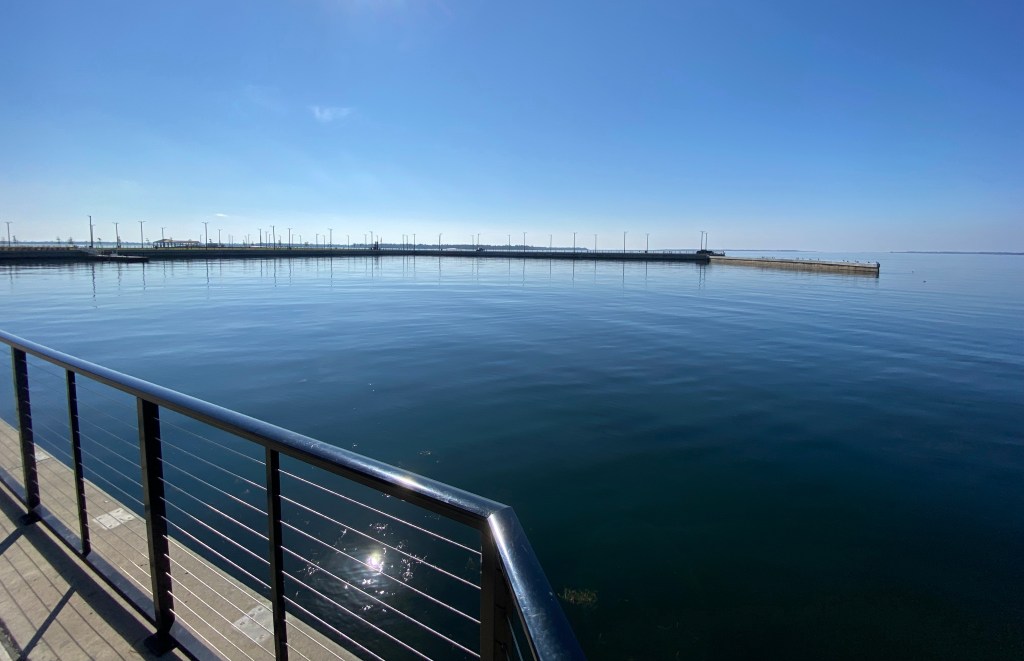
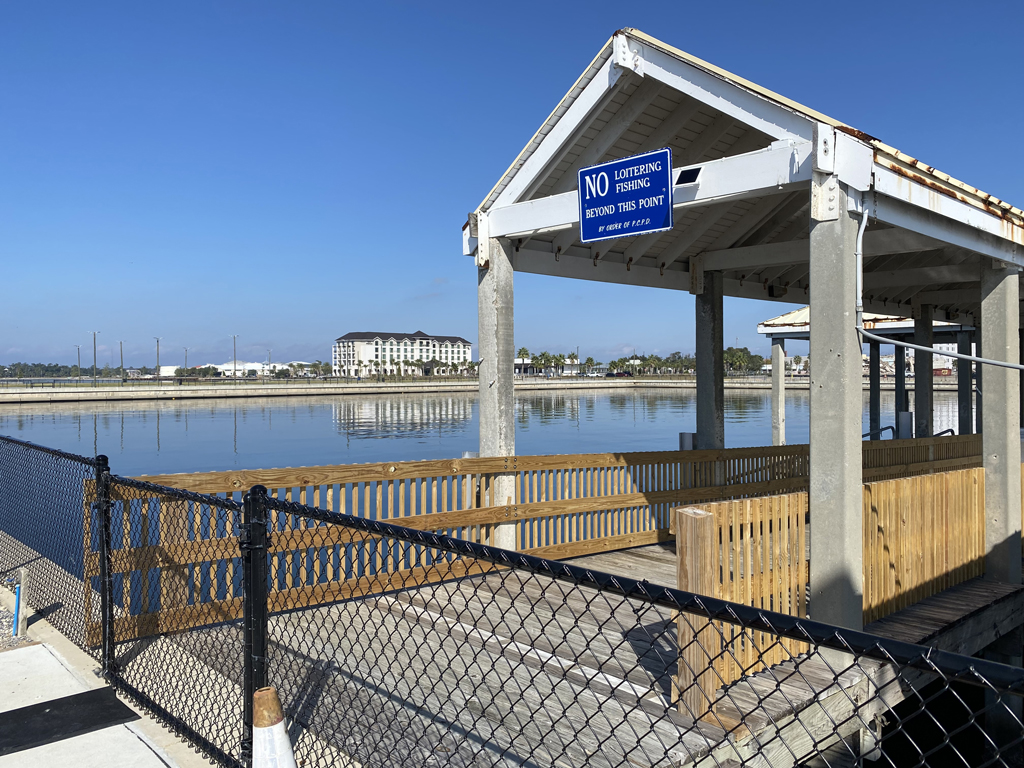
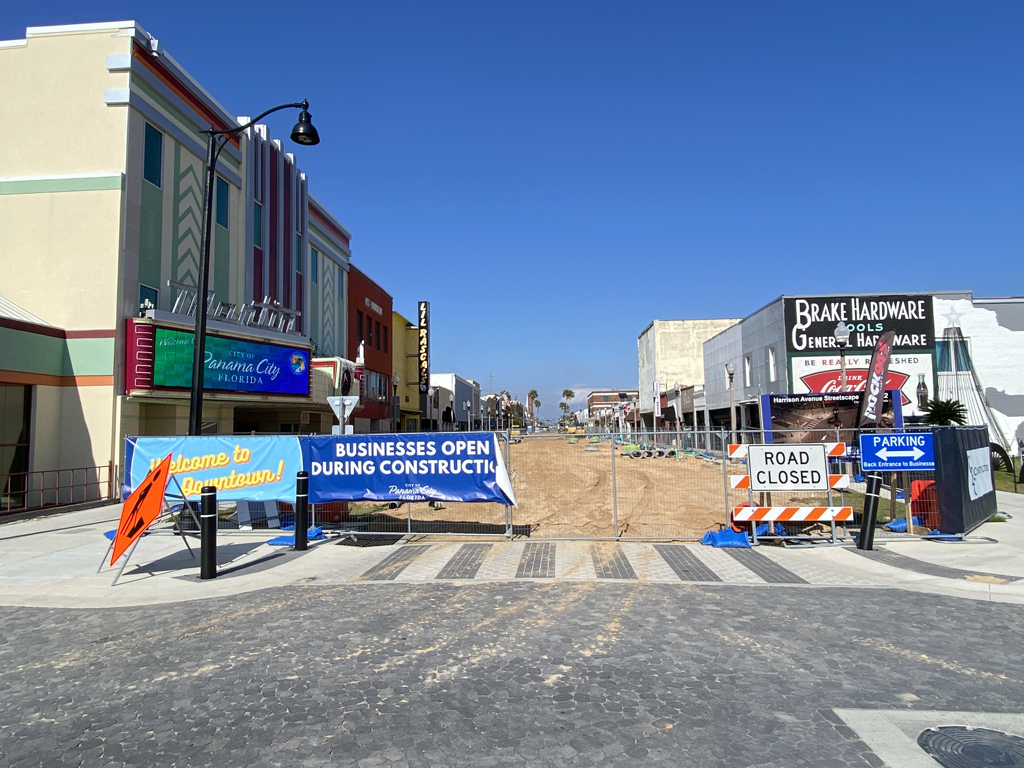
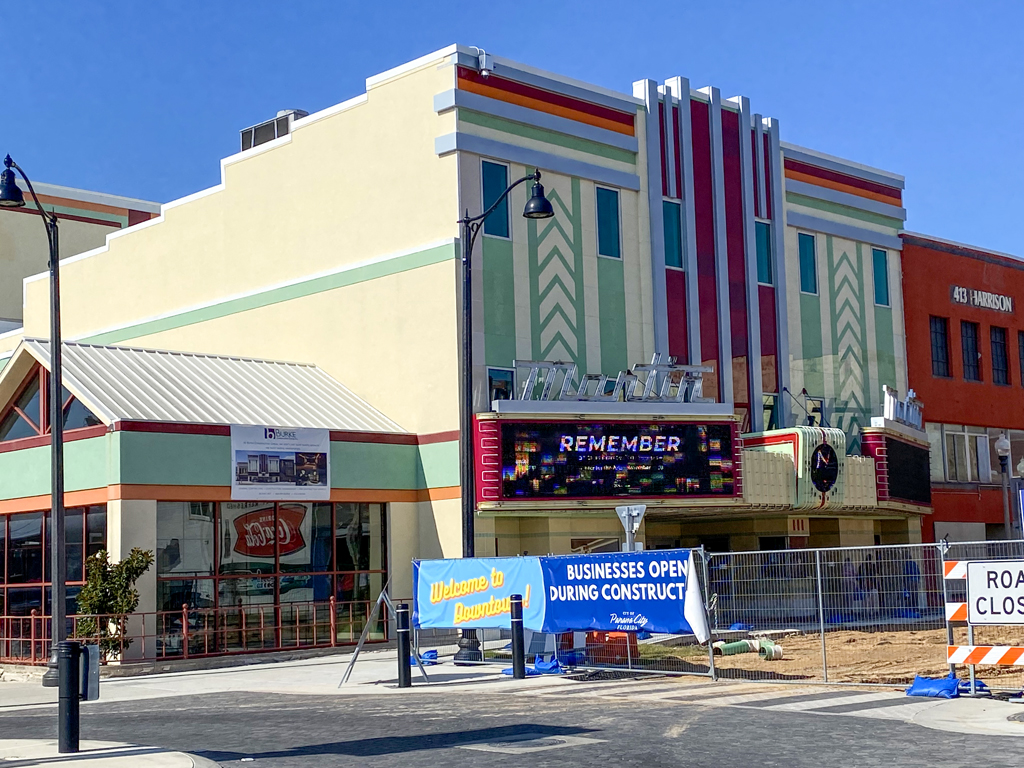
Dick went for a long bike ride to downtown Panama City, just to see what we were missing. (Emerald Harbor is a few miles from downtown). There is major redevelopment underway, including the historic downtown area, with many beautiful buildings, and a brand-new marina with surrounding condos. Unfortunately, the town has decided not to complete the marina, only the fuel dock and the breakwater are in place. One might speculate that they are hoping that private enterprise will take over and complete the docks.
The history of Panama City did not begin until the early 1900’s, when a number of unincorporated settlements in the area were amalgamated. Dick noticed that unlike Pensacola, the historic downtown buildings of Panama City date from the early 20th century and lack the Spanish and French influences of older Florida cities. The name was intentionally chosen to associate the city with the Panama Canal, which was under construction at the time. Supposedly the name was chosen by a local real estate developer who hoped to spur interest in the area. The port is the closest port in the US mainland to the eastern Caribbean entrance to the Canal. Two military bases in the area mean that the US government is the largest employer. Commercial interests include shipbuilding and tourism. The city was devastated by Hurricane Michael in 2018, and is still rebuilding. Hurricanes are frequent visitors to the area.

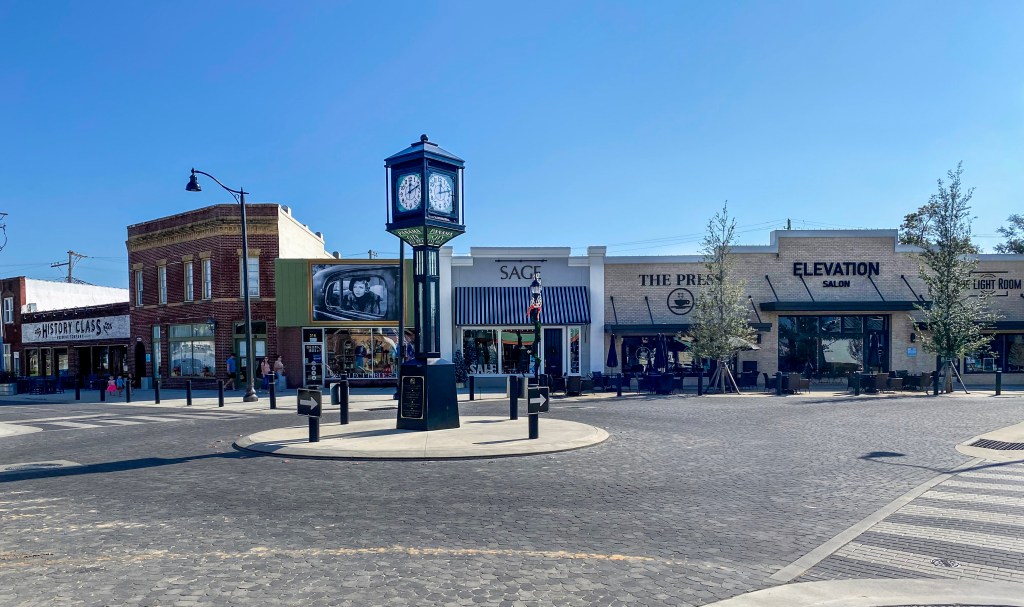

In the evening, we called Uber and went to the Grand Marlin, a seafood restaurant in Panama City Beach. The food was good, and the service excellent, but it probably wasn’t worth the ½ hour drive.
Our Uber drivers were interesting to chat with. Outbound, our driver came from Montenegro. It was interesting to hear his perspective on living in America. The return trip was with a local lady who could talk the hind leg off a donkey. She told us all about her childhood and how different it was from that of her grandchildren. It wasn’t really a conversation, more of a stream of consciousness monologue, and we felt quite exhausted by the time we arrived back at the marina.
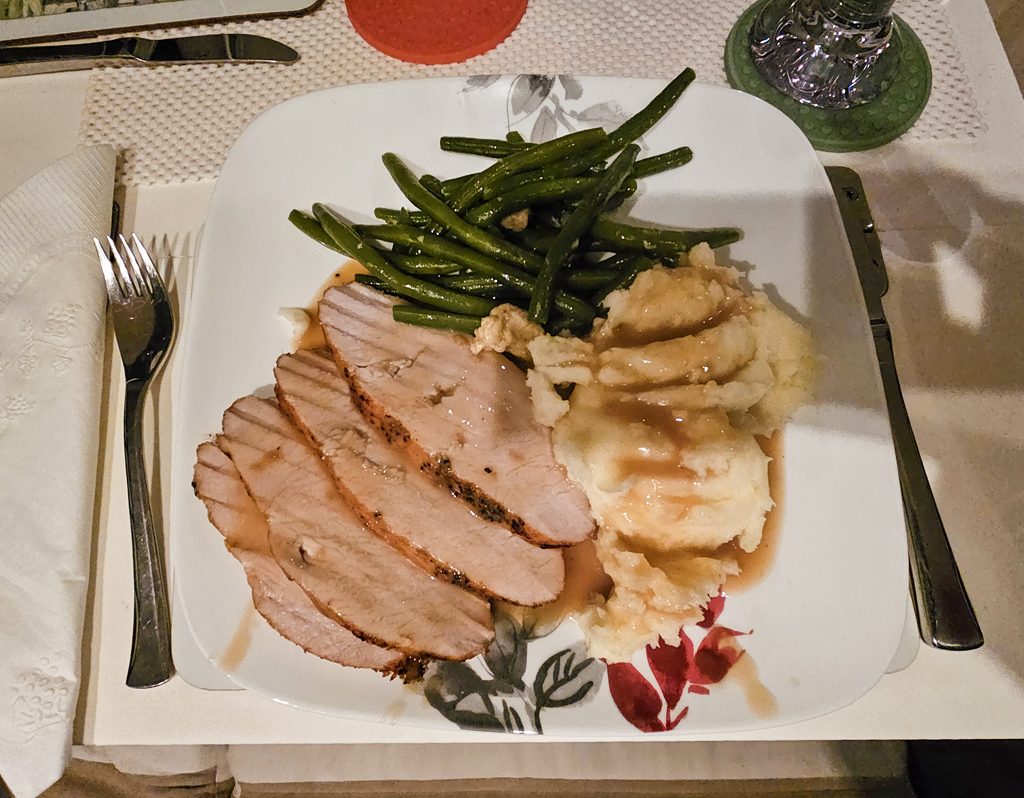
Thanksgiving Day was a bit lonely. We had read in previous years about Loopers sharing the day, but being in a location with only one or two occupied boats, it was unlikely. Dick cooked a traditional dinner of turkey breast, mashed potatoes with gravy, and green beans. We ate in the cockpit after a beautiful sunset, and enjoyed a nice bottle of wine.
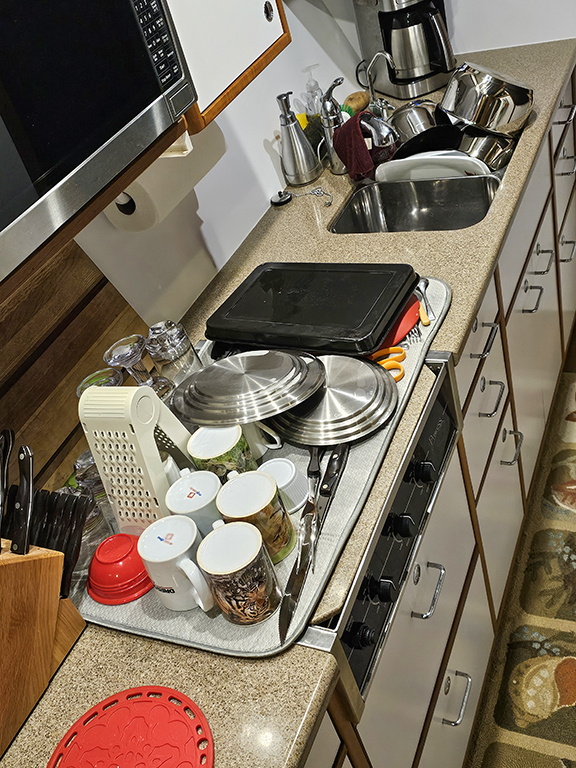
Late the next afternoon, the dockmaster came over to ask if we would be willing to move along the dock and make room for another boat. Blue Moon had been booked into the sister marina, but had found on arrival that she just didn’t fit. That was the marina that Dick had hoped to be in, but the owner had explained when he called to make a reservation that we wouldn’t fit. The docks at Emerald Harbor are still under renovation, and the end pier that we were on, while easily long enough to fit both us and Blue Moon, had only pilings and a single plank instead of proper walkways. Only the centre section is a normal dock. This meant a lot of balancing on 12” planks, and inching around the pilings. Very unsafe for all concerned!
Dick was able to help the dockmaster with getting Blue Moon onto the pier. We were happy to see fellow Loopers. They went to the famous Oyster Bar for their supper, while we ate on board, but afterwards they came over and we enjoyed a very convivial couple of hours with a bottle of wine. They are just at the start of their Loop, having begun in Indiana. Interestingly, because they were already familiar with most of the rivers, they chose to come down the Lower Mississippi to Baton Rouge and New Orleans. They had interesting stories about scarce anchorages and mega-tows. We certainly hope our paths will cross again.
We left by 9am to head to our final stop for this year at Port St Joe. While we motored through East Bay we passed a small boat with oystermen, pulling up oysters with large rakes and piling them into the open boat. Oysters have been eaten by humans for more than ten thousand years. They have been cultivated in Japan for at least 4000 years. Romans farmed oysters in the Thames Estuary east of London, and the town of Whitstable still uses those historic oyster beds. In Victorian England, oysters were popular snacks in pubs to accompany a pint of beer. In the 19th century, oysters were cheap, and they were mainly eaten by the working class. At that time, oyster beds in New York Harbor were the largest source of oysters worldwide. Sadly, by the 20th century disease, pollution, and sedimentation, as well as overfishing, had destroyed most of the New York oyster beds. Today, wild oyster stocks are depleted due to overfishing and other causes, and now they are considered a treat for the wealthy. There is a movement to use oysters to filter polluted water. This can be very successful, but as always, man cannot be trusted. Oysters from reefs that are used for pollution cleanup are not safe for consumption, but there is a high risk of unscrupulous poachers harvesting them and selling them as edible. For the most part, Dick and I do not enjoy oysters, and are happy to leave them for the aficionados.

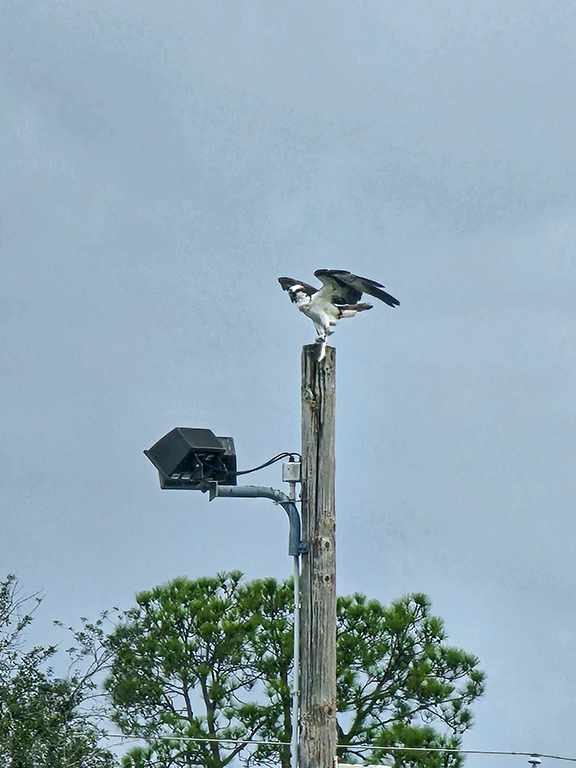
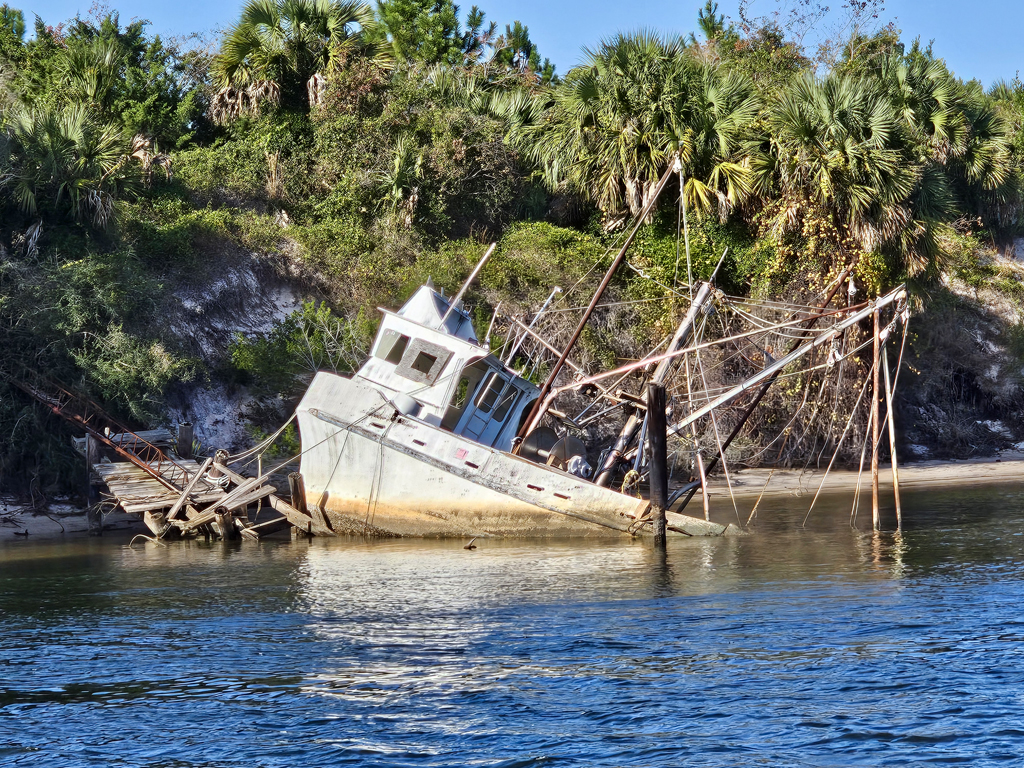
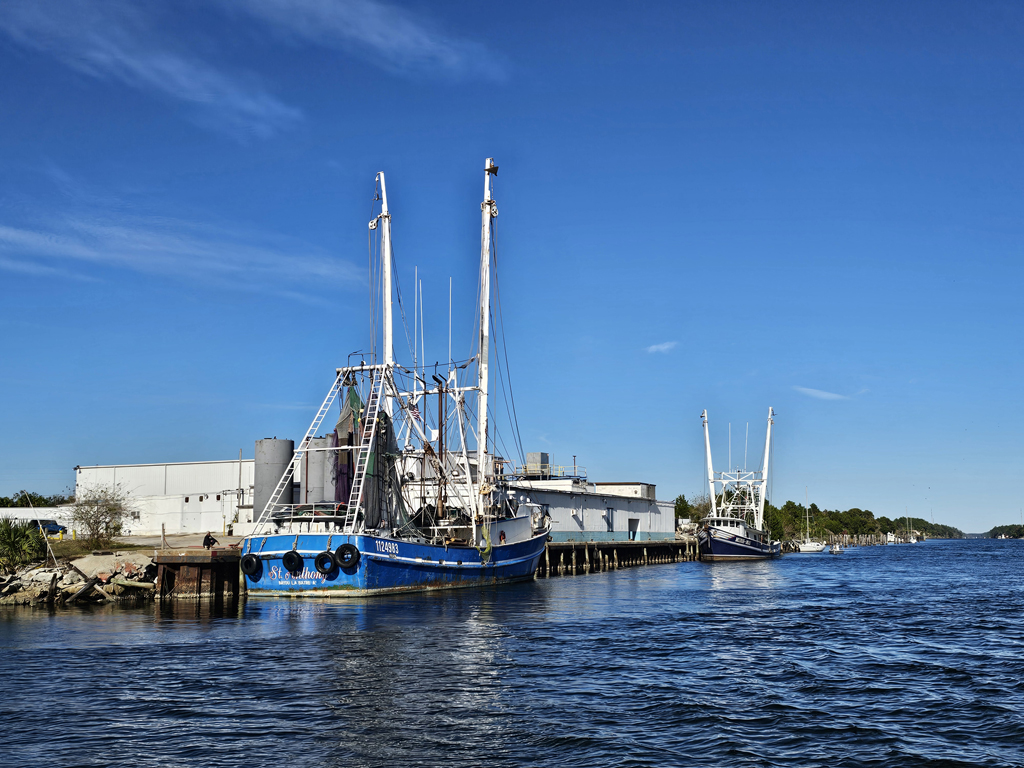
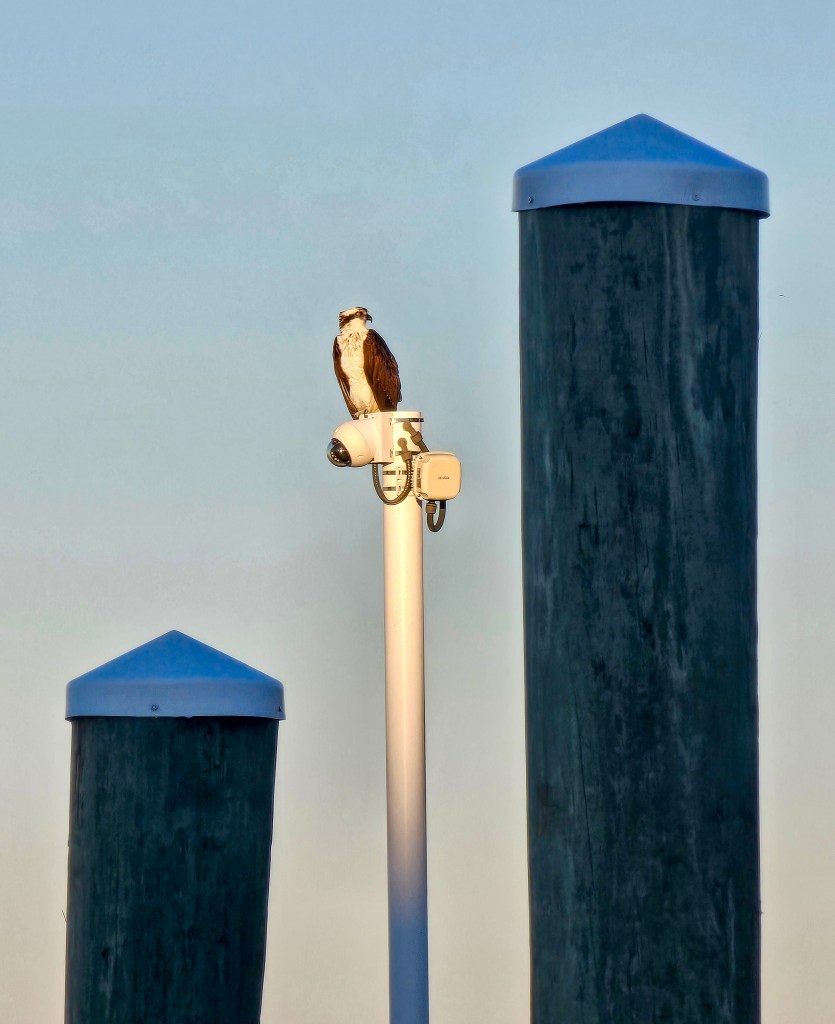
We passed through a long cut, and then a 5-mile canal to arrive at Saint Joseph Bay. It was quite an interesting journey, with some wildlife to be seen, including osprey, a bald eagle, and Dick saw a muskrat. Shrimp boats dock at the mouth of the canal. We saw a number of derelict boats thrown up on the shore, testament to the frequent hurricanes that come through the area in summer.
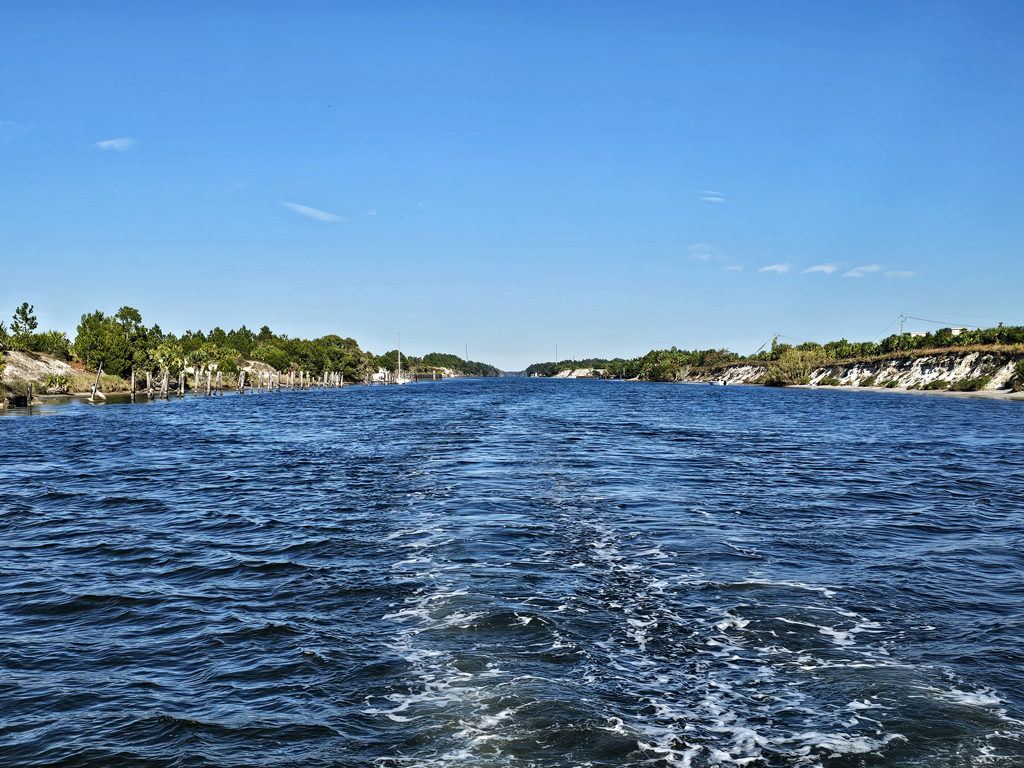
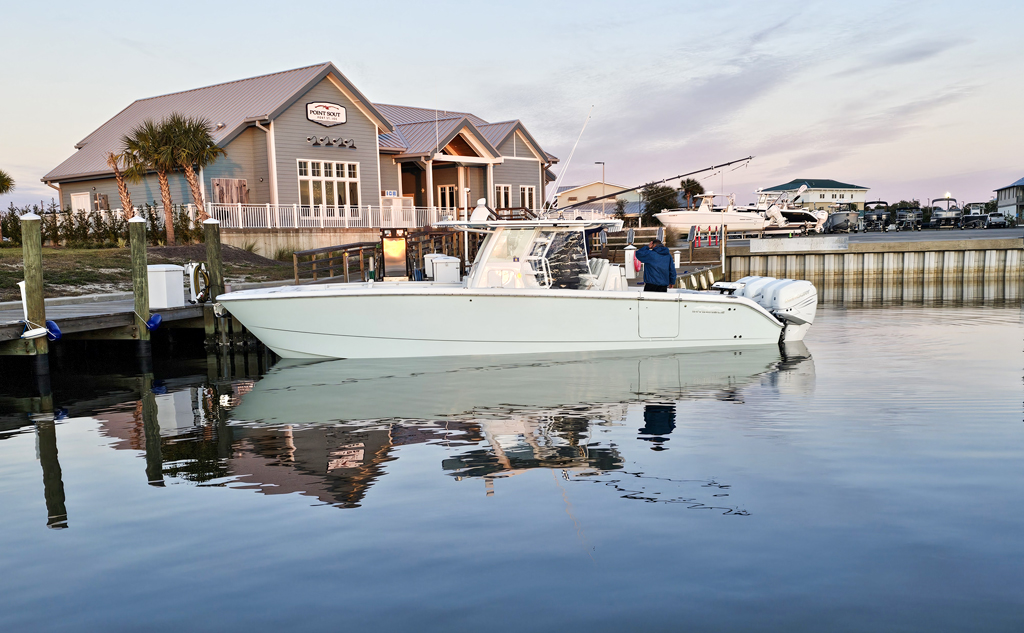
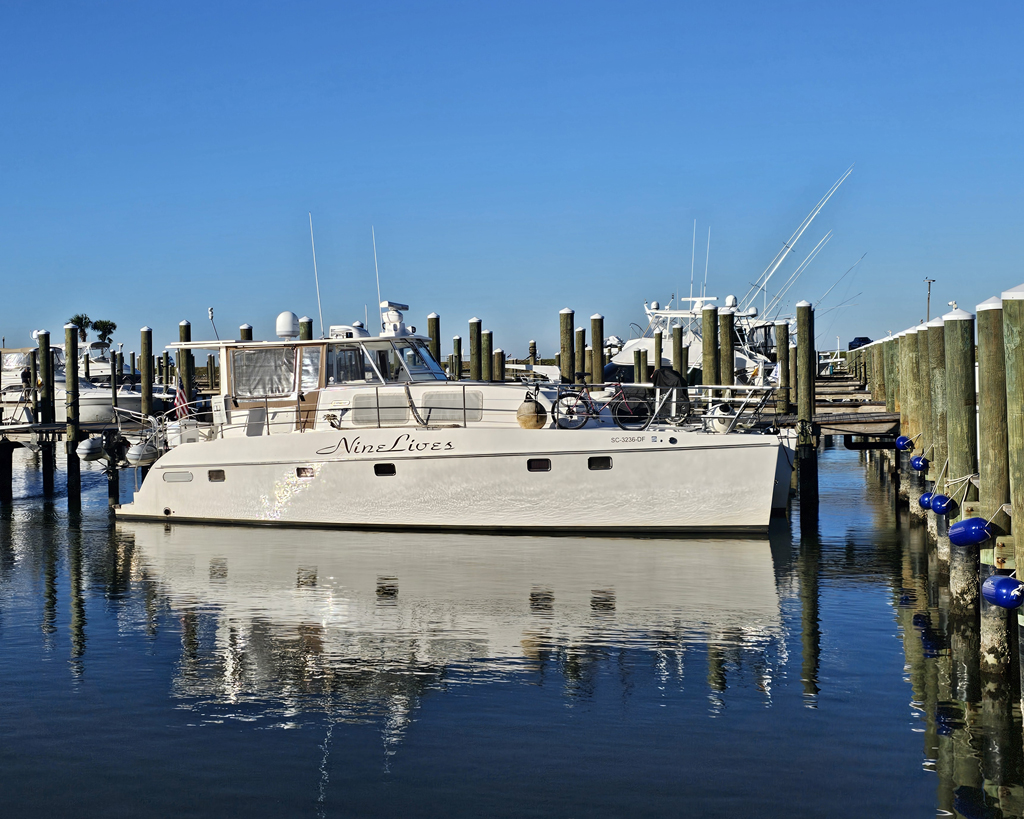
We arrived at Port St Joe by 3pm, and were tied up in the space where Nine Lives will be for 2 to 3 months. Point South Marina is a newly rebuilt marina with excellent docks and good facilities. We took some time tying up and placing fenders to be sure that everything would be safe and secure while we are away from the boat.
While we enjoyed our traditional wind-down after getting settled (beer for Dick while he fills in the logbook, and fizzy water for me), we saw a new center console catamaran arrive. This monster was about 40 feet long, and sported no less than 4, 400 horsepower outboard motors on the back. Dick found out that they had travelled across the Gulf that day from St Petersburg. They had 6 foot waves, and had to slow down from 40mph to 25mph. The boat had 4 guys on it (Dick speculated that one is likely to be the new owner, and one a delivery captain). It is being delivered to Galveston.
In the evening we went to a local restaurant. Port St Joe is a nice little town with what appears to be lots of interesting shops and a surprising number of restaurants. We are looking forward to exploring more of the town when we return in February.

We spent part of Sunday getting a few things packed up and into the car, but most of what is needed can only be done at the last minute. There is a Florida rule that if your boat is staying for more than 90 days, you need to pay for a special permit. Dick had filled in the form, but weirdly, not every local government office knows what it is or how to accept payment and issue the sticker! Dick tried to get it done in Pensacola, without success, so we had to stay in Port St Joe an extra day so Dick could get this done before leaving. Fortunately, the local office here does know how to process the permit. The extra day also gives Dick enough time to discuss the work that needs to be done while we are away with the next-door boatyard.
Nine Lives will snooze at the dock in this very nice marina until February. By late January we will be watching for a “weather window” that will allow us to cross the Gulf overnight and have calm waters. Unfortunately, there are not many days that this will be possible, Loopers may wait as much as two weeks before the right opportunity comes. Hilton Head is just a 6-hour drive, and we will make sure we are ready to leave at a moment’s notice to catch the right weather window.
We hope that the next issue of Nine Lives Voyages will be published in mid-February.
 The Voyages of Nine Lives