October 2nd  to 16th, 2024: Chattanooga to Tellico Lake and back to Scottsboro

The last installment ended with something of a cliffhanger… would Dick’s bike disappear from the place he had locked it to the railings?  Well, no, the bike was still there the next day when Dick went to get it to go for a ride, however, important components were missing, namely wheels.  It had occurred to him at some point that perhaps he should lock said wheels, which have a quick release mechanism, to the rest of the bike, but he didn’t.  Fortunately, there is a Trek dealership within walking distance of the dock.  Yes, he could get the wheels, but they would have to be ordered.  We had already planned to stay much longer in Chattanooga, so arrangements were made to rent a car.  Of course, it is somewhat ironic that while the bike is about 30 years old, the wheels had been replaced just a few months earlier after an unfortunate encounter with a tourist’s vehicle in Hilton Head.
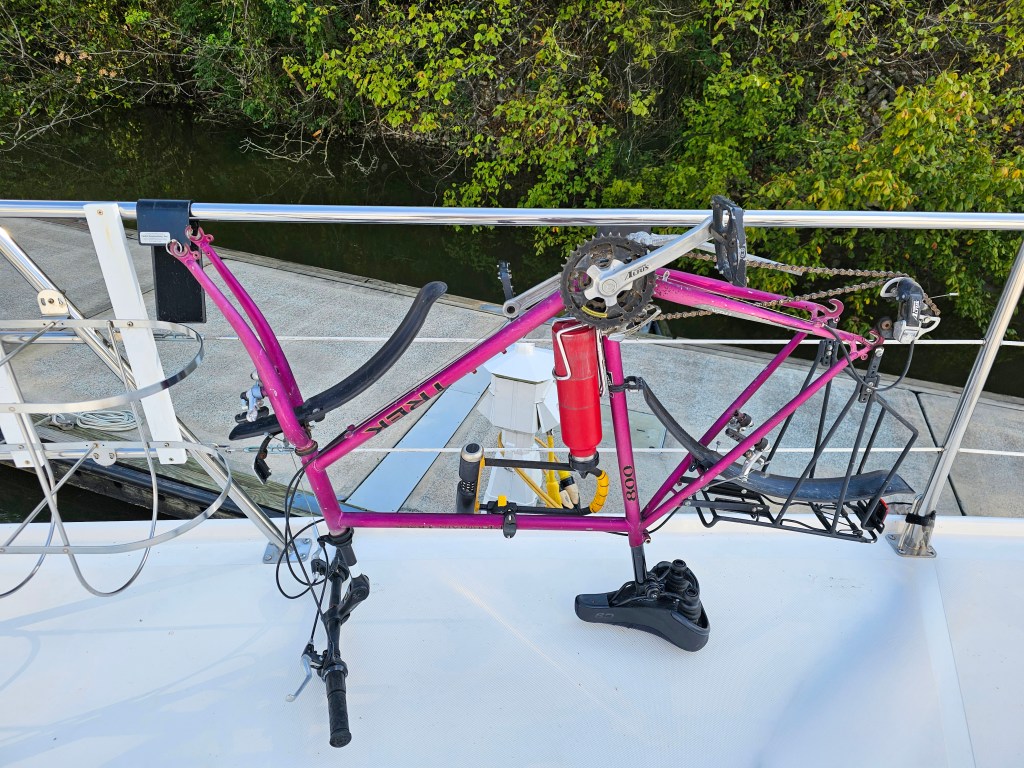
Oh dear!

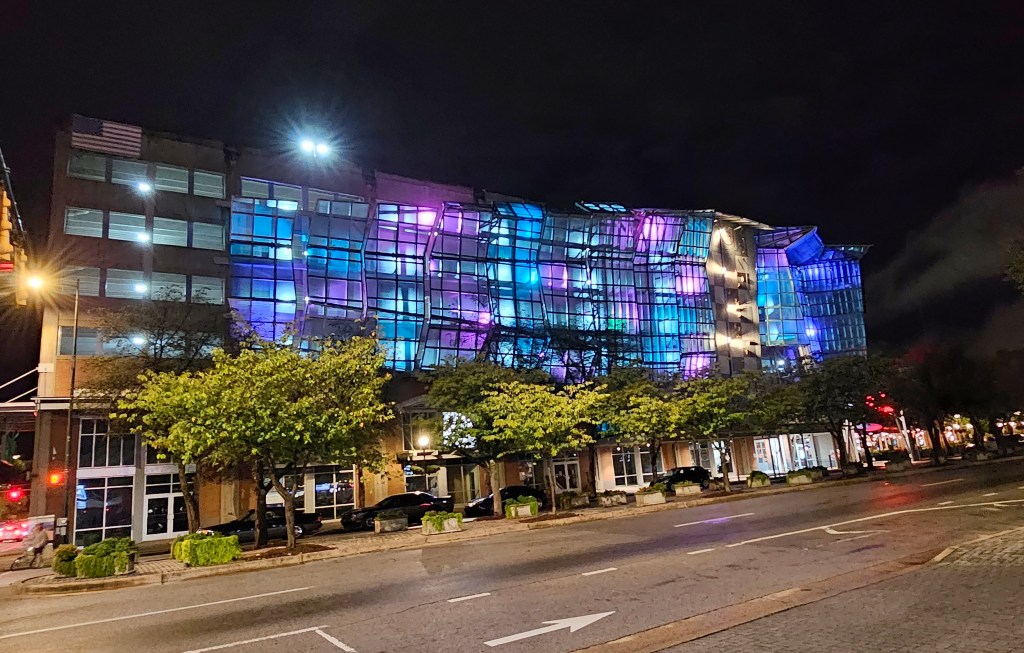
After one of Dick’s special breakfasts, we set out to collect the rental car.  The depot was very close to the end of the electric bus line.  We went to the supermarket and stocked up on the heavy stuff that is less easy to transport by bike.  Parking in Chattanooga is inexpensive, just $11 per day.  There are lots of multi-storey car parks, including the one with the beautiful lighted façade that is nearest to our dock.

I am impressed by how clean the city is.  Unusual for an American city, especially one with such a large homeless population.  The electric buses are clean inside, no trash on the floors, and while I see people leaving rubbish on the ground under benches, it is always gone by the next day.  An army of cleaning fairies must be deployed around the city every evening.  Even the area under the bridge is kept relatively tidy.

A new improvement for Nine Lives. When we are staying in a marina for a few days we can now hook up to mains water and not have to keep filling the tanks.

We ate at a restaurant called Public House.  The smoked trout dip was tasty, but it came with incredibly hard toasts and rather too many crudites for my preference.  It made a good lunch for Dick later!  The pot roast was excellent, and I had the best shrimp and grits I have ever tasted.  Desserts were very rich, but altogether it was a good meal.
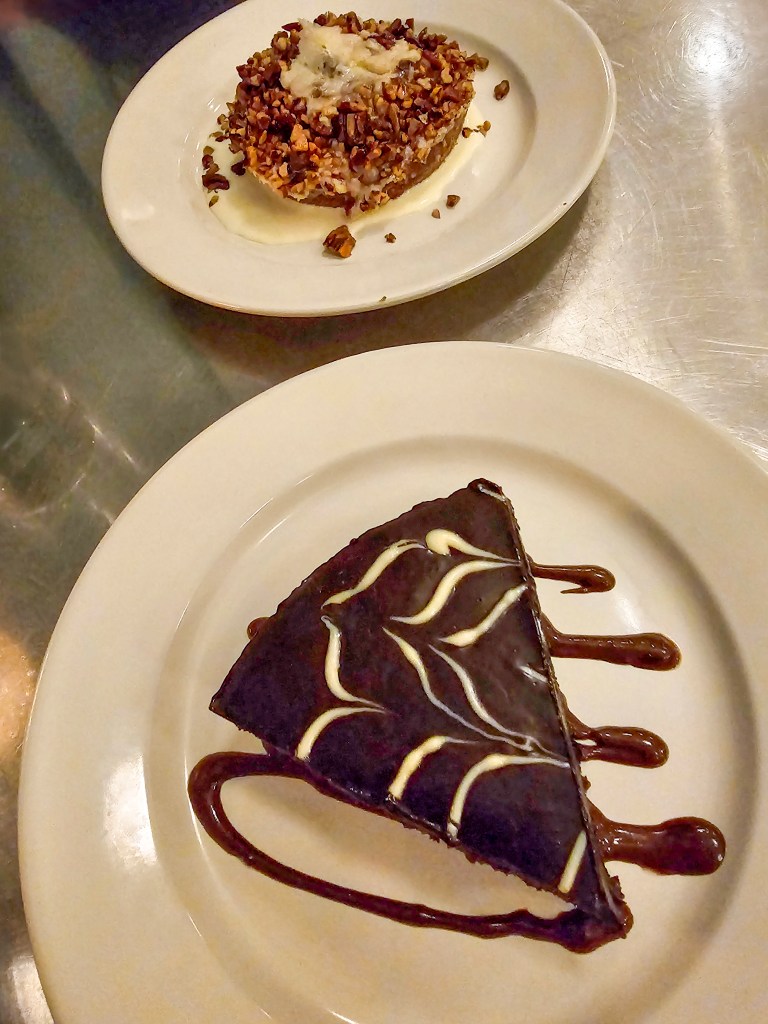
Desserts at Public House, Chattanooga

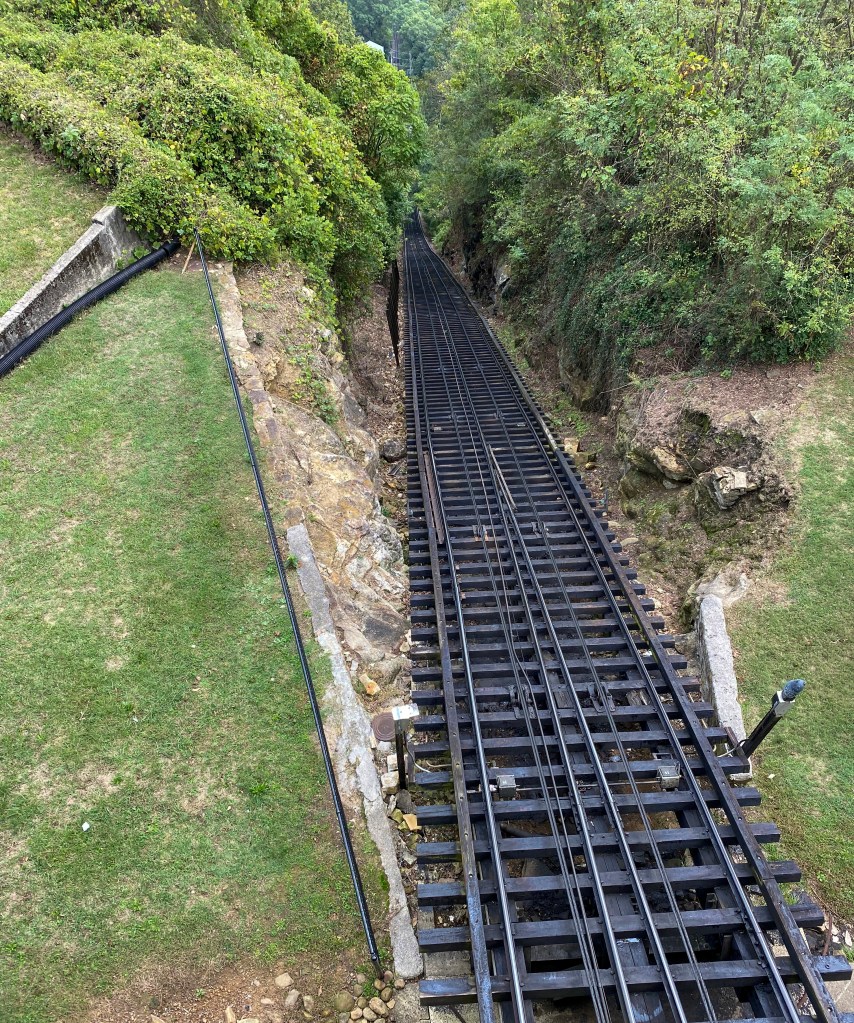
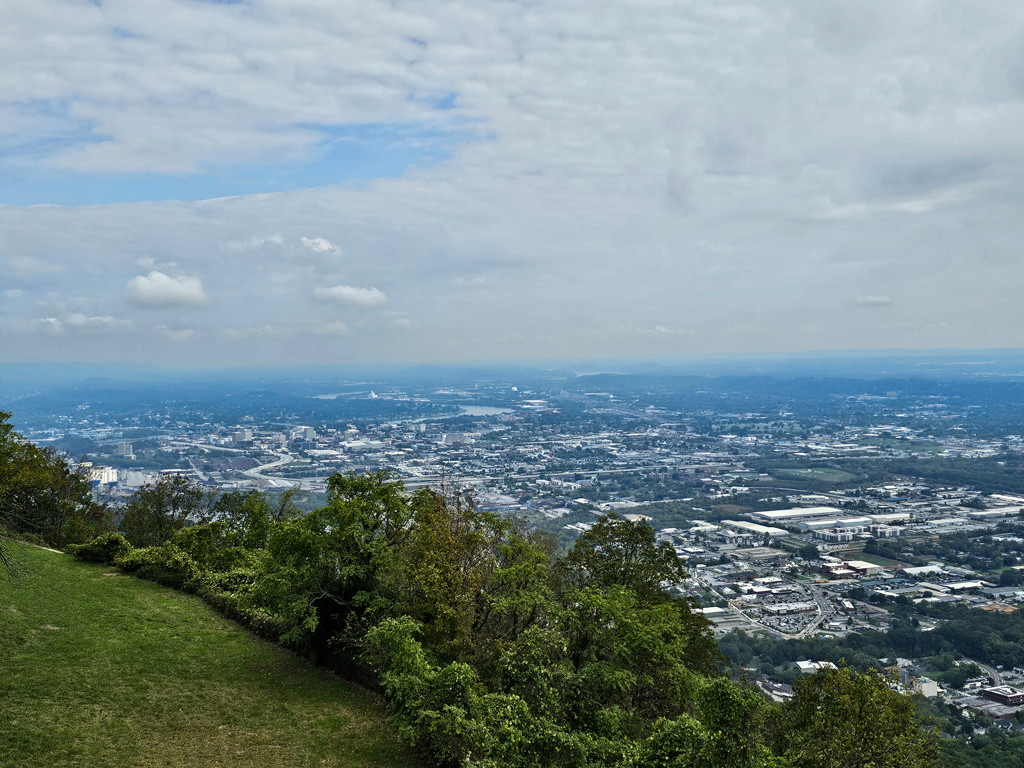
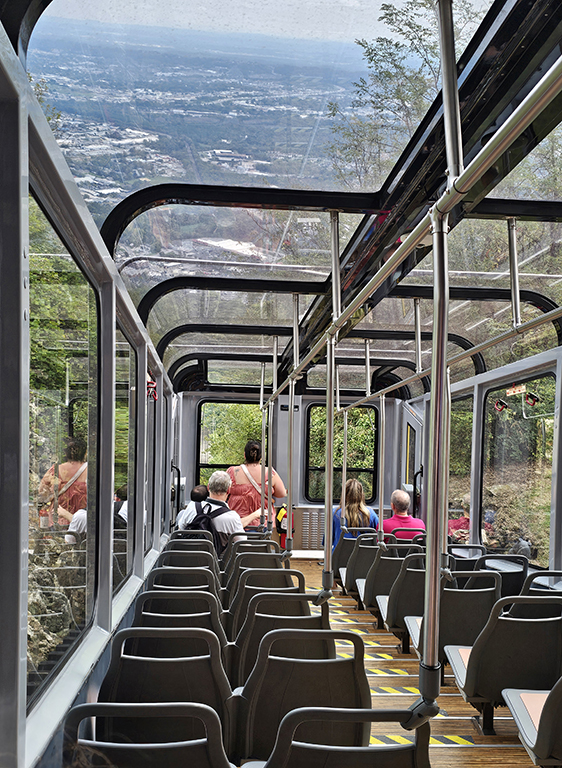
The next day we took a morning trip to the Incline Railway on Lookout Mountain.  It was cloudy, and too hazy for the really spectacular views, but it was an experience.  The railway is about a mile up the side of the mountain, with a maximum grade of 72.7%.  It is one of the steepest railways in the world.  I do not like heights. About 2/3 of the way up, I said to Dick, “The things I do for you!”  The lady in the seat ahead of us immediately said, “Oh I know what you mean!”  After we returned from the adventure, we stopped at Ben & Jerrys for ice cream.
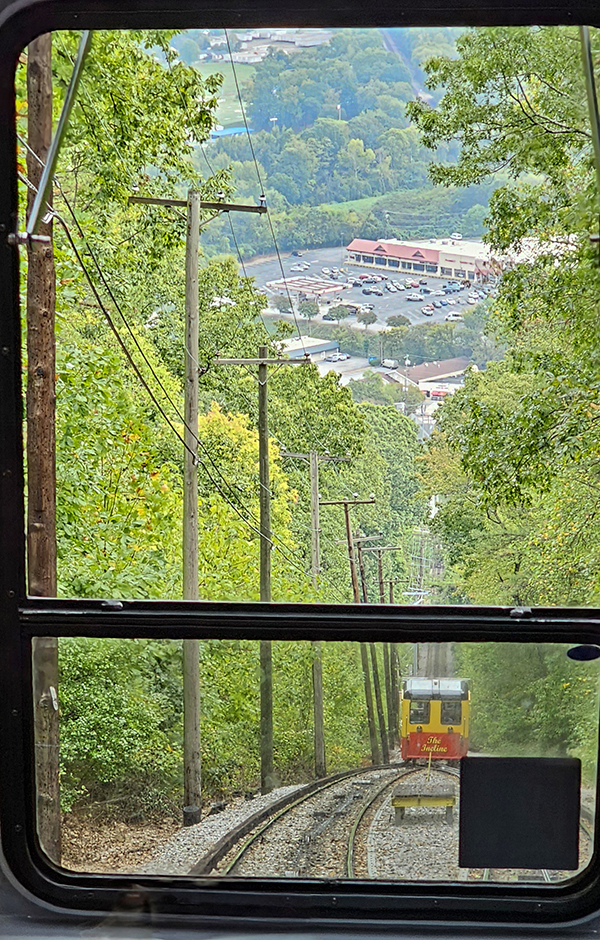
Incline Railway on our way up
Incline Railway looking down the track from the top (Dick had to take this one!)
The machinery of the Incline Railway
The view from the top of the Incline Railway
Incline Railway return

Another Looper arrived in the late afternoon, so at last we were not the only boat on the dock.  They joined us for our planned visit to a rooftop bar called “Whisky Thief” in a nearby hotel.  The public areas of the hotel have beautiful, fascinating artworks on display, and Debbie and I would have liked to have had more time to study them.  The bar was quiet when we arrived, but grew increasingly noisy and crowded as the evening progressed.  The menu is limited to QR codes or, find the bar’s website online.  While they serve flights of various whiskeys, you have to keep going back to your phone to figure out what you are drinking.  Instead of a flight, I had a bourbon that we had enjoyed last year when we tried a (properly labelled) flight in a restaurant in Louisville.  We enjoyed the congenial company and will look forward to seeing them again at Rendezvous.

One of the beautiful artworks in the Edwin Hotel
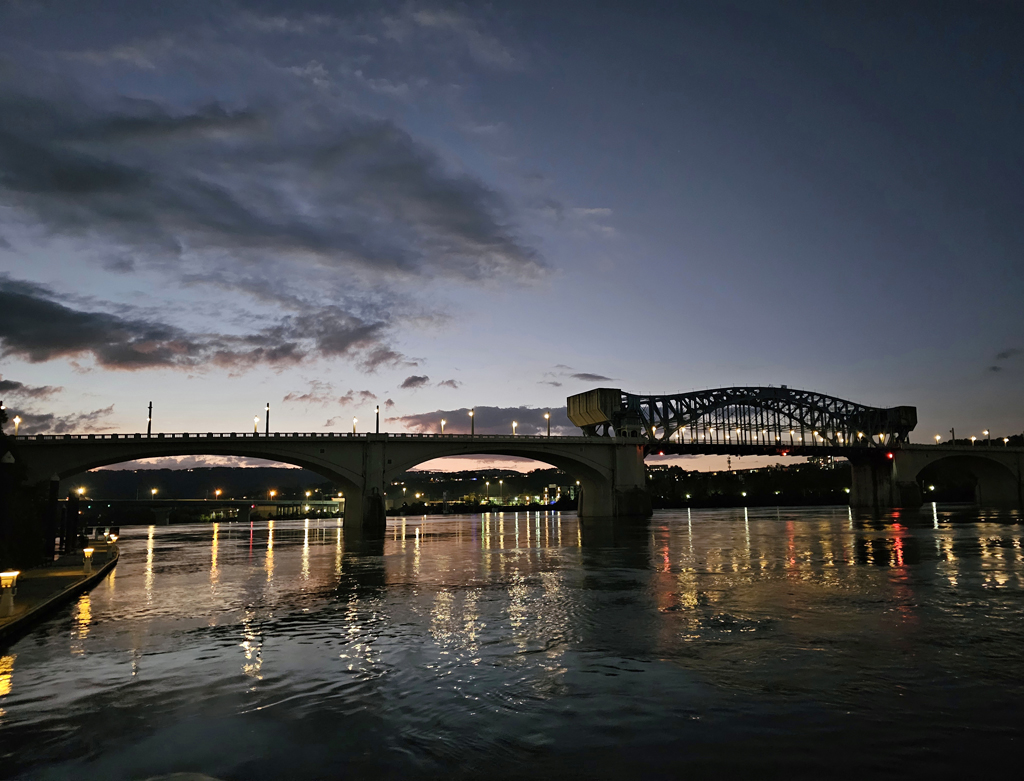
The Tennessee River at night, Chattanooga

The next day, after working on the Rendezvous presentation all day, we were glad to go out and walk to the second of the top steakhouses in Chattanooga.  There was a bluegrass festival in the waterfront park, but it was very hot and crowded, and the music was not really our taste, although we do enjoy some bluegrass.

Dinner was quite good, with excellent service, but the ambiance was more like a large cafeteria than an expensive steakhouse.  It was very noisy and crowded, and most of the patrons were dressed for the outdoor festival.  Although the water had receded and uncovered the downstream walkway to our dock earlier, when we returned it was up again, resulting in wet shoes and socks.
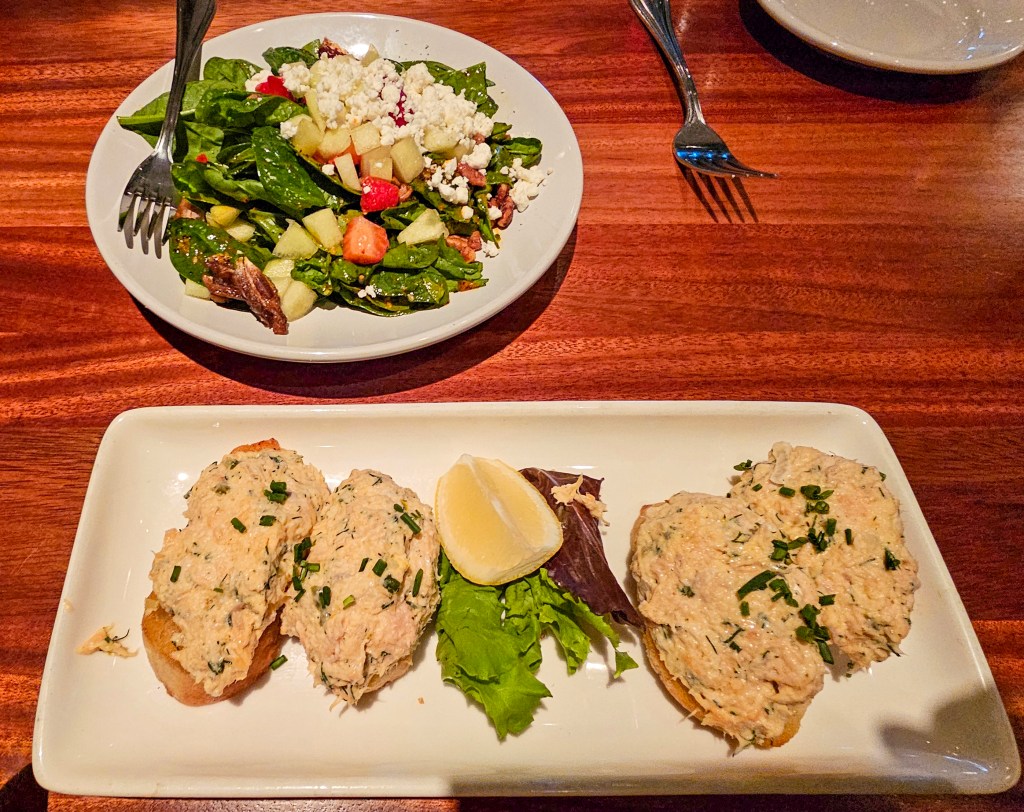
Hennen’s Steakhouse starters
Hennen’s Steakhouse steaks for both of us

After another of Dick’s special breakfasts, we set off for some sightseeing.  I had found what was described in glowing terms as an art enclave with shops, galleries, an artisan bakery, and restaurants.  It was certainly an attractive area, but one of the galleries had limited days, and the other was not yet open on a Sunday.  No shops, and the artisan bakery was just pastries sold out of a coffee shop with a queue of at least 30 people.  Apart from the coffee shop, there was just one restaurant that we had been told was not very good.  So, we walked back to the Museum of American Art.  You could have knocked me over with a feather when Dick told me that was actually our destination for the morning.
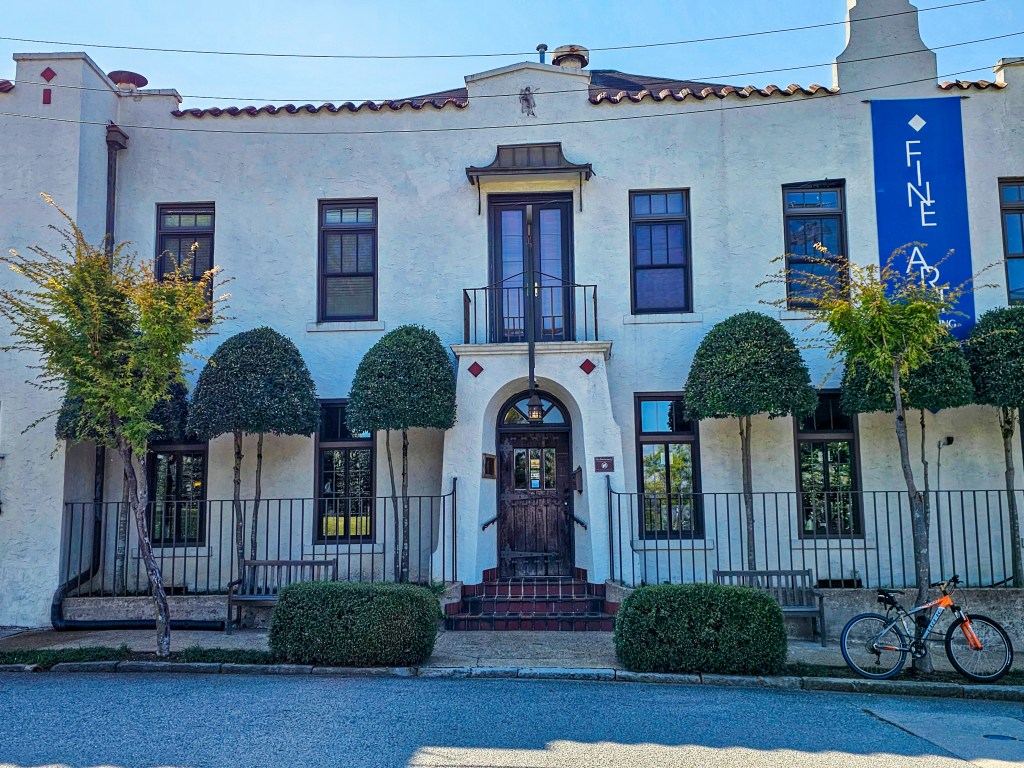
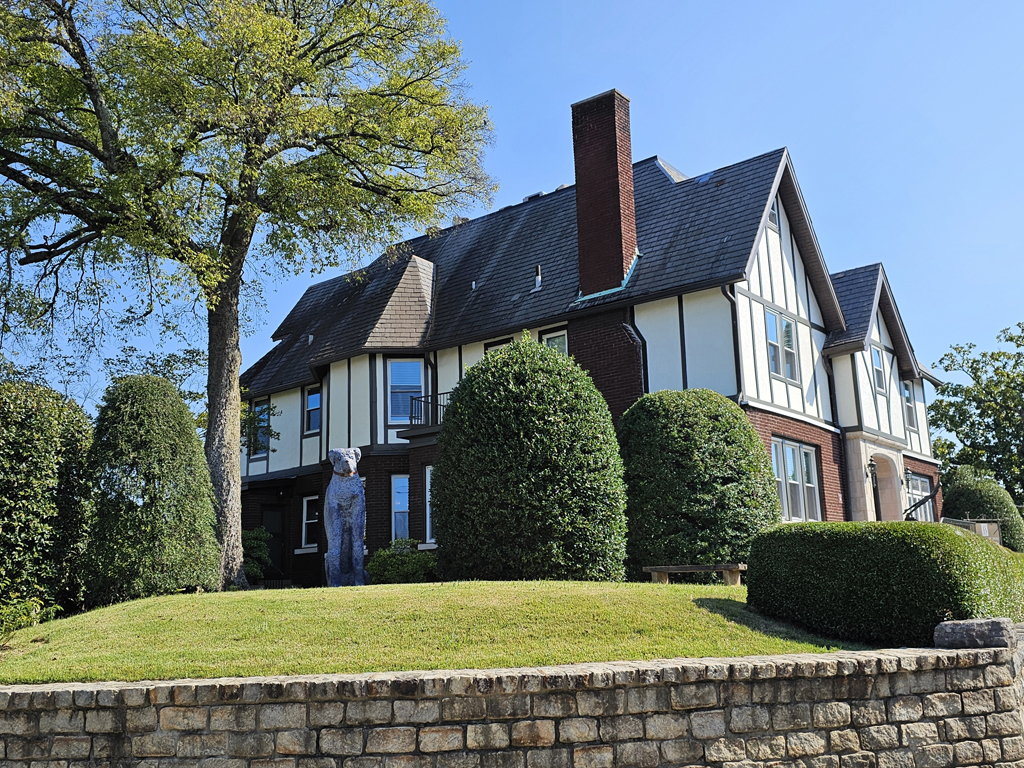
Chattanooga Bluff View Art District

Of the temporary exhibitions, one that featured art glass had just finished, we would have loved that.  Instead, there was an exhibition of graffiti.  Yes, the stuff that vandalizes public and private buildings and street furniture.  Dick walked around it, I didn’t.  Afterwards, Dick’s comment was that while he recognizes people’s right to express themselves, and even the talent of the artists, he totally objects to the defacing of public and private buildings, spoiling someone else’s architectural, engineering, or design efforts.

The permanent exhibitions were more interesting, spanning American art from the 1700’s to contemporary.
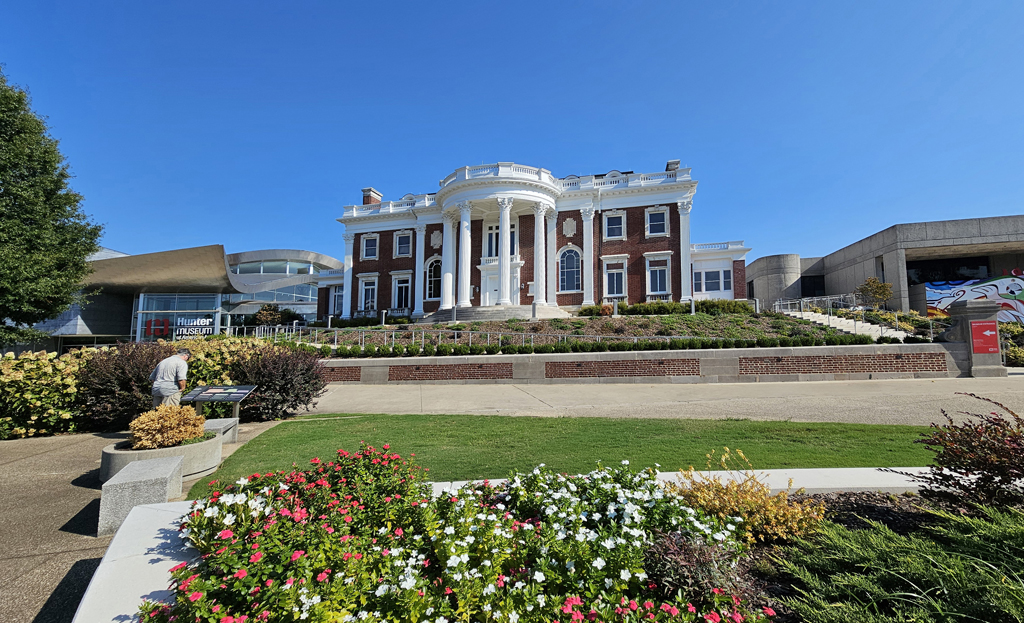
The Museum of American Art, Chattanooga
Chattanooga’s Walnut Street pedestrian bridge over the Tennessee River
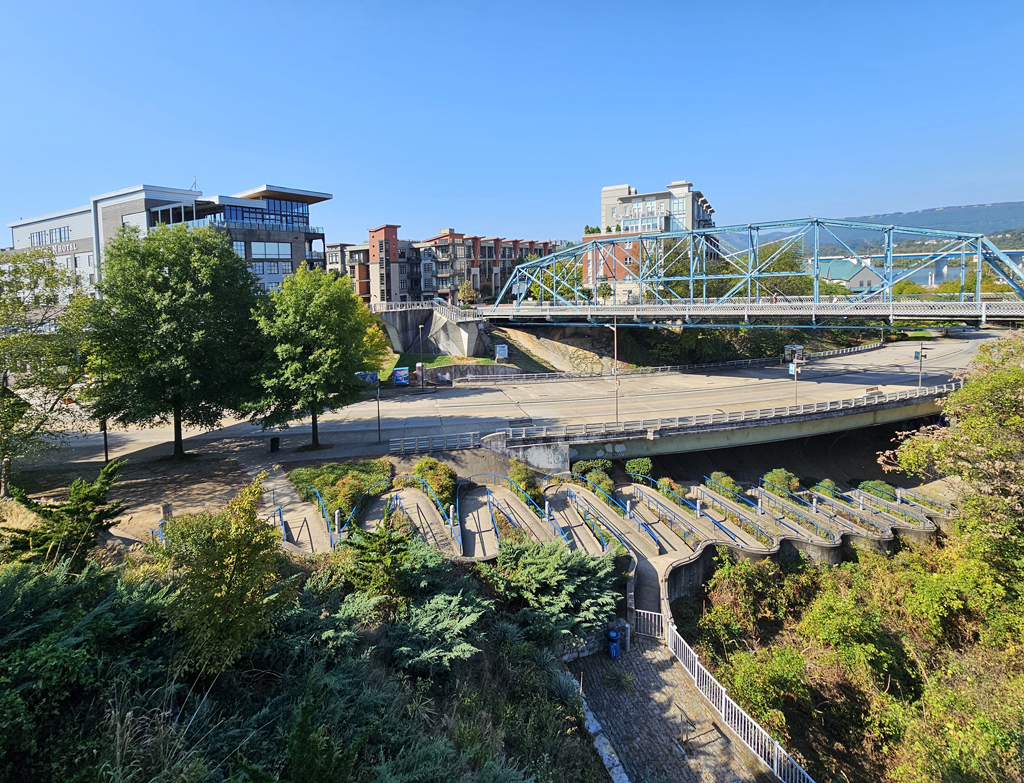
The Zig Zag Walkway is an alternative to climbing one of the steep staircases up from the river

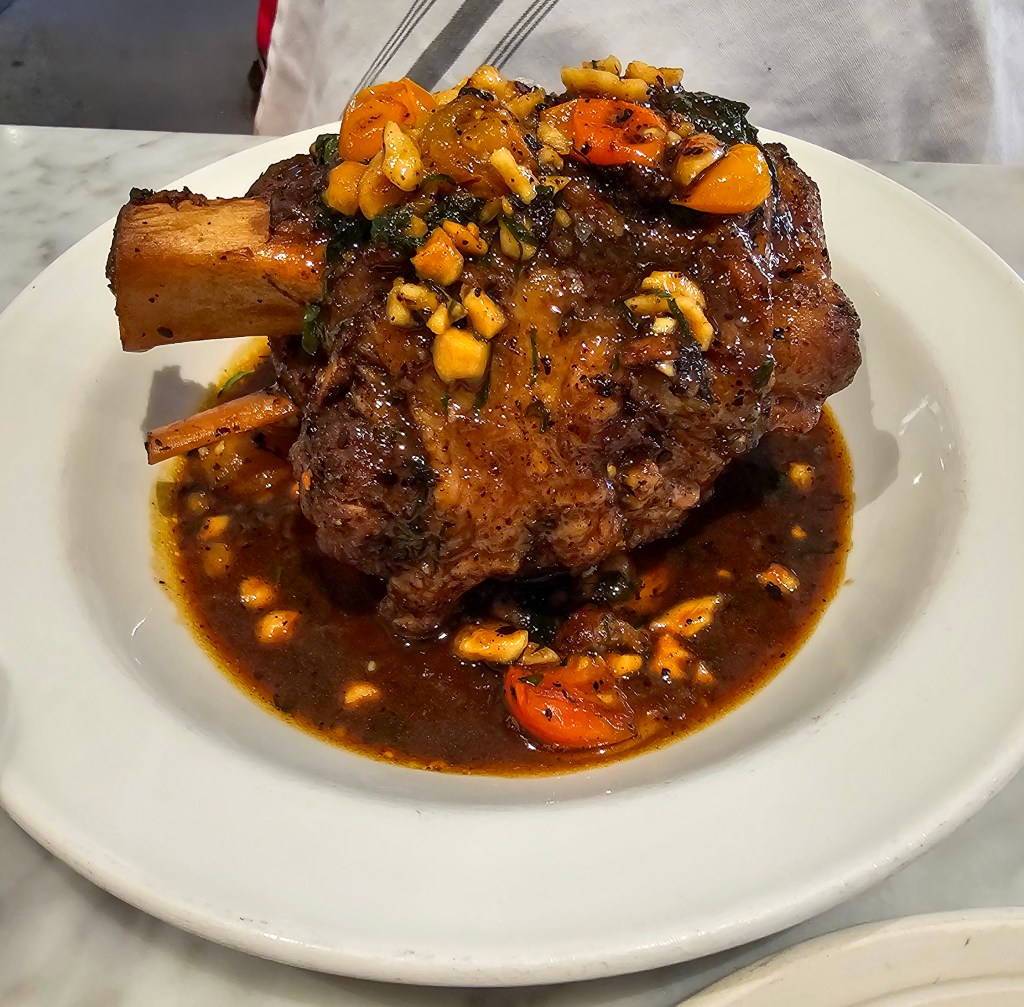
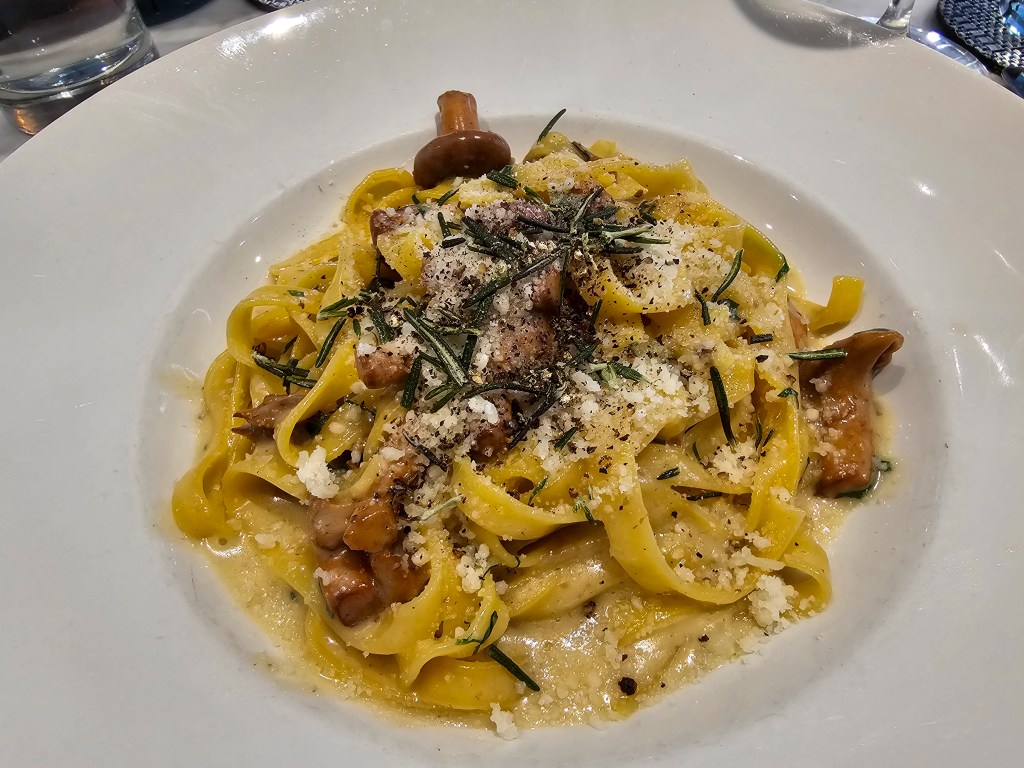
We went to Easy Bistro for an early dinner.  The venue was a surprisingly authentic French style.  I enjoyed the meal, quite unexpected, since there was so little on the menu for me to choose from that I ended up with a side dish as a starter.  Dick was in heaven, and had difficulty choosing from so many unusual options.  He settled on the rabbit rillettes, followed by pork hock, and profiteroles to finish.  My mushroom tagliatelle was very good, and worth taking home.  (and we remembered to take it, unlike the previous evening when we left the beautiful steak leftovers on the table by mistake).  The first glass of wine let me down.  I usually enjoy a Loire Valley white wine, but this one was awful.  It also happened to be the cheapest on the menu.  Dick’s comment, “The French hated it so much they sold it cheap to get it out of their country…”
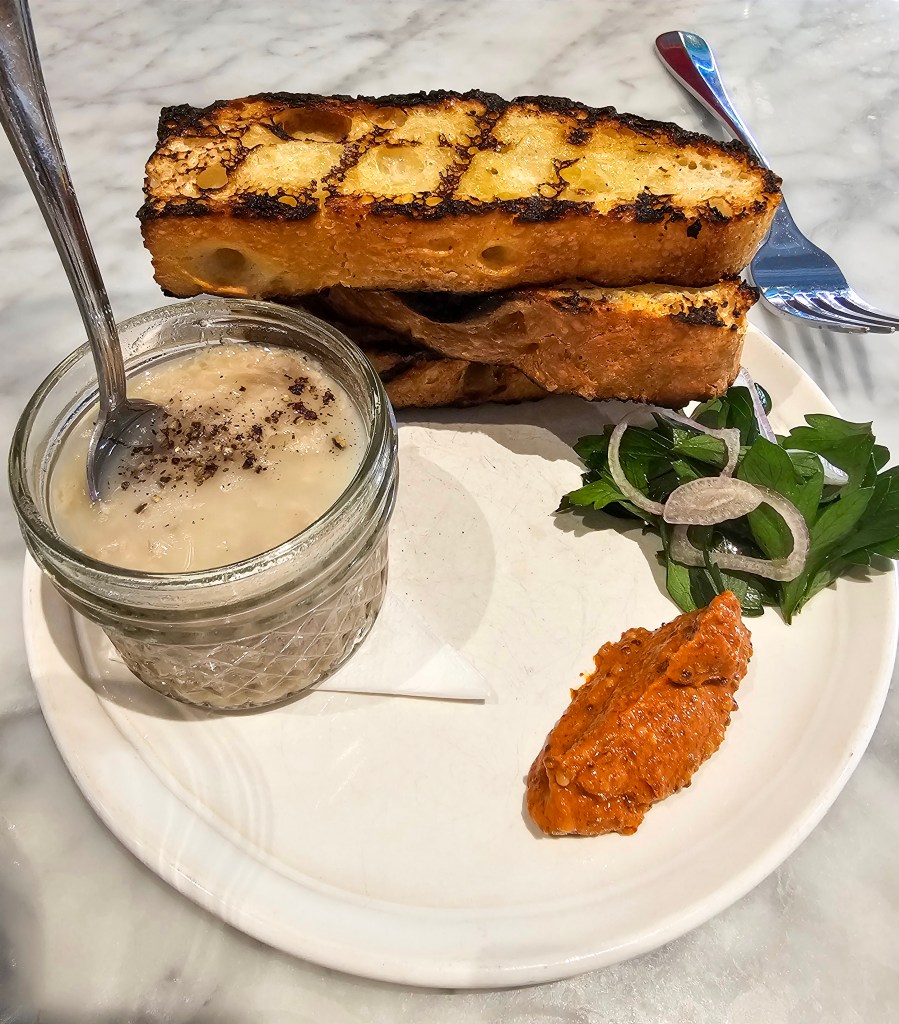
Rabbit Rillettes with Garlic Toast at Easy Bistro
Pork Hock at Easy Bistro
Mushroom Tagliatelli at Easy Bistro
Profiteroles at Easy Bistro

We left early the next morning so we could go back to the fuel dock and take advantage of the excellent (and free) pump out machine.  We were properly underway before 9am, but there was a delay at the lock for a pleasure boat to lock down.  There are very few tows on this part of the river system, particularly given the delays at Wilson lock.
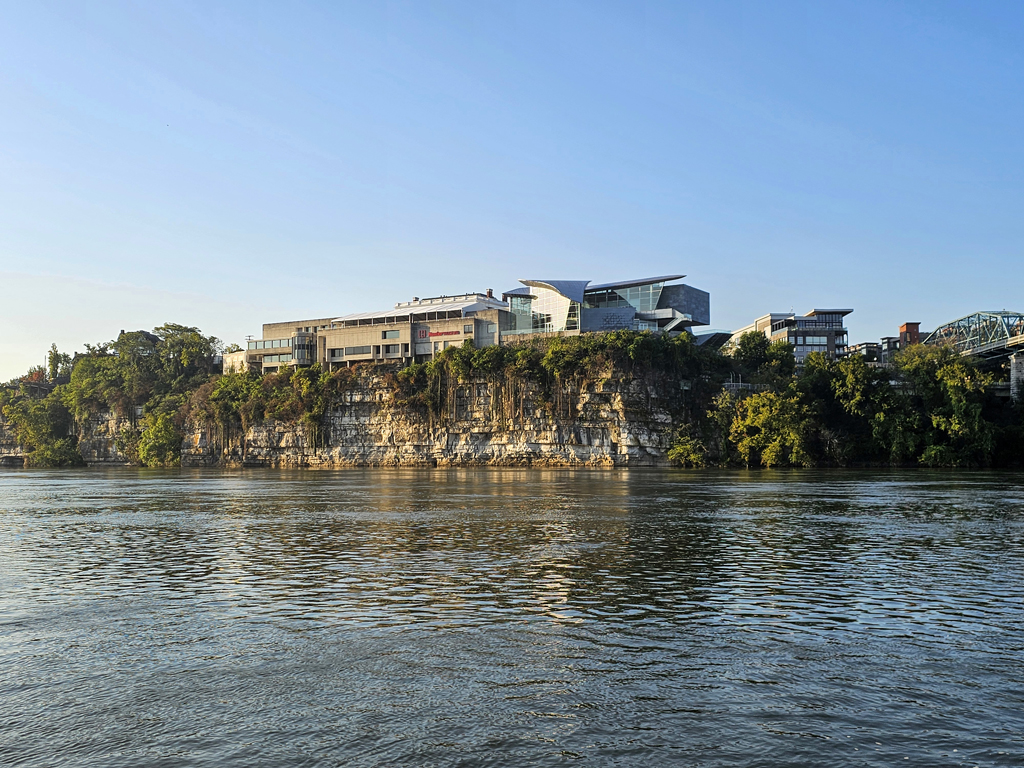
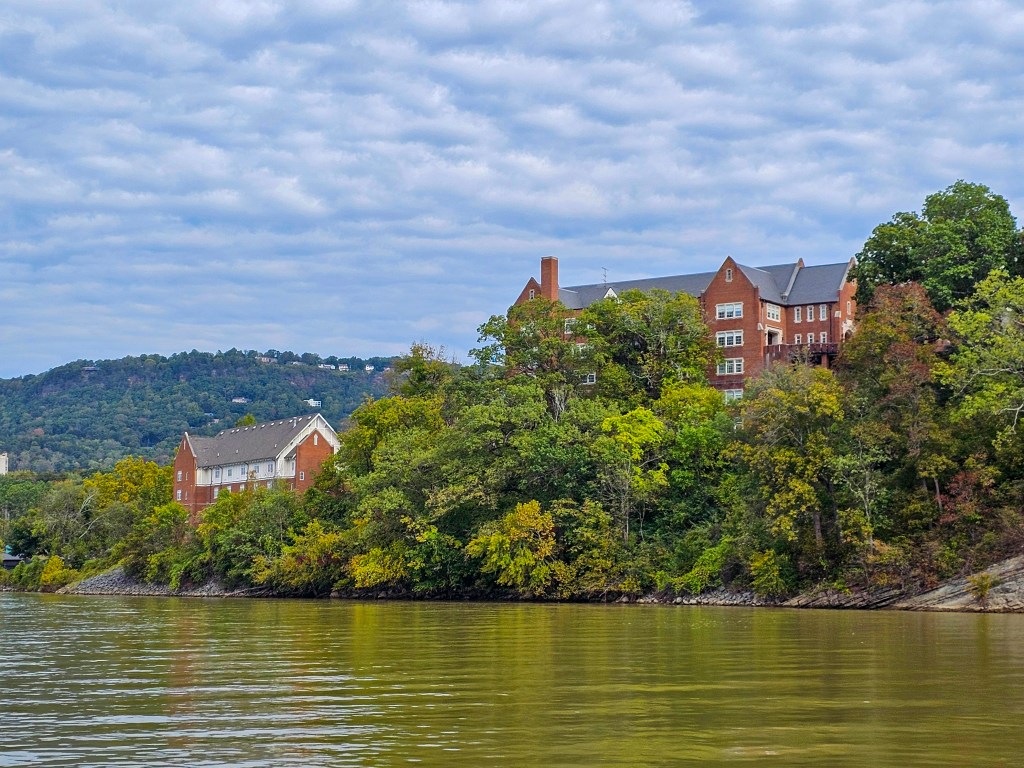
American Museum of Art from the river

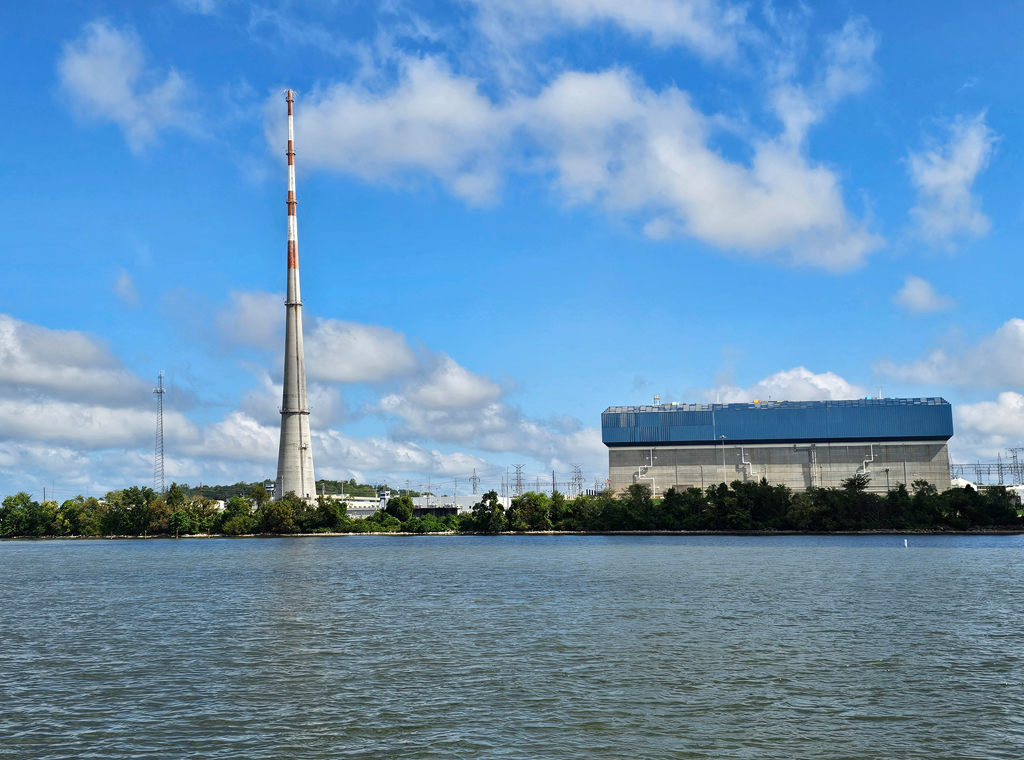
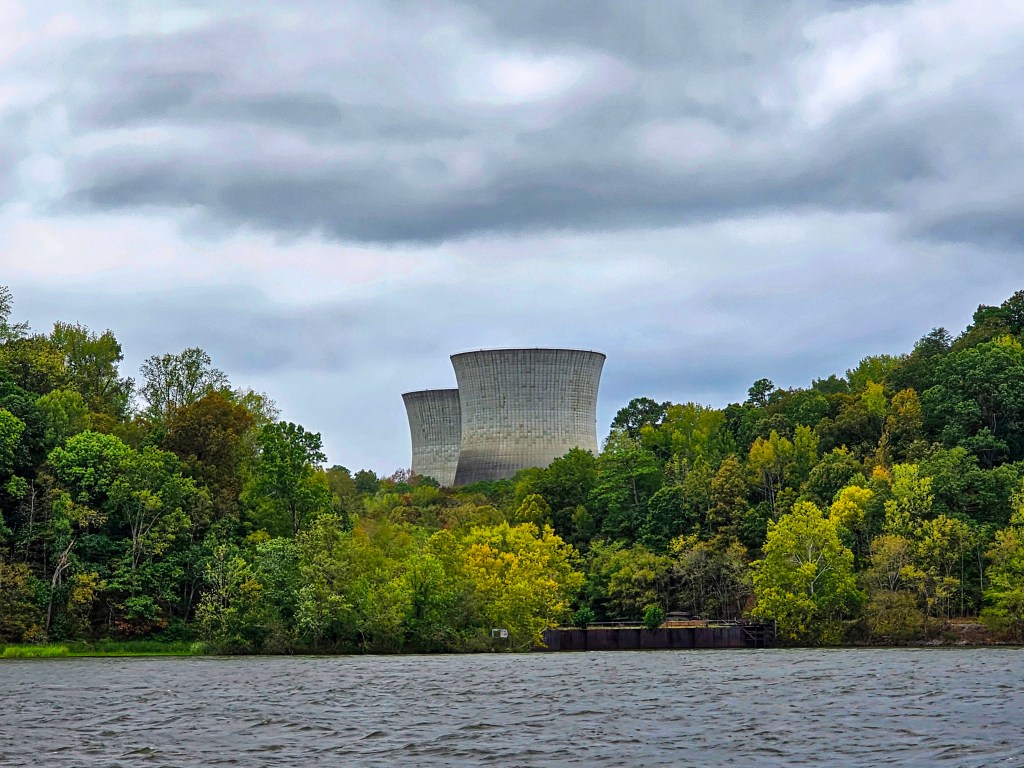
We passed the Sequoyah Nuclear Plant.  This plant, and its sister plant at Watts Bar, has a special system that uses borated ice to help condense the steam in the case of a loss of coolant accident.  The system allows for a smaller containment building.  The reactor cooling water at the Sequoyah plant is mostly pumped into the Tennessee River at a rate of a million gallons per minute.  A maximum rise of five degrees F is allowed in the river as a result of releasing the cooling water.  Once the maximum is reached, the big cooling towers are used to provide the required extra cooling.  On both occasions that we passed there was no steam coming from the towers.  We noticed that the area is popular with fishermen, so the fish must like the warmer water too.
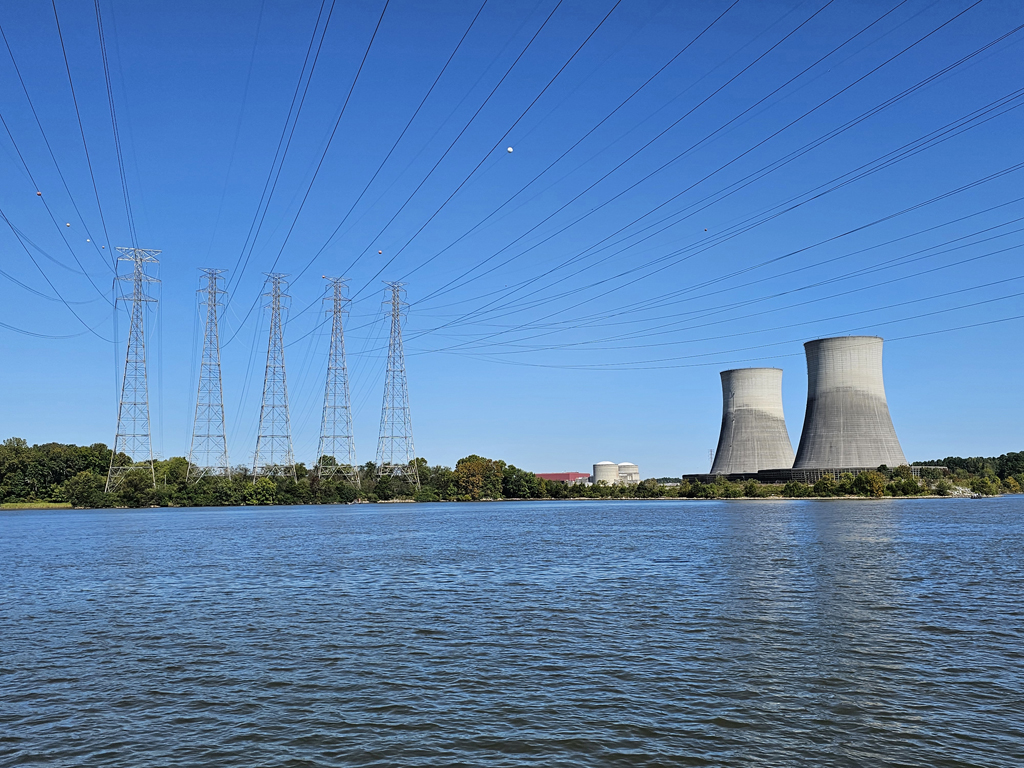
Sequoyah Nuclear Plant, Lake Chickamauga

Sequoyah was a Cherokee polymath.  His most well-known achievement was the creation of a Cherokee syllabary, enabling the Cherokee language to be written as well as spoken.  Within 25 years of adoption of the syllabary, the Cherokee Nation had almost 100% literacy.  Many things have been named after Sequoyah, including the giant trees in California, a mountain in the Great Smoky Mountains, and a yacht that was formerly used by American Presidents.

That night we stayed at a fellow AGLCA member’s dock on Lake Chickamauga.  They have built a beautiful house above the lake with stunning views.  Their boat is elsewhere for repairs, so Nine Lives was made welcome.  We enjoyed refreshments and nibbles and the wonderful views from their balcony.  Later we returned the hospitality with docktails on Nine Lives.

We saw our first Bald Eagle this trip on Chickamauga Lake
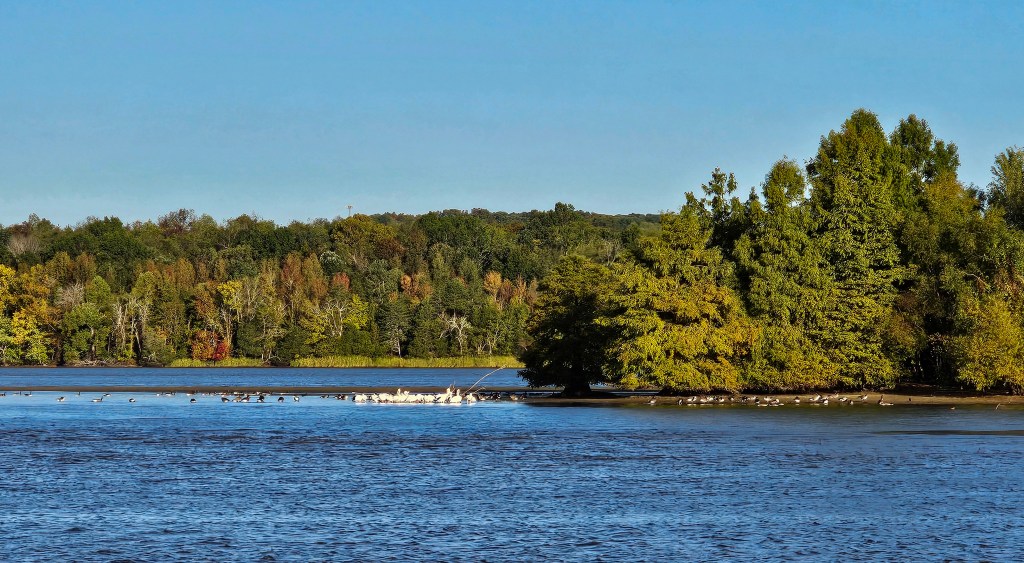
Autumn colours and pelicans

On October 8th we got an early start, expecting an 8-hour day, but the lock was ready for us when we got there, so we didn’t lose much time.  We were in the marina by 3:30pm in spite of a strong current against us.  The staff asked us to arrive before 5pm, so they could help us tie up, but after detailed instructions by phone for finding our slip, there was no help in sight.  Usually, this is just as well.  Not only does it save tipping a dockhand, but we do better ourselves.  This time it was a little more tricky than most because of very small cleats that are hard to keep a line around.  The onsite restaurant was closed for the season, so we had planned for shrimp sandwiches on board.  This year, instead of relying on frozen shrimp from the supermarket, some of which has been so awful it had to be thrown away, we bought several 1- and 2-lb packages of wild caught shrimp from Hudson’s in Hilton Head.  What a difference in flavour and texture!  Of course, it does mean that for shrimp sandwiches I have to cook them first, but the result was well worth the extra effort.
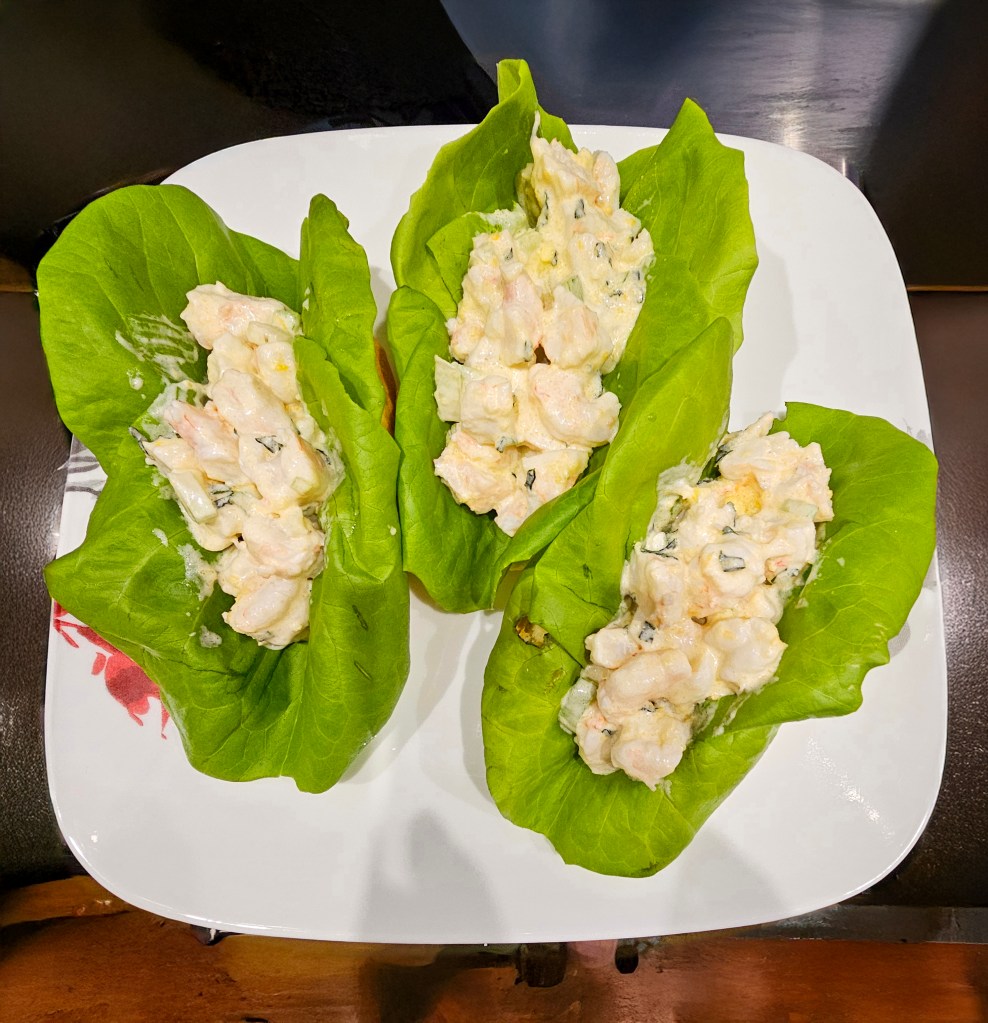
Shrimp sandwiches

We now have wonderfully cool nights and chilly mornings.  Long sleeves are good to start, and I am starting to think about the gloves that I have packed away somewhere that have full fingers.  We are beginning to see pretty fall colours and mist on the water in the mornings.

We passed under Interstate 75.  This highway starts at the Canadian border in Sault Ste Marie, and links Detroit, Cincinnati, Lexington, Knoxville, Chattanooga, Atlanta, Tampa, and Miami.

Passing under Interstate 75

In Loudon, about a mile of the riverbank was taken up by the Primient factory.  This plant used to be the familiar Tate & Lyle, but it was rebranded following ownership change.  Most of the factory is screened by trees from the river.  The smell is strong, and not particularly pleasant.  We thought we would not like to live in any of the houses across the river that must have the smell with them all the time.  Corn is delivered and turned into a variety of products including high fructose corn syrup, and fuel ethanol.  Something about those products being produced in the same facility….
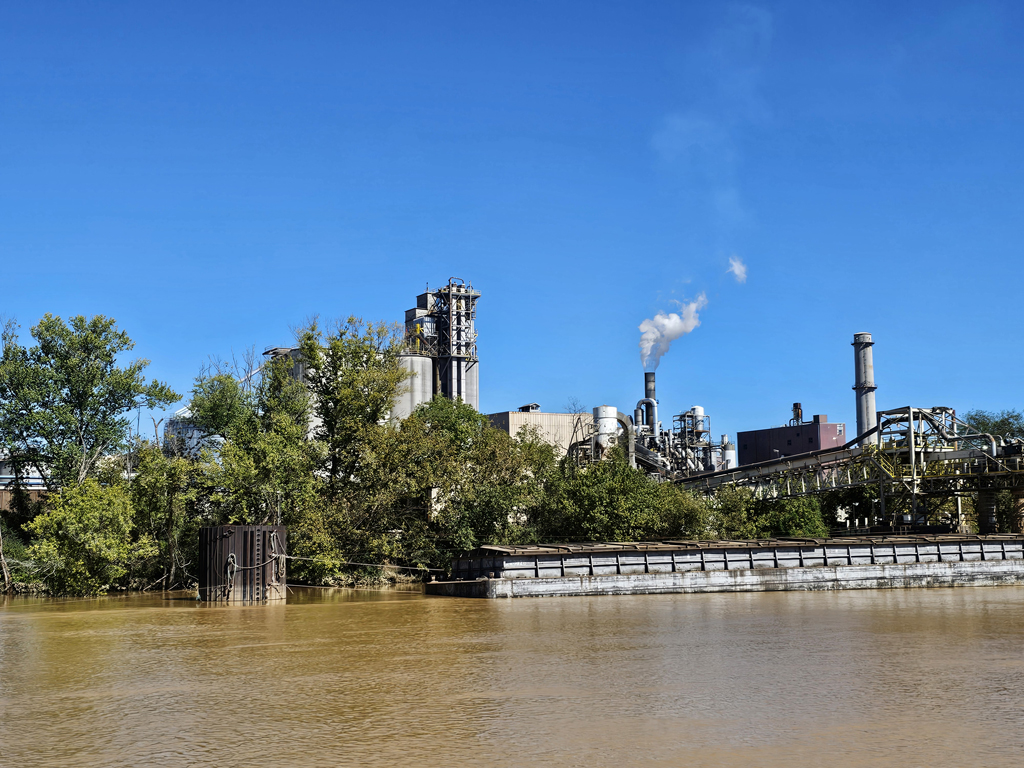
Primient Plant, formerly Tate & Lyle, at Loudon
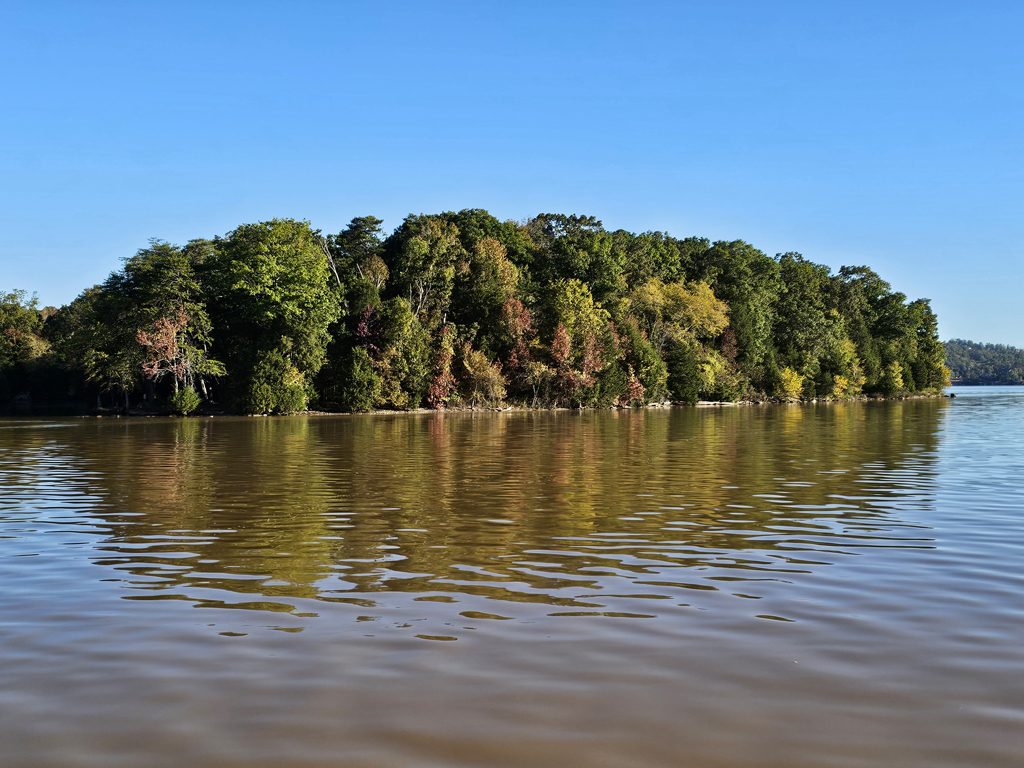
Fall colours on Watts Bar Lake
A farmhouse on Watts Bar Lake with the Smoky Mountains in the distance

A day that was a mix of interesting shoreline and long boring stretches became far more exciting than either of us liked.  Ft Louden lock was our last upbound lock on the Great Loop, and it was a doozie.  When we were about 30 minutes away, Dick made his usual polite phone call to ask about the queue, and request a lock up.  The lockmaster explained that he was about to lock down a tow that would take 8 hours, but that if we could get there within 20 minutes, he would take us up first.  Dick put the hammers down, Nine Lives leapt forward, and we arrived at the lock in less than 15 minutes.  Then the excitement began.
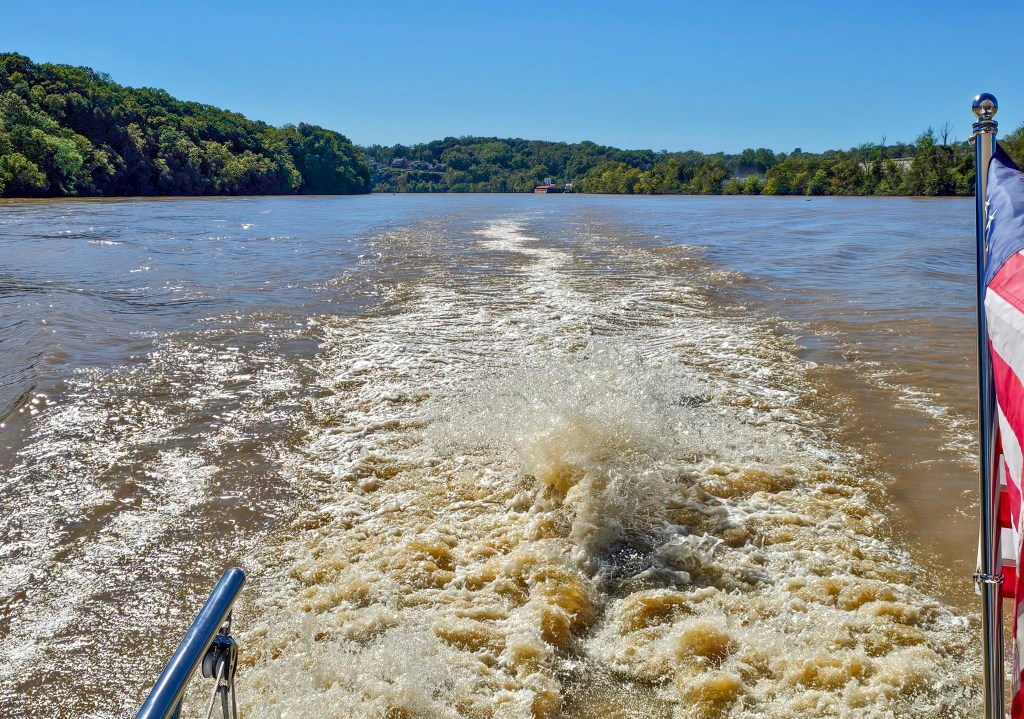
Nine Lives speeds up to catch the lock

In addition to some huge logs and pieces of debris, the water coming off the dam had created an area of rolling waves with whitecaps, that were broadside to the boat.  Dick fought his way through the mess, as we were flung this way and that.  We were very glad that we observe “cupboard discipline” and latch all cupboards and drawers at all times.  If we didn’t, the contents would have been on the floor.
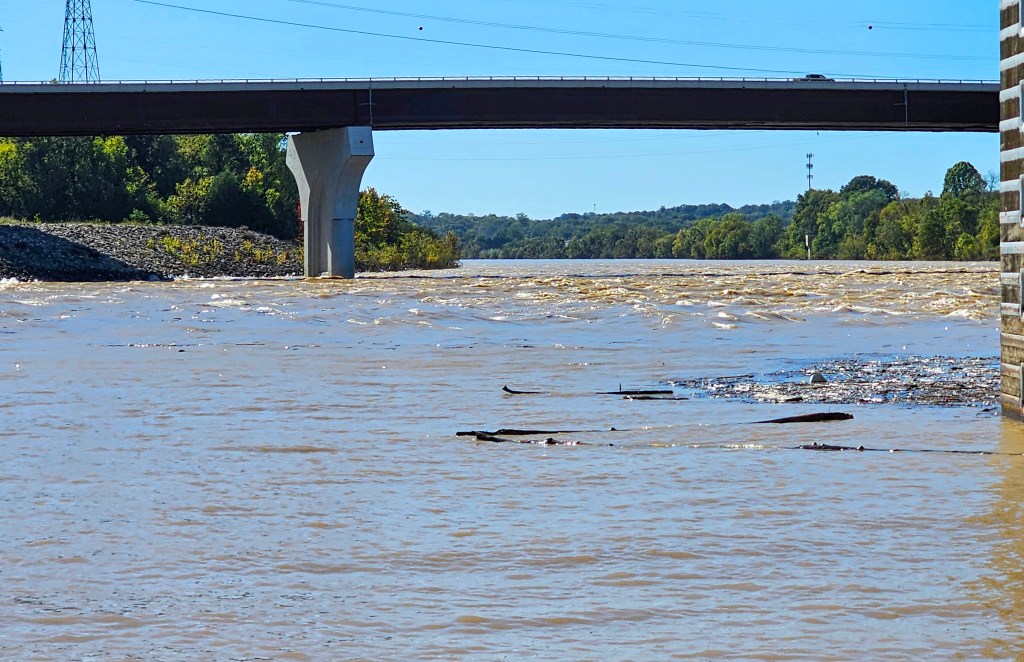
Looking back at the rough water below Ft Loudoun Lock

As we waited for the lock doors to open, we could see 2 huge tree trunks, each about 20 feet long, blocking the lock entrance from each side.  The only way was to push through them slowly.  Finally set, with Dick tending the line on the floating bollard as usual, he looked up to see a whole bunch of people looking down at us!  Once again, we were the show, or at least the opening act.  The lock was conducting tours of 30 to 35 local people, and our adventure coincided with one of the tours.  The excitement was not quite over.  The waiting tow had moved into position, in front of the lock gates.  Fortunately, after his front barges were tied off, he backed up a little, so there was enough space for us to get past.  Once again, we had to push through a debris field.  Certainly there was lots going on for the watching tour group. Dick posted on the Looper forum that evening, advising Loopers not to plan to come through that lock until the high water had subsided.  Nine Lives managed the turbulence, but some boats would have real trouble.
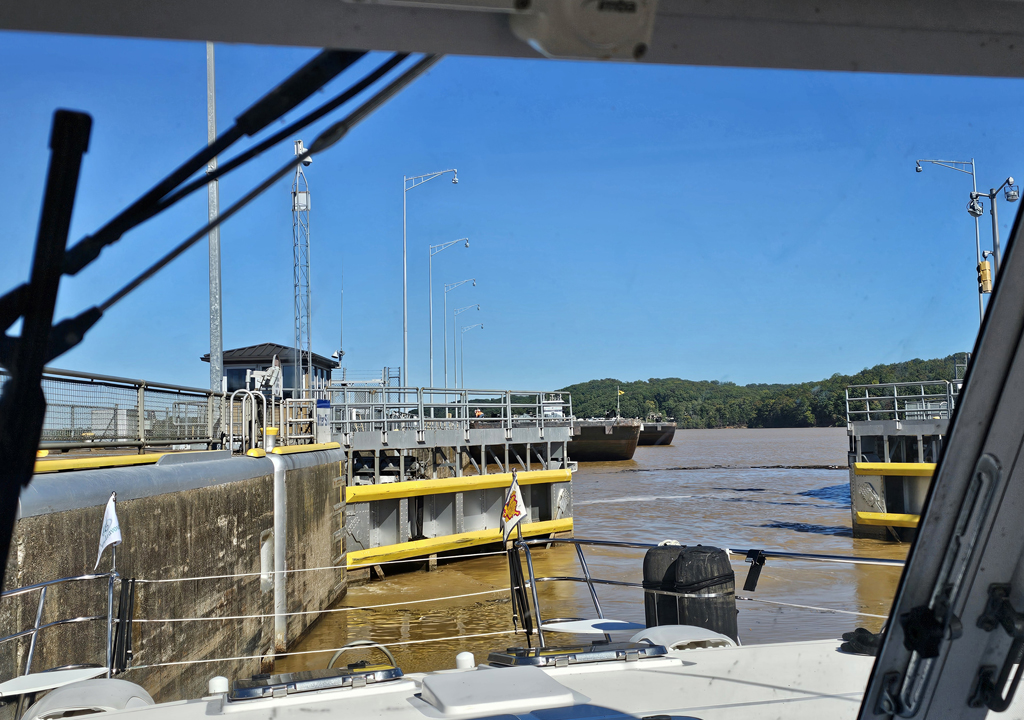
Exiting Ft Loudoun Lock past the waiting tow and through the debris field

We arrived at the marina, which is immediately above the lock, and had no answer when Dick tried to phone.  This meant tying up at the fuel dock in order to get a dock assignment and the gate key.  Always a pain.  Our slip was very short, although thankfully wide enough, with very small cleats that were impossible to get a line onto from above.  Once in the slip, I put the stern line around a post, and took station at the helm while Dick half climbed and half jumped off in the middle of the boat and secured all the lines.  I was not required to jump down 5 feet to go to dinner, as the ladder fit!  We planned to eat at the onsite restaurant.

We walked over and had about ½ an hour to wait.  However, there was room in the bar, and while Dick enjoyed a beer, I felt the need for something a little more robust after our earlier excitement, and ordered Woodford Reserve.  It was a double, but (sadly) not what one would describe as a generous pour!

The restaurant won a National Rib Cookoff, and regularly wins “best of” in Knoxville.  This is a barbecue restaurant, which means that I now have to explain to our non-Southern readers just exactly what is meant by the term barbecue.  In Canada, UK, Australia, and much of northern USA barbecue is a method of cooking over direct heat such as charcoal or gas, generally quite quickly.  Southern barbecue however, is done with indirect heat, such as smoking or roasting and over a long time.  Most Southern barbecue will feature a tomato and pepper-based sauce with brown sugar and often quite hot spices.  There are literally hundreds of bottled barbecue sauces available to buy in supermarkets, and restaurants often have their own recipe.  Dick and I have learned to use the term “grill” to describe either the equipment or cooking method, in order not to confuse any guests who might be expecting something quite different from what we are preparing!

Dick ordered a trio of 3 dishes, BBQ ribs, fried chicken, and pulled pork.  I had a hamburger.  All were excellent, but I found that the seasoned fries had a sweet taste that I didn’t like at all.

The replica ships, Nina and Pinta, were visiting the Tennessee River when we were there

Next morning we set off up the Little Tennessee River.  We passed the earth dyke of the Tellico Dam, a highly controversial dam that created Tellico Lake.  TVA insisted that this dam was required to prevent flooding downstream, and also to improve the local economy.  Environmentalists, local landowners, fishermen, and Native Americans all objected for a variety of reasons, including the presence of the endangered snail darter (a fish).  Construction was halted just before completion.  Eventually it went forward by an Act of Congress.
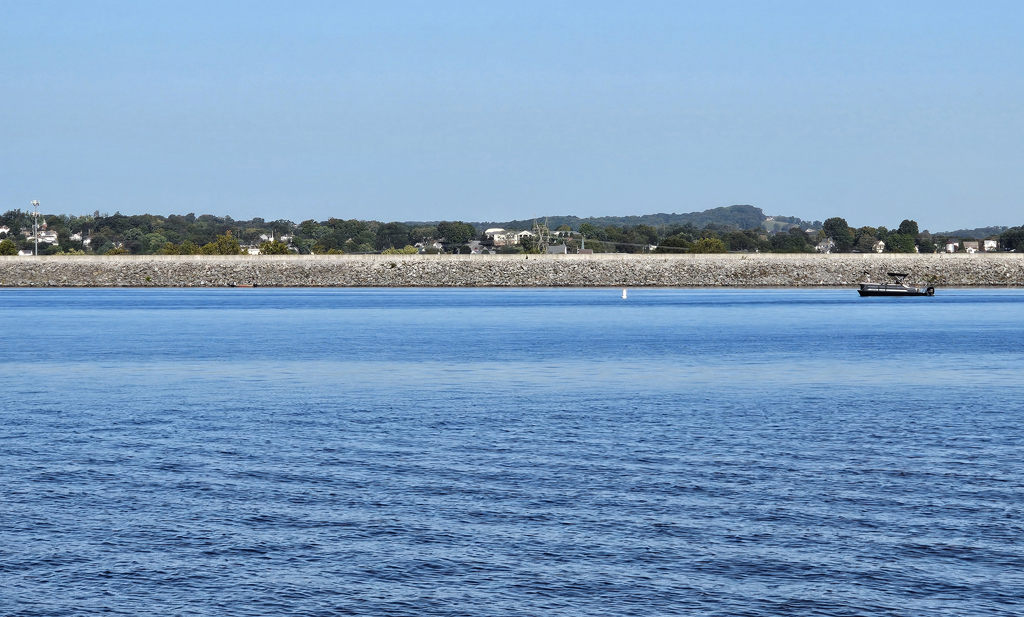
Tellico Dam, essentially a long earthworks.

There are an enormous number of houses built around the Lake, all very large, over 5000 sq ft.  Certainly, the local economy was very much improved by the sheer amount of wealth that has migrated to the location.  What the snail darter thinks, we do not know, although the freshwater fish was relocated by TVA and is no longer considered endangered.  Later we saw the tops of drowned silos, a reminder that these lands had been farmed for generations and the landowners were forced out.
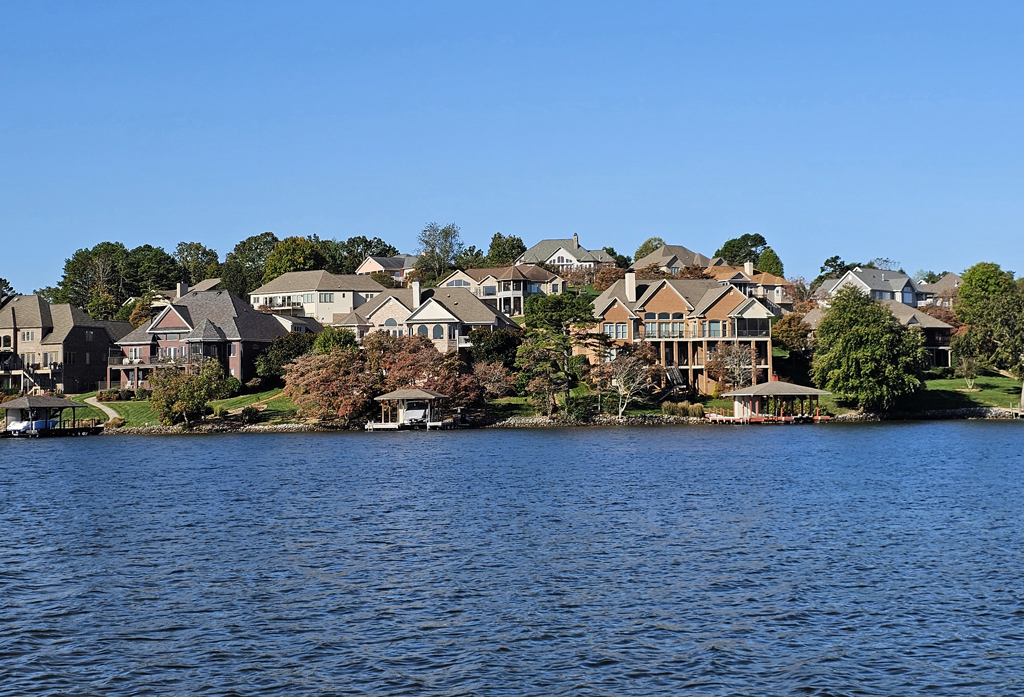
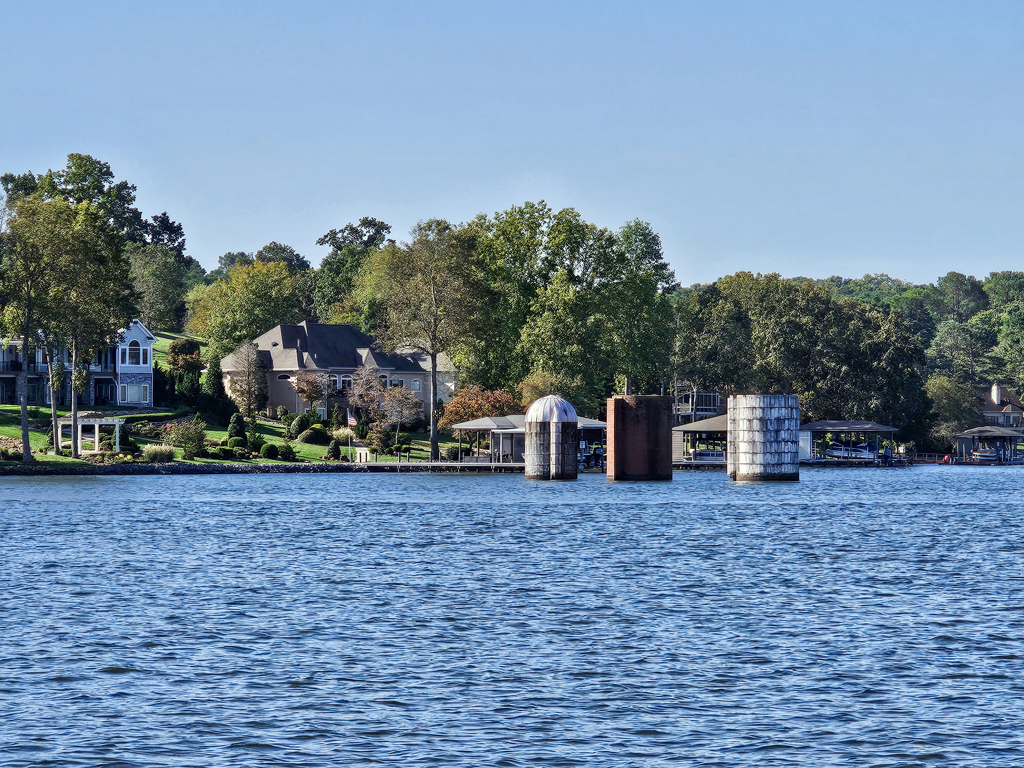
Some of the miles and miles of wealthy homes on Tellico Lake
Drowned silos are a reminder of what was lost and destroyed when the dam was built

We had thought to stop at Tellico Marina for the night, but repeated calls and emails had no response.  We went into the marina, and headed for the fuel dock, but it became increasingly shallow, so Dick turned around and we decided to anchor elsewhere overnight.  Shortly after leaving, the marina called to say they had space, but we told them sorry, too late, we already made other plans.

We explored about 26 miles up the river.  There were fine views of the distant Smoky Mountains, but surprisingly little fall colour in the trees.

View of the Smoky Mountains from Tellico Lake

Fort Loudoun was built by the British in 1756 to help keep the French out of the Appalachian region during the French and Indian War.  Just a few years after the war ended, there was a tragedy.  A breakdown in relations between the British and the Cherokee Nation resulted in 16 Cherokee chiefs who were being held hostage, being executed in South Carolina in 1759.  Fort Loudoun’s supply line was cut in the spring of 1760.  Once the food was nearly gone, the commander asked the Cherokee for terms of surrender.  Early in the morning on August 9th, the garrison of 180 men and 60 women and children left the fort by agreement and travelled as far as they could before making camp.  At sunrise the next morning, the camp was attacked, and 30 people were killed.  The rest were taken as slaves, although many of them were eventually ransomed.
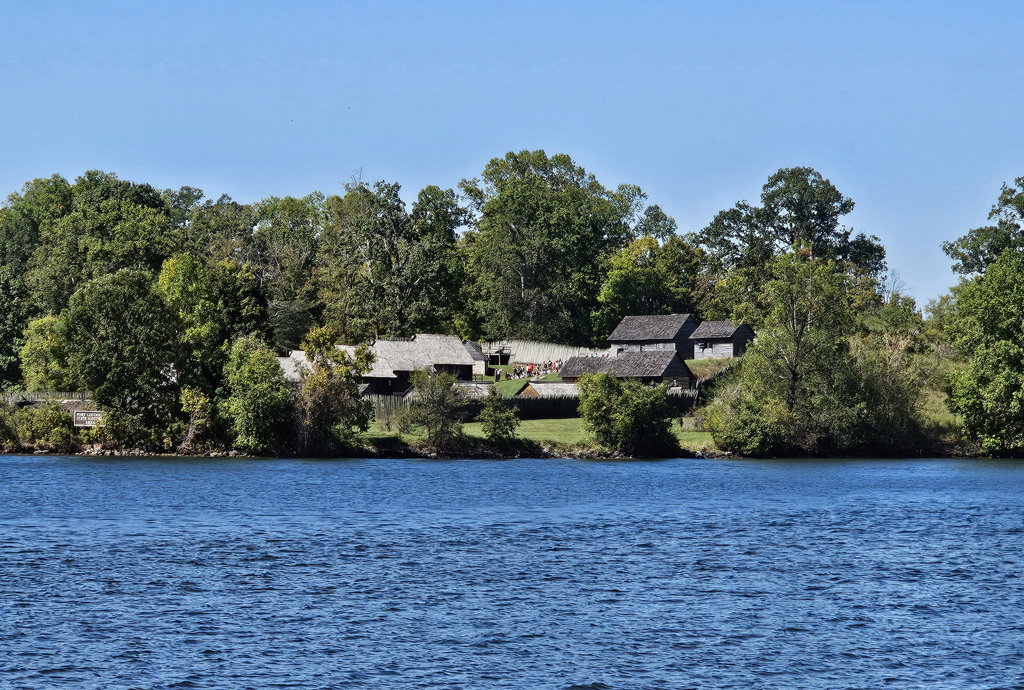
Fort Loudoun reconstruction

Across the river from the Fort, the Tellico Blockhouse was built in 1794, with the primary purpose of keeping the peace between white settlers who were moving into the valley and the Cherokee who lived there.  The blockhouse became a thriving trading post and was an important centre for negotiation of treaties for some years.  Gradually the local Cherokee moved away from the area, trying to get away from the encroaching settlers, and the blockhouse lost its strategic importance.
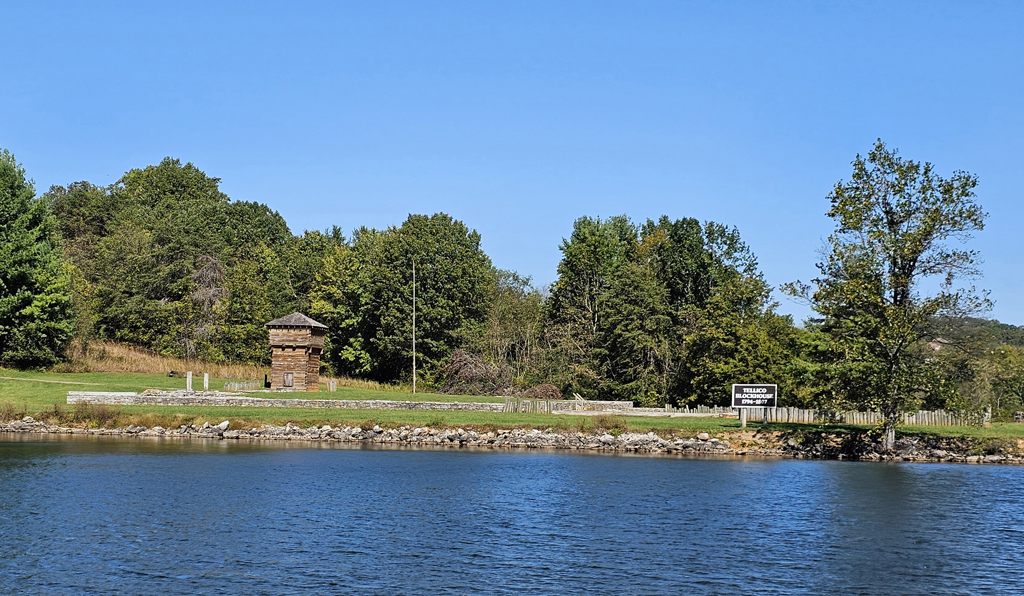
Tellico Blockhouse reconstruction

Among the huge tracts of expensive houses lining the lake we saw a number of boat building factories.  Yamaha, Sea Ray, and others were represented.  Clearly, this is a popular area for boat building.

The anchorage we thought would work was too small and unprotected, so we went back up the river a little way and found a good spot in a deep cove across from an RV park.  It was well protected.  The strong winds died down as soon as we got into the cove.  We had a very quiet night, and temperatures are now quite low, so the generator was not needed.  In the morning, the anchor came up easily, but covered in sticky red mud, so cleaning was required the next time we had dock water supply.

The return transit through Ft Loudoun lock was not something we were looking forward to.  There were some huge tree trunks we had to push through to get into the lock.  The ride down was smooth and easy compared to going up!  The debris field inside the lock raised our hopes briefly, as it appeared to obligingly move away to the side, but then the hopes were dashed as it spread itself back across our bows.  Dick did a masterful job of using bursts of the engines to move us forwards and then neutral to glide through.  Unfortunately, there was an even worse mess below the doors.  Eventually, I had to stand at the bow and direct, while Dick maneuvered forwards, backwards, and sideways, to shake the trees, and even planks of wood off the bows and avoid getting them caught in the props.  We only heard the distinct crack crackle of chewing lumber once.
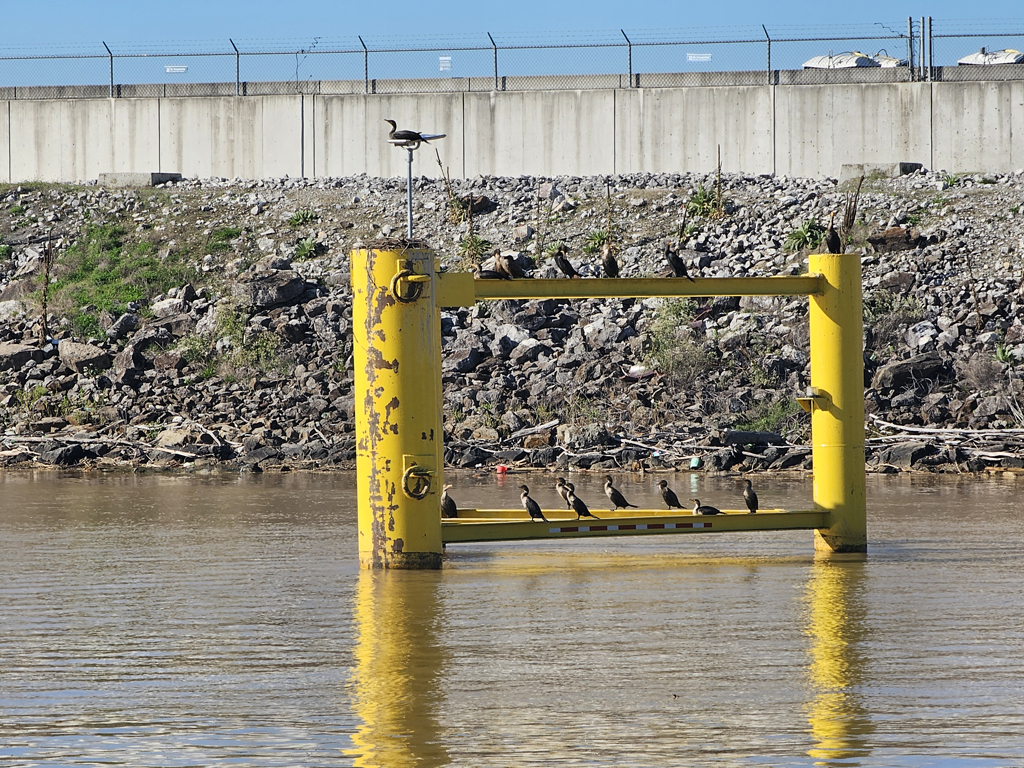
Cormorants at Ft Loudoun Lock

Debris navigated, there was the roiling water of the dam outflow to negotiate.  Although it was still more exciting than we would have liked, it was definitely easier with the current behind us even though the waves were still broadside.  Nice and friendly though the staff were, we are well glad to see the last of Ft Loudoun lock!  Later that day the lockmaster posted a video on their website of Nine Lives gliding up to the floating bollard with me at the helm and Dick waiting to lasso the pin.  We were quite chuffed, it all looked very professional!
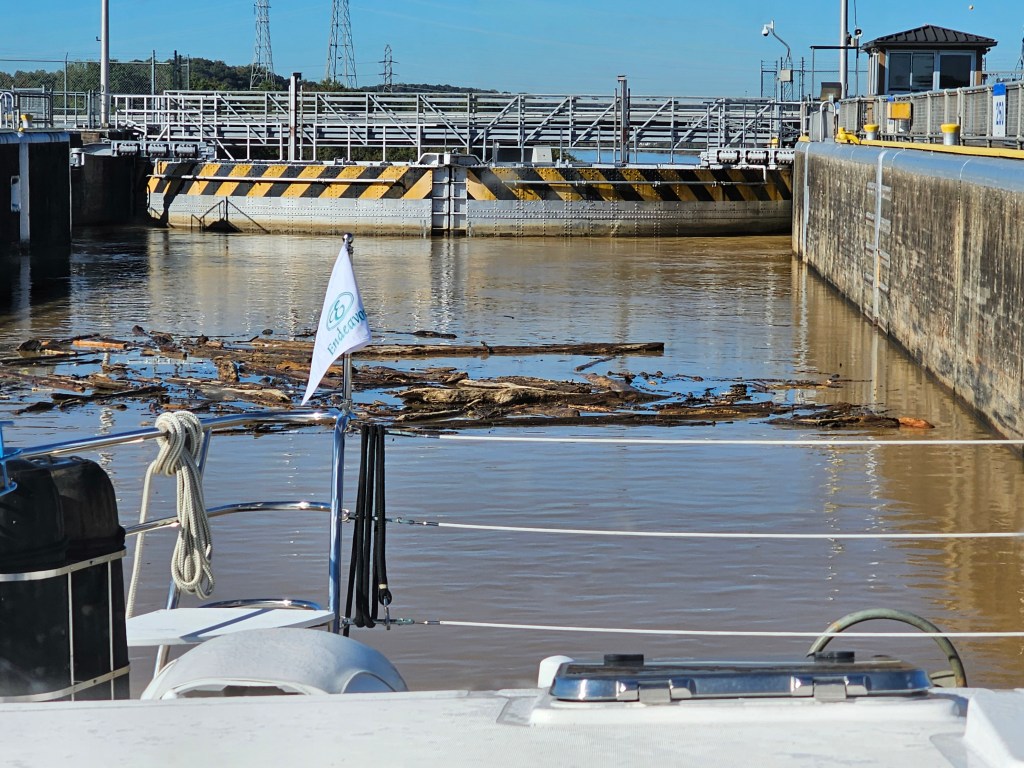
Debris in the Ft Loudoun Lock

As we headed downriver, we had a helping current, and made 9 and even up to 11 knots at our normal engine revs, compared to 5 on the way up.

We could see the stacks of TVA Kingston Steam Plant, also known as Kingston Fossil Plant.  It was built between 1951 and 1955, and at the time, was the largest coal-fired power plant in the world.  In 2008 a dyke ruptured at a coal ash pond and 2.7 million cubic yards of fly ash spilled, burying 400 acres 6 feet deep and filling the Emory/Clinch Rivers, that flow into Watts Bar Lake, in sludge.  The dangers of using wet storage ponds for fly ash was known at the time, and TVA had found leaks in the levees and seepage into the soil at the sites of many of its storage ponds.  Instead of switching to dry storage ponds, small repairs were made to reduce costs. This was the largest industrial spill in US history.  The cleanup was declared complete in 2015, but many residents of the area still do not drink the water or swim in the river.

Distant stacks of TVA Kingston Steam Plant
Historic image of the wall of ash after the spill at Kingston Steam Plant (courtesy Wikipedia)

We went into a deep bay for our marina for the night. Caney Creek Marina does not appear to be well known to transient boaters, but we had a good stay.  Our neighbours on the dock had seen the Ft Loudoun lock facebook video that featured us entering the lock, and they came out to help us tie up as soon as they saw us arrive.  We were then invited to drop over for some beer and chat.  A most enjoyable encounter.
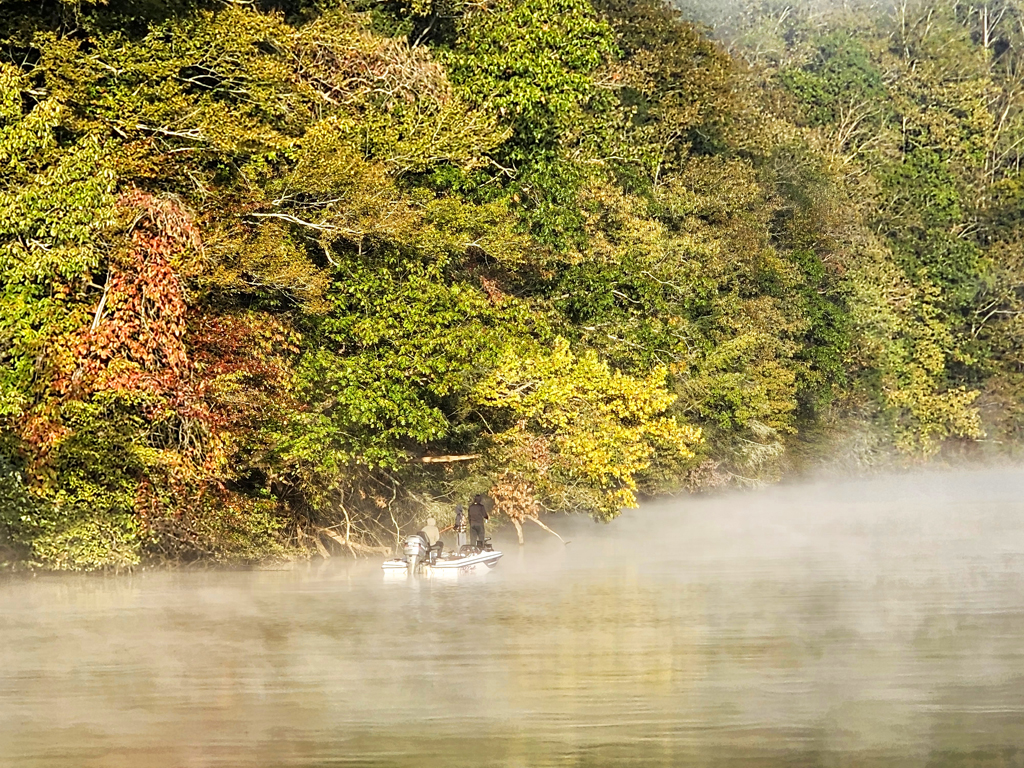
Fishing in the early morning mist
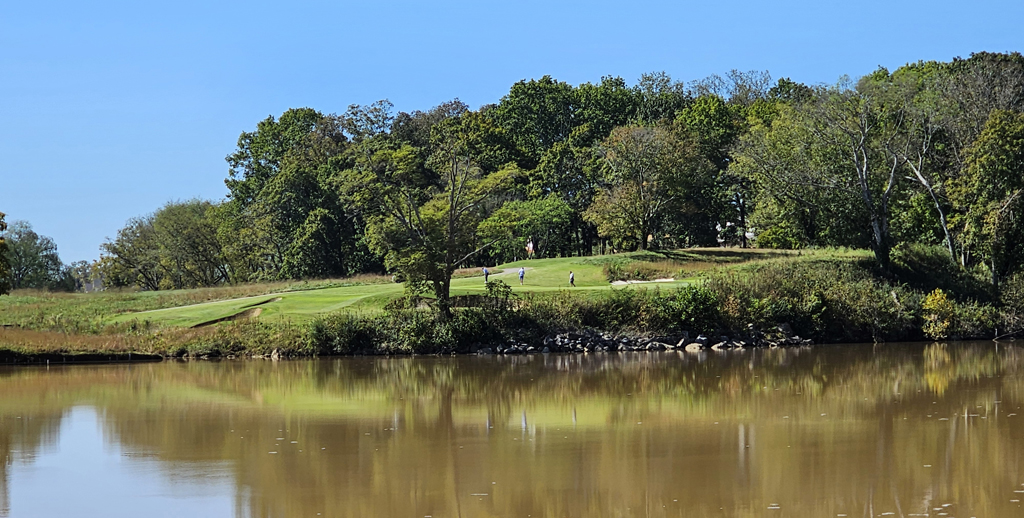
Tennessee National Golf Course
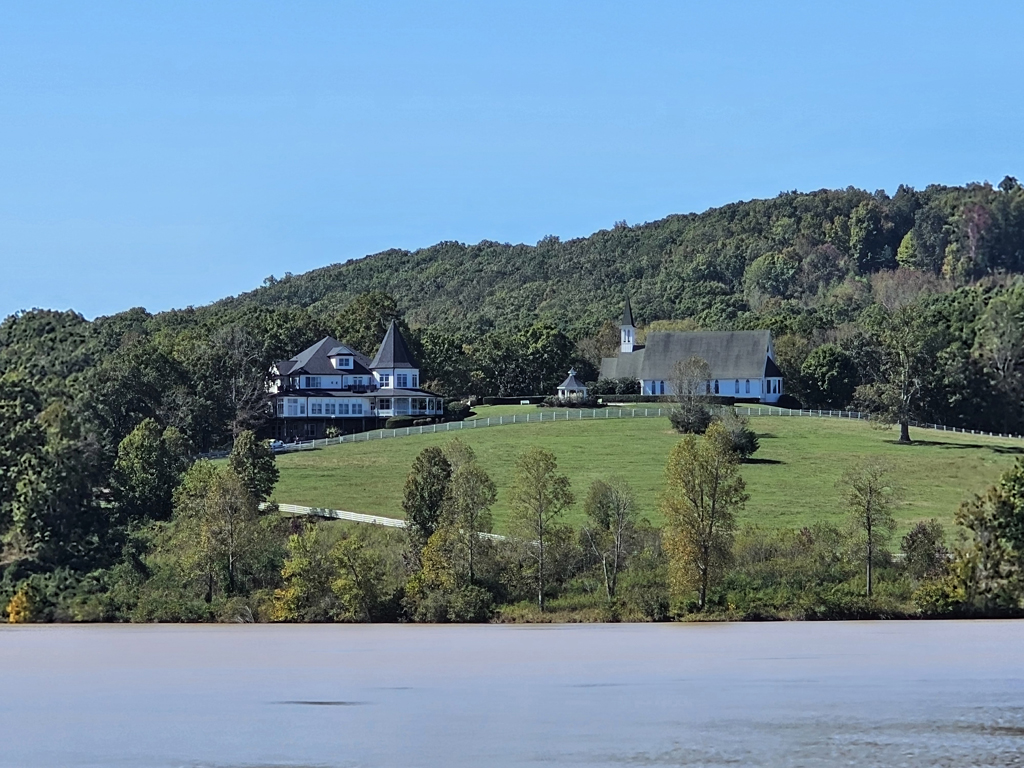
Whitestone Inn, an upscale B&B
An unusual rock formation and fall colour

We were out by 9:30 the next morning, a little later than planned, but Dick took the time to wash the mud off the anchor from the previous day.  After transit through the lock, we passed the Watts Bar Nuclear Plant.  It is unusual to find a nuclear power plant and a hydroelectric generating station in the same location.
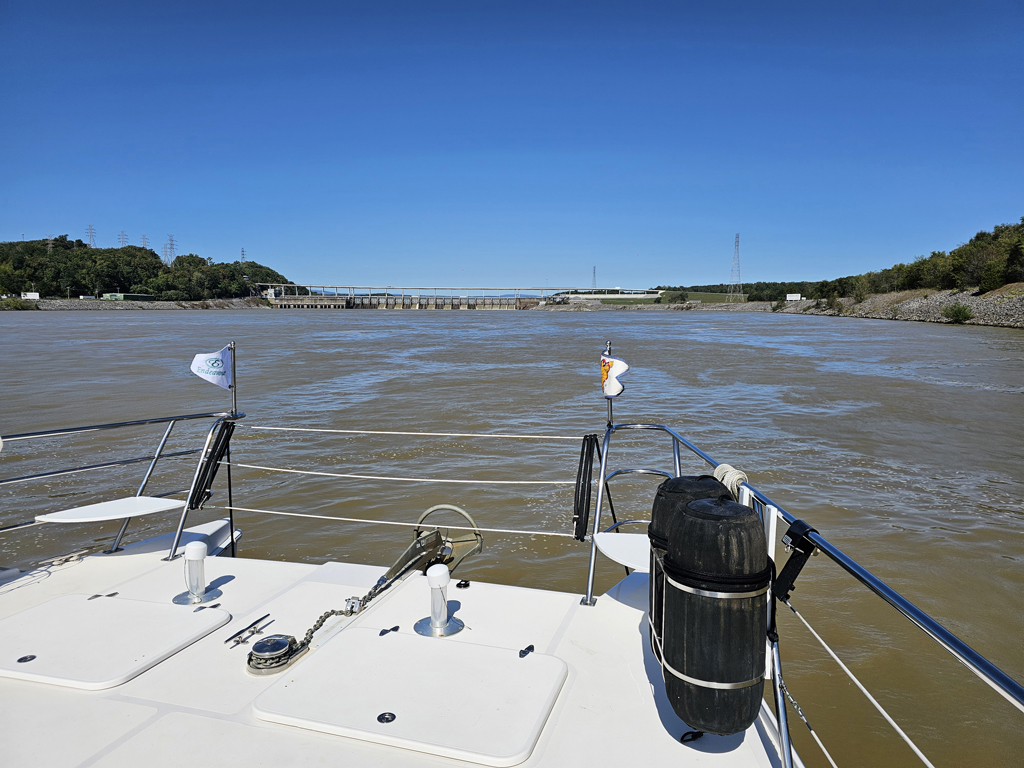
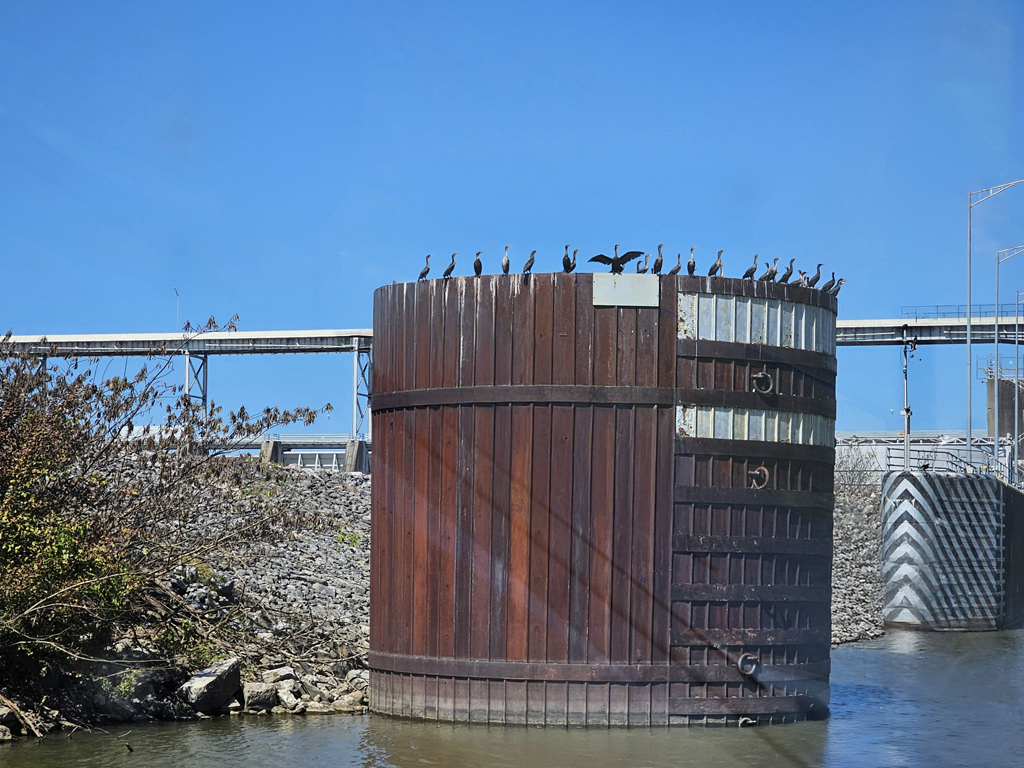
Approaching Watts Bar Dam
Cormorants at Watts Bar Dam
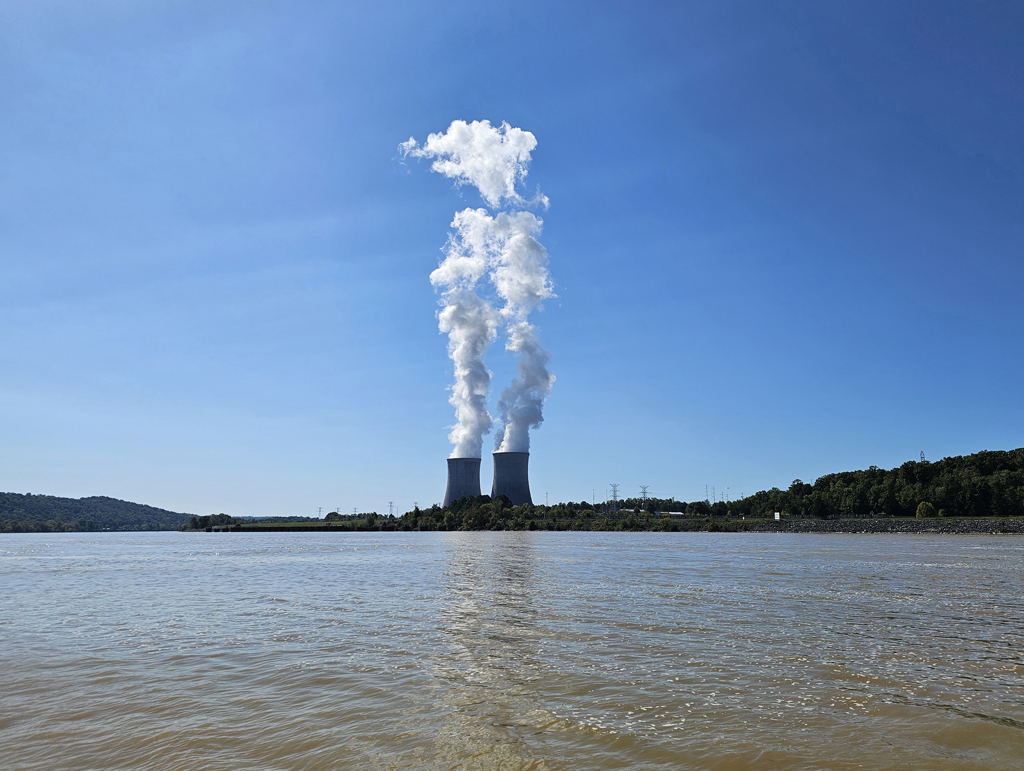
Watts Bar Nuclear Plant. That is just steam, not pollution, from the cooling towers.

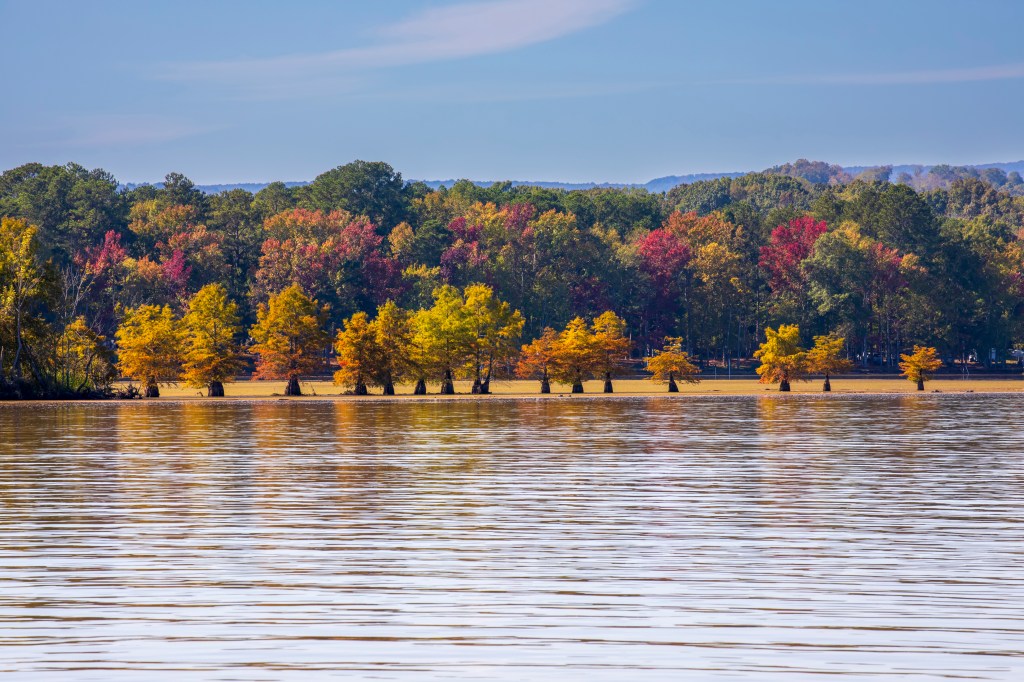
As on the way up, we had a day and a half of mostly boring travel.  Chickamauga is a large lake, so you don’t generally see much of the shore.  There was a brief excitement when an ultralight swept low over the river, and further south there were some lovely autumn colours in a row of bald cypress trees.
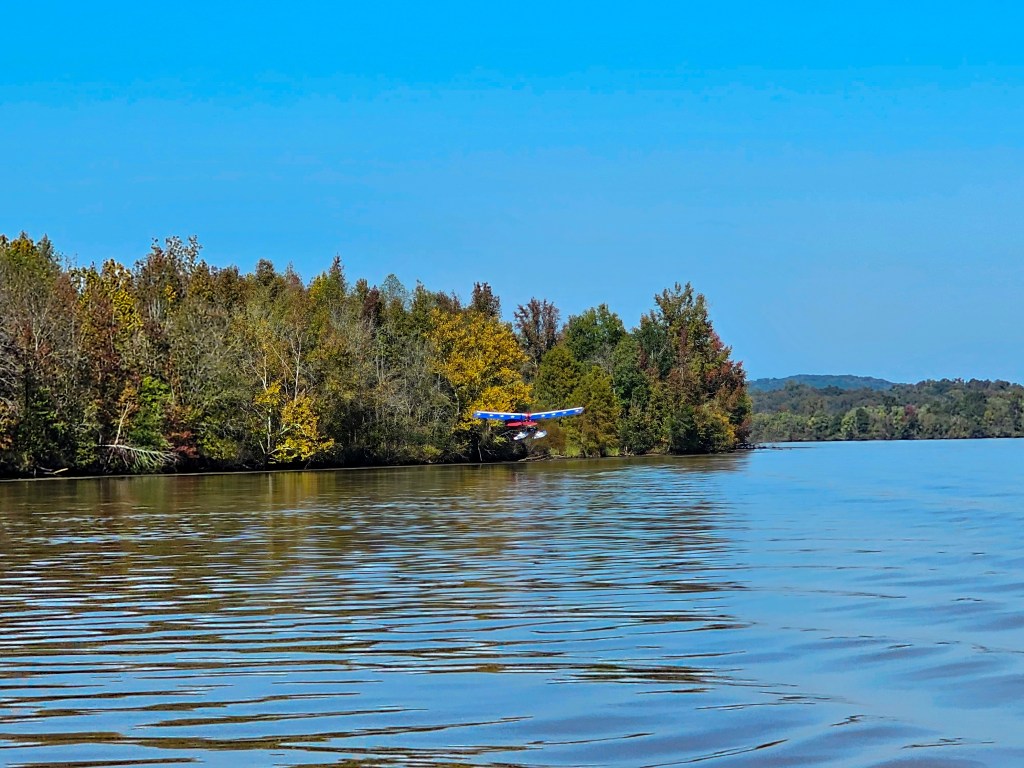
An ultralight flying low over Chickamauga Lake
Bald Cypress on Chickamauga Lake
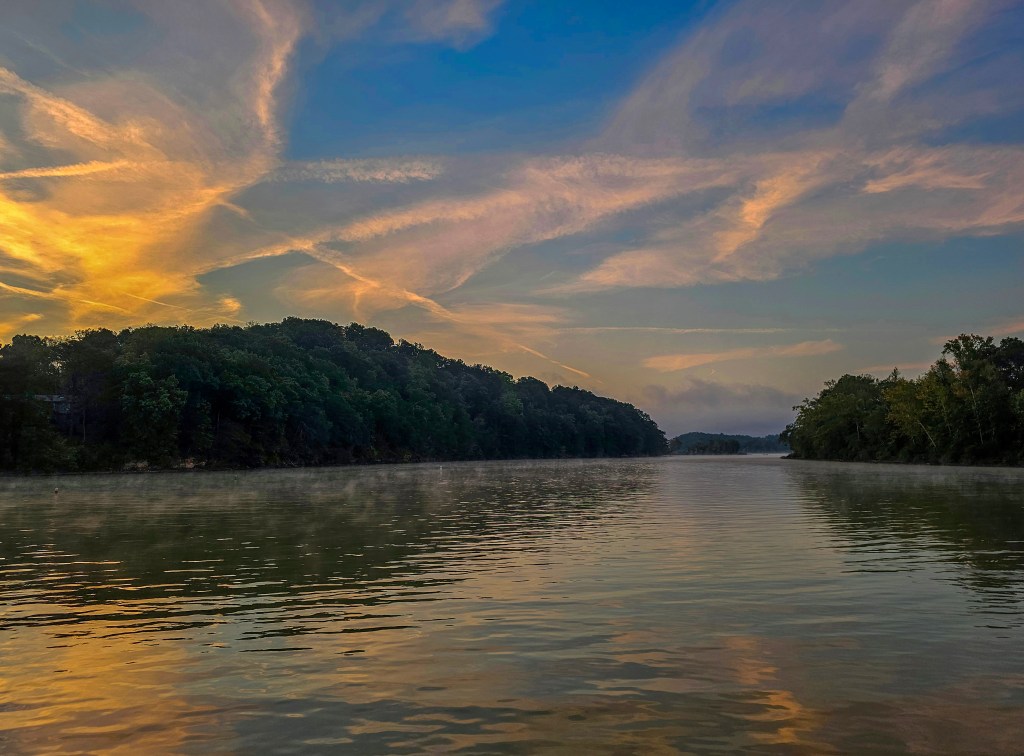
Wisps of clouds made a nice sunrise at the marina near Dayton

Our transit through Chickamauga lock was interesting.  We were locked through with a small runabout.  Given that it was a Sunday, and close to Chattanooga, the lockmaster was asking all pleasure boats if they had been through a lock before.  This fellow said he had, and then proceeded to tie up to one of the fixed pins – that would have been completely useless and very dangerous once the water started going down in the lock.  An explanation was provided, and they moved forward to the floating pin.  The guy chatted with Dick, he was a very pleasant fellow, laughed at himself, and said how obvious it was once he was shown.  We told them to go out of the lock first, as they would be faster than us, and they were very considerate, no burst of speed, and no wake.  We could certainly wish there were more boaters like that.

Later, after tying up at the familiar Bluff Dock in Chattanooga, we helped with a large cruiser coming in.  They spent the entire approach tying fenders all along the vessel, and only when at the dock, went to get out coils of line (and untangle them) to tie up.  If they had seen as many fenders roll up on docks and catch in the cleats as I have, they would change their preparation priorities.

We walked up to Mellow Mushroom for a pizza fix.  Amusingly, it is rated the #1 restaurant in Chattanooga on TripAdvisor.  We assume this is due to the large numbers of people visiting the Aquarium and the Chattanooga waterfront.
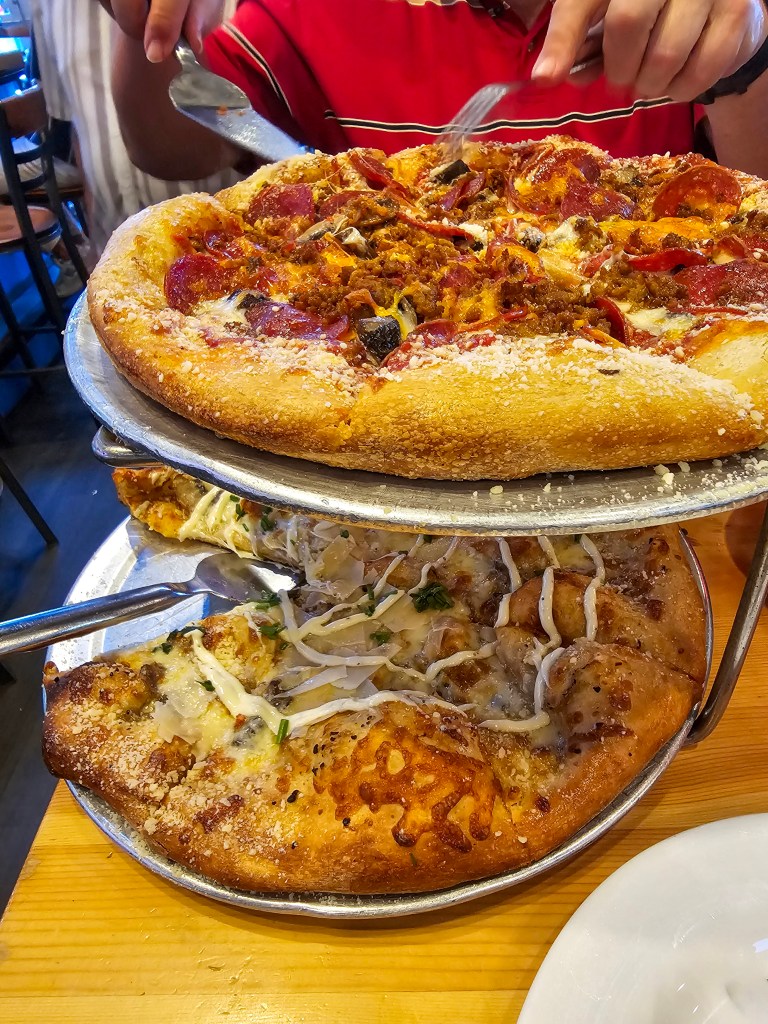
Pizzas at Mellow Mushroom

Our full day in Chattanooga was reserved for Dick to retrieve his bicycle, now sporting shiny new wheels, and he took advantage of being mobile again to use his trolley and pick up enough groceries to get us back to Aqua Yacht after Rendezvous.  I did several weeks’ worth of laundry.  Fortunately the clothes dried quickly on hangers in the very breezy cockpit.

Bicycles and groceries taken care of, Dick was able to get on with some forward planning for the next stage of the voyage.  He secured a 3-month booking at a newly rebuilt marina at the eastern end of Florida’s Panhandle.  With the whole of the Looper pack in panic mode after the devastation of 2 hurricanes, we feel it is prudent to nail down some of our options.

To our great disappointment, Dick had a phone call late in the afternoon to say that the restaurant we had been looking forward to for weeks had to close that evening due to maintenance issues.  It was purportedly the best fine dining restaurant in Chattanooga, but they had just moved to new premises and were clearly having teething problems.  We decided to give the steakhouse in the Read Hotel another chance.  The décor and ambiance was beautiful, and the meal was much more successful than our previous visit.

Sauteed shrimp at Bridgeman’s Chophouse
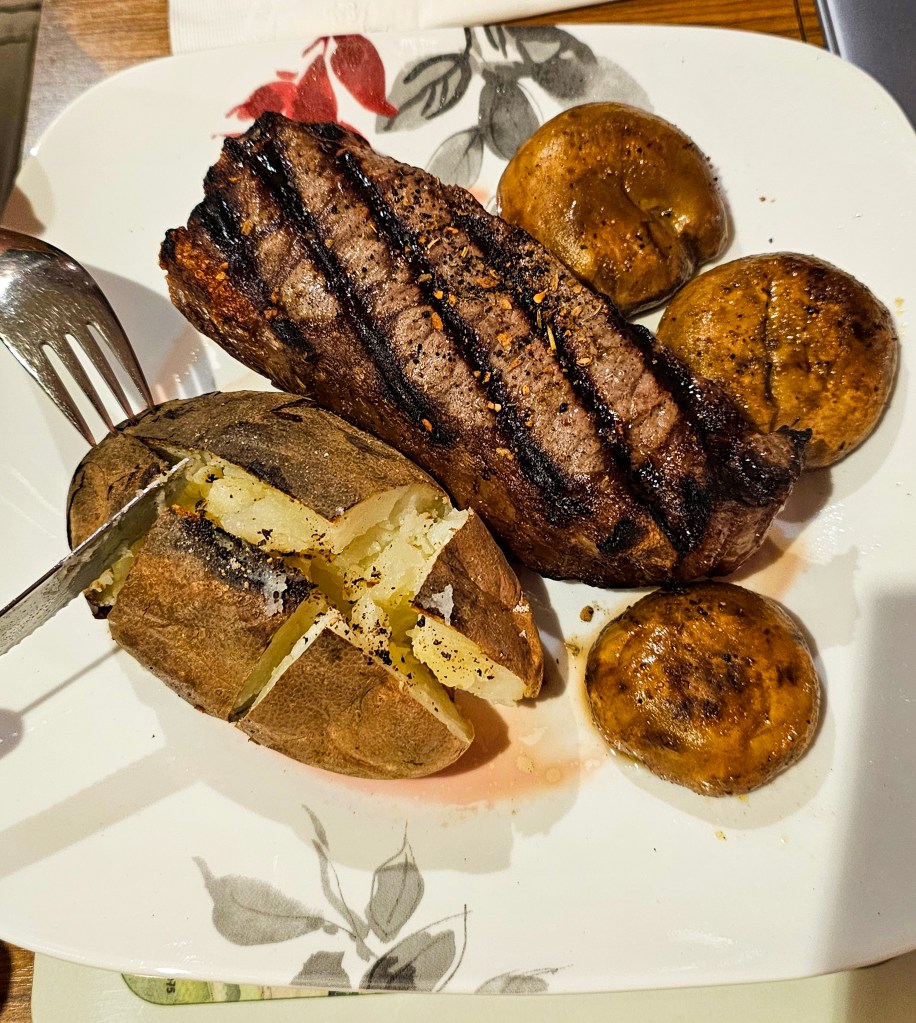
Rare steak for Dick at Bridgeman’s Chophouse
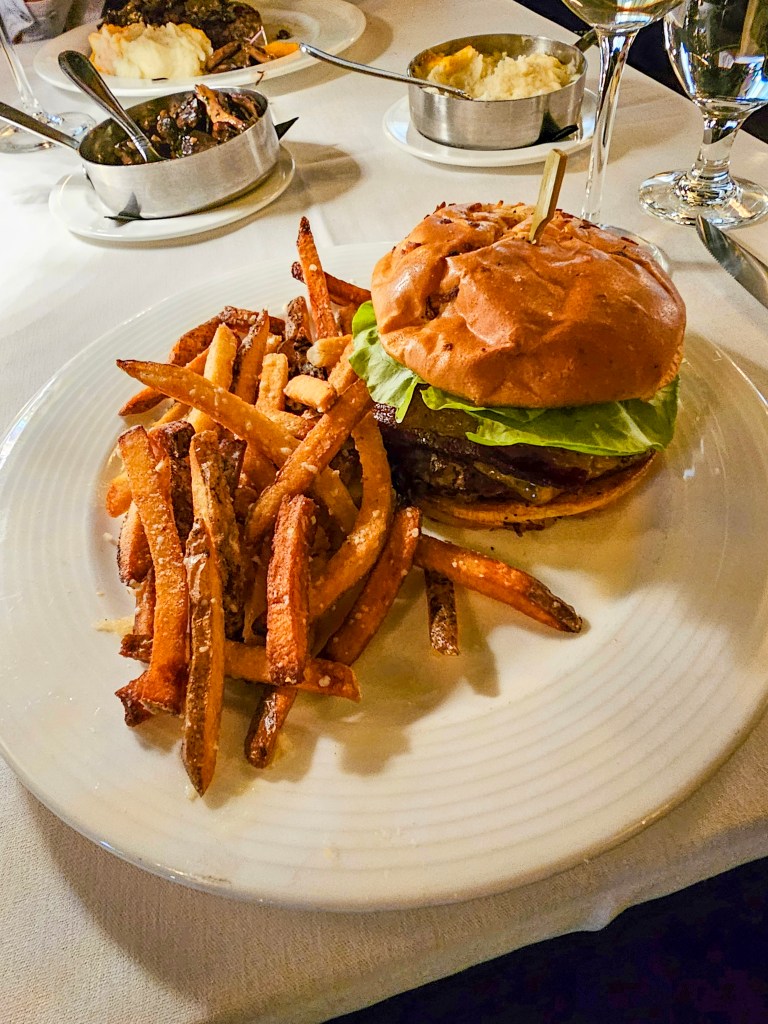
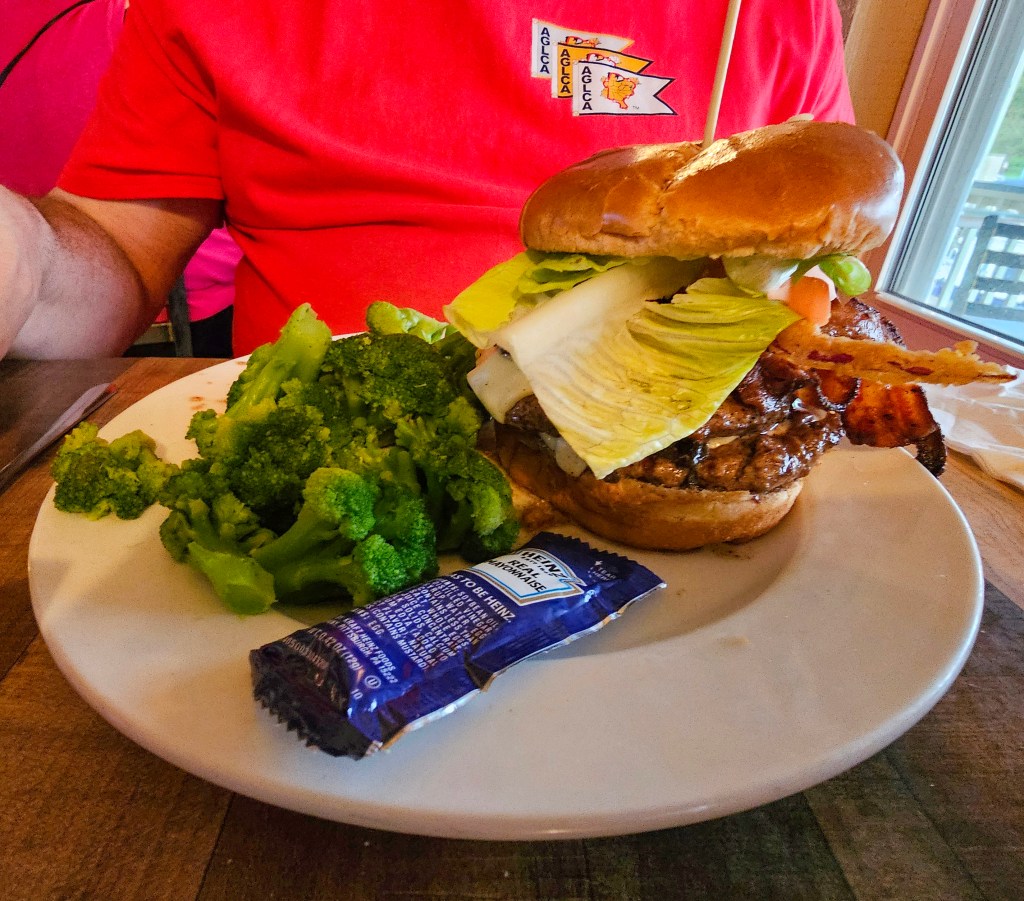
The hamburger at Bridgeman’s Chophouse was delicious in spite of the squishy bun
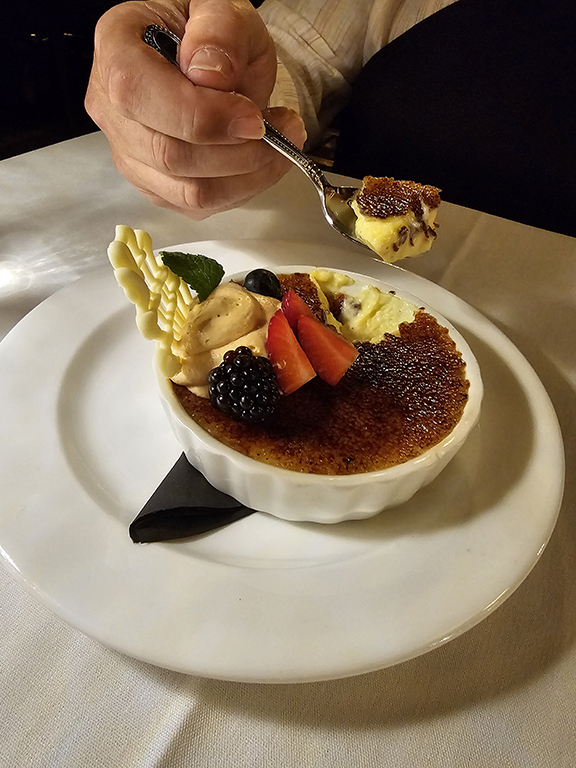
Creme Brulee at Bridgeman’s Chophouse

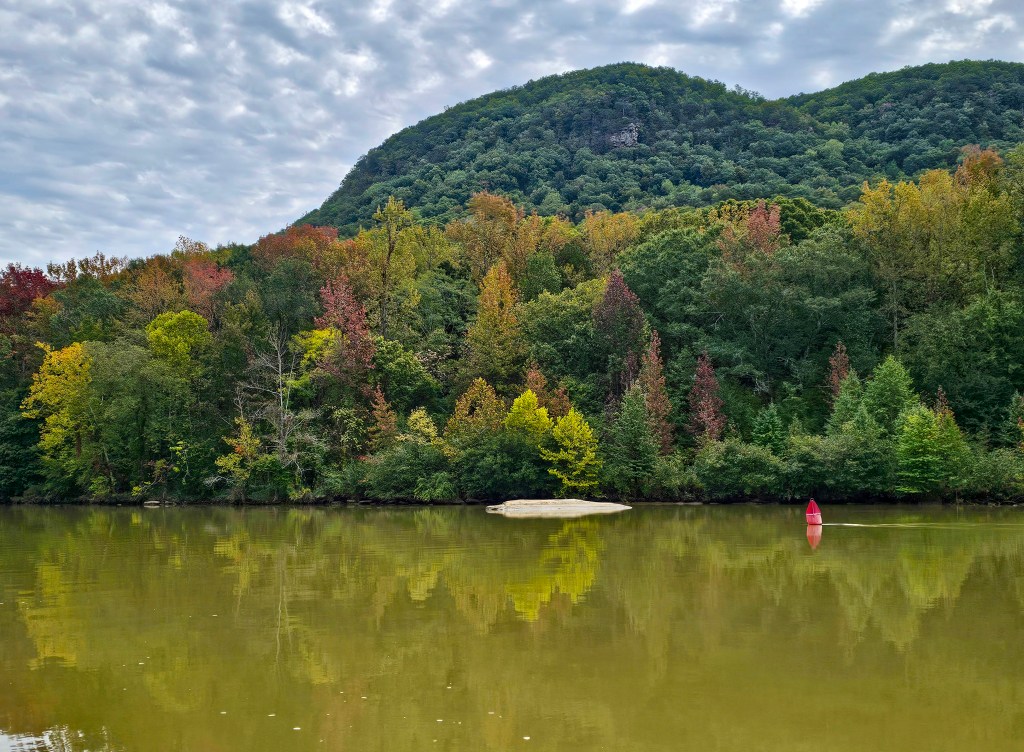
Tuesday was the day to travel through The Gorge, billed as Tennessee’s Grand Canyon.  We were hoping for more fall colour.  There were some pretty stretches, but an overcast sky meant very little photogenic scenery.  Naturally the clouds broke up and the sun came out after we were docked.
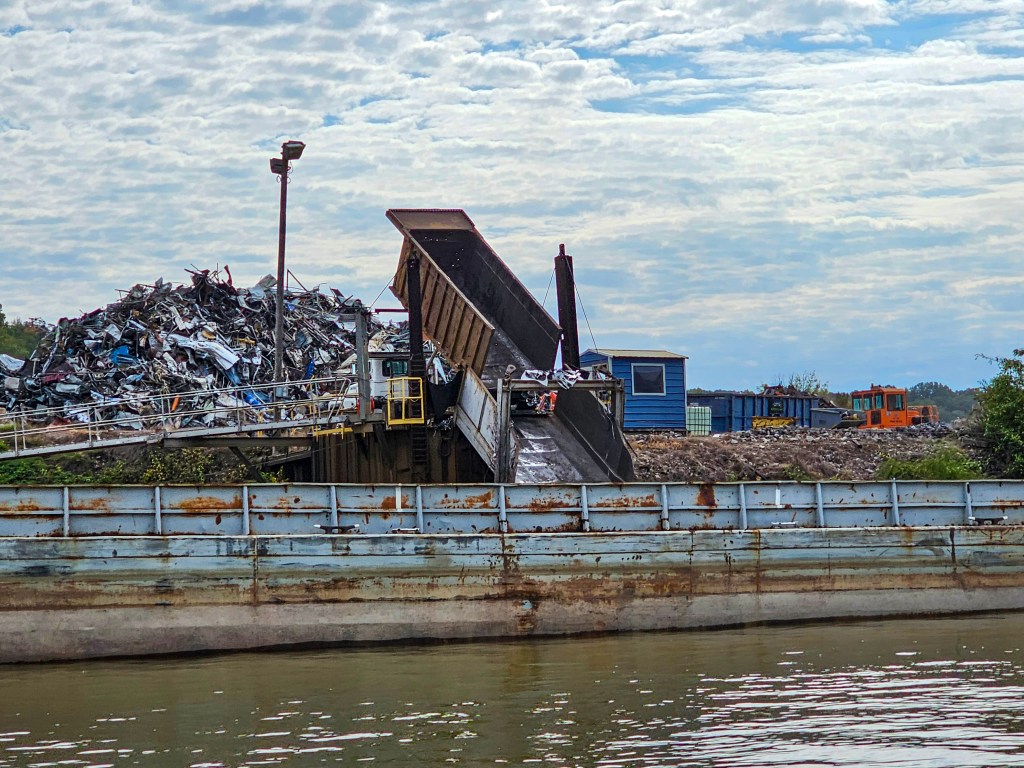
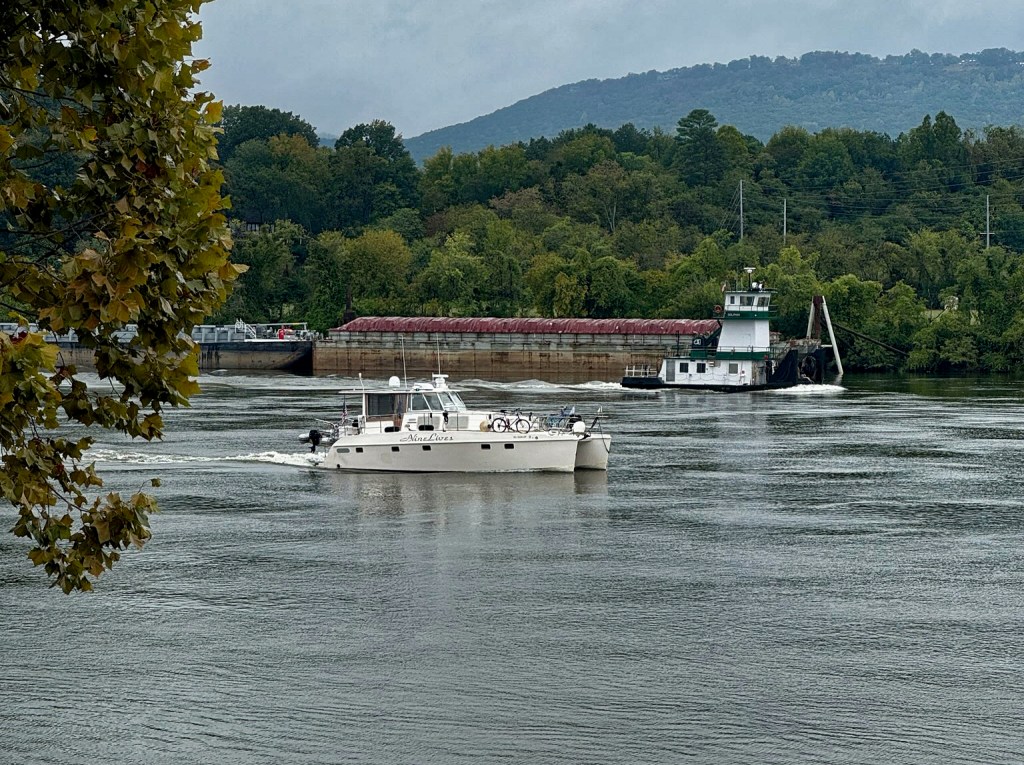
A barge is being loaded with scrap metal south of Chattanooga
Baylor School south of Chattanooga
Lookout Mountain from the river. The Incline Railway goes up this mountain.
The Gorge

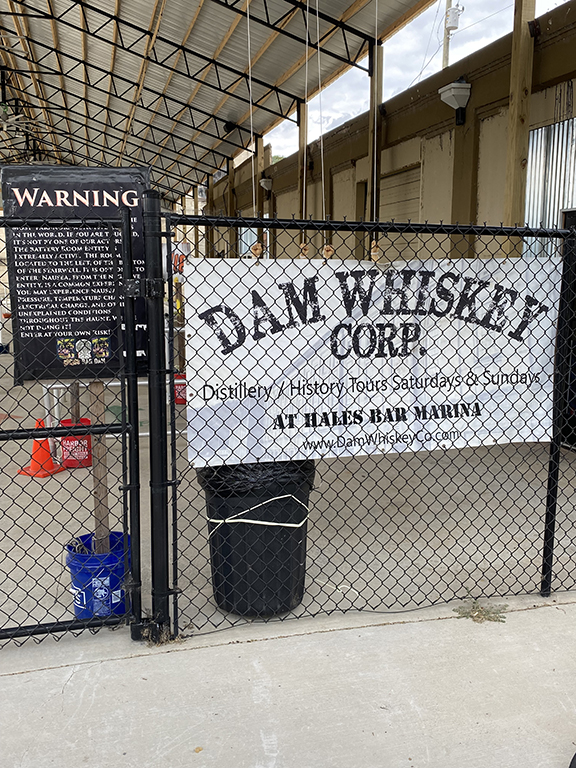
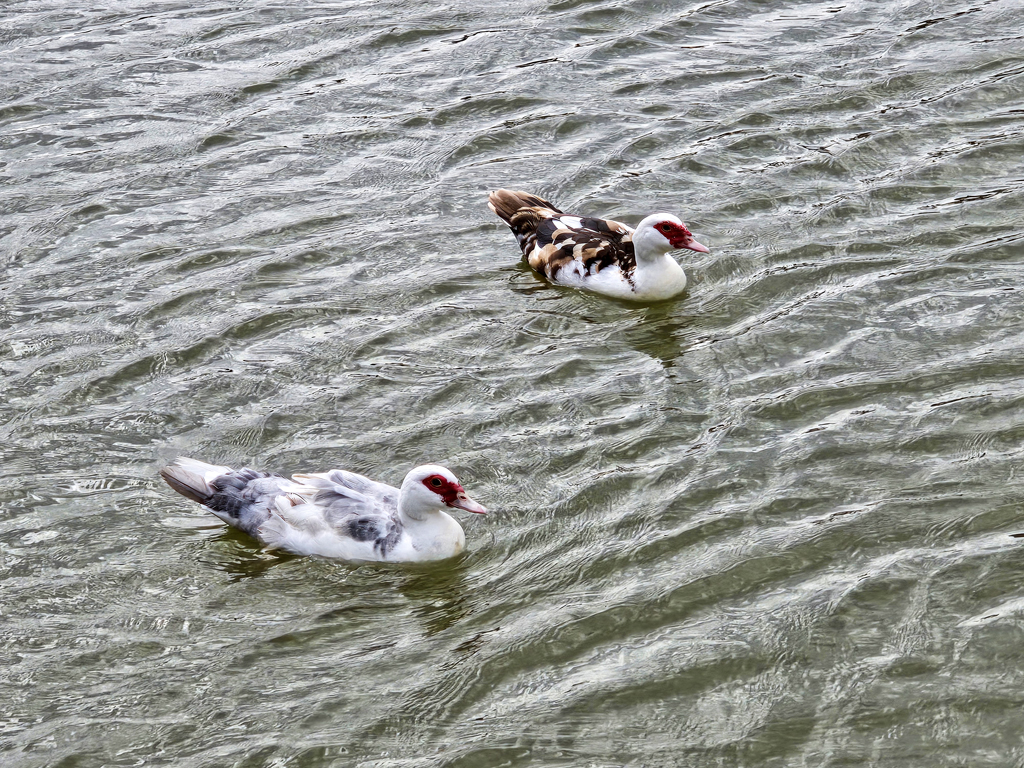
We tied up at Hales Bar Marina, with a view of the very unattractive but historically significant former hydroelectric facility.  There was only one useful cleat at our end of the assigned dock.  The whole place looks very run down, how anyone would consider coming and staying in one of the tiny floating cabins I do not know.  The distillery that occupies the former power house is only open weekends, so we did not get to tour or try their offerings.  There were some very colourful geese floating around the marina, but I can’t identify them.  I suspect domestic geese have encountered their wild relatives, with interesting results.  There are also goats wandering around.  Altogether a strange place.  We have no plans to return.
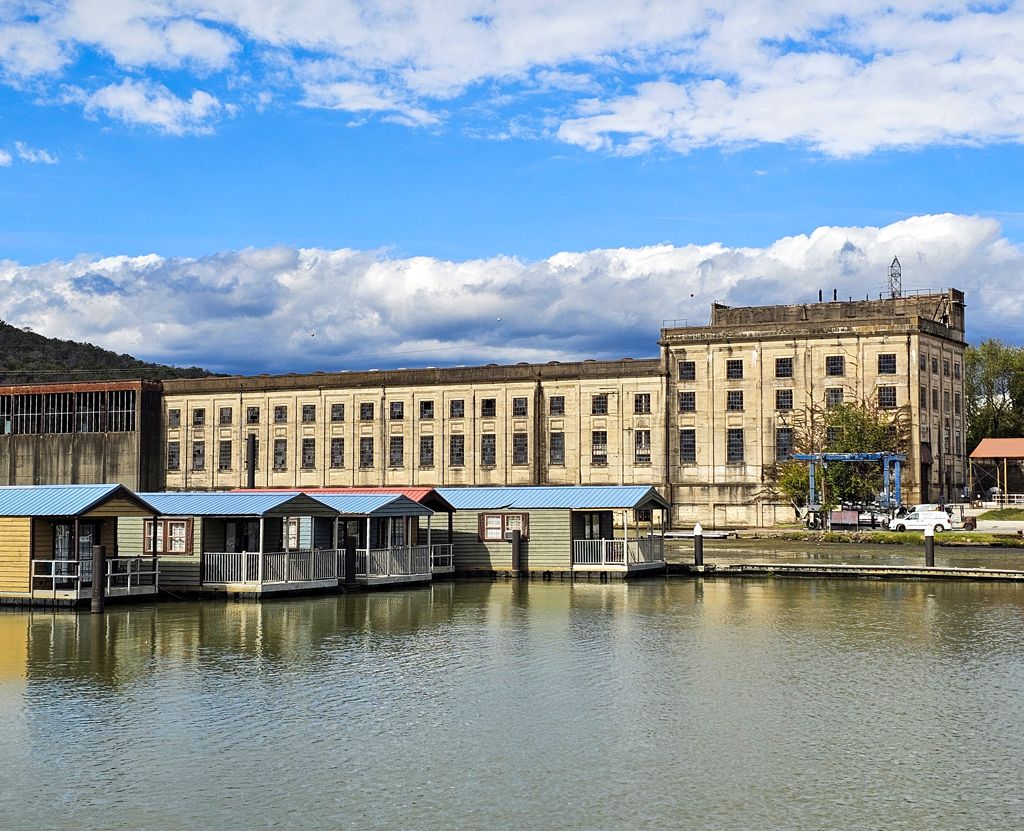
Floating cabins and the Power House at Hales Bar Marina
The distillery is located in the haunted Hales Bar Power House
Unusual geese at Hales Bar Marina

We had crossed into the Central time zone, so woke up an hour early the next morning and were underway shortly after 8am.  Dick had been told by the folks that tied up behind us that we could go out of the marina by another, shorter, but unmarked way.  We duly headed out, passing and waving to the occupant of one of the cabins on the way, but at a certain point the grass/weeds in the water fooled the depth sounder, so Dick could not tell where the channel was.  He backed around and we returned the long way, waving again to the bemused watcher.  Crossing over the submerged sandbar along the approved route was worrying, as the depth got shallower, but eventually we were through.

We had an easy transit through Nickajack lock, with no wait, but there were large mats of floating grass and weed to try to avoid.  Some boaters think it’s clever to proclaim “We were here!” by sticking stickers with their boat name on lock floating bollards. It is annoying to see, because those have to be cleaned off by lock maintenance staff in a time of tight budgets.  Defacing public utilities with stickers is just another form of graffiti.

Stickers deface the floating pins in many locks
Advice for new boaters, wear gloves for line handling! Imagine what Dick’s fingers would be like without them.

Our plans for the pre- and post-Christmas boating season have been revised in the wake of two devastating hurricanes affecting the Gulf Coast of Florida.  We originally expected to arrive in St Petersburg around mid-December, and then take about 4 weeks off to go home to Hilton Head for the Christmas/New Year season.  We are now booked to stop at a small place called Port St Joe, at the eastern end of the Florida Panhandle, on about November 22nd.  We have a reservation in the marina for 3 months.  After Christmas we will know how far along the various marinas and towns are with recovery and will be able to plan accordingly.  A big part of Florida’s economy is tourism based, so as soon as possible the towns will reopen and welcome tourists again.  It is likely that we will be anchoring more than originally planned, and we will spend less time in each place.  Our return to Hilton Head will probably be late April or early May.  It means that we will be boating in much warmer temperatures than Louise is happy with, but considering that so much of the Loop has already been too hot for my comfort, it is what it is.
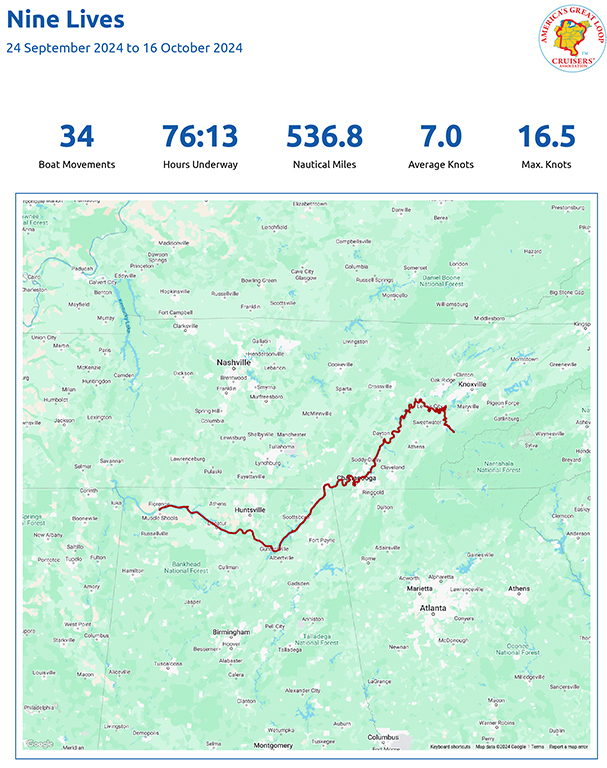
The track of our first 3 weeks of voyaging

September 20th to October 2nd, 2024 Pickwick Lake to Chattanooga

Nine Lives and her crew are cruising again!  From September until March, we will be visiting Tennessee, Alabama, Florida, and eventually Georgia and return to South Carolina.  During this final portion of the Great Loop, we will “cross our wake”, that is, cross over our original starting point in St Petersburg, Florida, and in spring we will finish in our home of Hilton Head.  We hope you enjoy the recounting of our voyages.
The first challenge, as always, is to get the crew back to Nine Lives.  From Hilton Head it is about 9.5 hours’ drive to Aqua Yacht on Pickwick Lake.  Unfortunately, the air conditioning on Dick’s vehicle broke down just a few days before our departure, and there was not enough time to get the replacement compressor shipped and installed before we left.  It was hot!  The maximum temperatures were 97F near Birmingham, AL, but it was not below 90F for most of the trip.  We arrived at 4:30pm local time.  We took the bikes and the new salon cushions to the boat, and set things up to shock the fresh water tanks so they could sit overnight with the bleach solution.  We also turned on the fridge and the freezers, so they would be ready for the next day.

Once again, we stayed in a cabin at Pickwick State Park for a couple of nights while we got the boat ready.  The cabins have a full-size fridge and freezer for all our food.  In spite of the long, hot journey, all the frozen food was still fully frozen.  We checked in and immediately had dinner at the lodge restaurant before going to the cabin.  We were so tired and hot that we knew we would not want to go out again once we got into the cabin!

The food was much better than Dick’s memory.  He was able to ask for his favorite catfish to be grilled, a great improvement over the usual deep fry.  I had fried shrimp, which were superb.  We shared cheese curds to start.  There won’t be many opportunities for that delectable treat after the next few weeks.  We have never seen them offered in Hilton Head or in UK.

The next morning at breakfast, while I waited for the pancakes I had ordered, I idly looked at the ingredients list on the packet of syrup in the basket on the table.  One of the first ingredients was ethylene glycol.  If you never knew, or had forgotten, that’s anti-freeze.  A cruise around our friend google suggests that we never, ever want to ingest this stuff.  Not even on pancakes.

After breakfast we were at the boat by 8:30, and began the process of trekking all the stuff 1/3 mile along the dock to the boat.  Well, Dick did the trekking, I sorted and put away as it arrived on board.  Division of labour…

Everything has to be put away

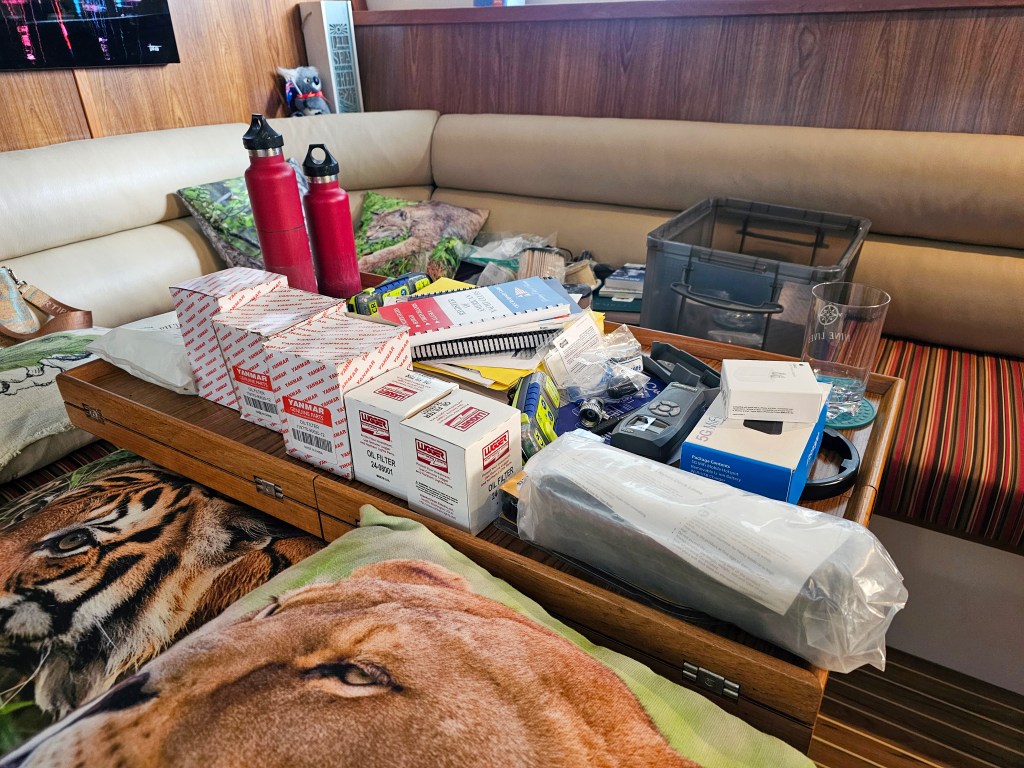
Dick finished the water process, changed the drinking water filter, put the chlorine tabs into the AC system, and stowed spare parts, and 2 dozen bottles of wine and other drinks.  He also put up the burgees on the bow.

Changing the drinking water filter requires some contortions

The boat was supposed to have been cleaned for our arrival, inside and out.  It is always a bad sign when cleaning equipment has been left on the dock, in this case a bucket of soapy water and a long-handled brush.  While the hull was sparkling, the deck had minimal attention, and the cockpit had not been touched since we left.  The smears from Dick’s enthusiastic destruction of marauding bugs last fall were still on the windshield. Inside was better (a different cleaner), but not as immaculate as the lady who did the job last year.

I prepared the clove bags that keep insects out of the galley drawers and cupboards, while Dick stowed 4 dozen beers and the fizzy water.

The big shopping excursion to the supermarket in Corinth took longer than Dick had expected, making us late for our much anticipated favourite restaurant, Vicari’s.  Dinner was every bit as good as always, a nice change.  So many of our favourite restaurants over the years seem to lose their mojo and the food ends up being pedestrian and bland.

We checked out of the cabin after breakfast, then Dick had to schlep all the food up the path to the vehicle, and then of course the whole lot had to be dragged to the boat, along with all the food and dry goods from the grocery shop.

One thing about having done this for so many years, we know where everything goes!  Mostly.

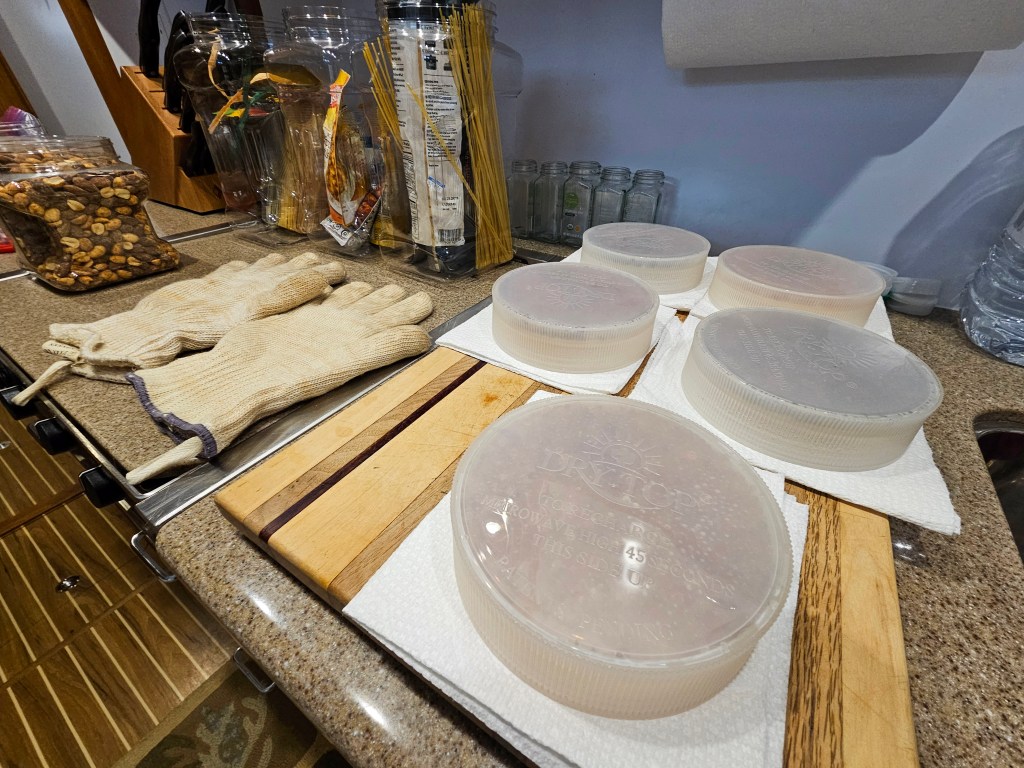
I sorted out the groceries, including chopping celery and bagging it into portions for the freezer.  I also recharged the “dry tops” from the storage jars in the microwave.  These are a Chinese product that was only available briefly, but they work fantastically well at keeping things like pasta, biscuits, nuts, and even brown sugar in perfect condition.

These are the tops of the plastic canisters. They are dehydrated in the microwave and are amazingly effective at keeping contents fresh.

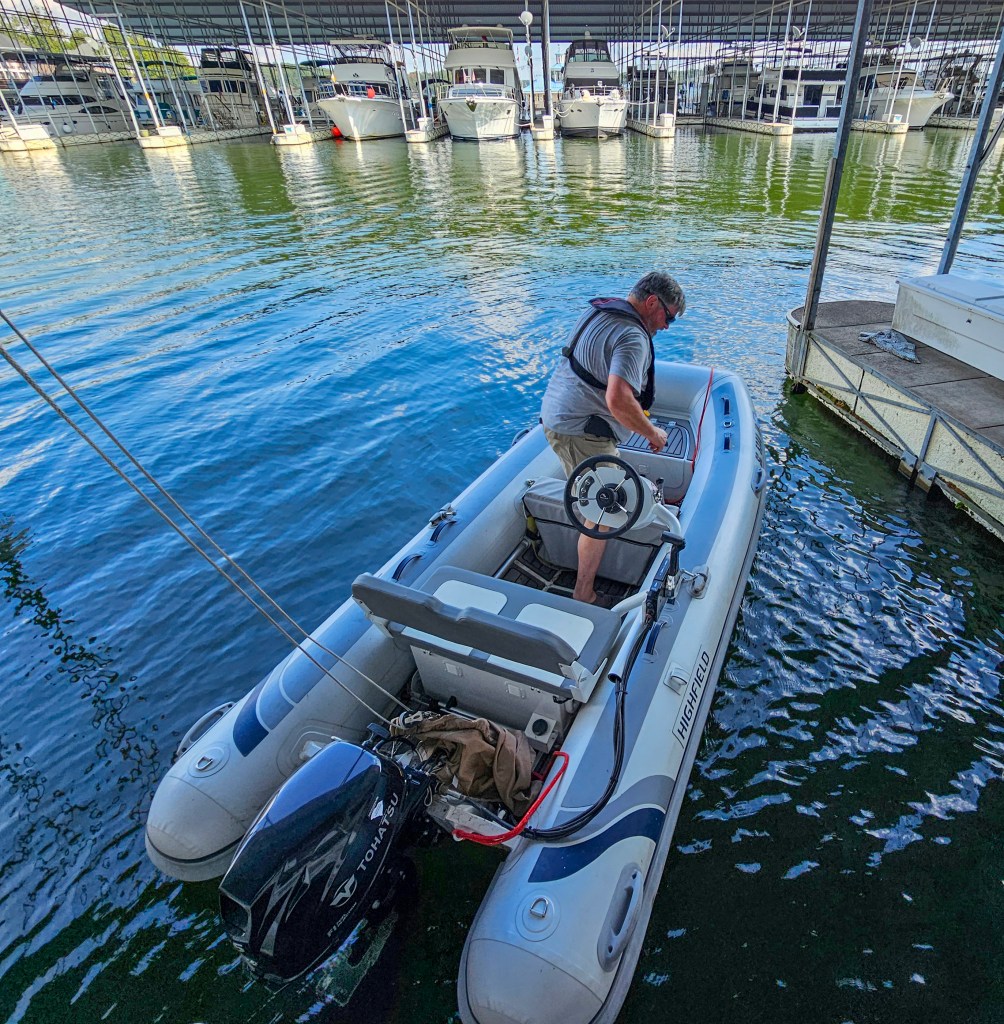
After a brief rest and recovery from all the to-ing and fro-ing with stuff, Dick started on his chores.  He changed the fuel filters from the main engines and the generator.  Vacuumed the cockpit and laid down the carpet. Put the new registration sticker on the dinghy.  Installed the sunscreens on the windows.  Checked the hydraulic steering reservoir for fluid level.  Prepare to launch the dinghy to check that everything was working correctly… and came to a grinding halt.

Launch the dinghy to make sure all is well.

The service department had put the dinghy up very high on the davits after they did the 50 hour service on the engine, and one of the two motors would not work to lower, only to raise that end of the dinghy.  After battling spider webs (my spray the day before had barely discouraged them), Dick had to get out the broom and have a really good sweep before even starting to try to diagnose the problem.  Naturally, more sophisticated troubleshooting was attempted before the simpler solution of wiggling the contacts for the plug.  Dinghy was duly launched (with the suitable precaution of keeping the rear hanger attached.  Dick evicted a staggering number and variety of 8-legged squatters, along with their webs, then followed the proper startup procedures, turned the key, and nothing happened.  The battery was absolutely flat.  The service men had not bothered to remove the drain plug when they returned the dinghy to the supports, and since there is an automatic bilge pump, every time it rained, the battery was drained a little more.  Dick set off to find a hardware store that would be open on Sunday and have a battery charger for sale.  He had to go all the way to Iuka, but he found one!

Battery set to charge, we walked out to the onsite restaurant for dinner.  Dick had checked that they were open on Sunday.  Sadly, not this Sunday.  A notice on the door said that they were closed indefinitely due to “unresolved plumbing issues”.  So we continued our Sunday stroll back to Nine Lives, and dug out the makings of sandwiches for dinner.

Next morning we were up early, and after taking time for coffee, Dick was pleased to find that the battery had charged and he could make sure the dinghy motor started and ran without issue.

We were finally away from our slip before 10am.  We had an uneventful day of cruising; a civilized 5.5 hours dock to dock.

The marina at Florence AL is supposedly open 7 days, but no radio response, and no phone was answered.  To be fair, Dick discovered later than he had the wrong number for the phone, so it was not surprising it wasn’t answered!  The 2 boats already in had spread themselves along the dock with gaps too small for us to easily fit into.  We docked at the back, but pulled up enough to leave room for the 50-footer that we knew was coming in behind us.  We spoke to them over the radio and were there to help with their lines.

They were a very nice couple, fellow Loopers, and we ended up going to dinner with them and then having drinks on Nine Lives after.

There was a hurricane brewing in the Gulf.  The forecasts were uncertain of its path, and there was a lot of concern for us and fellow boaters as to how much it might affect our plans.  We decided to look again in the morning and make some decisions.

Tuesday was a day that exemplifies the need not to have specific plans when boating.  We had volunteered, and our offer was accepted, to fill in for a veteran Looper for a presentation on locking at the upcoming Rendezvous of Loopers.  The various deadlines for submitting outline, bio, and introduction were already past, but we spent the morning starting work on the project.  We also untied and moved over to the fuel dock for fuel and a pump out.  Fortunately, one boat had left earlier, or getting back into our spot would have been quite tricky.

While Dick prepared bullet points for the presentation, I went through 7 years of photos to find those that are of locks and locking.  At this point, we discovered that our reliable workhorse, ten-year-old printer on board, while still operational, no longer speaks to our laptops, and could not be upgraded.

We kept a lookout for the marina courtesy car, and just managed to be first when it was returned.  Office Depot had a printer that would fit into the 12” space in the cupboard, and we also made a run to the supermarket for a few things that were missed earlier.  The rest of the afternoon was spent setting up the new printer.

We both felt that getting dressed up, then arranging for the courtesy car or uber to get to our planned restaurant, was just too much trouble, so we cancelled our reservation and walked along the dock to the onsite restaurant.  Basket food, but tasty.

A very tasty burger at Florence Harbor
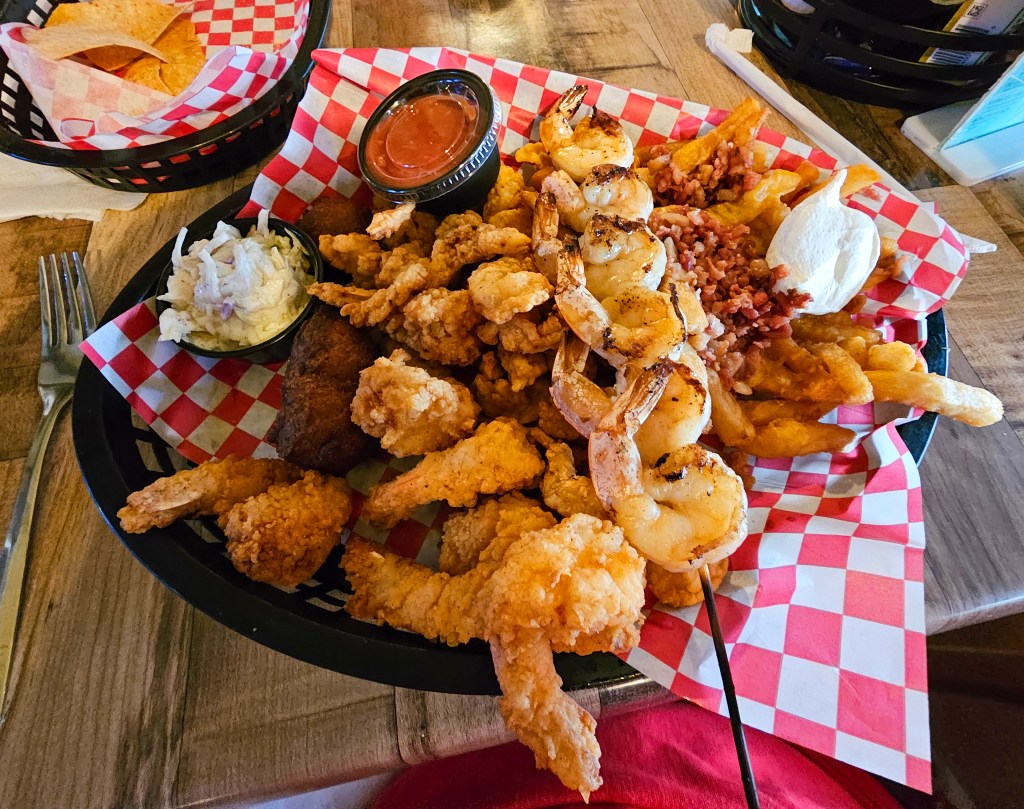
My choice was the shrimp prepared 3 ways

Later, Dick chatted on the phone with the lockmaster at Wilson lock, 5 miles up the river, and arranged to call again at 5:15am to find out the status of the lock.  It is always better to speak to the person who is starting his 12-hour shift, rather than the one who is finishing, who may be wet as well as tired!

There was a split tow in progress in the morning, so we had time for showers and breakfast before our expected 7:30 departure.

So early, you say?  This particular lock had an approach wall collapse into the river a couple of years ago.  This means that the tows have to wait their turn from a long way up or down river, thus slowing down all operations.  Pleasure craft will be locked through only early in the morning, midday, or late, plus or minus, depending on existing tow traffic.  Not wishing to take a chance on the midday slot, we hoped for the early transit.  We were through Wilson lock at a very reasonable 9am.  Considering that this is the lock with issues, and a reputation for multi-hour holdups, we did well.  What was unexpected was the experience at the next lock.

A line goes around the bollard in the lock wall and is held, then the bollard floats up (or down) as the lock fills or empties. Being held secure means we won’t be thrown around by turbulent water.

The tow ahead of us (the same one that was going through Wilson at 5am), refused to allow the pleasure boats to go through ahead of him (there were two of us), even though he would, in fact, have lost no time by letting us through, as he had more than an hour required to approach the lock from where he was waiting.  So our two boats waited a full 8 hours instead of 4 (there was a downbound split tow that had to come through first).  Our fellow Looper boat anchored, but we held back with a combination of floating with the engine off and occasionally repositioning.  I did the early prep for our planned dinner on board later.

Our fellow Loopers on this part of the journey turned out to be a Dutch fellow, who emigrated to Canada in the 1990’s.  We will look forward to meeting again and spending some time in person!

We were in Joe Wheeler State Park by 5:15pm.  There were still concerns about the developing hurricane, although it was expected to be purely a rain event, with no significant wind at this location.  Some “conversation” between Nine Live’s two captains resulted in a compromise that would have us stop just 3 more nights before Chattanooga, but all in marinas rather than at anchorages or free town walls.  No locks the next day.  Even though there had been only two that day, a break was needed!

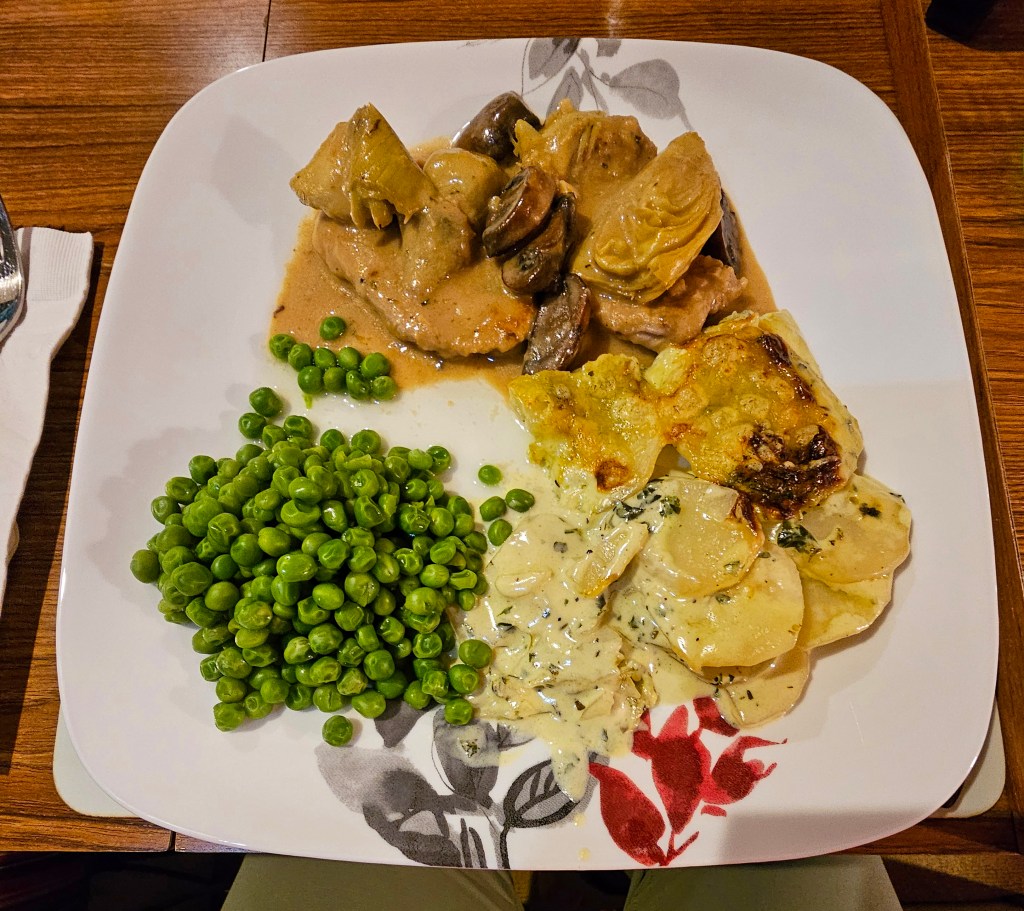
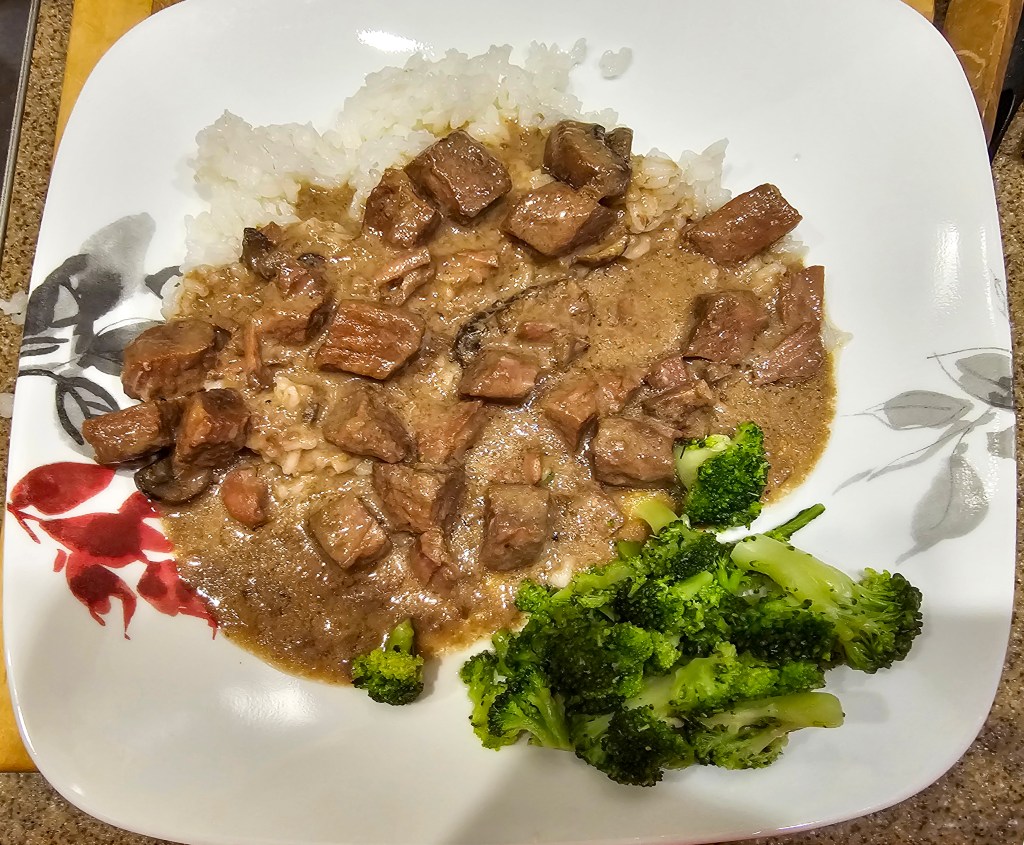
The first proper meal to be cooked onboard was a definite success.  The new recipe for scalloped potatoes complemented the pork and mushroom fricassee.

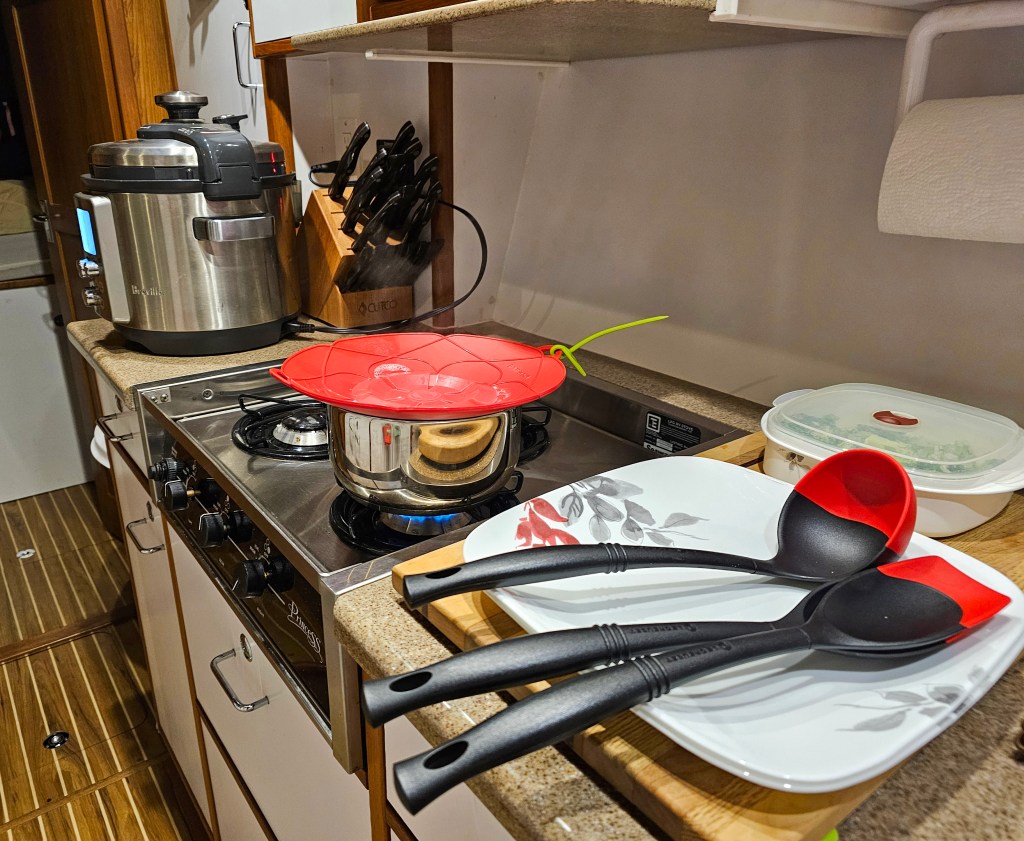
Preparing pork fricassee
A new recipe for scalloped potatoes
Our first dinner on board this cruising season

Thursday the 26th was the day for the hurricane (Helene) to make landfall, so we would know a lot more that evening, and even more the next day, as it was a fast-moving storm.  We planned to stay two nights at Ditto Landing to wait out the worst of the expected rain.  As I write this from my notes a week later, I know just how huge and devastating this storm was.  It was one of the largest ever to hit the United States, and loss of life and devastation to property extended from Florida to Georgia, Tennessee, and the Carolinas.  Our home in Hilton Head was fine, but our friends just a few miles away in Bluffton had trees down on their property and power outages.  Friends in Florida fared worse, and are still evaluating the damage, as are friends in Asheville, in the mountains of North Carolina.  We were lucky, more about our experiences later.

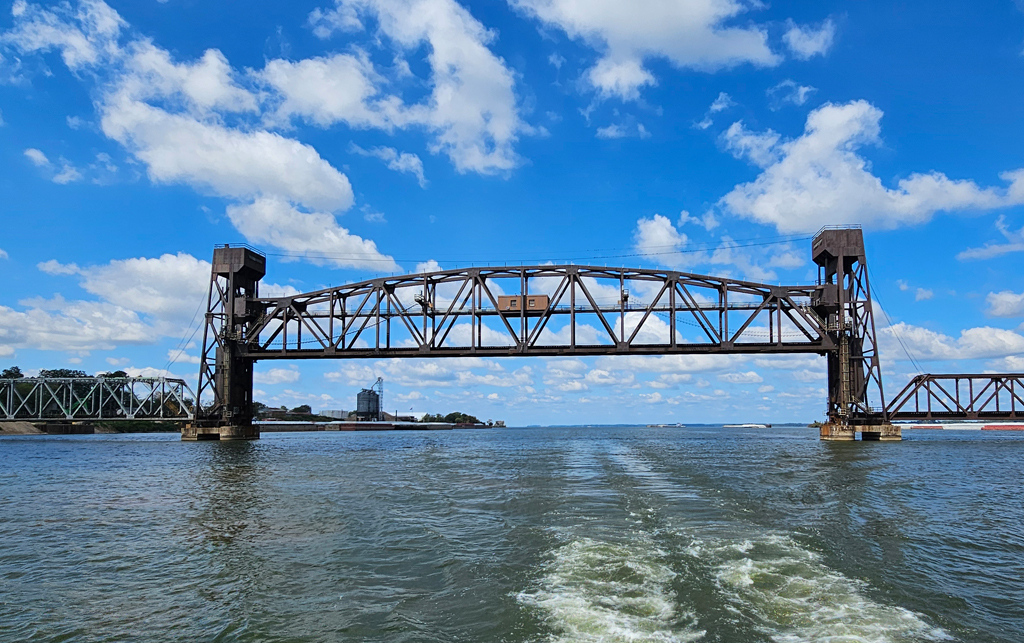
We left at 8:45 with an ETA of 3:30.  I spent an hour prepping a beef and mushroom stew for the slow cooker.  We passed TVA Browns Ferry Nuclear Plant.  This is the 3rd most powerful nuclear power plant in the USA.  It produces about 20% of TVA’s entire generating capacity.  There was no steam visible, so Dick wondered whether it is currently operating, although I can find no suggestion that it has been shut down. The stack is 660 feet high.  We were amazed at the number of additional low cooling towers on the site.  We delayed about ½ hour waiting for the Decatur Drawbridge, a railway bridge that is too low for Nine Lives to pass under.  The bridge tender was very pleasant, and kept us informed of the train movements.

Tennessee Valley Authority Browns Ferry Nuclear Plant
Some of the many cooling towers of TVA Browns Ferry Nuclear Plant
Pelicans and cormorants on a sand bar at Decatur
Decatur Drawbridge after opening for us.

It was a pretty boring stretch of river after Decatur.  We are too far from the banks to see any birds.  We passed Redstone Arsenal, a very interesting site, but the interesting bits are completely screened by trees.

We arrived at the marina, but our assigned slip proved difficult to get into with a slight breeze, and at only 20 feet wide there would not have been room for a fender between Nine Lives and the black rubber on the dock.  We were able to tie up next to our originally assigned slip below a launch ramp, which the dockmaster blocked off so trailers could not use it while we were there.  There were two more launch ramps available for day boaters to use.

Dinner was ready in the multi-cooker, and only the rice and vegetables needed to be prepared before we could sit down to enjoy our beef stew.

Preparing the side dishes for the beef stew
Beef stew with mushrooms

We were west and south of Hurricane Helene as it roared through Florida and Georgia and into Tennessee.  We didn’t even find out until later that it also had devastating effects in the Carolinas.  In northern Alabama we had heavy rains all night, but in fact, the noise of the fish eating the algae off the hull was louder than the rain.  It is an extraordinarily loud sound, as if someone is tapping hard on the hull!  Dick could not believe it was fish, and got up in the middle of the night just to check all around the boat.

The next day was quiet, as southern USA started cleanup and assessment of the damage.  Sadly, Tennessee and the Carolinas were just at the beginning of their problems, as water poured through areas that never expect hurricane impacts.  Our own plans would have ongoing impacts that only reveal themselves a few days at a time.

September 28th, we were out by 8:30am.  It was dull and cool in the aftermath of Helene, and the lines were soaking wet, but at least it wasn’t raining.

Nine Lives is happier now that she is flying 2 burgees again.  It was not appropriate to fly the Wexford green after we moved away, so last year we always felt a bit lopsided!  We now have an Endeavour burgee for the second flagpole.

It was a very long and boring day, and the weather was too dull to appreciate the emerging fall colours.  We passed Guntersville and through Guntersville Lake, seeing many large and expensive homes along the shoreline and up in the hills.  I cannot find any information as to why this area appears to be so much more prosperous than the rest of the Tennessee Valley.

Developing fall colours north of Guntersville

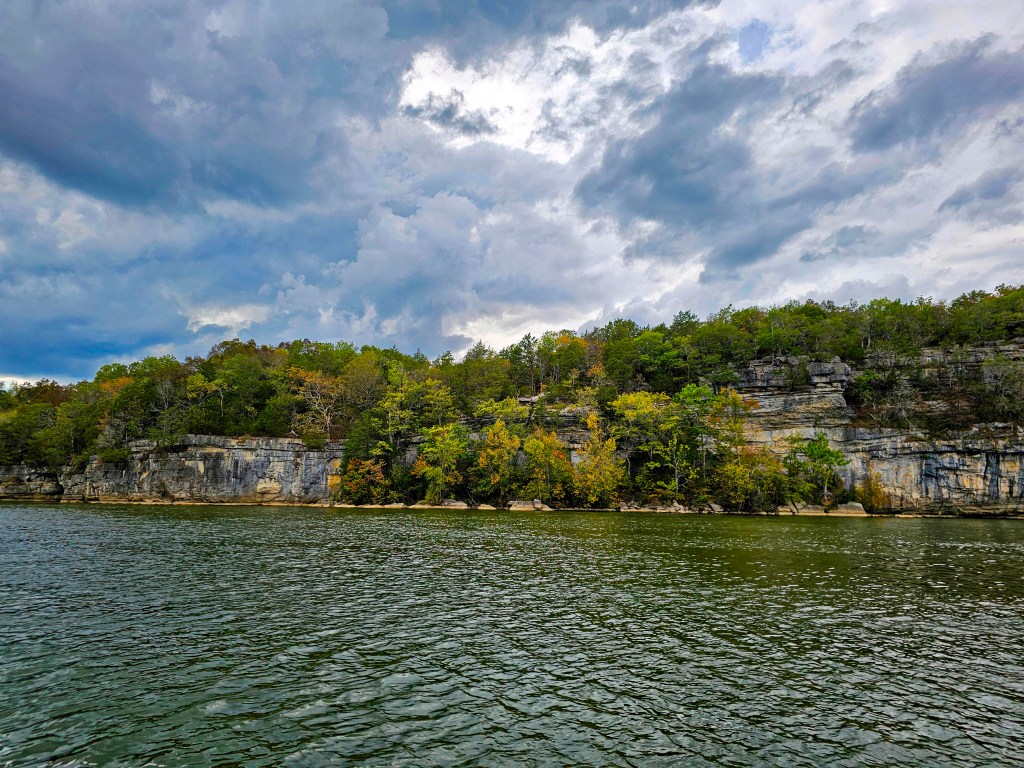
Painted Bluff is a famous landmark overlooking the river.  It features over 130 prehistoric Native American pictographs and petroglyphs.  The striations in the rock are certainly beautiful, especially with the developing autumn colours, but we were mystified that unsightly power lines were permitted to cross right over one of America’s beauty spots.

Painted Bluff

The Bellefonte Nuclear Plant began construction in 1975.  In the next 40 years over 4 billion was spent, and yet so far the plant is not operational and may never be.  It stopped construction in 1988, and moveable parts were sold off, then the site was auctioned in 2016.  Regulatory permissions were not obtained, by the new owners, and the whole thing is now tied up in the courts with lots of finger-pointing and accusations of malfeasance, including bribery and corruption.

A glimpse of the cooling towers of Bellefonte Nuclear Plant

We had planned to tie up for the night on an old, decommissioned lock wall.  After a very long day of cruising, we arrived at 6pm to find that it was just not suitable for Nine Lives.  The distance between bollards along the flat part of the wall was too great to tie up, and the two places we could have reached had metal protrusions and a cut out section of the wall.  We had to back out and carry on to an anchorage further up the river.  The location is in a wide chute behind an island.  We could see a Yamaha Plant on the shore, and it has what appeared to be a very respectable marina, complete with lit power pedestals, and not a single boat.  If the anchor had not set, we would have gone with the principle of “easier to ask forgiveness than permission” and availed ourselves of the facility.  In fact, I can’t even imagine how one would ask for permission!  We were anchored by 6:45, a very long day, finishing just as it was getting dark.  Most days are good on a boat.  This was not one of them.  Dick’s steak dinner prepared on the grill was a welcome treat after a hard day.

Setting the anchor at dusk
A well-earned steak dinner prepared on the grill

After a very peaceful night with just a few feet of movement from where I set the anchor alarms, we were ready to pull the anchor and get back onto the river for another long day.  I woke up very early (5am), because my phone was absolutely convinced that Bridgeport AL was in Tennessee and thus in the Eastern Time Zone.  We decided to head out early.

As the procedure began for pulling the anchor, Dick discovered that the bridle lines had caught an incredible amount of floating weed.  It was the highly invasive hydrilla, that infests waterways from Florida to California after escaping from aquariums in Florida in 1950’s and 60’s.  It costs millions every year to try to control it.  Dick had to shake it off with a boathook, then lift the lines a little bit and shake off the next clump.  The picture shows only one of the smallest clumps, there was enough of the stuff for several bales!  There was more weed on the anchor chain itself, but once that was cleared, the anchor came up smoothly and clean and we were away by 7:30am.

Hydrilla on the anchor chain

We passed the somewhat unprepossessing structure that is the historic Hales Bar hydroelectric plant.  Construction of the dam began in 1904, and took 8 years to build, with many accidents and several deaths.  On completion in 1913, it was the world’s second largest hydroelectric plant.  Only Niagara was larger.  The book tells me that there was a huge celebration, with bands playing, dances, banquets, speeches and fireworks.  From the beginning the dam leaked.  The area was cursed by a Cherokee warrior in 1775, and it has apparently been unlucky ever since.  The dam is considered to be one of the most haunted in the USA.  The dam was half a mile across and 60 feet high, and contained what was at the time the highest single lock lift in the world.  TVA acquired the dam in 1939, and continued the ongoing efforts to seal the leaks, but they were in vain.  By 1960, the dam was leaking at a rate of 2000 feet per second, and it became clear that the leaks were joining together inside the dam, with an increasing risk of complete (and sudden) failure.  A new dam and lock was build down the river, and as soon as the Nickajack Lock and Dam opened in 1967, the Hales Bar Dam was decommissioned.  Today the historic building is used as a private event space, and is also the home of Dam Whisky and Moonshine Distillery.  Although we plan to stop at the marina there on our return down the river, the distillery is only open on weekends, so we may not be able to tour and partake.

Hales Bar Hydroelectric Plant

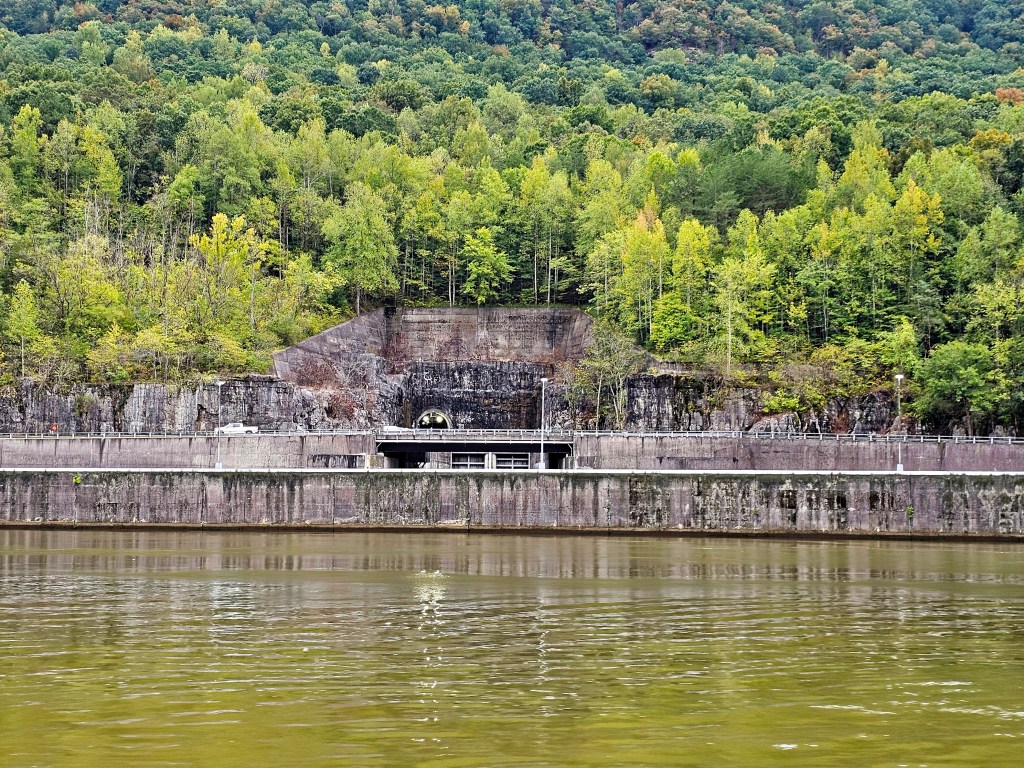
The outflow for the Raccoon Mountain pumped storage facility can be seen from the river.  During times of low power demand, water is pumped from the river to a reservoir on the top of the mountain.  When demand is high, the water is released through a tunnel and drives generators in the underground power plant.  It takes 28 hours to fill the reservoir.

Raccoon Mountain Pumped Storage Facility
Autumn colours in the Gorge

Williams Island is passed just a few miles before Chattanooga.  In 1862, James J. Andrews, a Union spy, led 21 men through Confederate lines and managed to steal a railroad engine in Marietta, Georgia.  They headed north to Chattanooga, destroying telegraph communications as they went.  A Confederate force in another engine followed them, and caught up with them and imprisoned the spy in Chattanooga.  Andrews managed to escape, and got as far as Williams Island before he was caught.  This time he was taken to Atlanta and hanged.

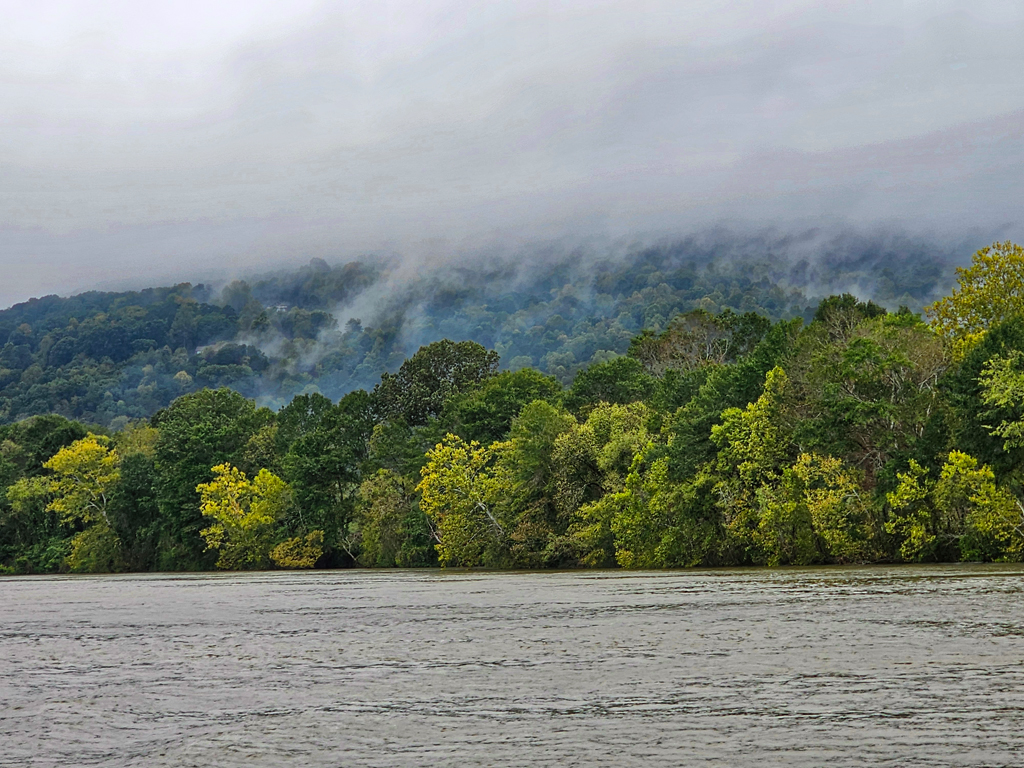
Misty weather obscures most of the views in the Gorge

We arrived in Chattanooga by 4:30, and had help from a neighbour on the dock, who had stayed for 10 days waiting out the hurricane and the high water.

Nine Lives arrives in Chattanooga

We had dinner at one of the top steakhouses in Chattanooga.  We walked up many steps to get to the depot for the free downtown electric bus service.  It is very popular with the homeless.  The restaurant is in a gorgeous historic hotel.  The service was excellent, and the food was tasty, but unevenly heated.  Parts of the meal were piping hot, other parts (especially the potatoes) were barely warm.  After dinner we walked back to the boat because the bus does not run after 8pm on Sundays.  We were glad that it had stopped raining.

A beautiful building facade with lighting that changes colour. The building is a multi-storey car park!

In the morning, Dick went for a long walk to explore the downtown.  Unfortunately, while there are many interesting restaurants and the beautiful old buildings are being renovated to provide downtown living and shopping, it is still very much a work in progress.  In the afternoon, we enjoyed our first docktails on Nine Lives this season with Maggie and Bruce, the local Harbor Hosts.

Waterfront park on the north side of the river

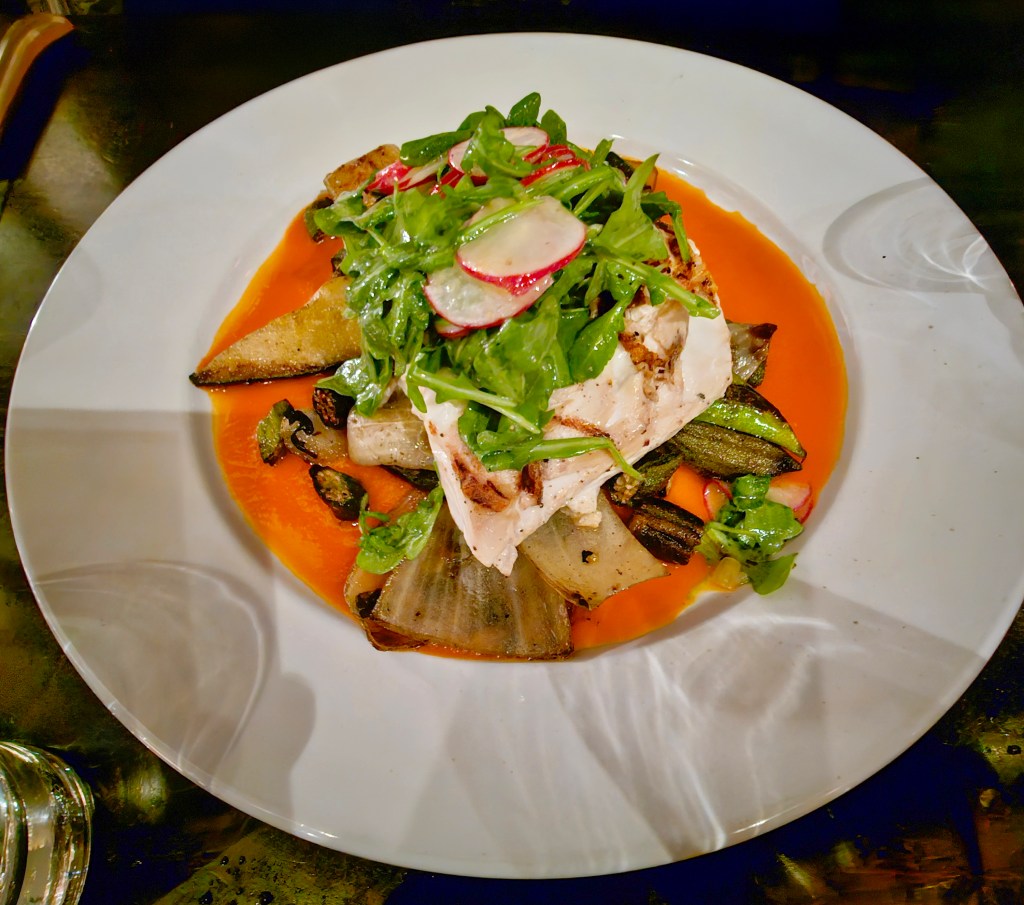
We took the bus again to our dinner destination.  Alleia was an excellent choice for an Italian meal.  We shared a cheese and charcuterie platter.  Dick had the halibut, which was delicious with an excellent pomodoro sauce.  He was less enthused about the accompanying vegetables: summer squash, zucchini, and okra!  Dick loves most other vegetables, so this was quite a miss from his point of view.  I chose a mushroom and preserved truffle pizza, one of the best I have had in a long time.  Nothing on the dessert menu caught my eye, but Dick enjoyed his favourite panna cotta.  We returned by bus, as it runs late on weekdays.  Unfortunately, the usual ramp to the dock was under 5 feet of water, so we had to come down the steps at the other end.  They are in an unlit area much favoured by the large homeless population of this city, so not a comfortable way to have to go back and forth to the dock. 

Halibut at Alleia
Mushroom pizza at Alleia
Panna cotta at Alleia

The effects of Helene are still manifesting, and we were advised by the Knoxville Harbor Host not to venture that far up the river.  Apparently, TVA regulates the water being released by the dams on the system to limit flooding in Chattanooga, which explains why the walkway is periodically under water but the town is not flooded.  We extended our stay by 6 more days, and will reassess next weekend.  We hope to be able to travel up the river, but we will not go as far as Knoxville. As I write this, 4 of the locks on the Tennessee River are closed because of the very high volume of water flowing over the dams.

There is also great concern over the status of Wilson Lock, which the majority of Loopers must pass through to get to the site of the Rendezvous.  This gathering has been fully booked for months.  Since our passage, the main chamber of the lock has had to be closed for several months for repairs.  The auxiliary chamber is in fact 2 smaller steps, requiring a tow to lock through just one barge at a time.  With a typical tow on this river being made up of 15 barges, the transit takes 15 to 24 hours per tow.  Pleasure boats are not a priority, but it is hoped that it will be possible to arrange flotillas to fit between the commercial requirements.

We had concerns about the effectiveness of the pump out we had at Florence Marina.  The rather feeble pump had not seemed to have done the job properly, and a quiet afternoon seemed like a good time to untie and head over to the fuel dock.  Both the fuel pumps and the pump out machine are self-service, so there are no helpful dockhands to assist with operations or tying up.  In spite of the fierce current, Dick maneuvered Nine Lives into the quiet water in front of the dock, and I was justly proud of my skillful capture and double wrapping of the midships line around the dock cleat.  The pump out took just a few minutes with the robust pump, and we were back retying on our dock in less than half an hour.

Nine Lives on the dock

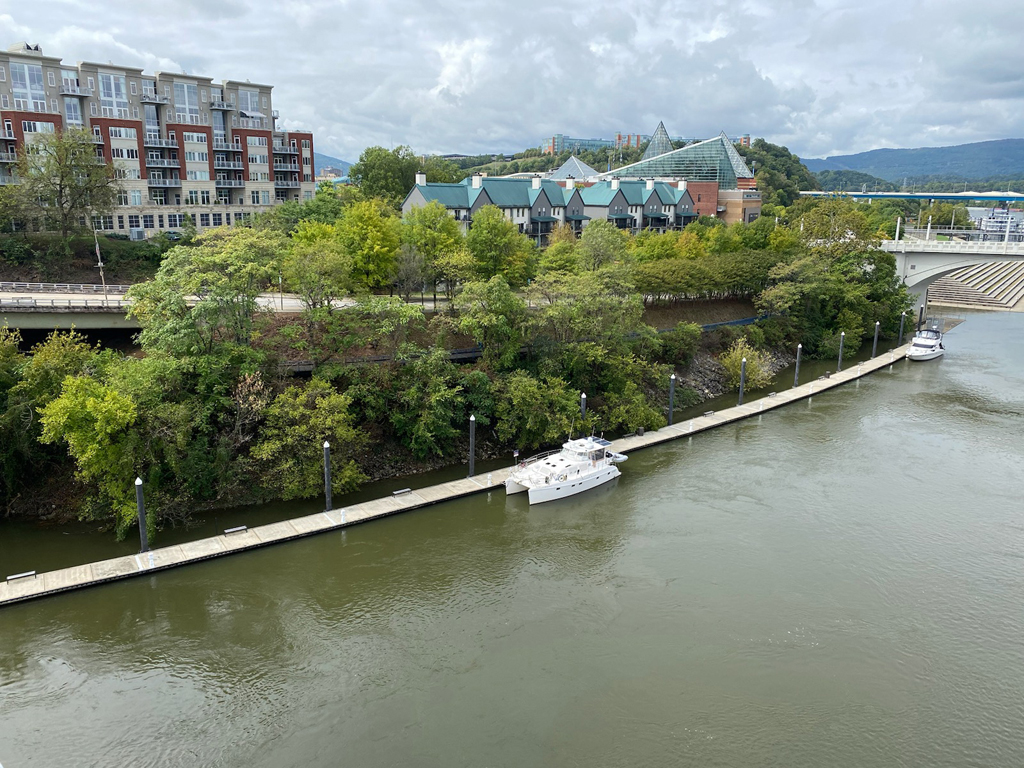
As we walked to the bus station we looked down at the waterfront.  You can see in the picture that the fixed docks are completely submerged.  Those light lines in the lower right are the handrails along the walkways, more than 5 feet under water.  At the base of the concrete lights in the top left are small white boxes.  These are the power outlets for the dock.  Theoretically the power has been cut off, but I did see the lights on the other night! The dock we are on is floating, so at least it moves up and down as the water rises and recedes.

The waterfront at Chattanooga is under more than 5 feet of water.

Chattanooga’s history began in 1815, when Cherokee descendant Chief John Ross established a ferry service across the river.  He also built a boat landing and a warehouse, and began trading with the local Cherokee Indians.  The settlement grew, and was incorporated in 1839.  It was in a strategic location, and metal industries ensured its continued growth.  It was fought over during the Civil War, and is still today an important manufacturing, wholesale, and retail centre.  It is also a popular tourist destination.  Ross’s Landing was located where the steps at the end of our dock are, our only access to the town when the ramp at the other end is flooded.

In 1854, the East Tennessee Iron Manufacturing Company built a blast furnace on a site overlooking Ross’s Landing.  A few years later the blast furnace was converted from charcoal to use coke, and was the first in the South to use coke in the primary reduction of iron ore.  Just a few years later, in 1863, Federal troops occupying Chattanooga demolished all the buildings, leaving only the stack, which was used as a lime kiln.

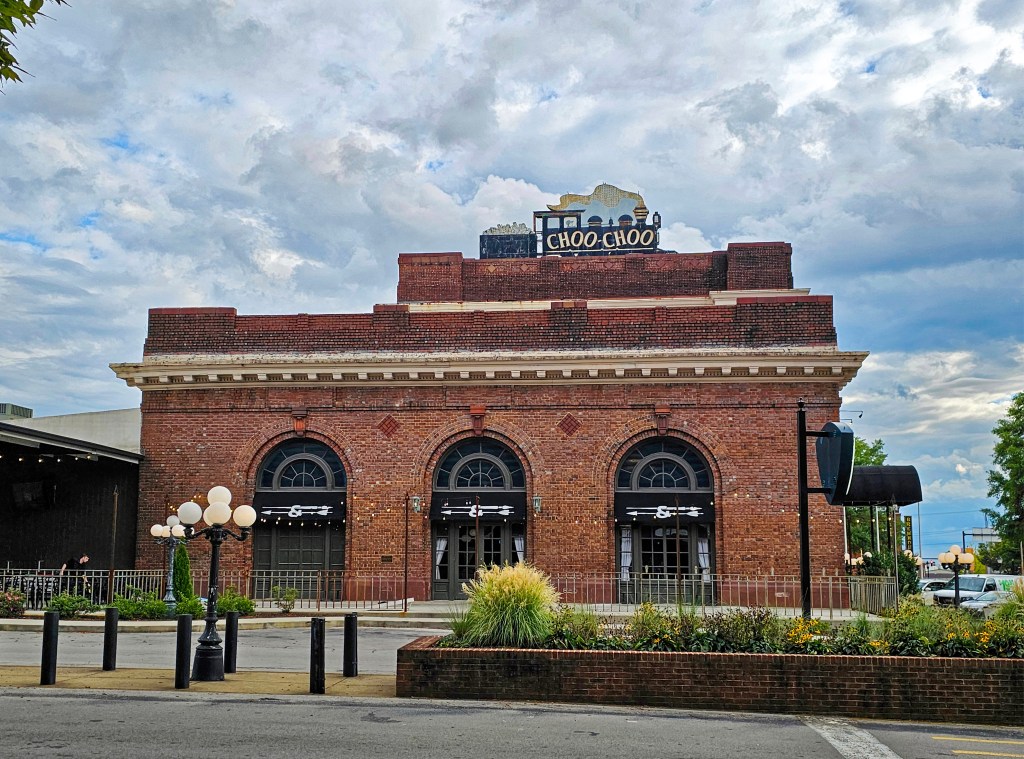
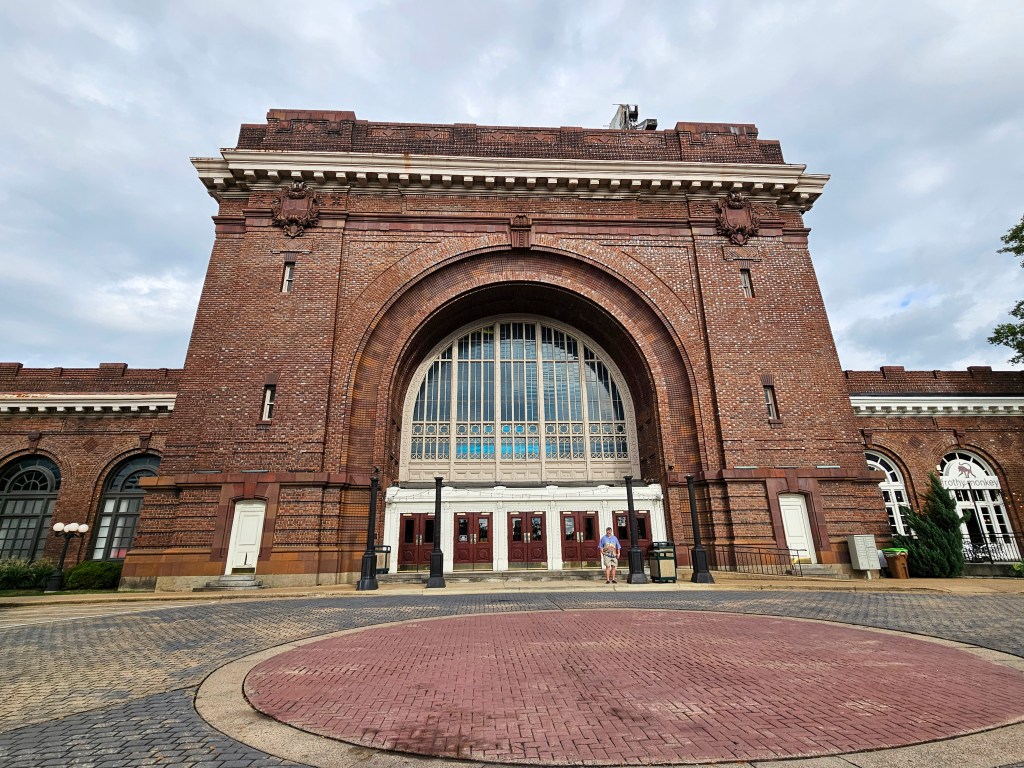
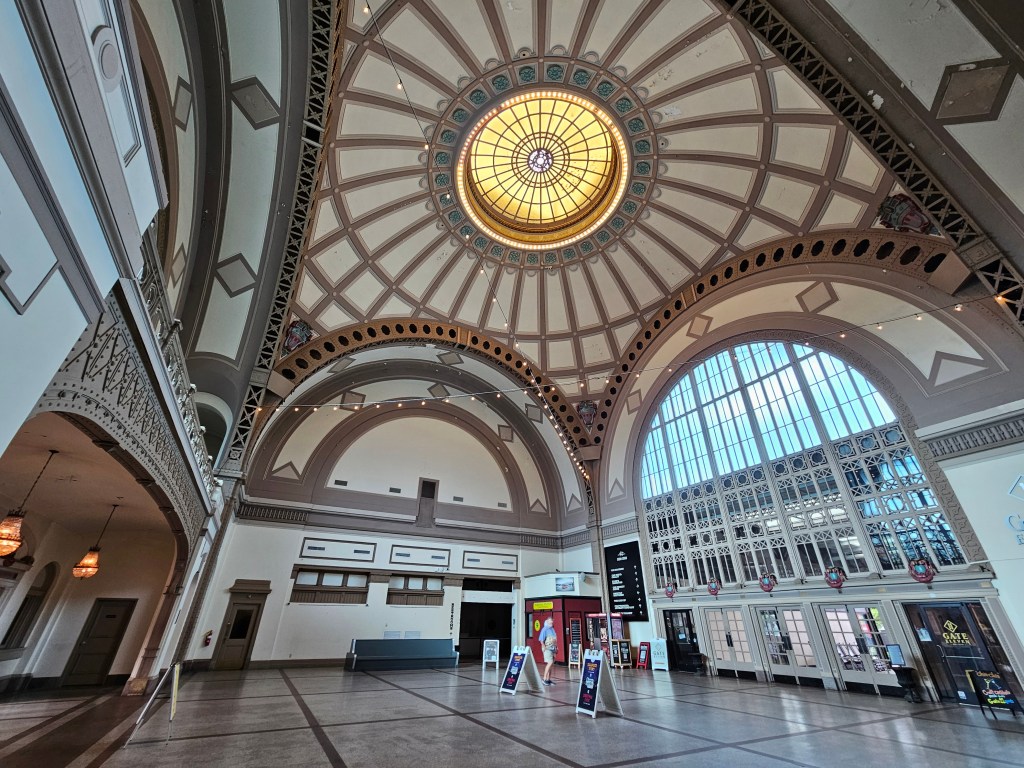
The Chattanooga Choo Choo building (yes, it’s a real place), was a Beaux Arts Classicism building built by the Southern Railway and completed in 1909.  It had the largest brick arch in the world. An 85-foot freestanding dome spanned the waiting room.  The last train arrived in 1970, and the beautiful building was boarded up and threatened with demolition.  It was rescued and refurbished and is now a hotel and restaurant complex.

Chattanooga Choo Choo
The station entrance
The dome and former waiting area

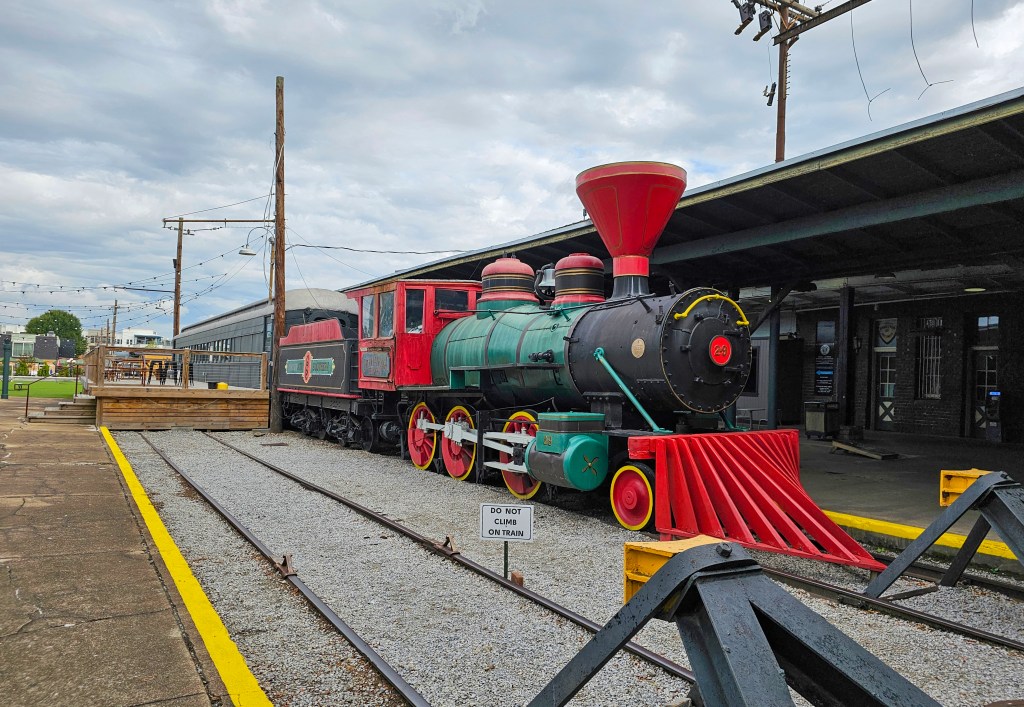
The song, yes, the song.  If it isn’t running around your head yet I am surprised.  See if I can remind you of this particular earworm!  The song tells the story of train journey from New York to Chattanooga, where the singer’s sweetheart will be waiting for him, and he will settle down and never leave. The passenger asks a shoeshine boy, “Pardon me, boy, Is that the Chattanooga Choo Choo?  Yes, yes, Track 29. Boy, you can give me a shine.”  The song was written in 1941, and first performed as a big band/swing number by Glenn Miller and His Orchestra.  It was a huge hit in a time of war, speaking to soldiers who wanted to look forward to the day that they could go home and be met by loved ones and parties.  It also referenced the heart of America, and the prosperity and industry that depended on the railways.

We went to dinner at Elsie’s Daughter, a somewhat unusual restaurant that is part of Hotel Chalet, that in turn is part of the Choo Choo complex.  The hotel features modern “chalets”, but the alternative, if you are willing to pay an additional $100 per night, are beautifully converted passenger cars, formerly part of the rolling stock of Southern Railway.

Converted railway cars of the Chalet Hotel

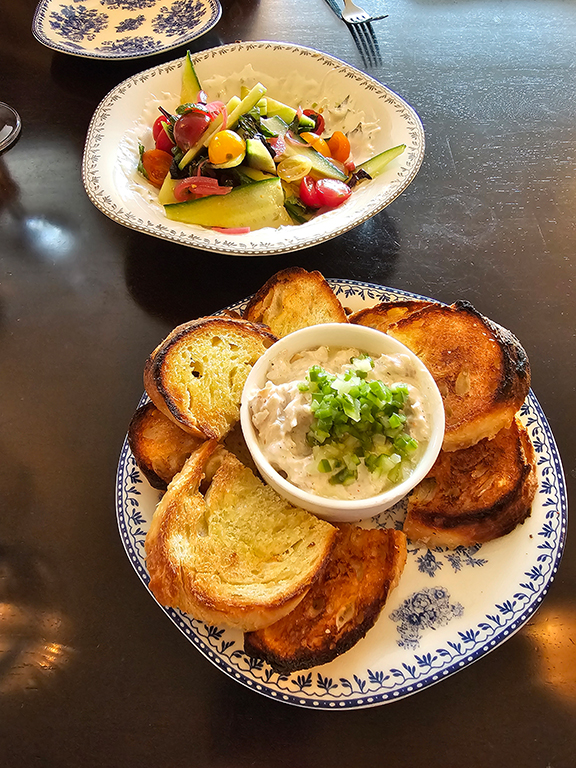
Dinner started well.  There is a very limited menu, and all plates are meant to be shared.  We began with a tomato and cucumber salad in a delicious dressing, and a plate of smoked trout spread accompanied by crisp pieces of toast.  Dick chose the crispy half chicken, which was also delicious.  I know this because my mushroom tartine was so tasteless that I gave up on it after a few bites (copious additions of salt and pepper did not help), and instead had some of the chicken.  The service that had been so bright and solicitous fell apart in the middle of the meal, as the single waitress tried to cope with a full restaurant.  We decided that the only dessert choice on offer was not of interest, so we paid and left.  We would consider returning, but not after 6pm.

Sharing plates at Elsie’s Daughter Restaurant

Earlier in the day, Dick had carried his bicycle up multiple flights of steps to go grocery shopping, because the walkway at the other end of the dock was under 5 feet of water.  He didn’t want to have to repeat that effort, so on his return, he locked the bike to the railings at the top of the steps. As we passed the bike, I commented that I thought there was about a 50% chance that it would be there when we returned from dinner.  The bike was there.  We passed a fellow standing on the pathway, with a suspiciously familiar water bottle at his feet.  I pointed it out to Dick, and he asked the guy, “did you take that water bottle from my bike over there?”  To my vast surprise, the guy laughed, apologized, and handed it back!  One hopes the bike will continue to be safe, but from now on the water bottle returns to the boat after each excursion.

A Chattanooga Choo Choo