
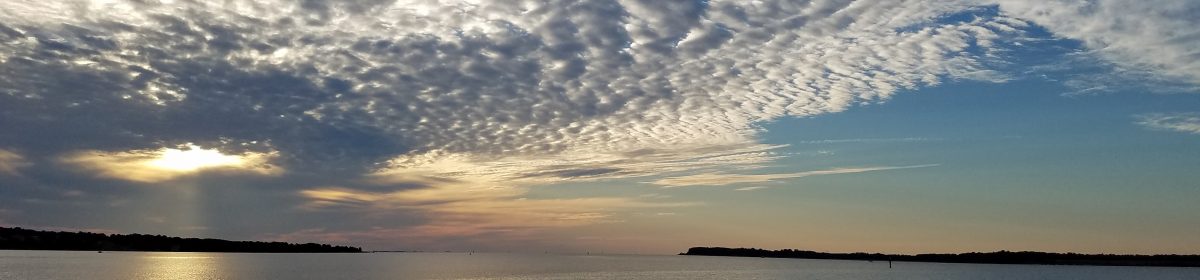
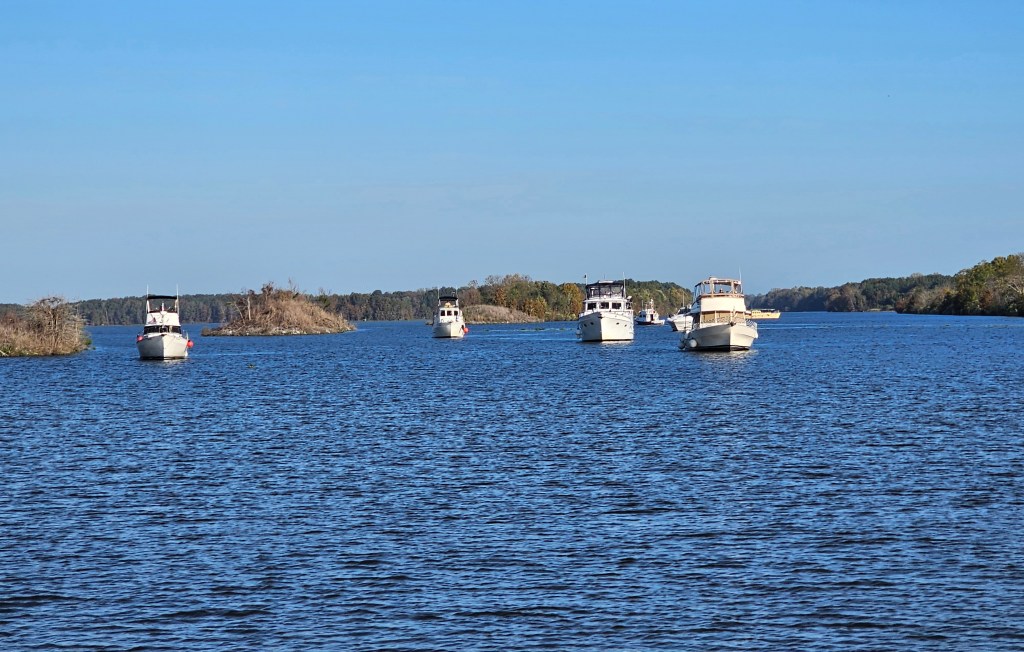
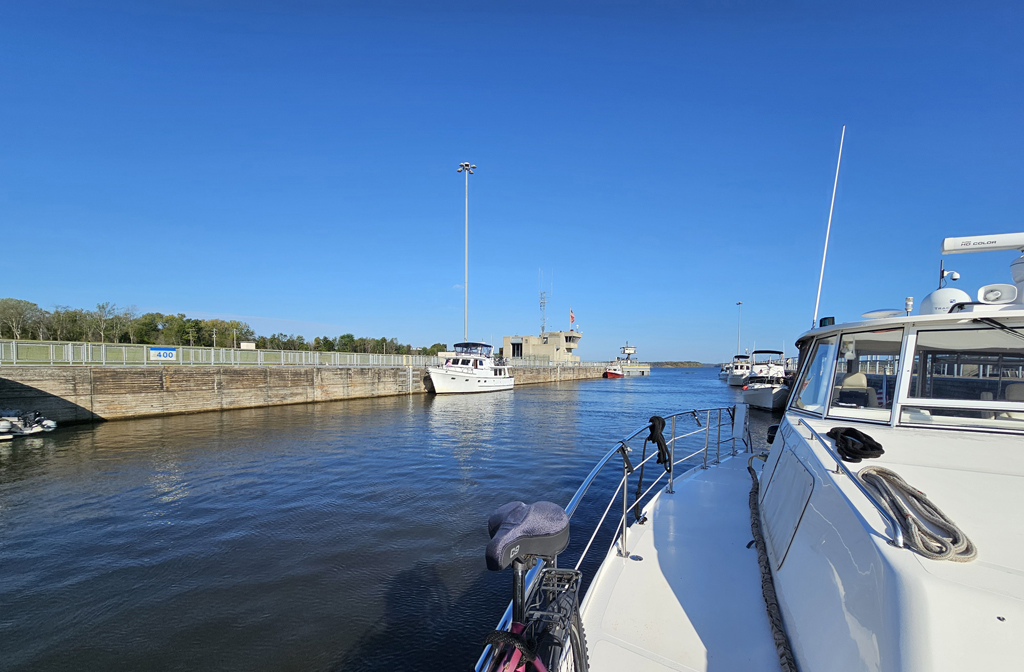
The night before we were due to leave Columbus, the clocks went back an hour, so everyone was awake early. A couple of boats left before 7am, but 7 of us arranged to leave together, shortly after 8am. We had to wait a bit while a tow locked down ahead of us.
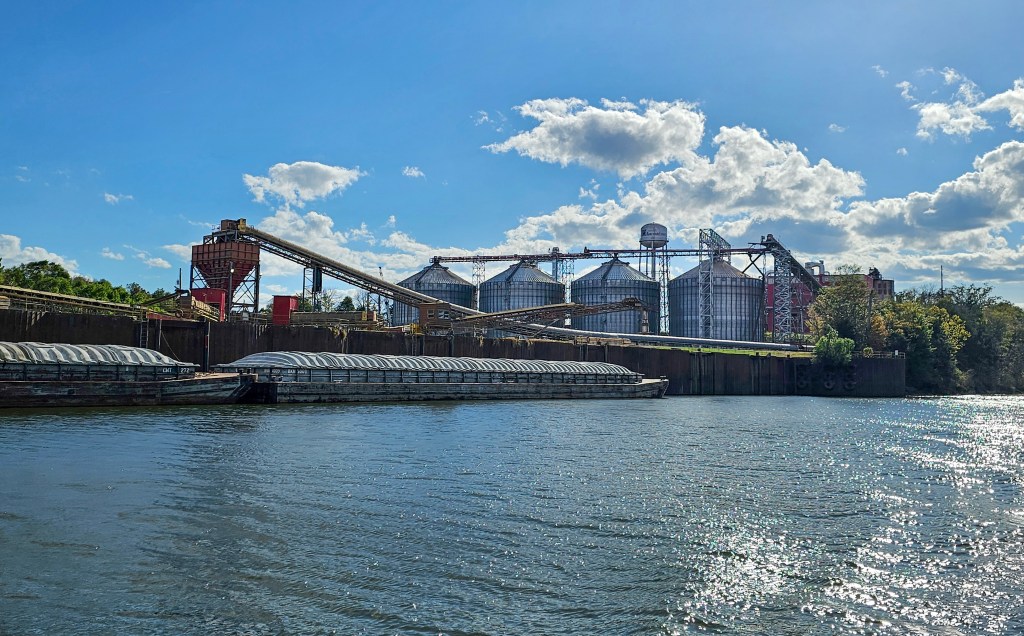
We passed the Drax Aliceville Pellet Plant. They turn wood into pellets and ship it all over the world to be used as biomass fuel. Plants fueled by biomass make a claim of green energy because of the assumption that forests will regrow. The claim is controversial, but several countries give subsidies to energy companies that use biomass instead of fossil fuels. One such plant in UK has been found to use wood harvested from old growth forests in Western Canada, according to reports by investigative reporters. I presume (but do not know this for certain) that there are no old growth forests left in this part of USA. On the rivers we passed many tracts of pines that were being grown as a crop. In a pelletisation plant, wood that is unsuitable for other products is chipped, heated to reduce its moisture content, and then reduced to a fine powder. This is then pressed at high pressure to form a small, dense pellet. Biomass pellets produce 80% less CO2 emissions than coal, and there are lower levels of other pollutants. Coal fired generating plants can be converted to burn biomass pellets. Using wood pellets is considered to be carbon neutral when the wood is taken from sustainably managed forests.
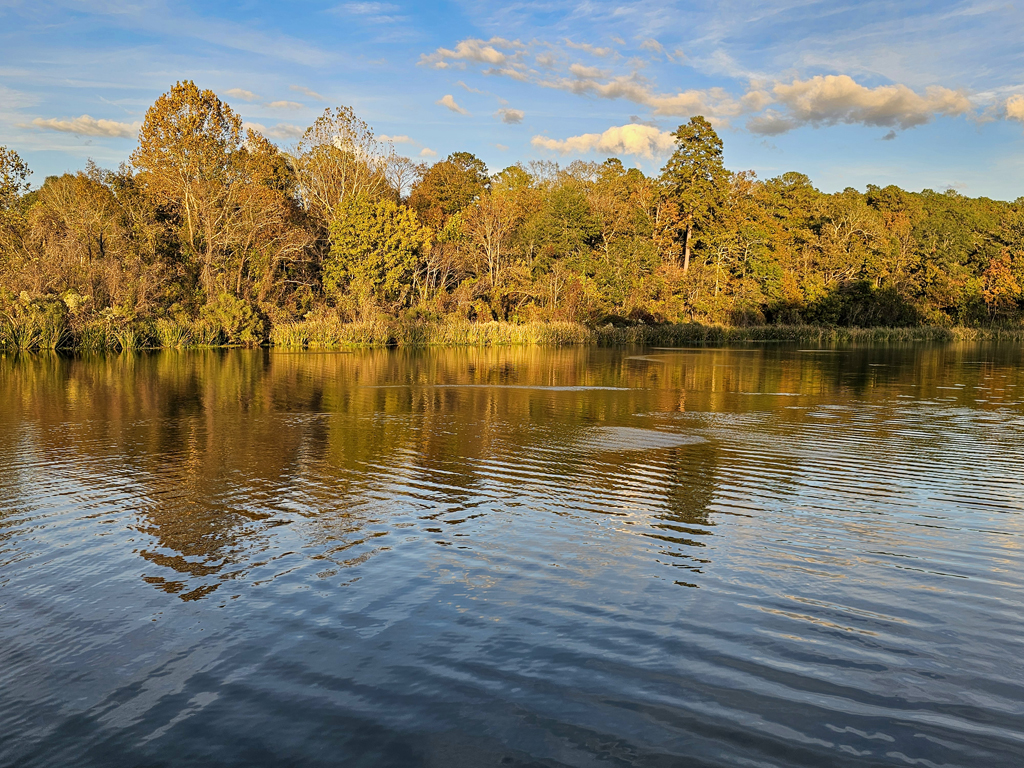
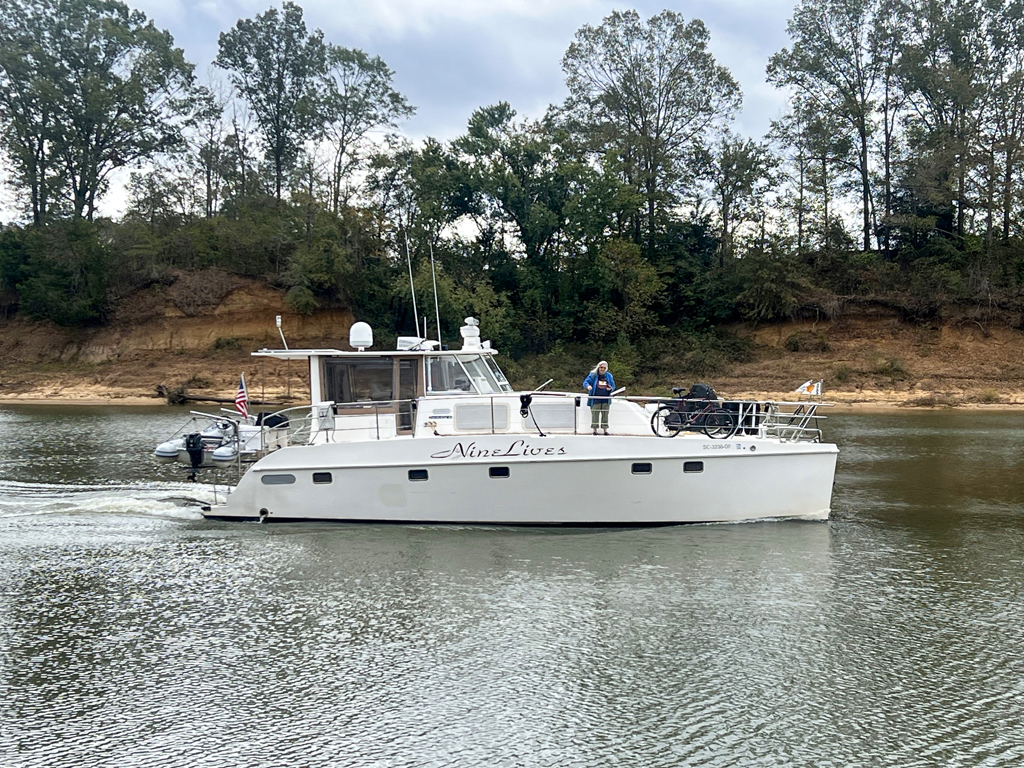
We were anchored by 4pm in a quiet oxbow off the waterway. I was much happier than I was at the last anchorage! Firstly, although we were still in 20 feet of water, the area was wide enough to have full confidence that there was more than enough space to swing 360 degrees. Secondly, we both felt a distinct pull when the anchor set, so no concerns on that score either. The wind came up during the night and we swung back and forth about 60 degrees, always being stopped by the well-set anchor. My anchor alarm shows a track, so we can see where Nine Lives meanders while we sleep. At 7:15 we lifted the anchor in quite a stiff breeze, but all was well, and we set off down the river.
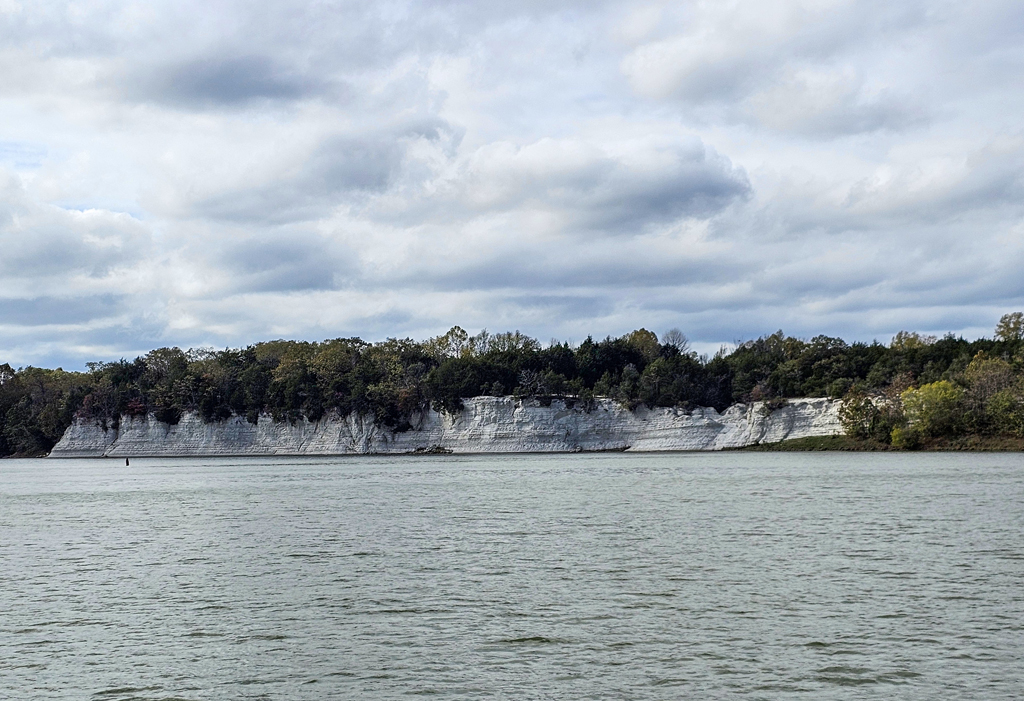
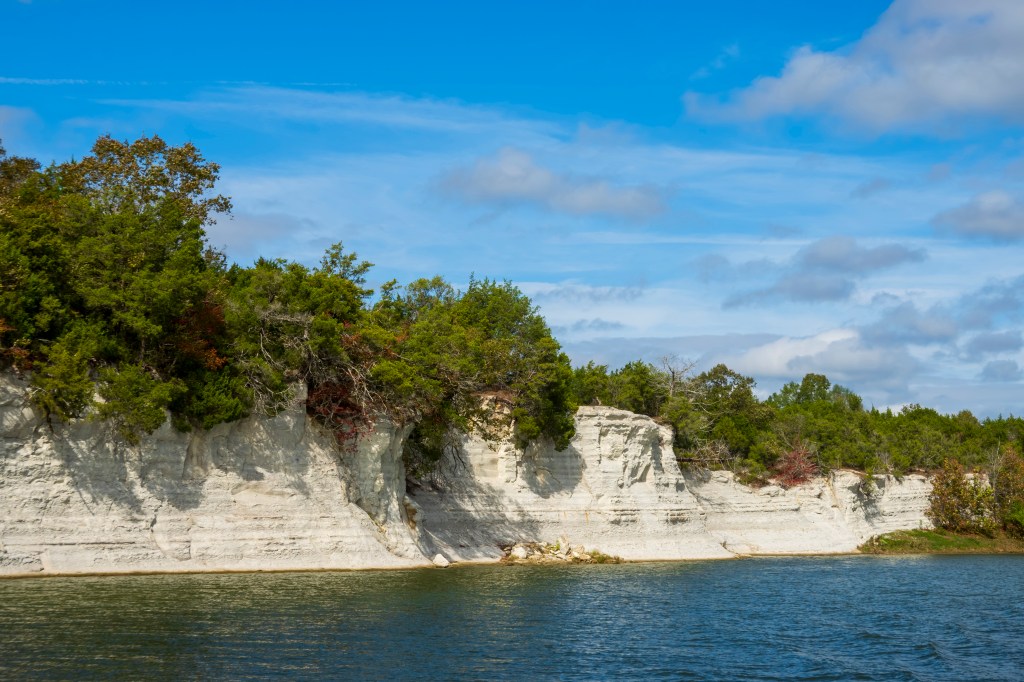
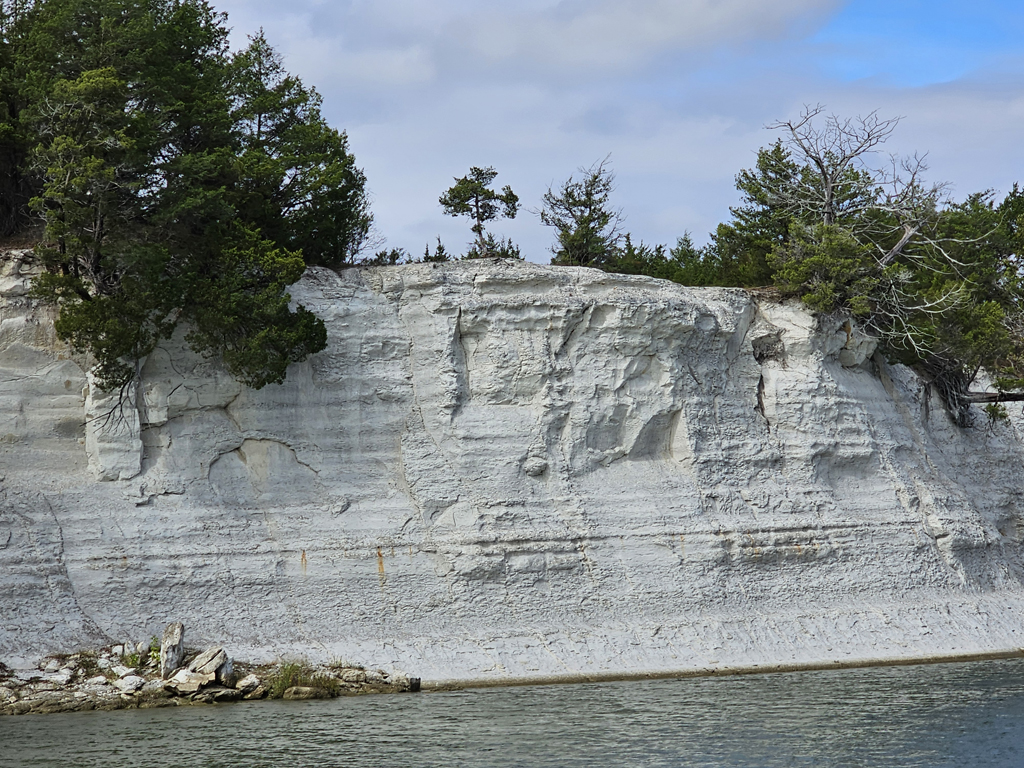
We passed a stretch that was an interesting lesson in geology and canal construction. Later, we came to the White Cliffs of Epes, also known as White Bluff, or Ecor Blanc. These spectacular cliffs are formed of chalk that was laid down at the same time as the White Cliffs of Dover, about 145 million years ago. The cliffs are 80 feet high, but they are in a difficult spot for most travellers to admire them, as they are best seen from the river. Chalk was formed by layers of marine organisms, and these 80-foot cliffs would have taken about 1.4 million years to be laid down. This chalk underlies the fertile Black Belt that cuts in a crescent through Alabama. Apparently, an underlying chalk base is impermeable and leads to very rich soil above, making the Black Belt area a perfect place for growing cotton.

Now that most of the cotton is gone, the chalk underlying the land means that it is particularly suitable for landfills. 15,000 tons of trash per day, originating from 33 states, arrives at just one of these landfills. The same landfill was used to bury more than 4 million tons of coal ash slurry from the TVA Kingston Spill in Tennessee that I wrote about earlier this trip. Further down the river there were more white cliffs, not quite as extensive and bright, and so not as famous.
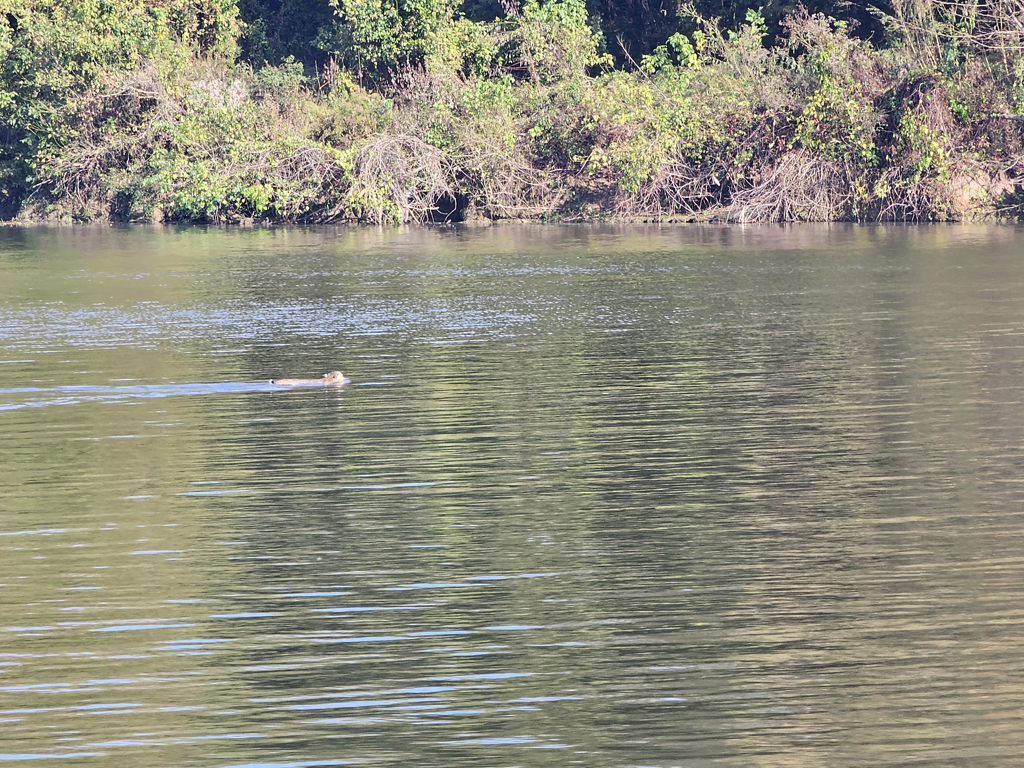
That day was one of the prettiest and most interesting days on the Inland Rivers. The copper colours of the bald cypress and their twisted roots above the water, the geology, egrets and herons, and the sun shining through the trees in their fall colours all combined to make an exceptional day on the water. Seeing a large cat swimming across the river was a highlight, although I could not get a very clear picture. We believe it had to be a bobcat, as there are no cougars in this part of Alabama. Male bobcats can be up to 40 pounds, so we are pretty sure that is what we saw
We crossed 3000 hours on Nine Lives’ engines. We also moved into the Black Warrior River, the lower part of the Tenn Tom Waterway. The river is named after Tuscaloosa, a Maubilian chief. The river rises in the Appalachians, and flows for 169 miles into the Tombigbee River, draining 6228 square miles of the watershed. Its dams and reservoirs allow use for hydroelectric power, drinking water, and transportation. The basin that it flows through is still important for mining coal and methane, although we saw fewer coal-carrying barges here than we did last year on the Ohio River. Mobile is still the largest coal port in the southern United States. There are 50 active coal mines on the river. The Black Warrior has also been an important waterway for shipping iron and steel.

Reading about the Black Warrior River and its early history, we find yet another ugly chapter in the region’s history. The Muskogee Indians, including the Creek tribes, lived in this area, with the Maubilians occupying the farthest south areas with the Tensaw tribes. An estimated 2,500 to 5,000 Maubilians, under the leadership of Tuscaloosa, the legendary Black Warrior, were slaughtered by Hernando de Soto in 1540. The Spaniards effectively wiped out the Maubilian culture, but their name lives on in the city of Mobile. Mobile comes from a French variant of Maubilian.
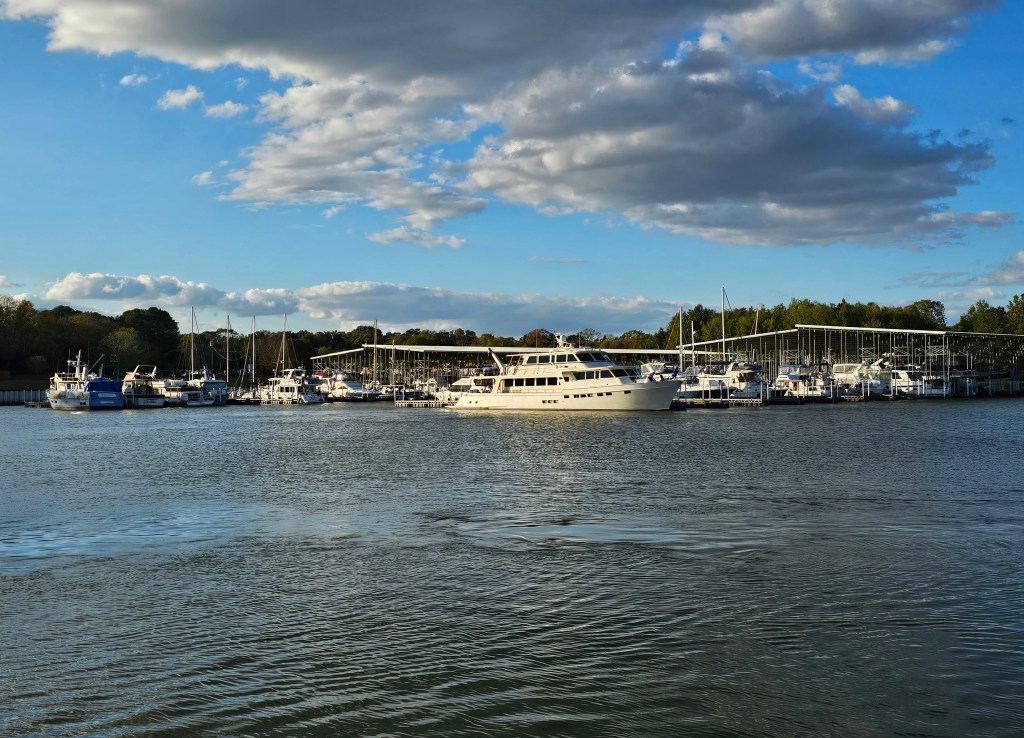
We arrived at Demopolis and were tied up by 2:15. They put us on the fuel dock because there was a 97-foot Marlow coming in that would take up the whole of the long T-dock where we would normally have been assigned.
In the evening, we were happy to welcome Sandy and Frank from Proost on board for dinner. It was Nasi Goreng. Frank is originally from the Netherlands, and the dish is a favourite for all of us. We enjoyed a very congenial evening, swapping stories and comparing how Nasi Goreng should be prepared, and which condiments should accompany the dish.
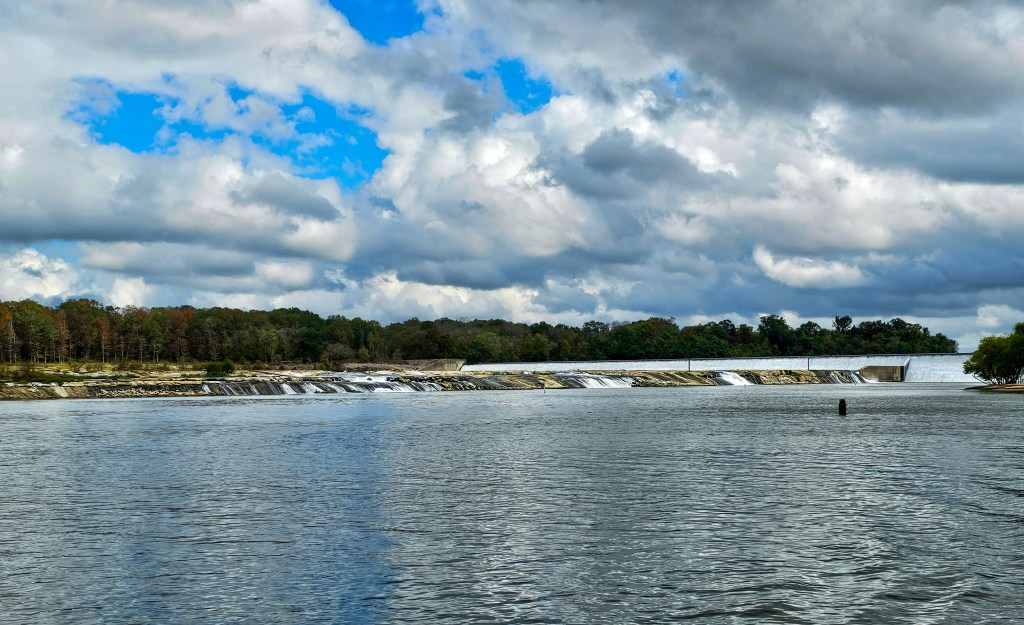
The group of boats that planned to leave in the morning included the big Marlow, but their appointment at the lock was 6am, which would have meant leaving before sunrise. Dick decided we were not going to do that. Unfortunately, the lock had later scheduled maintenance (we suspect that the early group knew this and failed to share that information). We were able to go to the lock shortly after 10am, but then we had to wait an extra 15 minutes while a towing boat with a disabled sailboat maneuvered out of the lock. We were finally on our way downriver by 11am.
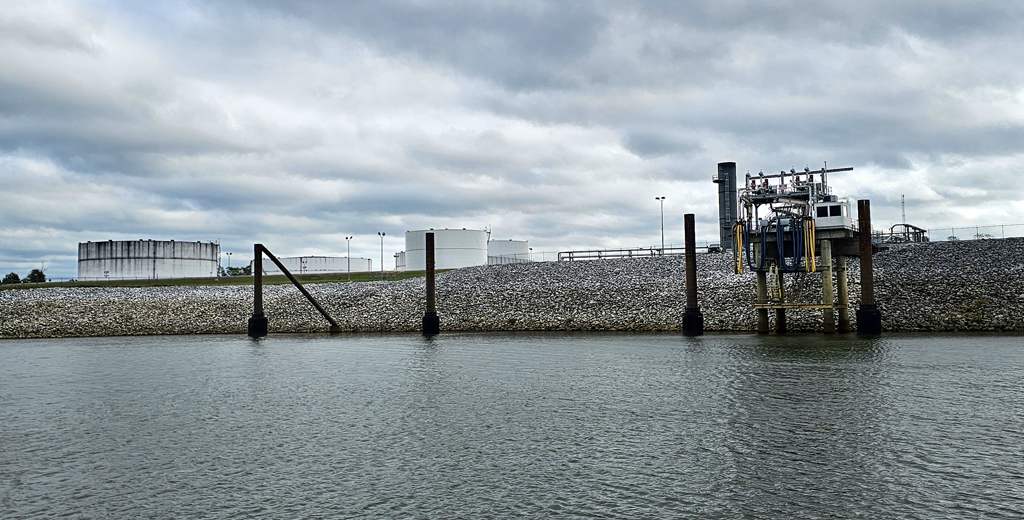
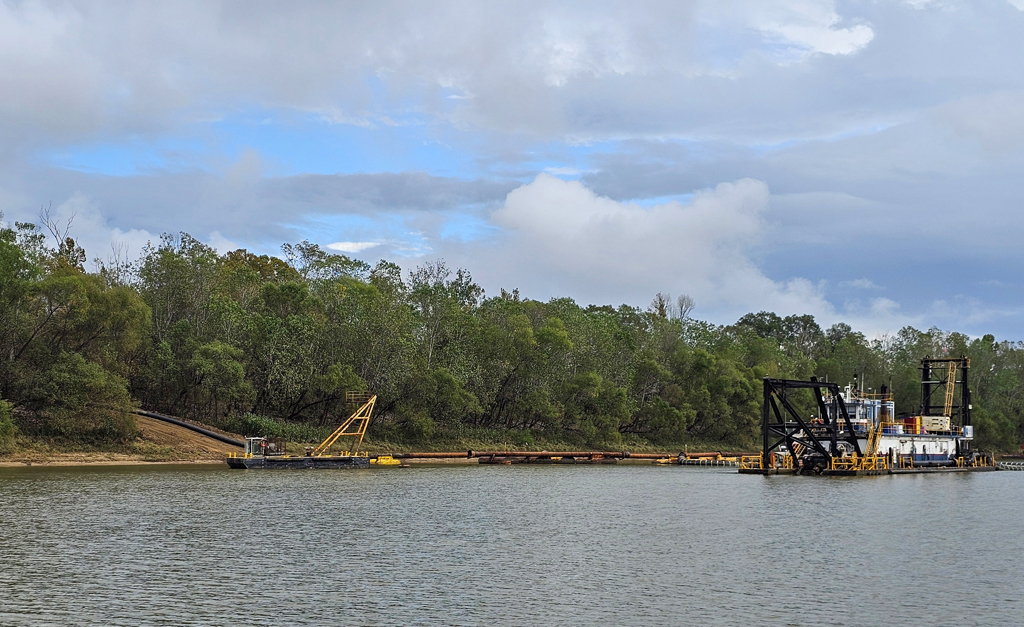
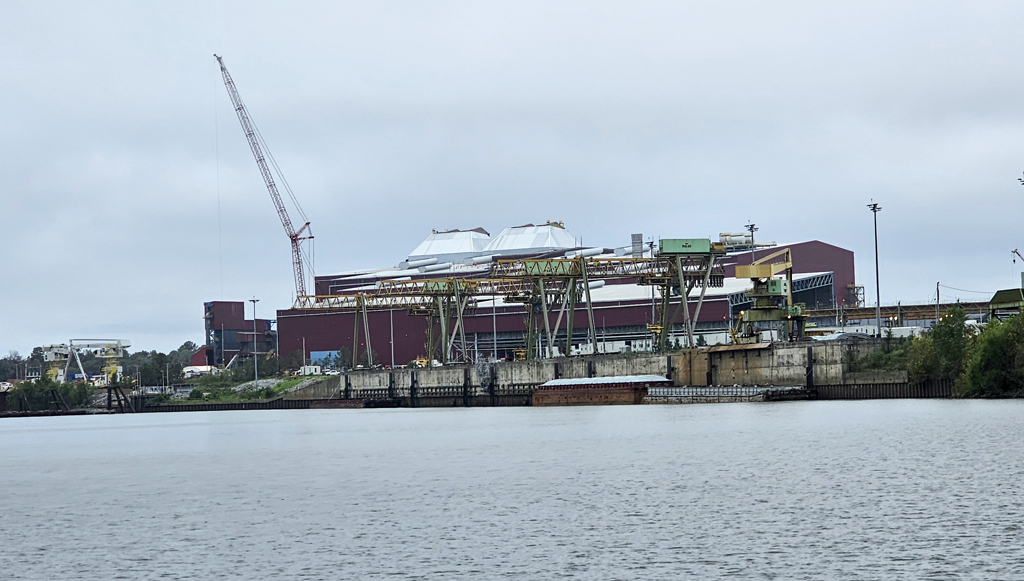
I was surprised and disappointed that after a day of lots of wildlife and very pretty scenery, our first look at the Black Warrior River was not nearly as nice. In fact, it was long hours of boredom, with mostly scrub growing along the banks, no houses, and only the occasional wood products plant to look at. There are very few anchorages along this stretch, and even those are simply in a shallow area in a wider part of the river. I was not happy, looking at any of the choices. We had departed Demopolis with 4th Dimension, another Endeavourcat, that we have been leapfrogging on this journey. Kip and his wife have been around the Great Loop 4 times, and we knew that they planned to stop at the same anchorage as Dick had chosen.
There were two places to anchor on the bend, and Dick eased into the upstream area, trying to leave space for 4th Dimension. He soon discovered that the river shelved rapidly, and with just 4 feet of water under the boat there would be no room to swing. We absolutely don’t want to be putting out a second anchor to hold us in place, although many boaters do choose that solution. At this point, it was clear that Kip was heading towards the downstream section of the bend, so we followed. Dick got on the radio and asked if we could set our own anchor alongside, and then raft up. That way we would swing together. Kip was dubious. His concern was that if we swung 180 degrees, our anchor chains would twist together and be a heck of a mess to untangle. The forecast was for the wind to stay in the same direction, but drop overnight, so it was decided there was little risk. It was a great advantage for us, because Kip has broadcast-AIS.
Automatic Identification System, AIS, is a feature that all commercial vessels must have by law, and that is available for pleasure craft. Pleasure craft can have broadcast-and-receive-AIS as part of their radio setup, or receive-AIS only. Way back in 2016, when we had to replace our secondary radio due to a lightning strike, we would have preferred to have the full AIS transponder, that is, both broadcast and receive. At the time we were told that a new radio with broadcast-AIS would be several months before it could be delivered, but receive-only was available immediately. Dick felt that it was more important for us to be able to see the commercial traffic, than for them to be able to see us. Interestingly, so it has proved. What’s more, in 8 years of voyages we have never once heard a tow call a pleasure craft because of the pleasure craft’s transponder, and the one time we were called by a tow it was because he saw us on radar. So, Nine Lives cannot broadcast AIS. Our position in that anchorage put us out in the river, disturbingly (for me) close to the sailing line. With Kip broadcasting AIS, we felt that we were far more visible to tow traffic than our anchor light alone would have allowed.
The tow that passed us shortly after dark threw us around with its prop wash as it powered through the bend, but our anchors held us in place.
We were able to reciprocate a little, because our location had poor cell service and Kip was unable to watch the election night results come in using his phone as a hotspot. Our mi-fi was doing a sterling job as always, even with just 1-2 bars of reception, it gave enough bandwidth for up to 5 devices, and we were able to share it with 4th Dimension. We all passed a peaceful night, especially as there was no more tow traffic.
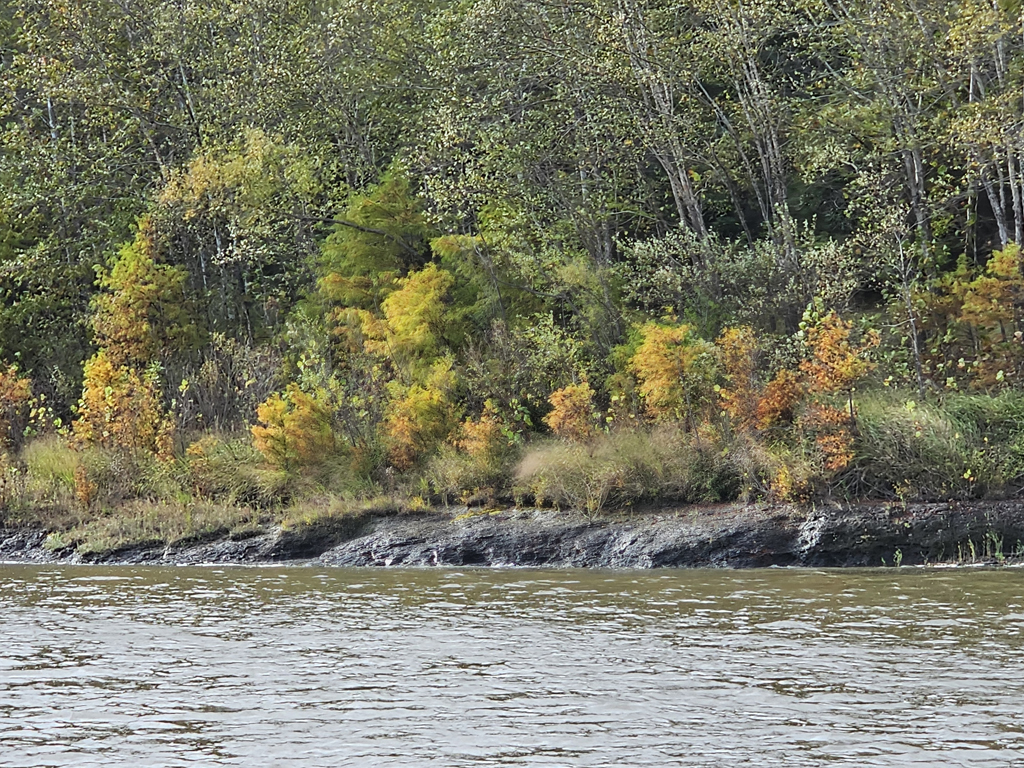
We needed an early start, hoping to get well below the next lock that day, a 100-mile step. We were untied and up anchor and on our way by 6:10am. The water was incredibly still, with mirror reflections. Even though it was the same relatively ugly scrub, in the morning sunshine and clear water it was very pretty. Except for the stretch below a water treatment plant. We could see the outflow bubbling up and about 2 miles of foam sitting on the water.
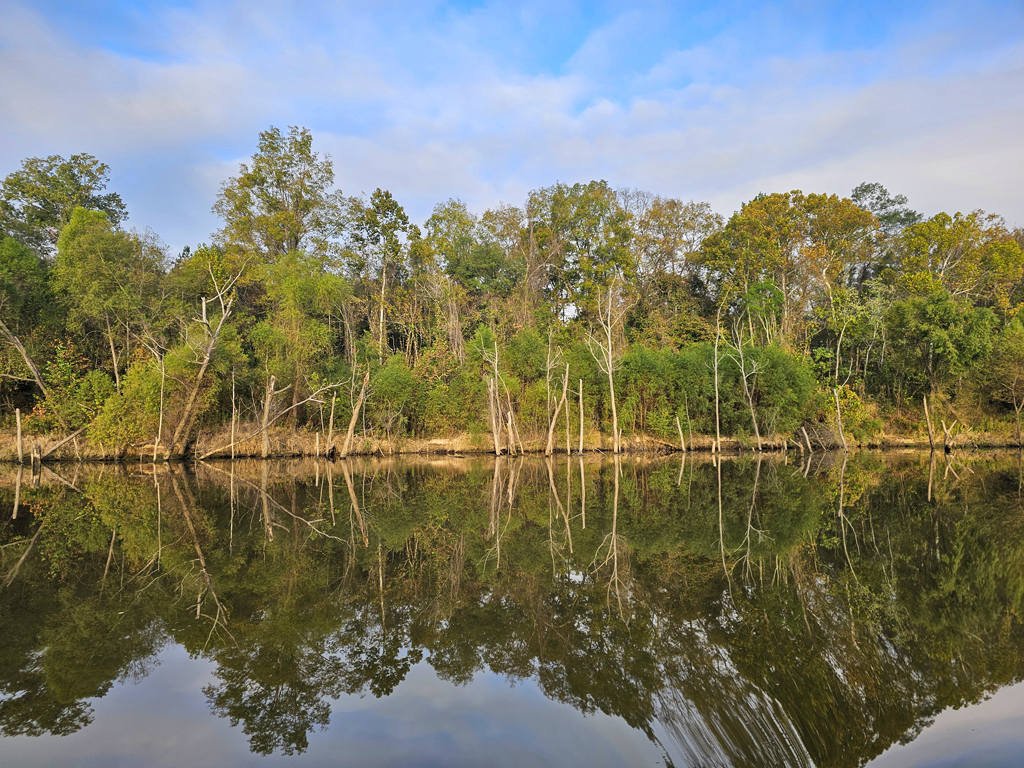

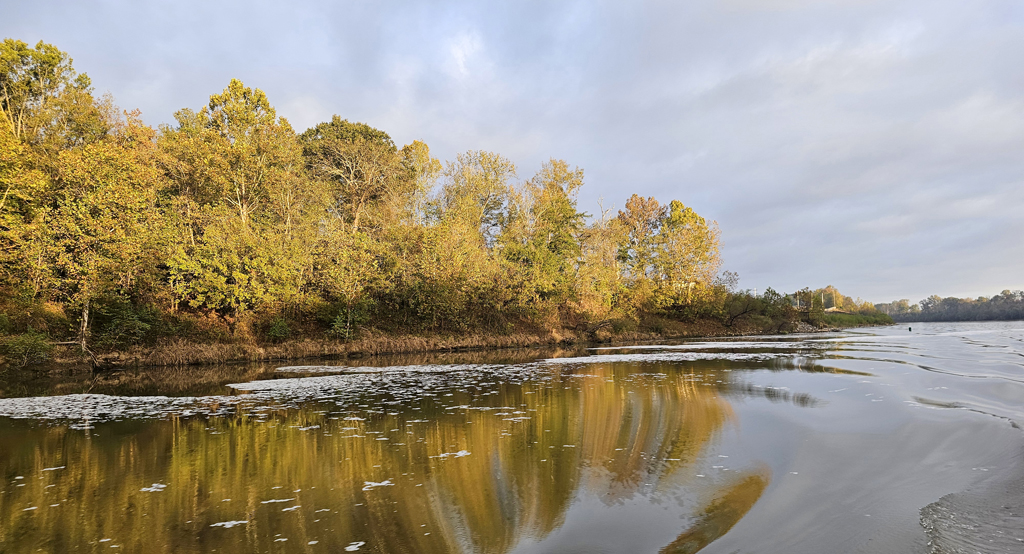
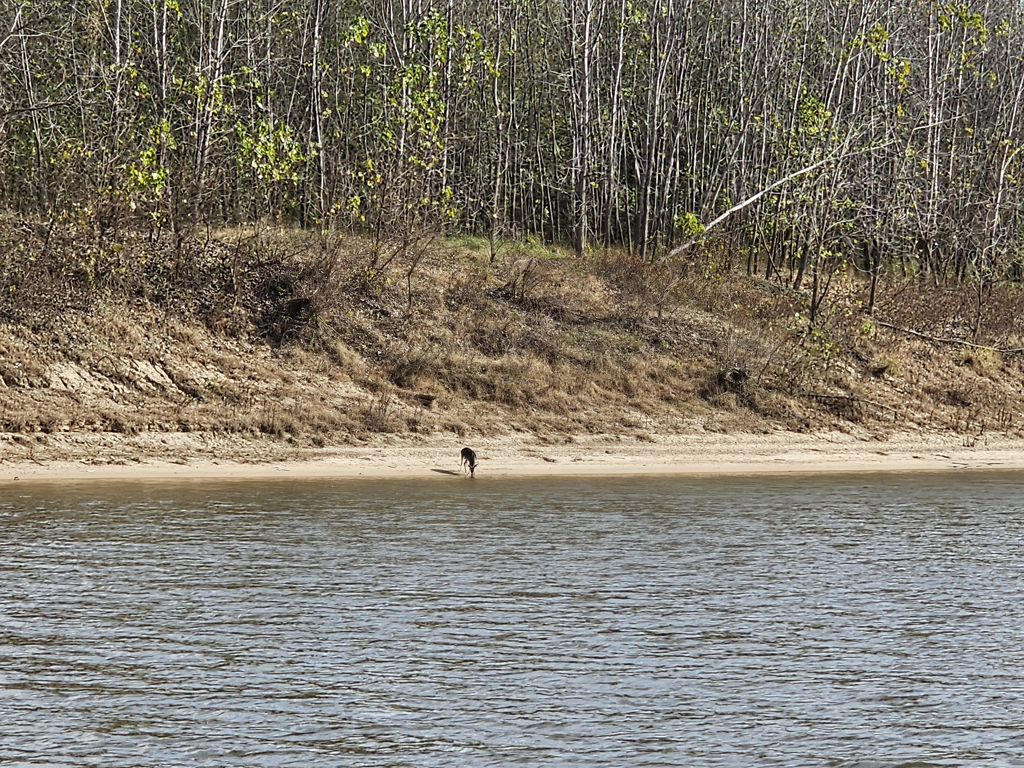
Although not too obvious, there was some wildlife other than birds. In addition to the cat we saw swimming a few days before, and the deer on the beach, Dick saw a bear in some bushes, and we saw our first gator swimming near the shore. As I read about the area, I discovered that alligators once were found as far north as Missouri, and that a few still live in Wheeler Lake in Tennessee. They were on the list of Endangered Species in 1973, but have come back and are now in the category of Least Concern. Today they are gradually expanding their range back towards northern states where they were previously extinct. Alligator farming is now a big business, producing both meat and hides. Dick will order alligator in a restaurant, but I do not.
We passed the famous, or rather infamous, Bobby’s Fish Camp. It is a character place, the only possible stop for Loopers who must have fuel and/or water on this stretch of the Loop. Only the first 3 boats to arrive fit on the dock, the rest must raft up, and do not get power. Regardless, all pay the same $2.75 per foot (compared to $1.25 at Columbus and Midway, both of which are proper marinas). Bobby used to be a real character, but he died, and the subsequent owners apparently lack his charm. I say no more. We did not plan to stop there, as we did not need fuel or water, and feel it is better to leave spaces for those who really need them.

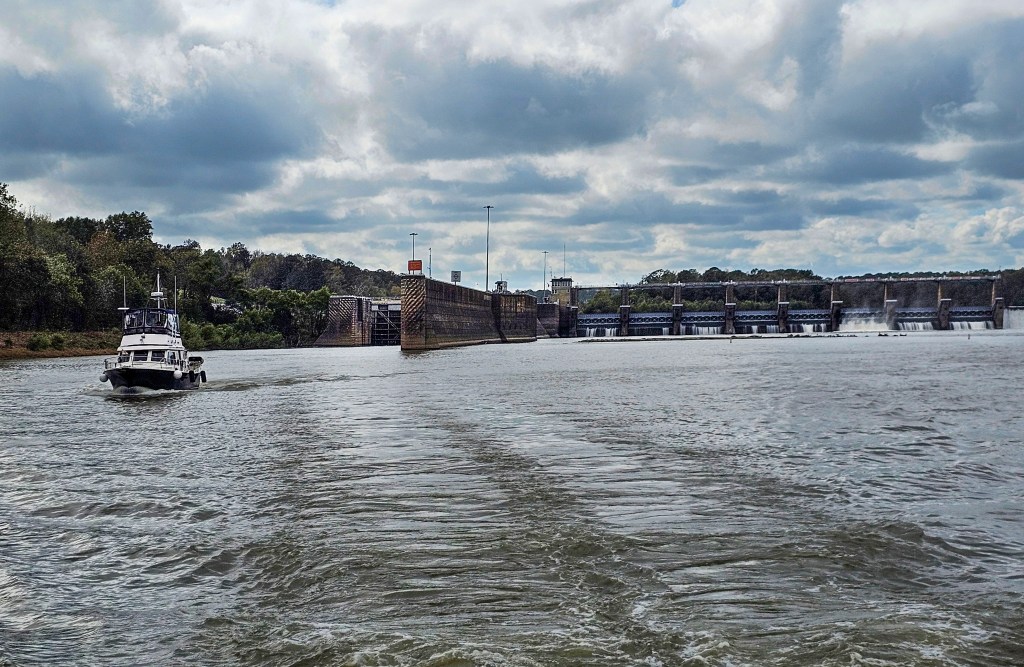
We were able to catch up to a group of 4 Loopers who had already contacted the Coffeeville lock, so we were through with no delay. Just as well, with a further 3 hours to our planned anchorage. That was our last lock until we travel all the way around Florida and arrive back at Wexford! We have done 421 lock transits in total on the Loop.
We anchored in a bend in the river with about 7 feet under the boat. There was no wind, and a bit of current, but plenty of room to swing, since we only had about 80 feet of chain out. Later, after dark, a tow passed us. It was interesting to see their searchlight sweeping back and forth, and it was very comforting to see how far to the other side of the river they passed by. We also felt no wake or propwash, since they were so far away and had to go very slowly around the series of bends in the river. Overnight there were other tows passing, but Nine Lives did not even rock as they passed by. The river is tidal at this point, and overnight we did swing 180 degrees, but we were still in deep enough water and well off the sailing line.
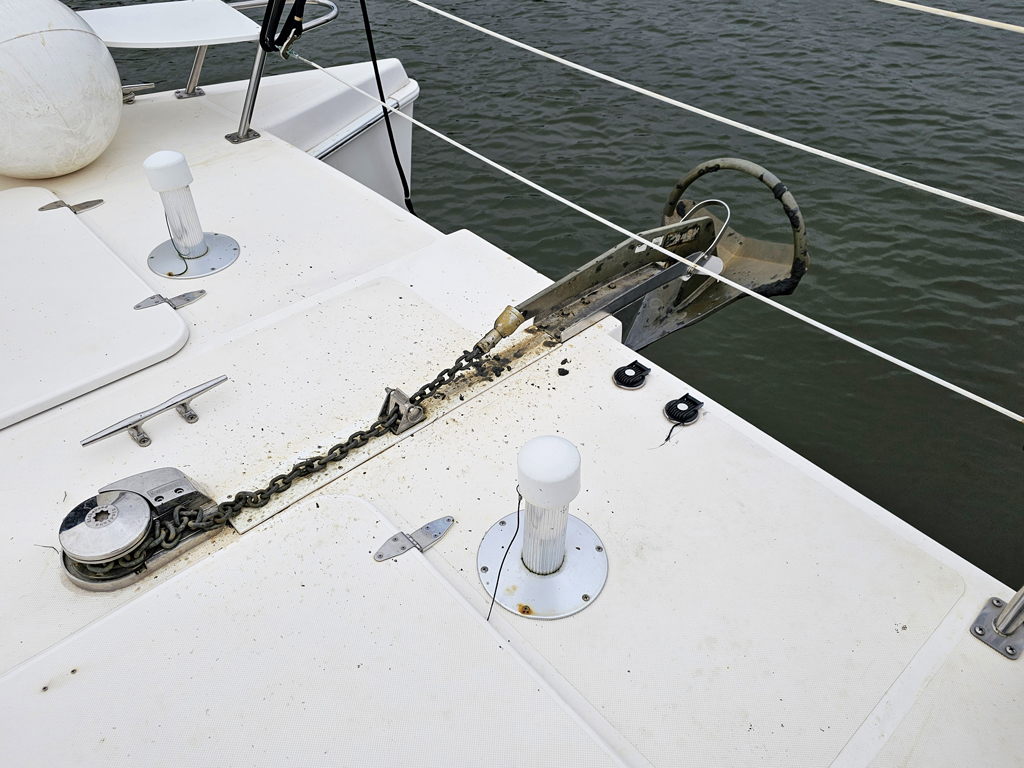
As we raised the anchor, there was a disturbing moment when the clutch (part of the electric windlass that pulls the anchor chain) began to slip. “Shit!” said Dick. However, he did not immediately expand on his remark. When prompted (remember that we are wearing headsets for communication), he said that the clutch was slipping. Further muttering, followed by the comment that the anchor must be snagged. I moved the boat forward to see if we could move past the snag, and Dick then took hold of the anchor chain and was able to lift the anchor off the bottom with no difficulty. That is, no difficulty apart from manually lifting a 55-pound anchor and accompanying 3/8-inch chain. Once the anchor was well off the bottom, I eased Nine Lives away from the anchorage and into the river while Dick figured out what had happened. It turned out that the clutch slipping had been doing its job of protecting the windlass, because the chain had piled up and jammed in the locker. Once freed, everything worked smoothly, and we were underway by 6:35.
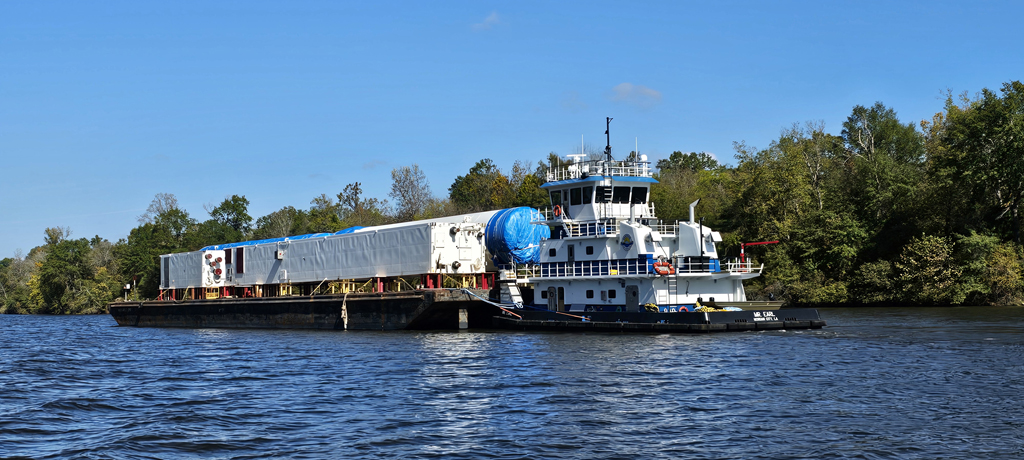
This was again quite a long and mostly boring stretch of river. We did see 4 brown pelicans fly past us, quite a while since we have seen those. They are a strictly coastal breed, and feed by diving from above and scoping up the fish. The larger white pelicans that we have seen for the past few years are migratory on the Inland Rivers, and feed by scooping up fish from a floating position.

There is quite a change in vegetation in a fairly short stretch of river. Palmettos, Spanish moss, cypress and loblolly pines begin to dominate. In addition to the herons and egrets, we also saw kingfishers and osprey as well as seagulls. We were now definitely in the bayou.
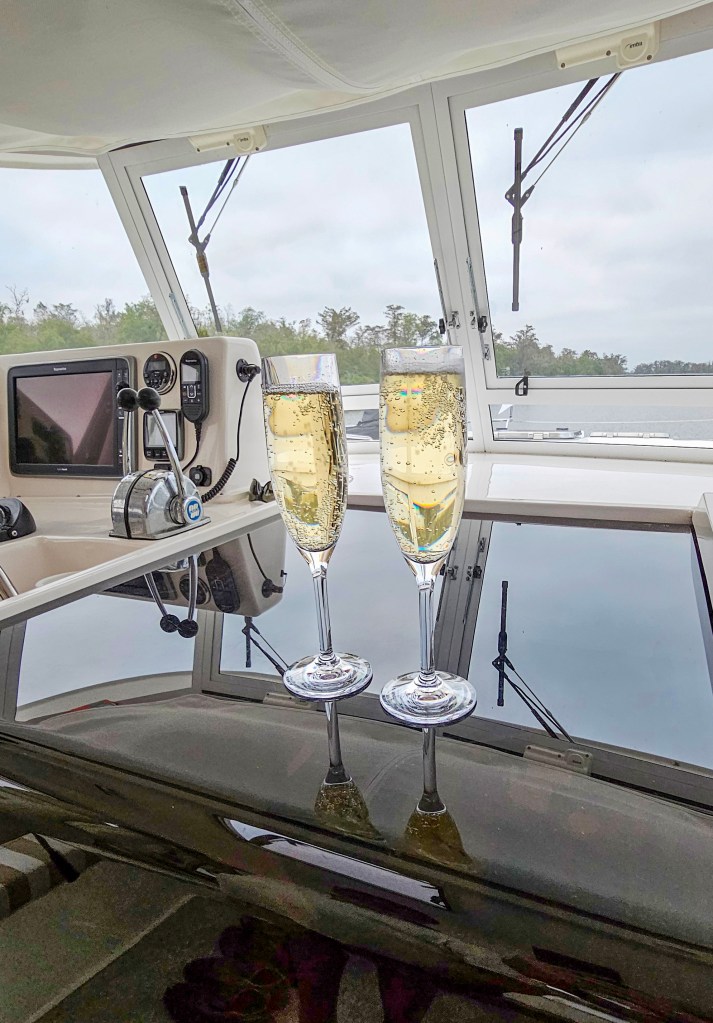
We anchored in a creek off the Tensaw River that feeds into the Mobile River. It is 12 miles north of Mobile, and 25 miles from our next day’s destination at Fairhope, on the east side of Mobile Bay. Notwithstanding previous reviews of the anchorage, the current in the creek was not enough to hold us in place against the change of the tide so we woke up to find ourselves facing the opposite direction from when we went to bed. After more than 6 years since we anchored in tidal waters, I had forgotten to set the alarm to allow for the swing. We were up in the night checking to see that the anchor was holding and that we were where we should be. There was debris that had to be cleared from the bridle and the pontoons before lifting the anchor, and it came up with quite a lot of black mud.

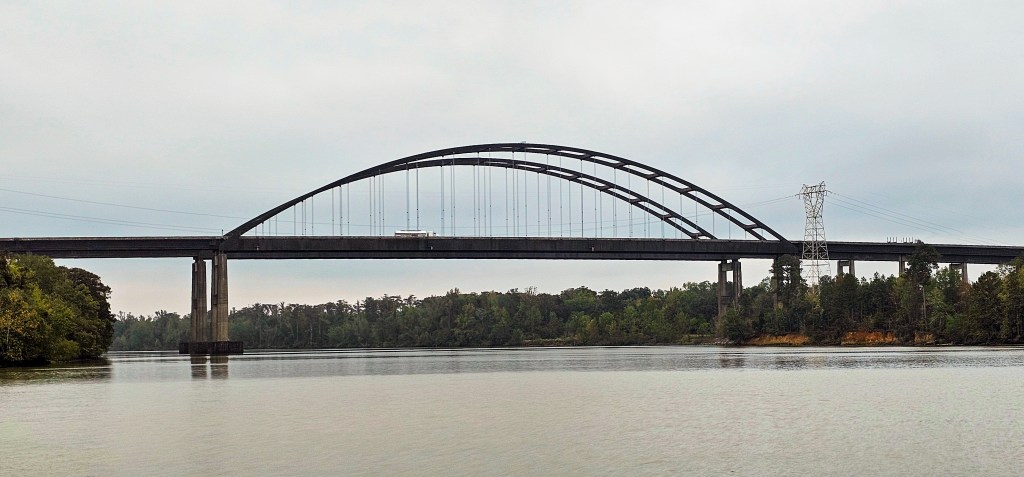
We arrived in Mobile Port. We haven’t seen that many barges since Cairo (at the junction of the Ohio and the Mississippi Rivers). There was an oil tanker docked, we haven’t seen those big boys since the Great Lakes. We felt very small as we made our way through the port traffic towards Mobile Bay.
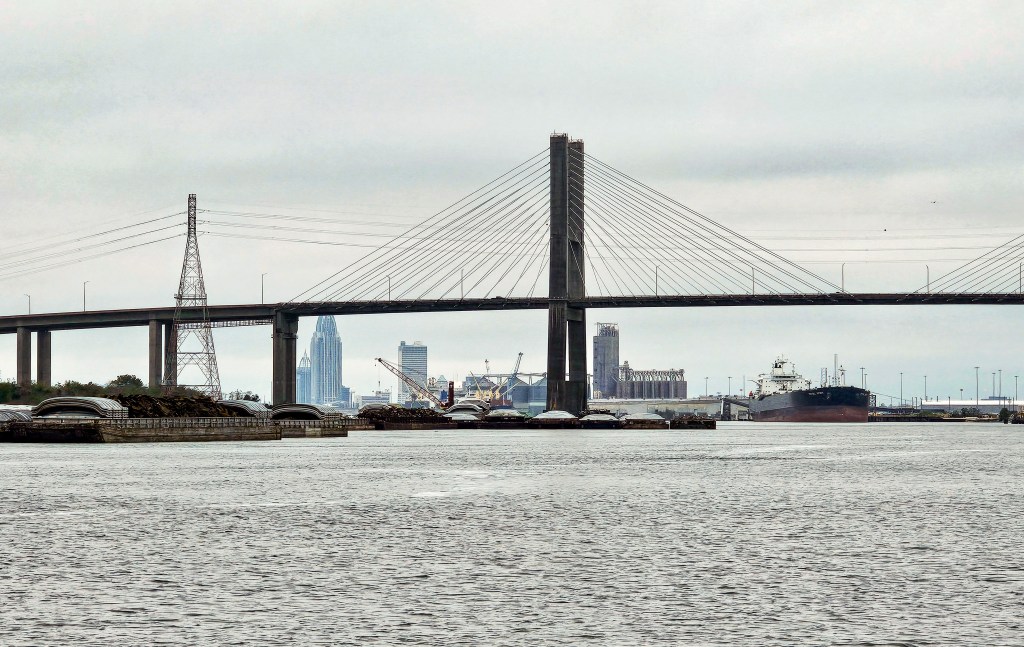
Mobile is the second-largest city in Alabama. Its position on a protected saltwater bay has been the key to the success of the city from its founding by the French in 1702, when it was the first capital of Louisiana.
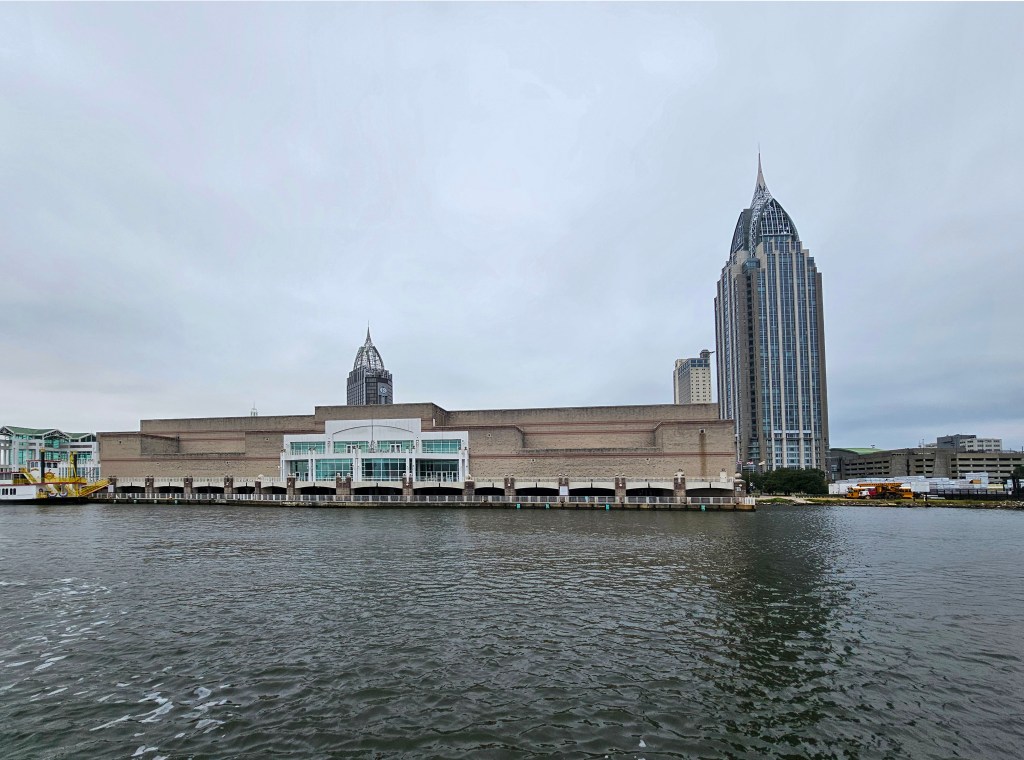
We passed the Convention Center, where you can dock, for a fee, with no power or water. Some Loopers stop there, but it is reported as not particularly safe to leave your boat there, so it seems somewhat pointless. We were very lucky with the big ship traffic. The only ship that was underway had already slowed down for the harbor entrance, so we did not have to deal with the kind of wake the big fellas create. A passing boater in a 44 ft trawler told us that cargo ship had passed him in the bay and had thrown him around “like a rubber duckie”.

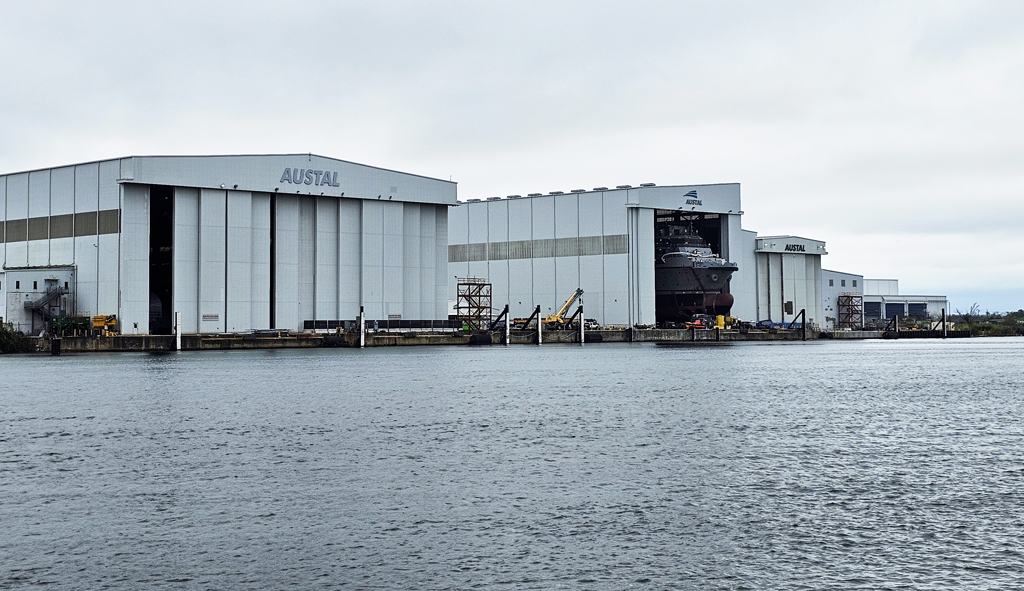
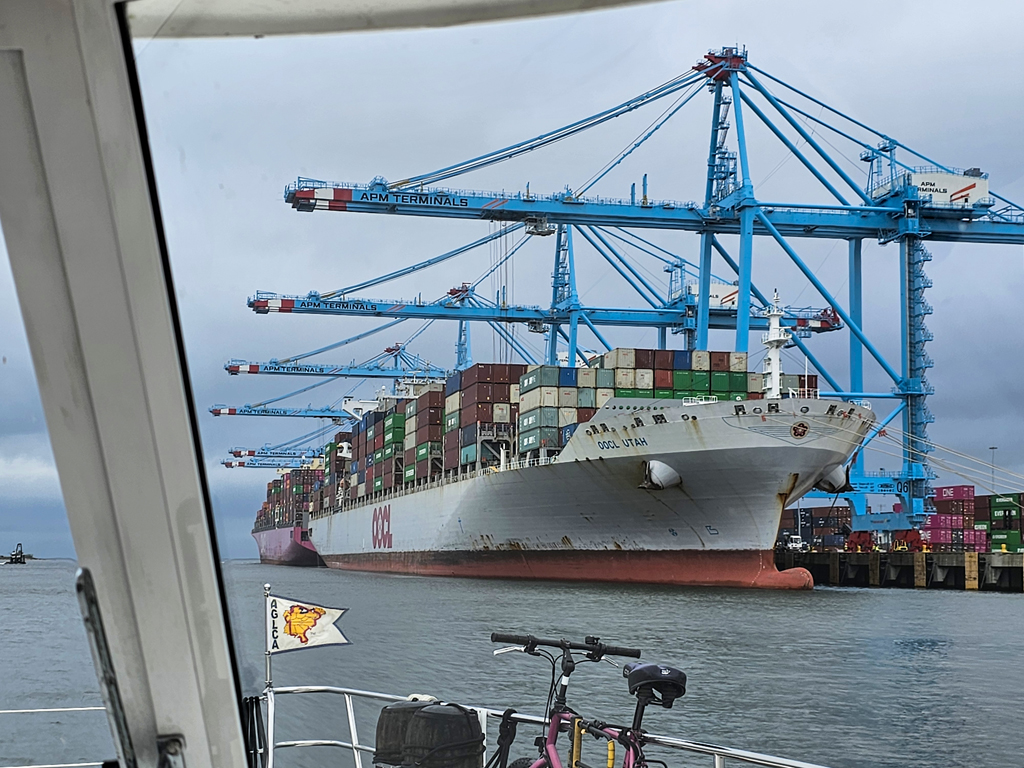


Although the wind was stronger than expected, thanks to a hurricane passing across the Gulf, it was still not too bad, and it was an easier crossing once we were out of the ship channel and no longer heading due south with the wind on the beam.
We arrived in Fairhope Marina by 11am. Our side tie was at the end of the last dock, nearest the bay. At the entrance to the channel, we lost the 5G T-Mobile signal, so our mi-fi router did not work, and neither did my phone, although Dick’s was working. It turned out that his phone receives only 4G. After a long conversation with T-Mobile and a change of setting on my phone, my access was restored, and we had instructions for changing the mi-fi.
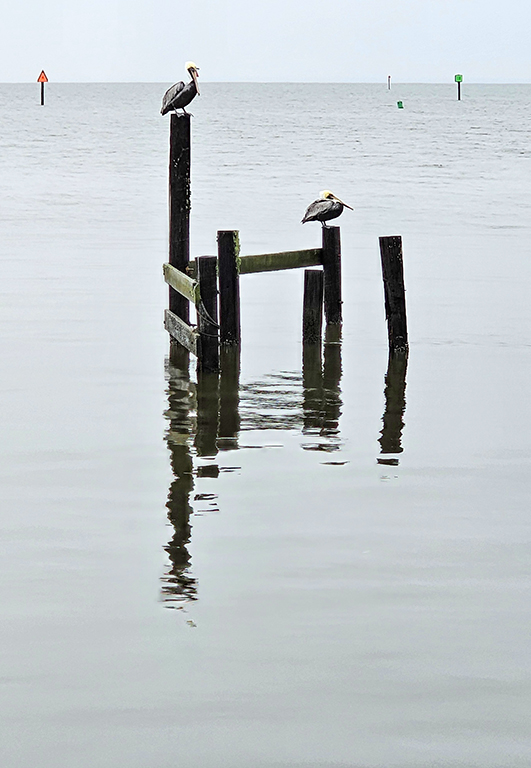
Dick took Uber to collect the rental car. Enterprise advertises that they pick you up, and about half the time they do, but not in Fairhope. Although the town claims to be “bike friendly”, that applies only when you are in the downtown. To get there you have to ride for several miles on a narrow road with no shoulder.
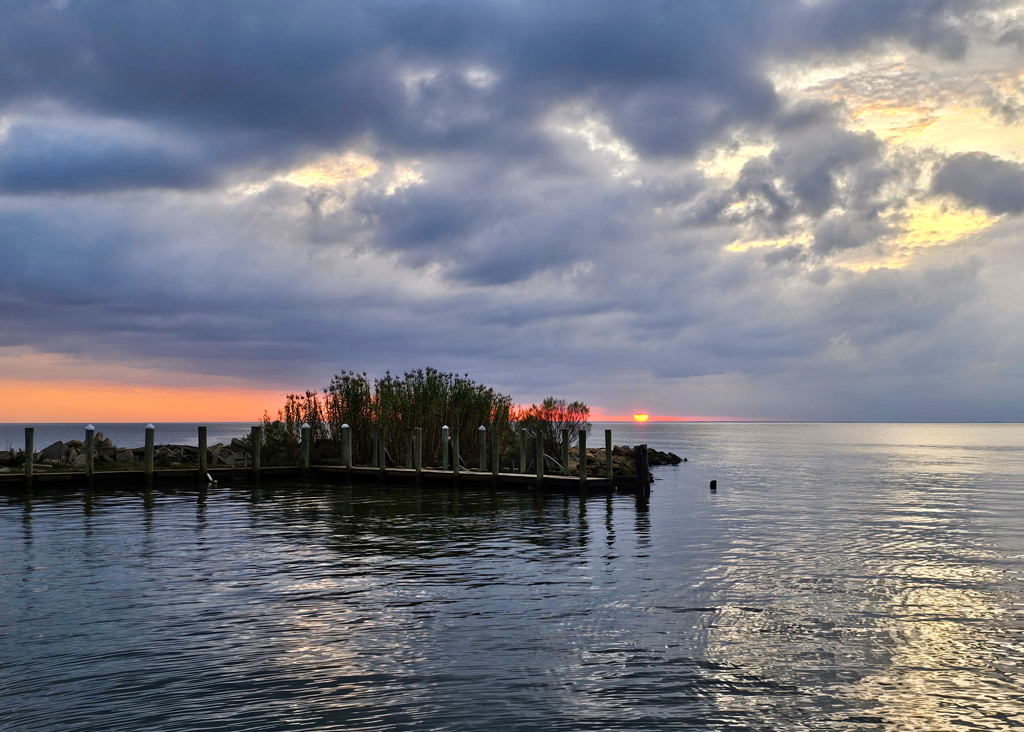
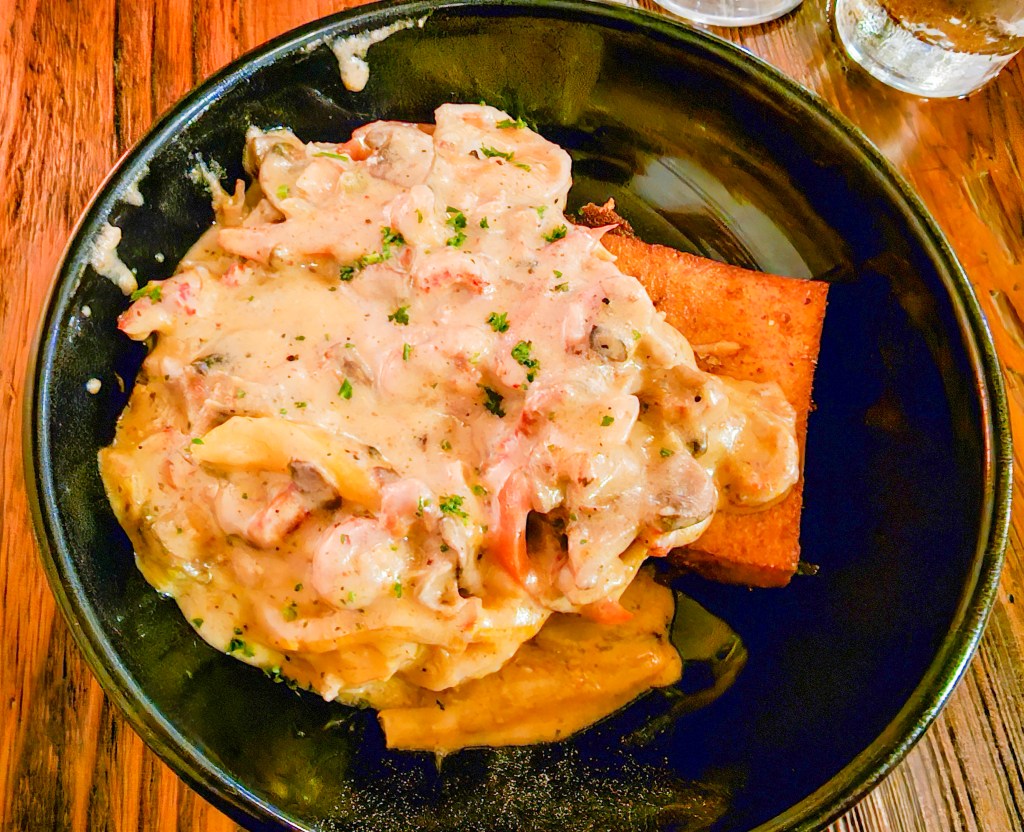
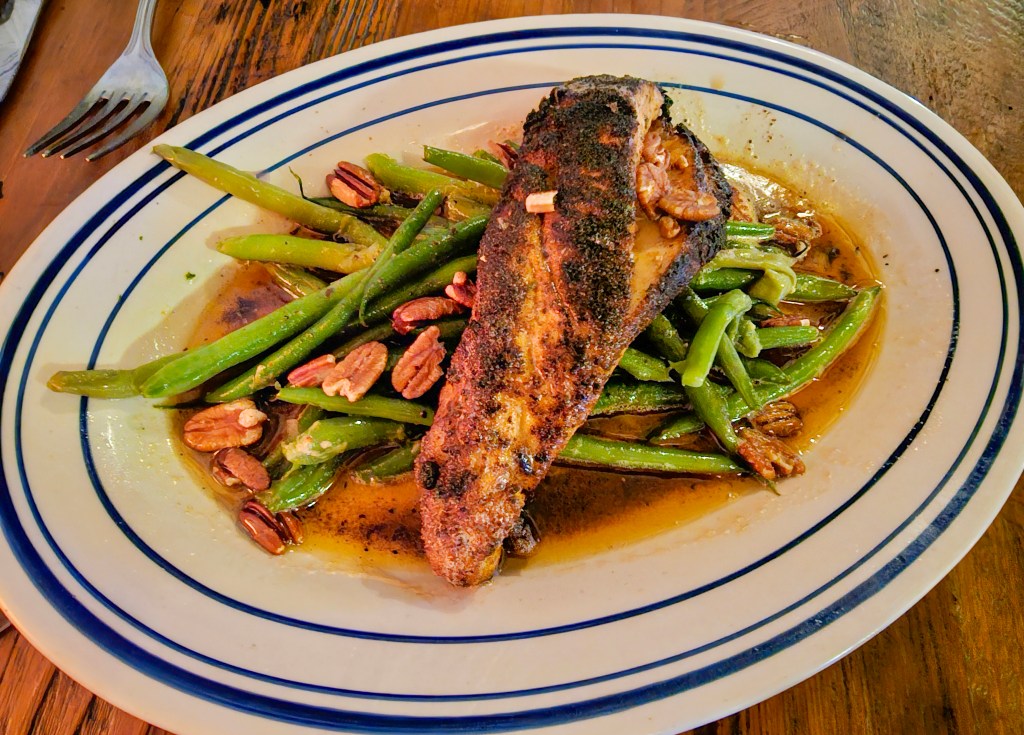
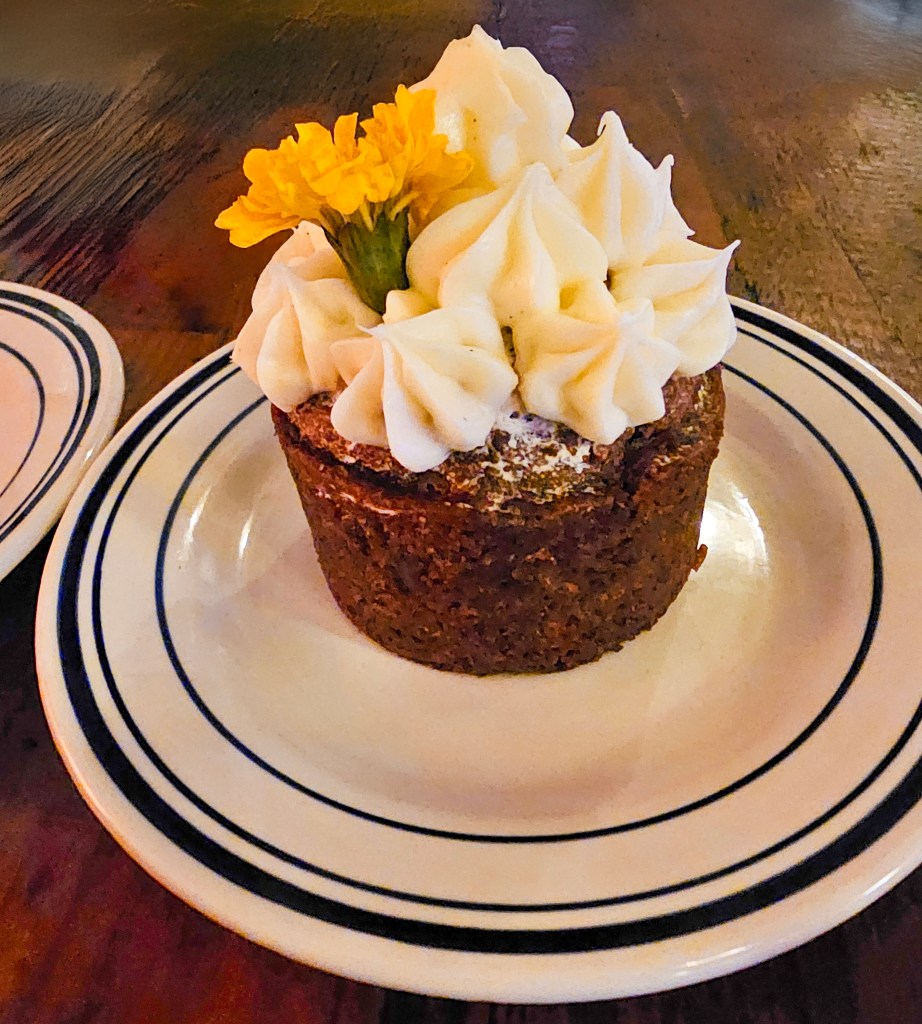
We drove to an interesting French/Southern cuisine restaurant, R Bistro. It was very crowded, with several large groups, including a birthday group of 8 women who were right next to us. The noise in the restaurant was unbelievable. The food was delicious though, and we would certainly return if we lived in the area. Dick started with gumbo, and I tried their crawfish beignets. My shrimp and grits were served on a grits cake, an unusual presentation, and Dick had blackened grouper. None of the desserts appealed to me, but Dick loved his carrot cake (I had a tiny taste and thought it was awful!)

The next day we went first to a local Publix, quite simply the best supermarket we have been to in years. After returning to the boat and putting away the food, we set out to explore the town.
The city of Fairhope was founded in 1894 by a group of colonists who supported the economic theories of Henry George, who believed that there should be no taxes other than a single tax on land. The idea was popular, and colonists and financial backers flocked to the area. From its beginning as an optimistic utopia (and before you get all excited and think about relocating, today they do pay all the usual taxes), Fairhope grew as a resort area, with people coming across Mobile Bay to enjoy the quiet and the scenery. It became a popular place for artists and intellectuals to spend the winter. Today it is a resort area and a bedroom community for wealthier commuters from Mobile.
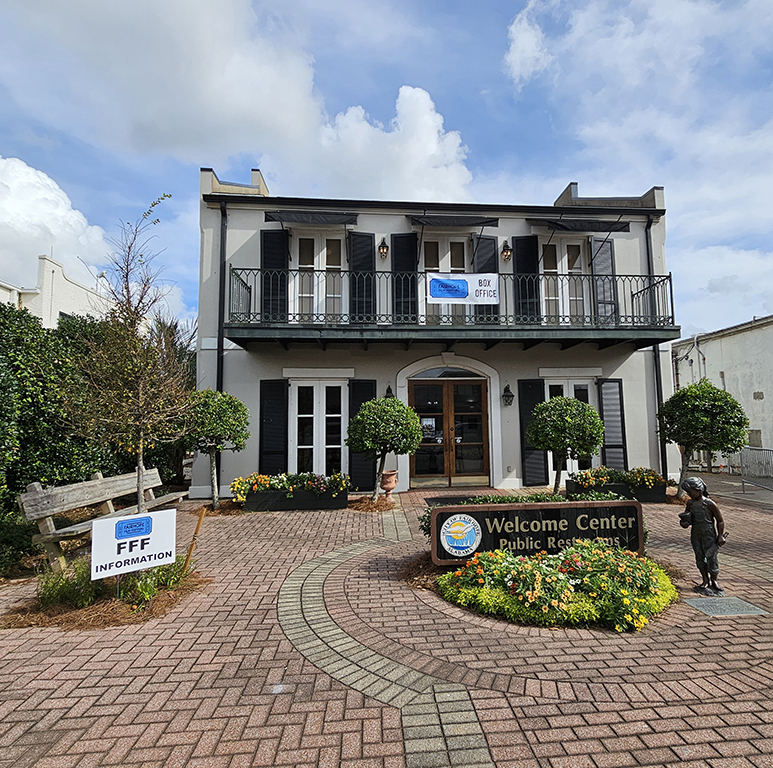
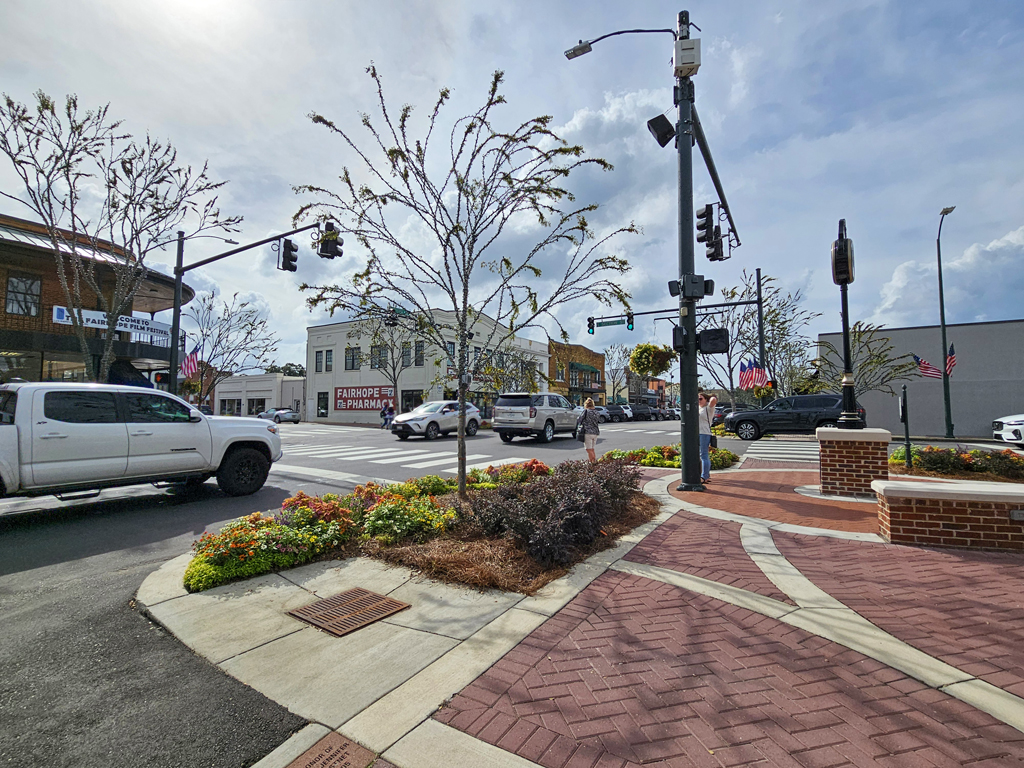
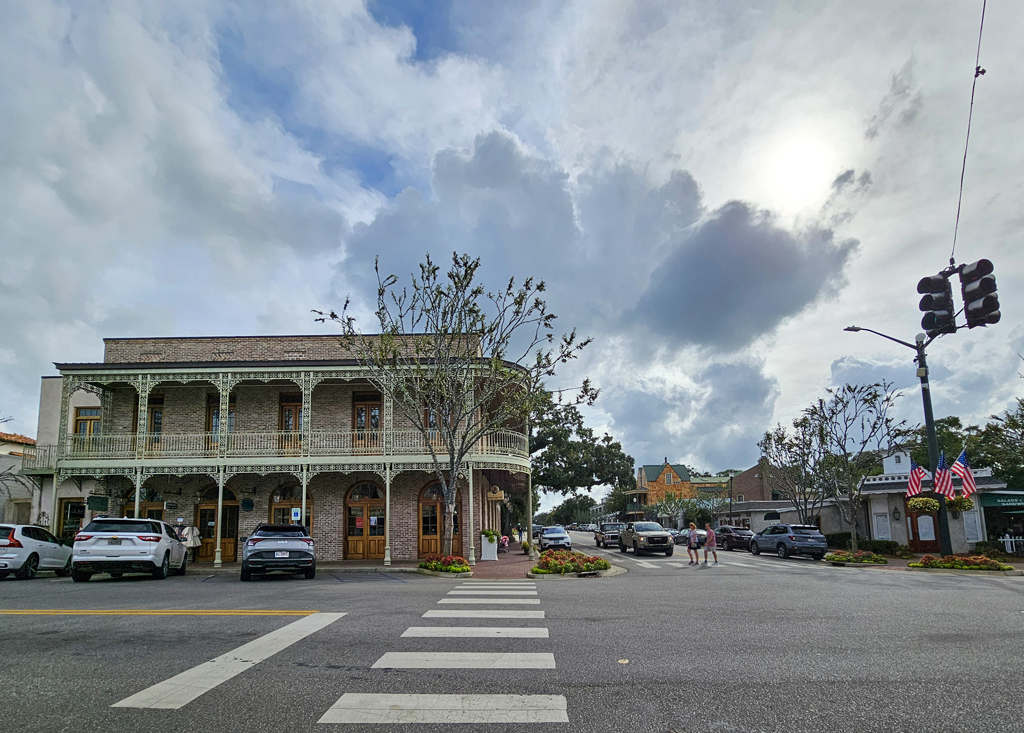
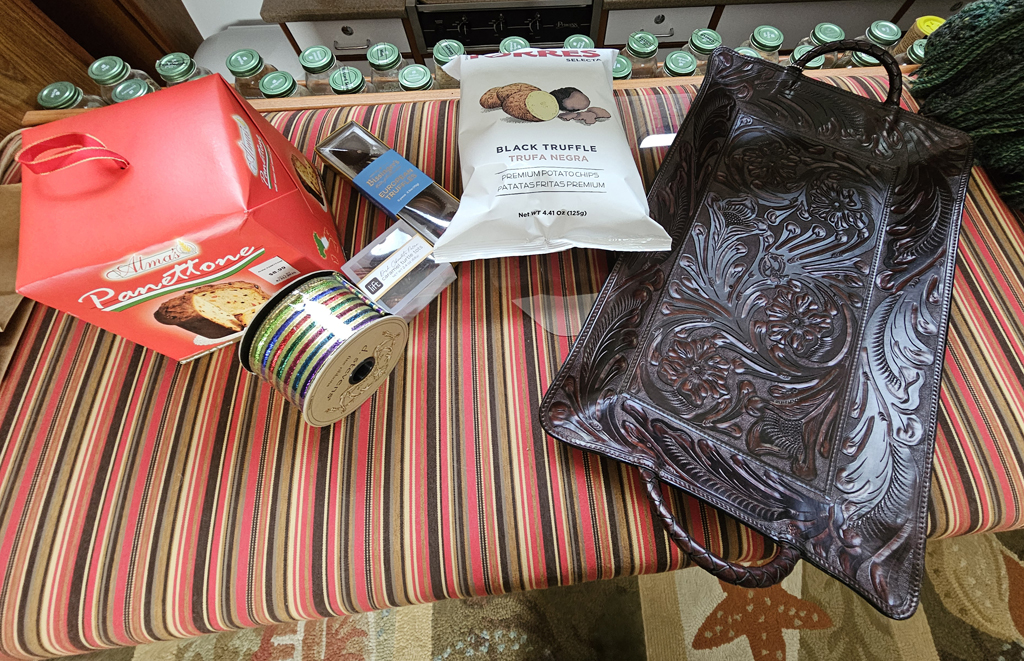
In Fairhope we found some of the best main street shops we have enjoyed looking around for a long time. We bought a hand made leather tray in an antique shop, and at the other end of the spectrum, some exotic potato chips and a few chocolates in a specialty food shop. Afterwards, I had been hoping for a cappuccino at one of the many coffee shops, but Dick had a different idea.
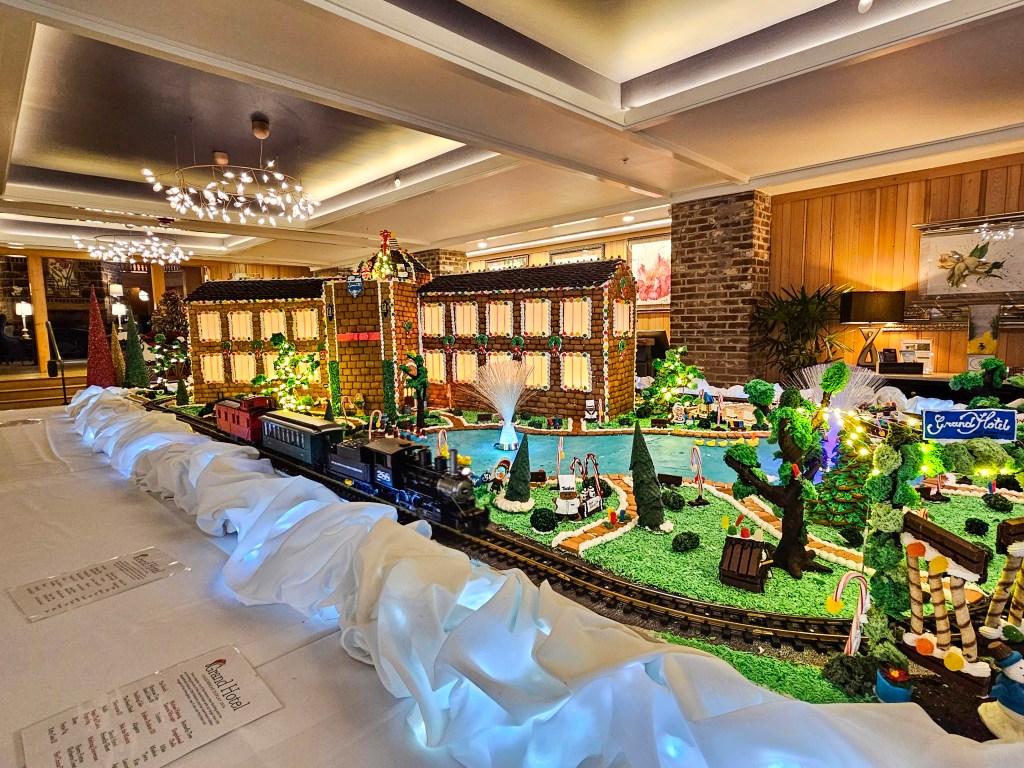
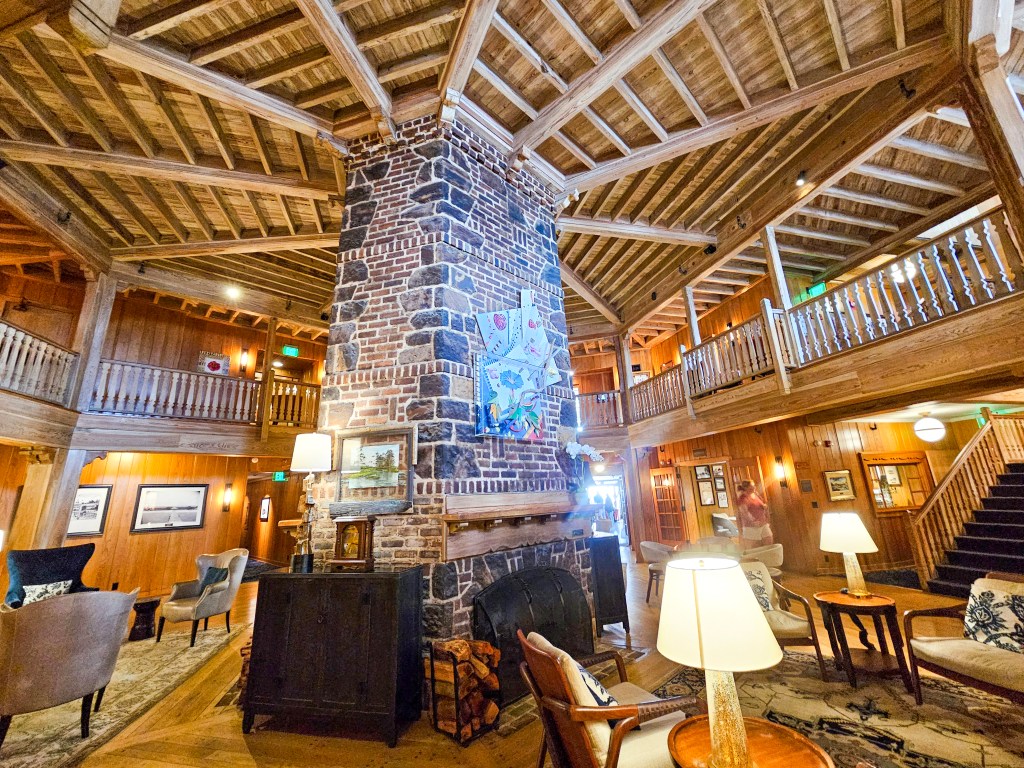
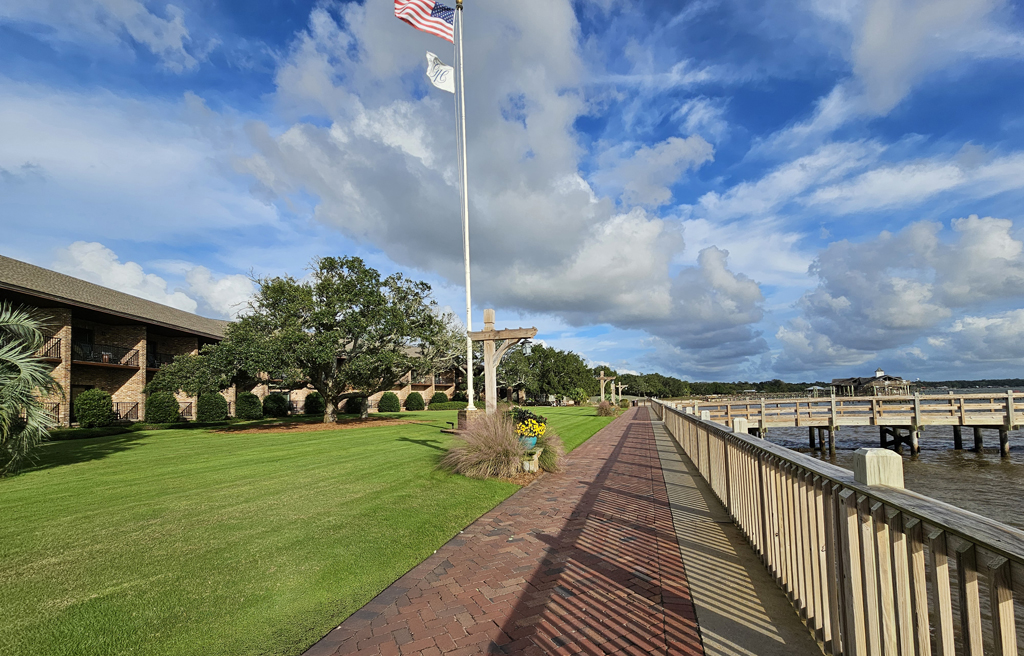
We drove a few miles out of town to the Grand Hotel, a historic hotel that is now part of the Marriott Autograph Collection. There has been a hotel on the site since 1820, and by 1847 a large establishment had been built. During the Civil War, the hotel was used as a Confederate hospital, and over 300 soldiers are buried in the Confederate Cemetery on the grounds. The present hotel was built in 1941, and during World War Two it was used as a training base for US Army Air Force amphibious landings. In the lobby was an amazing gingerbread and candy display depicting the hotel and the grounds, with a train running around it. Children and adults alike loved it. We enjoyed an excellent cappuccino and a cherry Danish in the lobby and made note that we will hope to come and stay there one of these days.
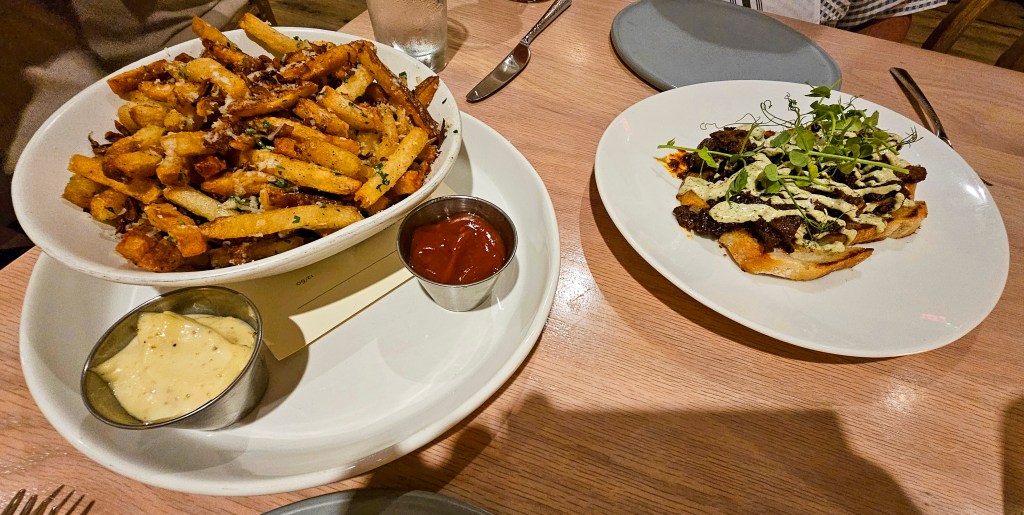
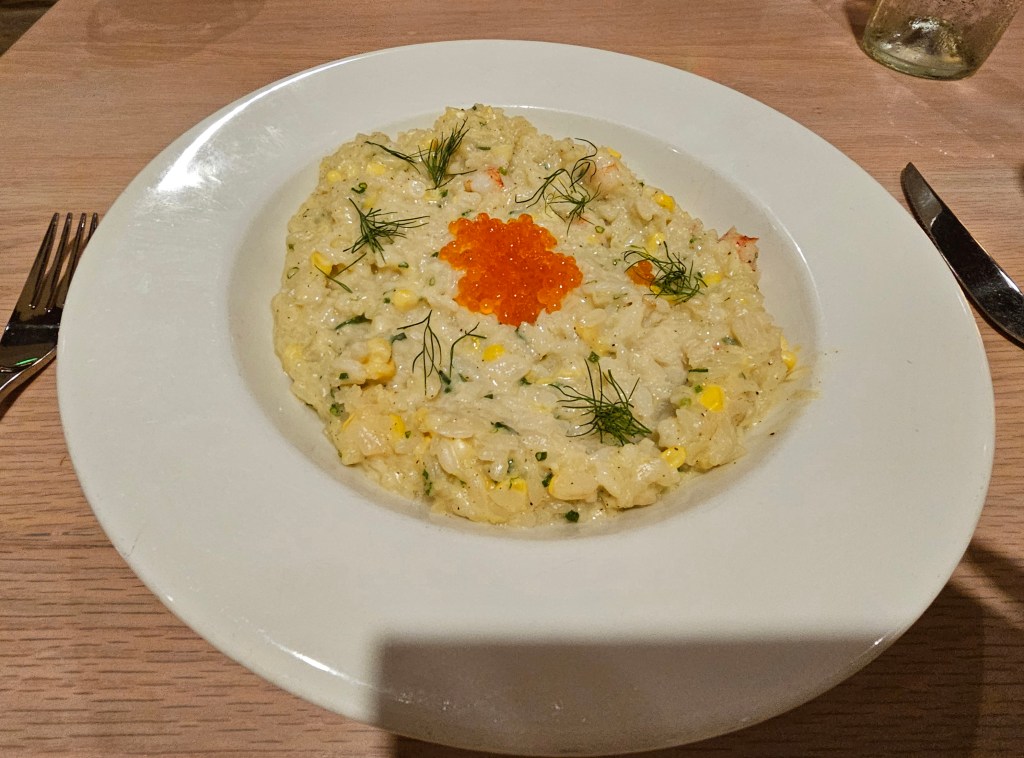
Sadly, the dinner in the evening did not live up to the delights of the day. Hope Farm is all about the trendy farm-to-table concept, and they boast about their own produce, but since they appear to grow mainly brassicas and mushrooms, it makes for some odd combinations in the dishes on offer. Dick enjoyed his highly recommended mushrooms on toast for starter, but my fries with parmesan and truffle garlic aioli missed excellence because they were not hot. I had the shrimp risotto, properly prepared rice, but if there were 5 tiny shrimp in there I would be surprised. Dick’s tomahawk pork chop was delicious. Dick was then persuaded to try some home-made ice cream that involved bacon. He said it was good ice cream, but the flavour was just too strange. I was tempted by the “duck fat caramels with sea salt”. It was explained that the cream was replaced with duck fat, and our waiter considered them an amazing treat. Amazing might be the operative word, but not in a good way. It is a long time since I have consumed anything as awful that was not intended as a cure for illness. They were too gooey to bite in half, so I ended up with this large, sweet, incredibly greasy lump of goo that had to be consumed (and no hint of the promised sea salt). As I worked through getting the disgusting mass so I could swallow, Dick unhelpfully kept offering his weird tasting ice cream “to wash it down”. Uggh. I can still taste that greasy mess when I think about it. I told the waiter they should give it all back to the ducks. He was delighted to receive the remaining 5 of these so-called treats, and he also took them off the bill, which was a kind gesture.

The next day was entirely taken up with repositioning the car. This involved driving the rental car 6.5 hours north to Aqua Yacht, and then turning around and driving back to Fairhope in convoy. The northbound journey was not so bad, on roads that had little traffic and no trucks (it was Sunday). Unfortunately, we did not want to return by the same route because half of the journey would be in the dark, and there would be a high risk of hitting a deer. Instead, we took the Interstates, which are always busy. The journey was made longer because of intermittent rain, sometimes heavy. Dick was good, and drove more slowly than he normally would, partly because of the conditions, but also to make it easier for me to follow. We left Nine Lives at 6:30am, and were back on board at 8:30pm. Dick, of course, drove the full 14 hours, my part was just 7.5 hours and I was in our own, more comfortable vehicle. Even so, this was not a journey I want to ever repeat. We did another reposition a few days later, but that one was all done in daylight.
Monday was a day for regrouping and taking care of a few domestic chores. Dick also traced persistent water leaks that we have noticed these past few weeks. All three turn out to have slightly different causes, but all essentially are caused by aging plastic connections. These are made of a particular type of plastic that has been banned in plumbing for some years. Water is seeping, not a flood, but it does have to be taken care of. Dick hopes to arrange for all the connections to be replaced when we are way from the boat in December/January.
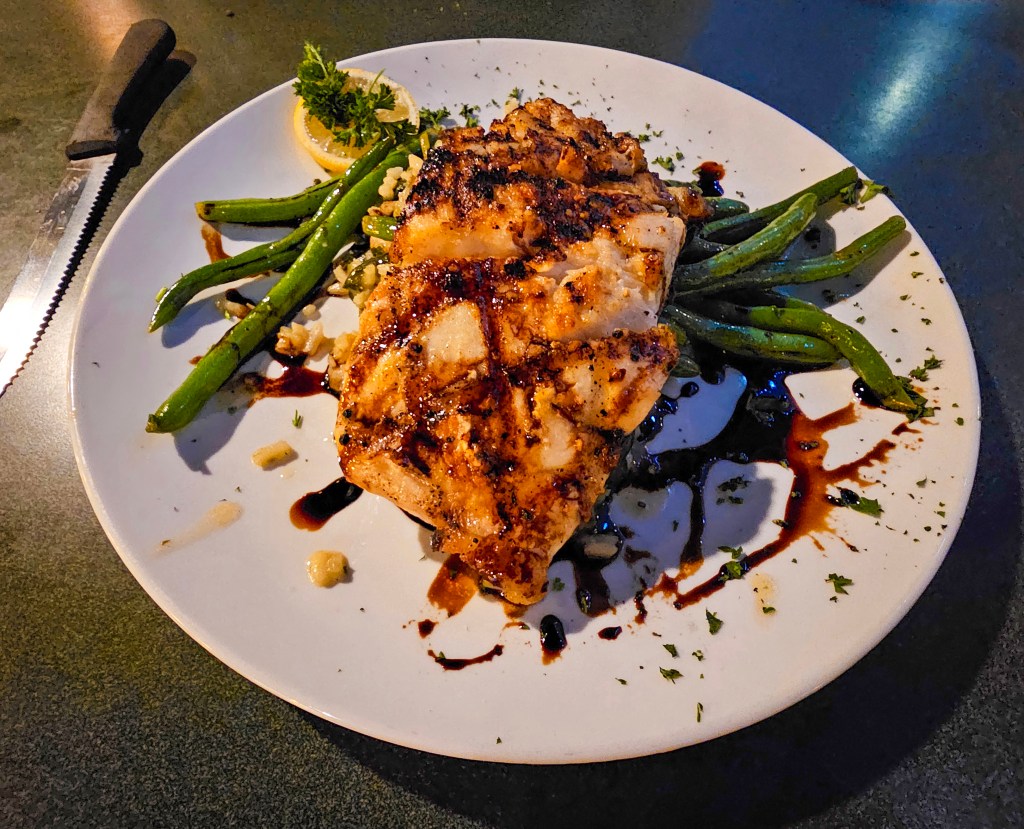
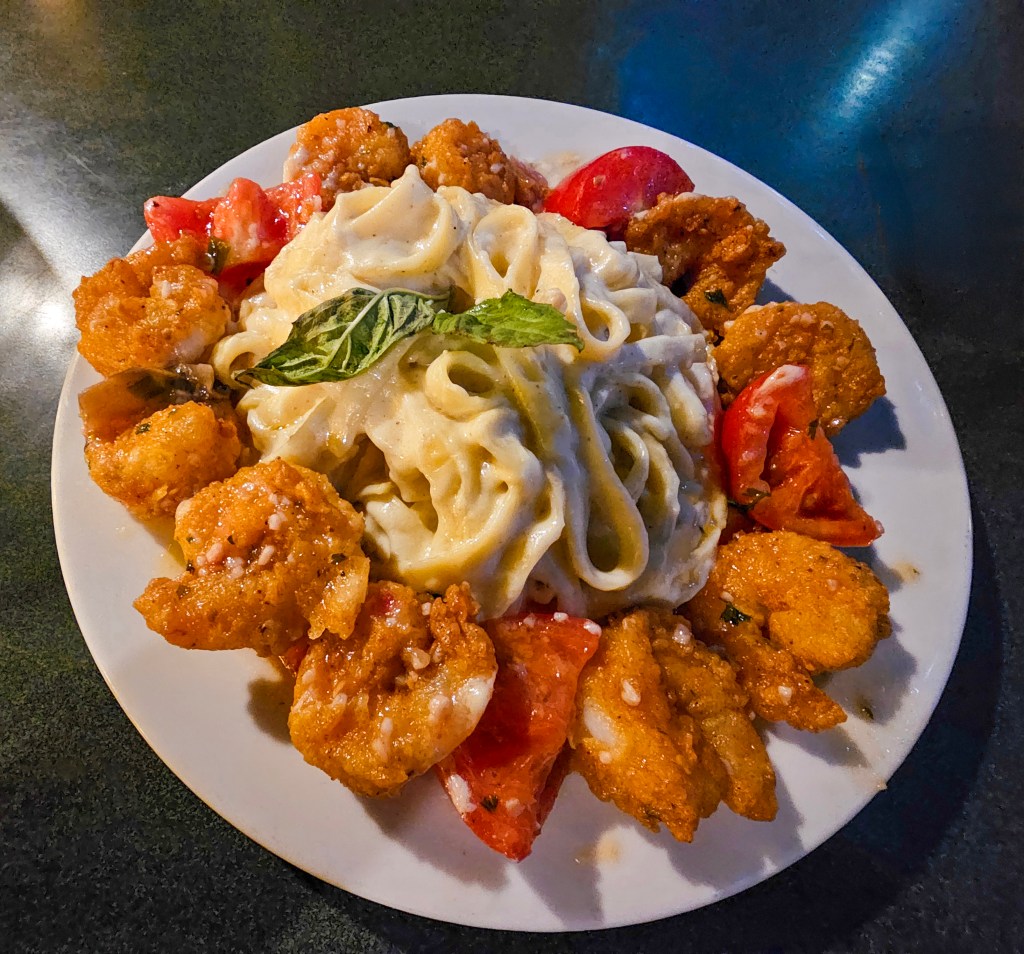
In the evening, we had an early dinner at Gambino’s, a venerable Italian restaurant that gets top billing on TripAdvisor. We enjoyed the meal. Dick and I both started with the gumbo. I had a delicious shrimp dish, while Dick tried the fish special. The fish was tri-tail, a game fish that is also by-catch from commercial tuna fishing in tropical and semi-tropical waters. We have never heard of it, but Dick said it tasted delicious.
Looking around the restaurant, we noticed a strange thing. A large group of adults arrived and were seated near us. There were about 20 people, all couples. As each couple arrived, they greeted the earlier arrivals, and then the men separated, and sat at one end of the table while all the women sat at the other. We were amazed. Later, I read a possible explanation from some notes on the culture of pre-Civil War Alabama. According to the research, life in the Deep South was by no means all Gone with the Wind and Tara. Before the Civil War, the vast majority of the population were independent landowners, working farms with typically less than 100 acres. Assisted by a few slaves, they grew a variety of staple crops, and usually 10 to 15 acres of a money crop, such as rice, indigo, or tobacco and later, cotton, for export. There were few slaves on these farms, it was too expensive. Instead, most of the labour was supplied by family members. In the evening, farmers returned to their houses, made up of two identical halves with a long corridor (known as a dog trot) down the middle. When visitors came, they were segregated by gender, men and women sat on opposite sides. Only the visiting dogs mingled in the middle. We can’t help but think that the segregation of genders that we saw in the restaurant is a cultural norm that traces back to those early years.
Just to round out the story, above the yeoman farmers, were a small group of Southerners, the planters. Legally defined as landowners with more than 20 slaves, most were yeoman farmers who had worked their way to the top through sheer force of will and practical farming techniques. The average plantation had more than a thousand acres, and a slave population of 50 to 100. The land owned was not necessarily all together, tracts could be widely separated. The work was supervised by overseers, who may have lacked the knowledge or the will to maximize and sustain a crop yield, while the planter applied himself to finding markets and transportation for the crops and balancing debts. Most of the larger plantations operated heavily in debt. According to this source, by the Civil War, the economy of the South was already crumbling, due to poor farming practice and soil depletion. Fields and houses were abandoned and left to the weeds as the planters moved west. As we travelled down the rivers, we saw trees grown as a crop for wood products, and we rarely saw fields of cotton. In many ways the land has returned to the early years of the pioneers, with cattle and grassland alongside the tree plantations.
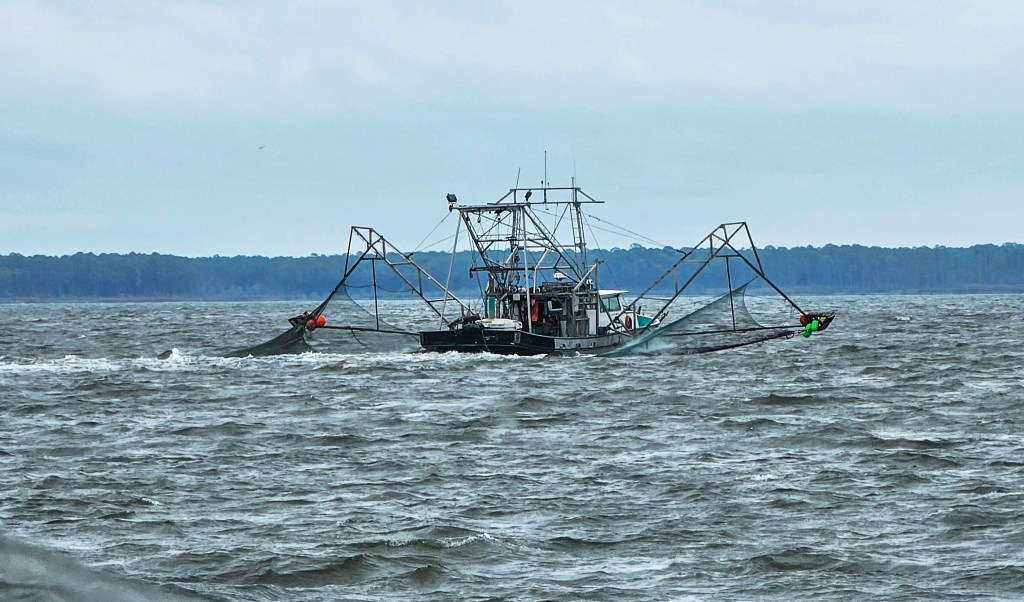
We left at 8:30am for the trip south through Mobile Bay and into the Gulf Intracoastal Waterway for our Orange Beach destination. The morning began poorly. The promised rain failed to hold off, and what began as a light mist, immediately became a downpour as we set about the untying process. I had my jacket on, but Dick decided too late that wearing his would have been a good idea. I had to kneel on the deck to undo the strap holding the power cord, so I was wet from the knees down. Naturally, the rain stopped almost immediately after we were underway. We saw our first dolphins in 6 years! A pod of 3 swam alongside for a few hundred feet. After that, it was just an ugly 3 hours until we were able to turn into the waves on the Gulf Intracoastal Waterway (GICW) channel. Mobile Bay is very shallow, and with a wind off our beam for most of the way, causing an ugly chop reminiscent of the Great Lakes, it was an unpleasant ride. Dick adjusted our heading several times to try to improve the comfort level, but there was only so much he could do. We saw shrimp boats out in the bay fishing. We could see a number of other Looper boats on Nebo, making their way south. Interestingly, several chose a route very close to the eastern shore, that Dick had rejected as too shallow.
The marina we had chosen is unfortunately a long way off the main route and has quite a complicated entry. On arrival we were told to tie up on the end of L-dock. It took a lot of maneuvering, especially with the wind blowing us off the dock. There were no dock hands to help until we were just about set and ready to connect the power cords. Then the dockmaster arrived to tell us that we were in the wrong place. We had to untie everything, go back along the narrow channel, turn around, and finally tie to the side of L-dock. This time we had 3 dockhands to help. After all the messing about, Dick did not, on this occasion, dispense the usual $5 bills for the help.
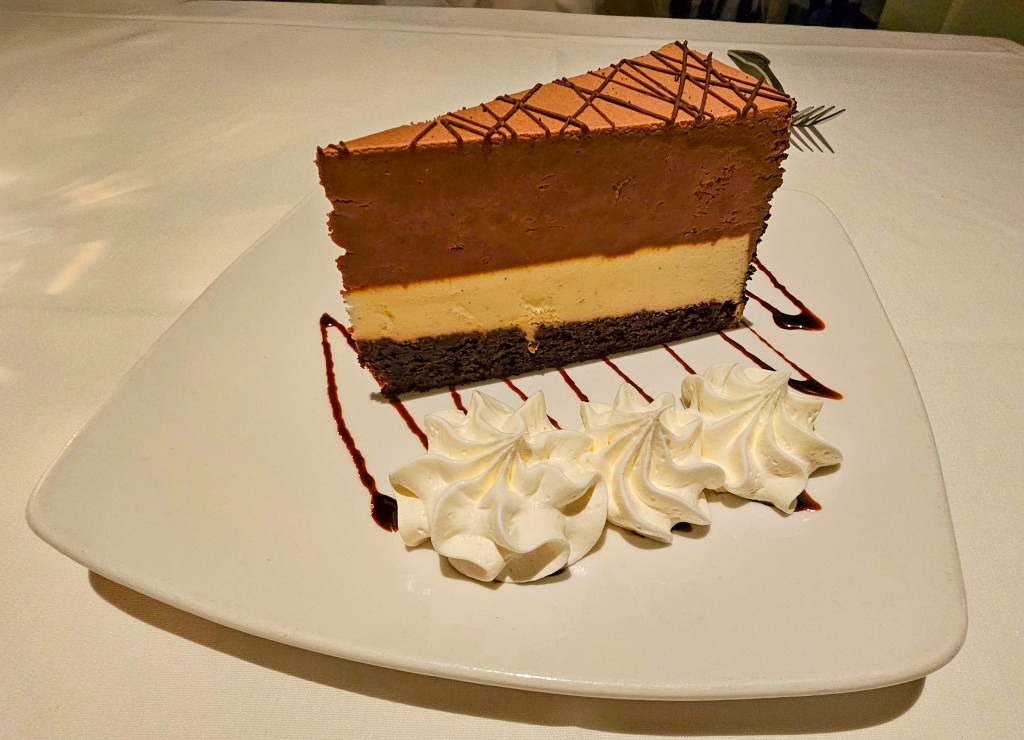
The marina is too far from town to walk, and we would not ride bikes after dark, so Uber it was for our dinner plans. After a slight issue with the driver being sent to the wrong side of the channel to pick us up, we were soon at Louisiana Lagniappe for one of the best meals we have had on this trip. It is a classic restaurant, with fresh white tablecloths for every dining party, professional wait staff and old-fashioned extras including a plate of hush puppies delivered as soon as you sit down. Each entrée includes a salad and a twice-baked potato. We started with lobster wontons, which were as tasty as they were pretty. Grouper is the specialty, with many different options for preparation. Dick enjoyed the one he chose, and I had the New Orleans style barbecue shrimp. We shared a delicious multi-layer chocolate cheesecake for dessert. There was one interesting moment. As usual, we ordered a glass of something bubbly when we arrived. I had not finished mine before the waitress brought the glass of wine I had ordered to go with the main course. She began to take away my unfinished glass of bubbly, and when I stopped her, she told me that Alabama law does not allow anyone to have more than one alcoholic drink in front of them at a time. Clearly, this particular law is not always enforced, because I nearly always have a few sips left when the next glass of wine arrives!

Our Uber driver on our return was again directed to the wrong location, and he thought we were just making conversation when we said we had passed the turning, as he drove us farther away from our destination. He finally turned around with profuse apologies after I told him, quite loudly, “We really are going the wrong way!”
The next day was time to review our plans in light of two days of high winds in the area. We decided to stay an extra day, and head for Pensacola a day later than planned. Dick had to rejig the rest of the schedule, and we will not be back in Hilton Head as early as we had thought. On the other hand, this will give us a chance to take a bit more time on the Panhandle, an interesting and enjoyable part of the Loop that we had been looking forward to.
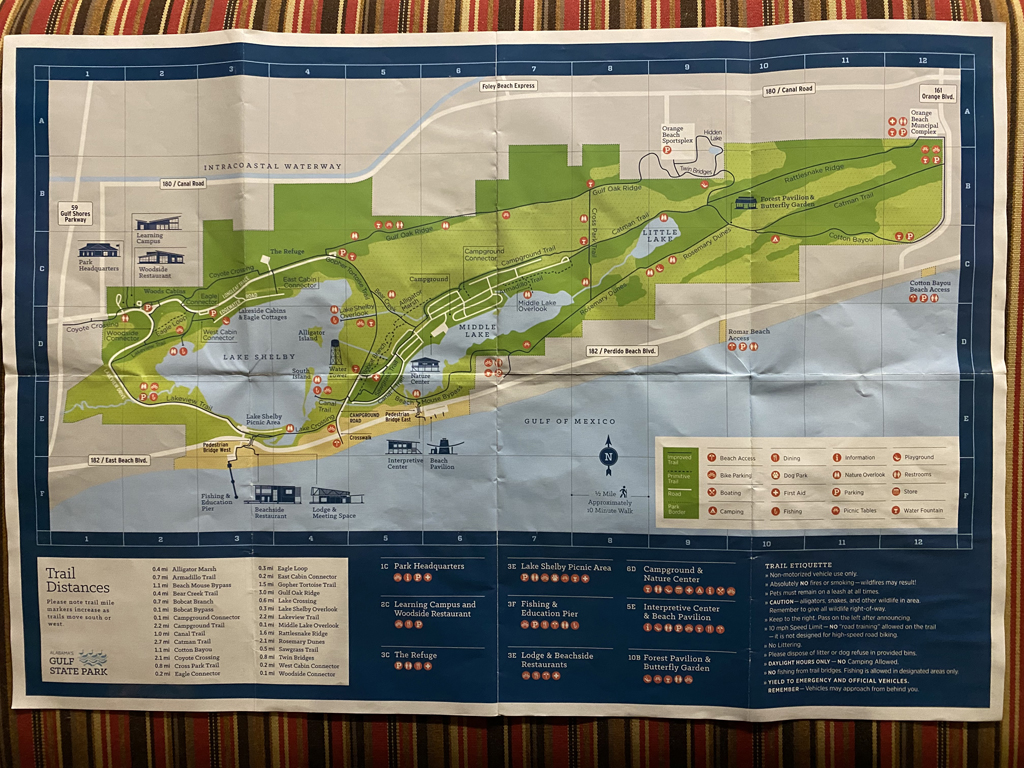
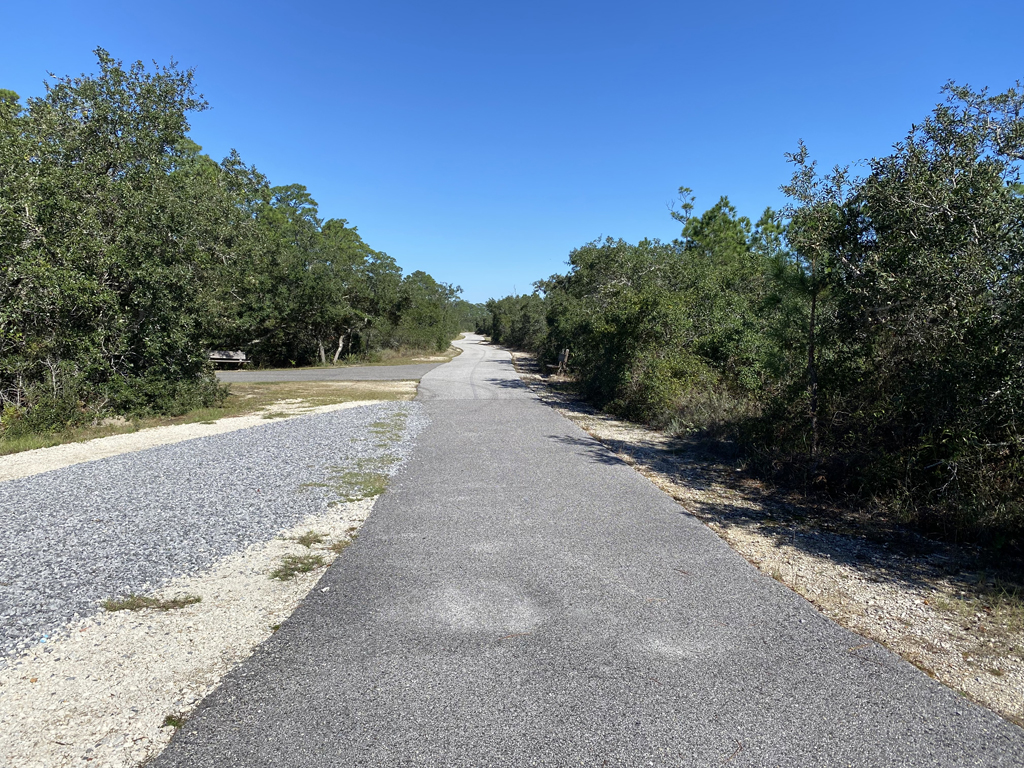
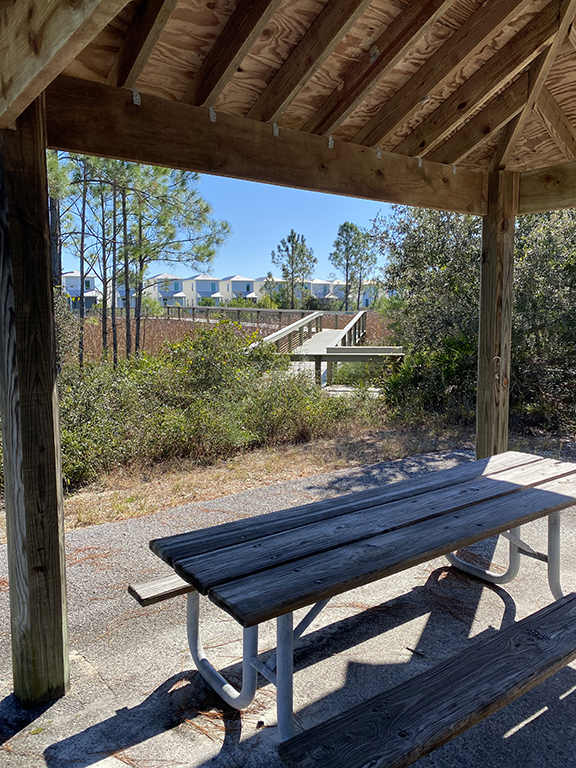
After making adjustments to the plan for the next week or so, Dick set off on his bike for a 17-mile ride through Gulf State Park. He reported that it was a wonderful park, and regretted that there was not going to be an opportunity to get my bike out and show me the excellent scenery and wildlife.

In the evening we took an Uber to Zeke’s, a seafood restaurant, marina, and fishing port. It was far more casual in style than the other night, but we enjoyed a good meal. The incredibly decadent skillet brownie with salted caramel ice cream was a fantastic finish.

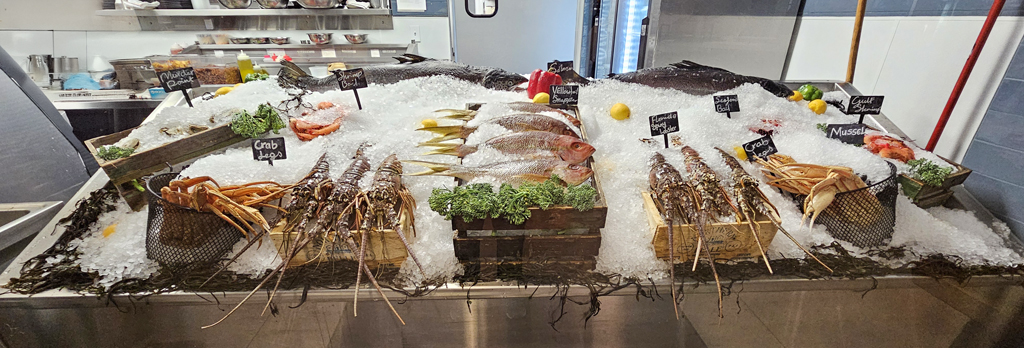
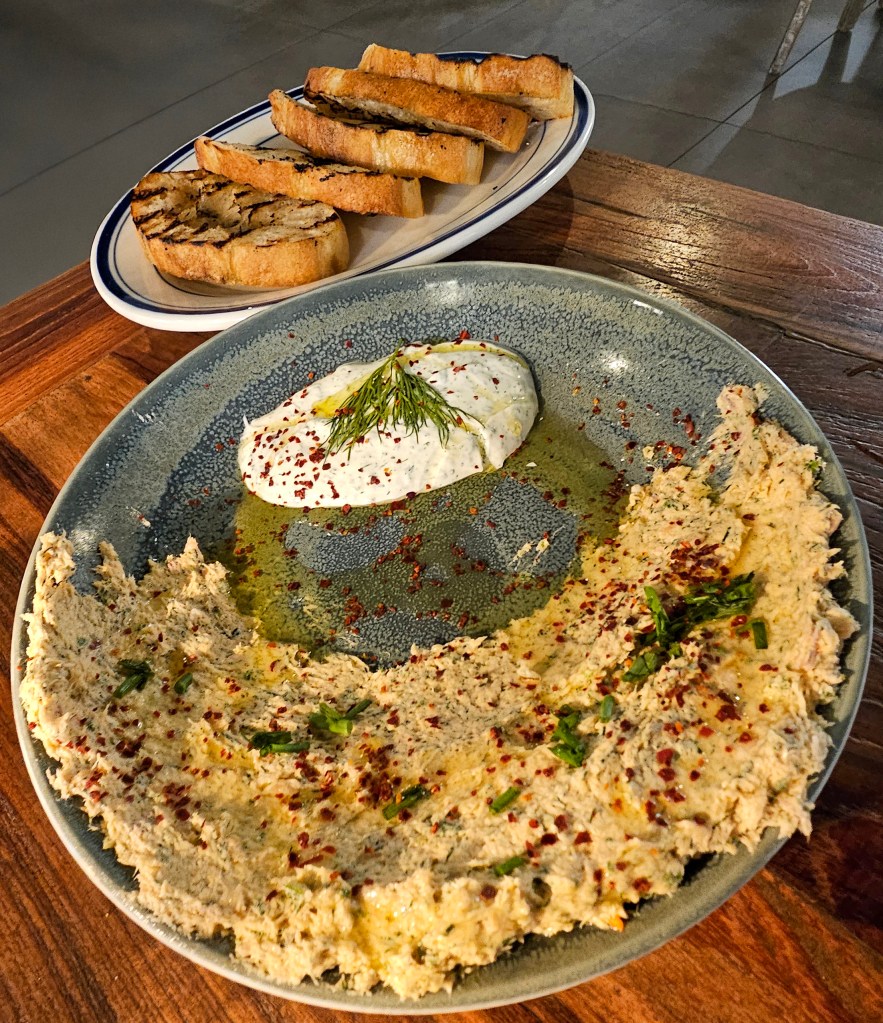
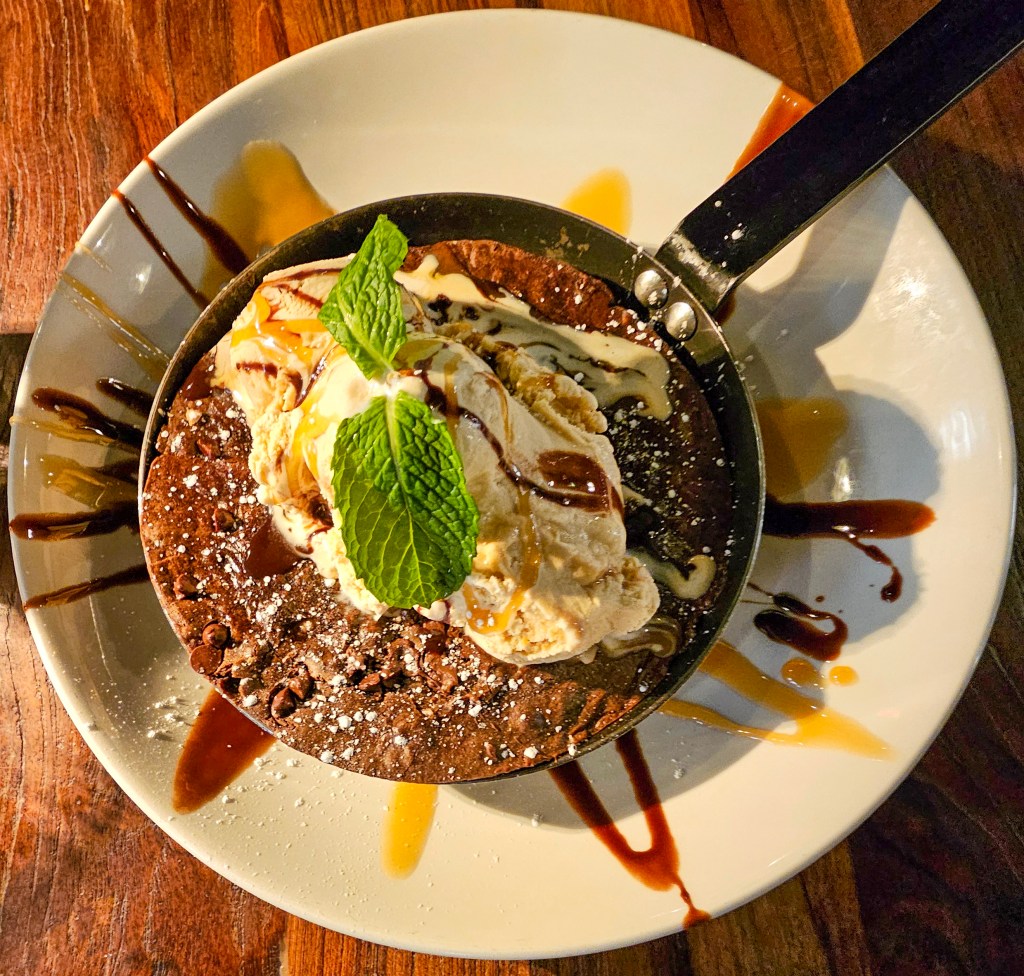
We made a later than usual 10am start the next morning, to allow the waves in Pensacola Bay to settle down. It was still pretty bouncy, but the waves were in the right direction, so it was not uncomfortable. We arrived at the marina just after the attendant had left for lunch, so we had no help tying up at the fuel dock for fuel and a pump out. Timing was good though, as soon as Dick had everything ready, the attendant returned and started fueling. Dick then negotiated to stay a full week, rather than the four days that had been reserved. The attendant was quite reluctant, but eventually agreed. There is another hurricane brewing in the Gulf, and while it is expected to dissipate without making landfall, the wind and waves will be roiled up for several days, and we do not want to cross Pensacola Bay in adverse conditions.
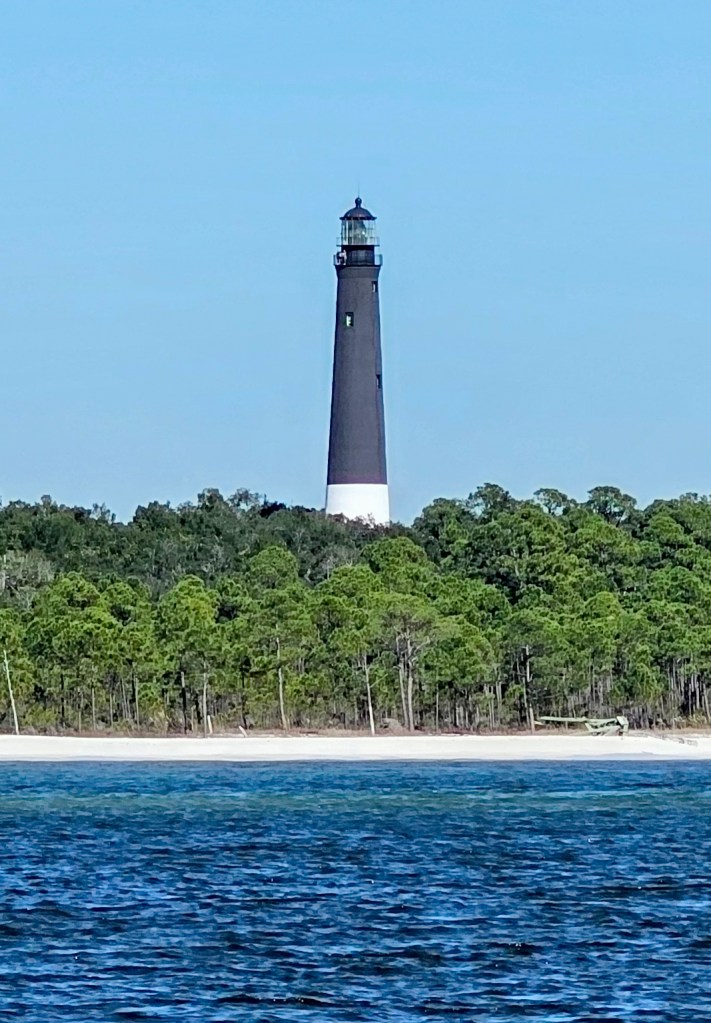
In the evening we walked through the historic downtown to our first restaurant, an Italian eatery with a Southern twist. We started with a cheese and charcuterie platter, which was authentic and delicious. I chose the New Orleans Barbecue shrimp, and Dick loved his lasagna. Both arrived piping hot! We are sincerely hoping that now that we are out of the mid-west, hot food will be the norm rather than the exception.
The next morning, Dick collected another rental car, and we drove back to Fairhope, where we picked up our vehicle that was waiting for us at the marina. On the way I was delighted when Dick agreed to stop briefly in downtown Fairhope, so I could have a look around a very interesting ladies’ shop that I had missed the previous week. Very interesting clothing, bright colours, and a lot of embroidery. It took some time to choose, but I was happy to leave with a new white blouse with very colourful embroidery. Our car was safe and sound, and it was a fairly easy drive back to Pensacola. The next day would be the final reposition, and a much longer journey, as we take both cars to Port St Joe and then return to Pensacola in the rental car.
That evening we took advantage of having a car to drive to a restaurant several miles away. It was an odd place, called O’Brien’s, but it is not Irish, instead I would call it French/Southern. The décor was dated and very tired, and the menus were a bit grubby, but both the food and the service were excellent. Their version of NOLA barbecue shrimp was served in a delicious cream sauce, and Dick’s seafood gratin bake was perfect. Dick had rack of lamb for main course, mine was a Southwest Chicken Salad. Dick was astonished, as I almost never order salad, or chicken! The cheesecake for dessert was a perfect finish. The owner came around to all the tables, to ask if everything was to their liking, always a great touch.
The next day required a fairly early start for the final repositioning of our car so that it is waiting for us at Port St Joe when we arrive there in about 10 days.
 The Voyages of Nine Lives
Hi Louise,I thoroughly enjoyed reading your latest travel report! Thank you for sharing your experiences, wonderful pictures, some of the area’s history. See you so
LikeLike
Thank you Louise for the writing, learnd quiet a bit of history. Small world we met Proost in Delawere Bay 2 years ago. Save travels.
LikeLike